
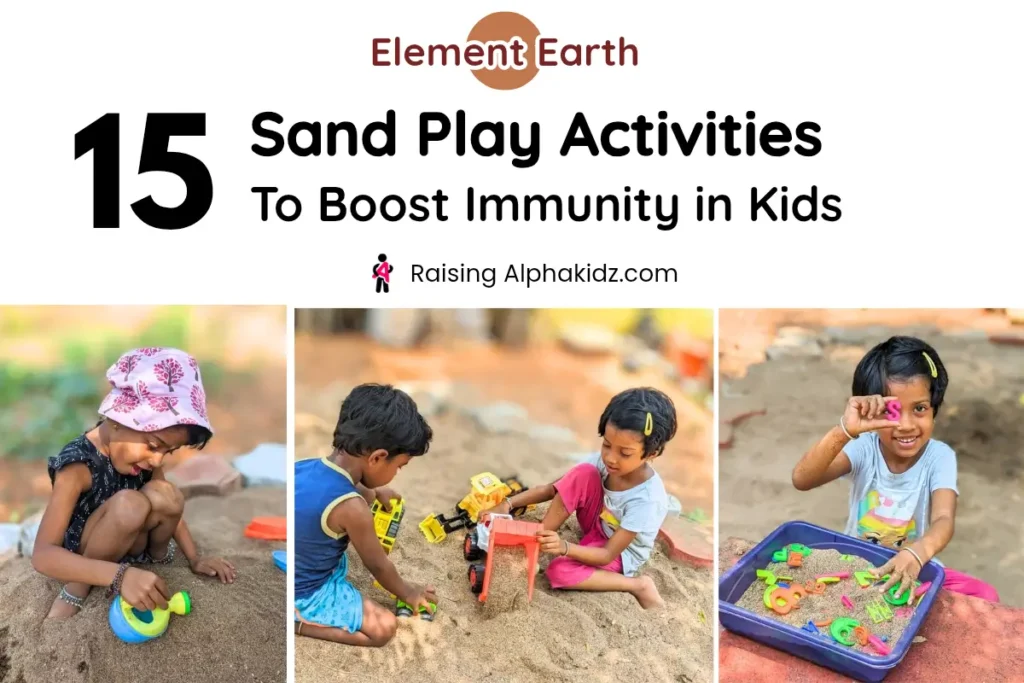
Hi Parents! Before we jump into the list of sand play activities and play ideas, let’s take a step back and explore the why behind the sand play activities.
Key Takeaways
Element: Earth (Sand/Sensory)
Core Skill Developed: Sensory exploration and imaginative construction
Supporting Skills: Fine motor control, hand-eye coordination, cause-and-effect reasoning, immune and nervous system regulation
Age Group: Preschool, Kindergarten, Elementary
Life Connection: Rediscovering an ancient, instinctive play material — building resilience, grounded calm, and open-ended creativity through unstructured outdoor play
What is Sand Play
Sand play is one of the ancient playtime activity which connects children to the natural world through the simplest, most ancient play material—earth.
You’ve probably seen it happen. Your child picks up a handful of sand at the beach or in a park, and suddenly—they’re lost in it. Pouring, patting, digging, building. No one taught them to do that. They just… knew.
That’s not a coincidence., but the way we evolved with sand and soil beneath!
Long before homes had floors and backyards had tiles, children played on sand and soil. Their tiny hands shaped the same earth their feet ran on. And somewhere deep inside, today’s kids still carry that memory in their DNA.
So sand play activities isn’t really something we need to introduce. It’s something we just need to allow. Make space for. Not push away in the name of mess, dirt or inconvenience.
And the quiet gift behind it? Sand play activities gently helps a child’s body in ways we rarely see—boosting immunity, settling their nervous system, and supporting bone strength. All without them even trying.
So if you’re wondering whether sand play is worth the cleanup… maybe let’s find out together. Here are some simple, joyful ways to bring it into your child’s world—without any pressure, perfection, or plan.
Highlights
- Balances: Earth Element (Immunity & Core Strength)
- Age: 2+ years
- Toddlers (2–4) → sensory sand tray
- Young kids (5–8) → Sandpit pretend play
- Requirements: Sand pit, beach sand environment.
- Solves: Old Friend Hypothesis/ Hygiene Hypothesis
- Outcomes: Efficient immune system functioning, nervous system regulation and enhanced creativity.
Benefits of Sand Play Activities
Sand play is an essential part of early childhood. If you have a child, a sand pit is almost a must-have. Organising Sand play at home is one of the most important playtime activity that fosters a child’s health and well-being. Wondering how? Let me explain the science behind it.
1. How Sand Play Activities Boost Immunity
Sand play can help boost immunity in several natural ways.
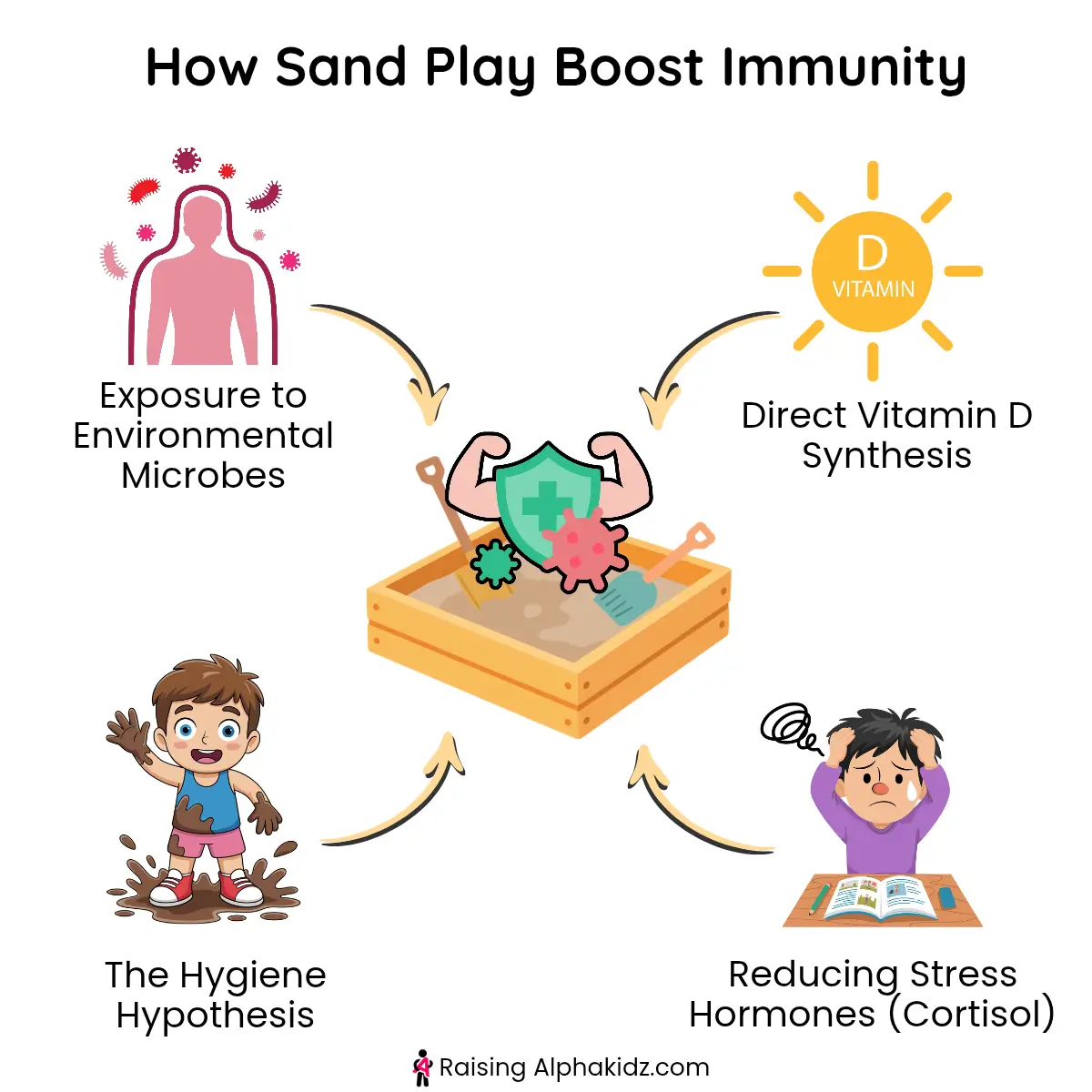
When children engage in outdoor sand play, they are exposed to a variety of environmental microbes, which can help train and strengthen the immune system by teaching the body how to respond to different germs.
This idea is supported by the hygiene hypothesis, which suggests that limited exposure to dirt and microbes early in life may lead to weaker immune responses.
Outdoor sand play also often involves sunlight, which supports the body’s production of vitamin D—an essential nutrient for immune health.
In addition, playing freely in outdoor sandpit is relaxing and enjoyable, helping to reduce stress levels and lower cortisol, a hormone that can suppress immune function when elevated. Together, these factors make sand play activities a simple yet effective way to support overall immune health, especially in children.
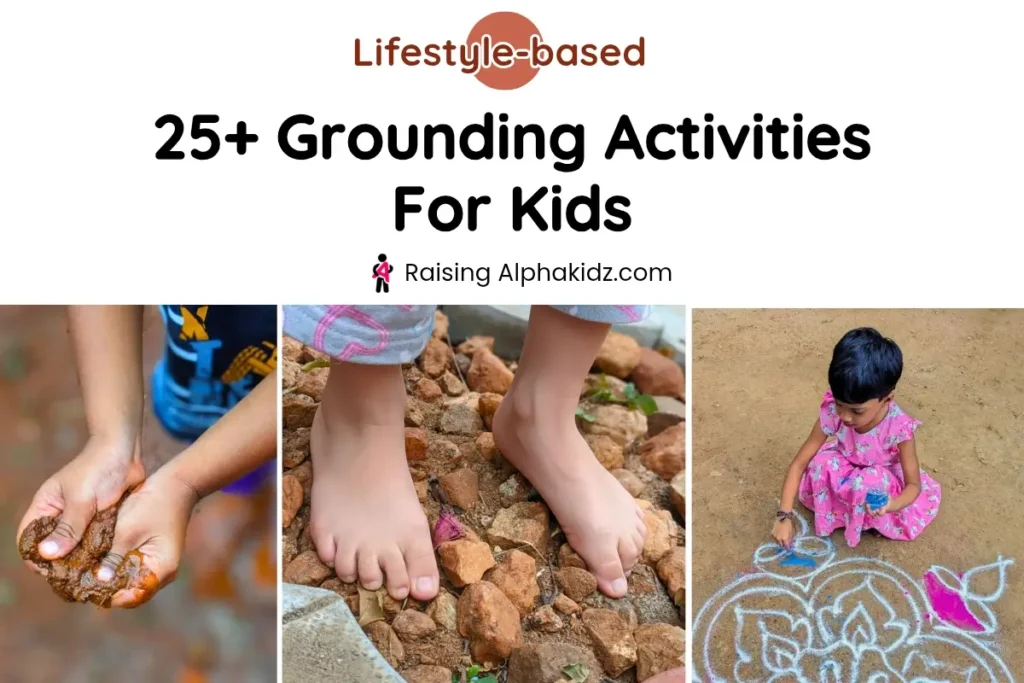
2. Sand Play as a Grounding Activity
Sand is primarily made of silica (quartz), or silicon dioxide. Our own bodies contain trace amounts of silica, especially in our bones. Silica is chemically stable, inert, and non-oxidizing—meaning it doesn’t react with atmospheric conditions and remains stable even under extreme stress, wear and tear.
This stability makes sand an excellent grounding element. It absorbs excess electrical charges from the body without undergoing any chemical reaction.
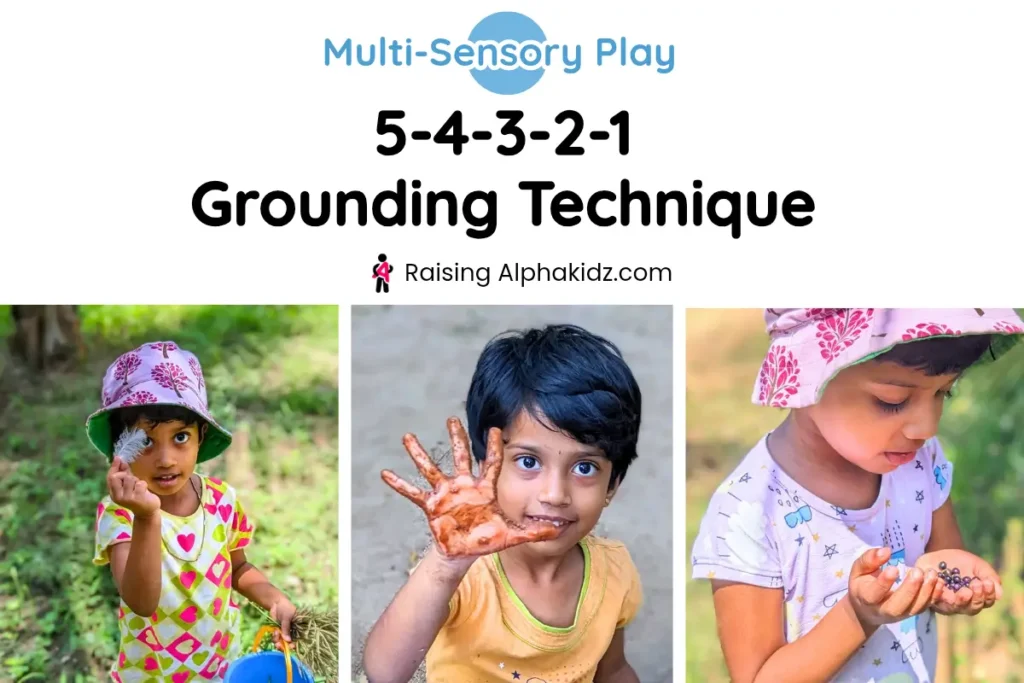
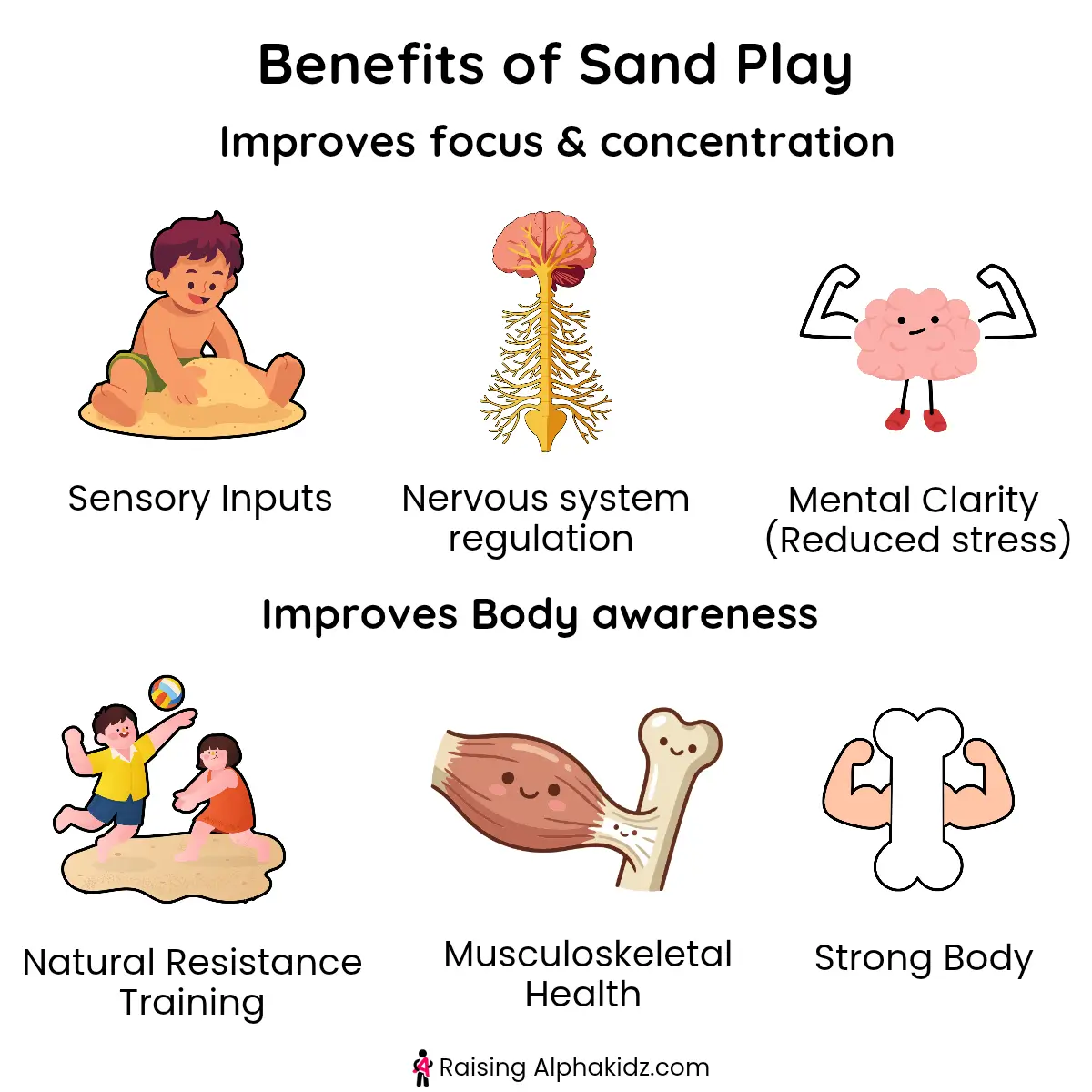
When children get in contact with sand, their bodies release built-up charges associated with stress and anxiety.
This helps regulate the nervous system, leading to a calmer state of mind, improved focus, and better mental clarity.
3. The Piezoelectric Effect of Sand
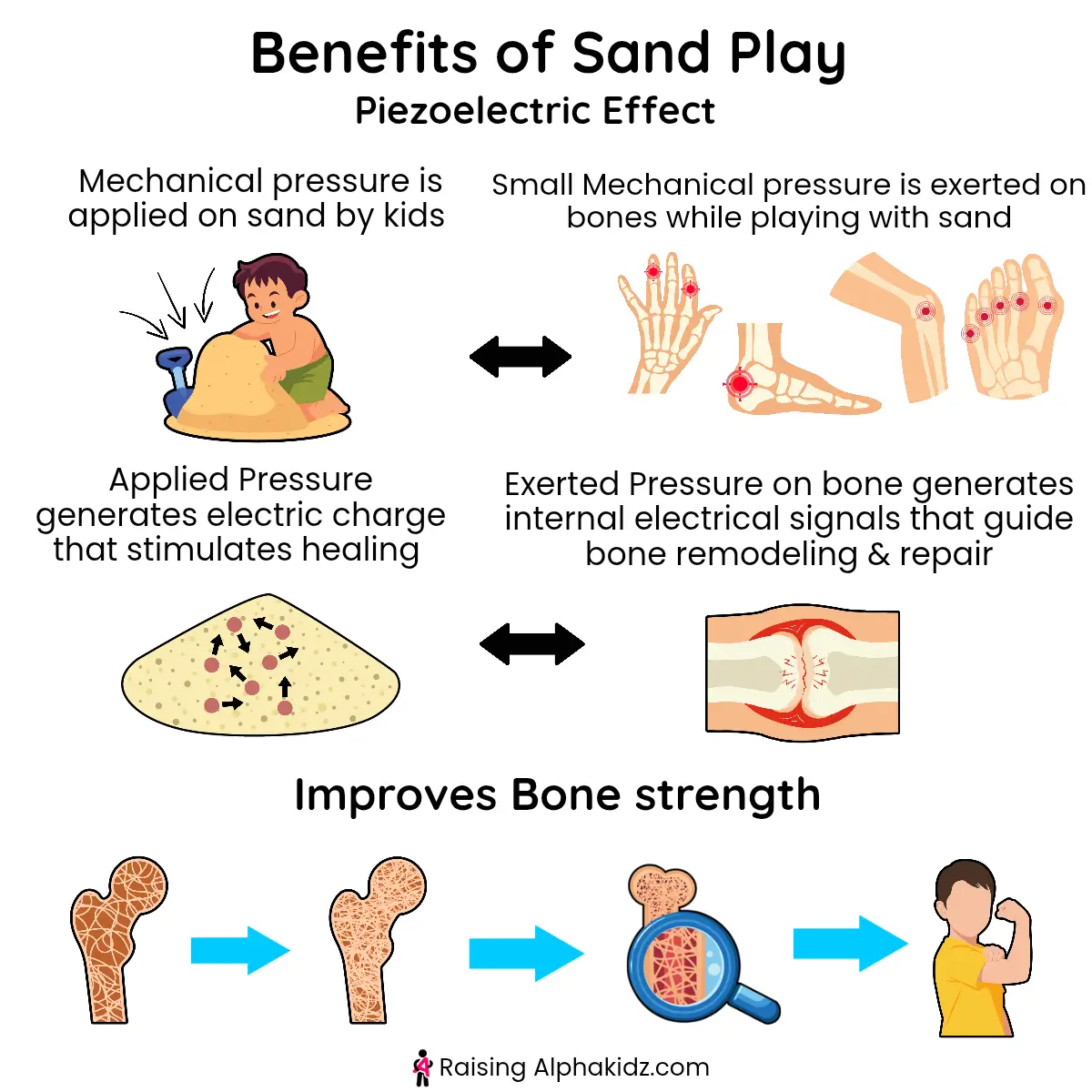
Quartz crystals exhibit a property called the piezoelectric effect: when mechanical pressure is applied to them, they generate a small electric charge. As kids move, jump, dig, and press their hands and feet into the sand, they are constantly applying pressure to countless quartz particles, which in turn produce tiny electrical discharges.
How the Body Responds To Piezoelectric Effect
Interestingly, human bones are also piezoelectric. When you move, walk, or apply pressure to your skeleton, your bones convert that mechanical energy into electricity. This bioelectricity stimulates bone remodeling and growth.
When children walk and play on sand, two things happen at once:
- Their bones generate electricity from physical movement.
- The sand generates an external electrical charge from the same pressure.
These electrical fields can interact with the body’s own electrical microenvironment, potentially supporting healing and development. In fact, piezoelectric materials like sand are even used in advanced bone graft substitutes because they mimic the natural electrical signals produced by bones to aid in healing.

Related Posts: Understanding Children Behavior & role of Nervous System
In short: Sand play activities doesn’t just feel good—it helps ground the nervous system, generates beneficial electrical signals through the piezoelectric effect, and supports bone health, focus, and emotional regulation in children.
List of Sand Play Activities To Encourage Outdoor Play in Kids
Sand Digging & Scooping
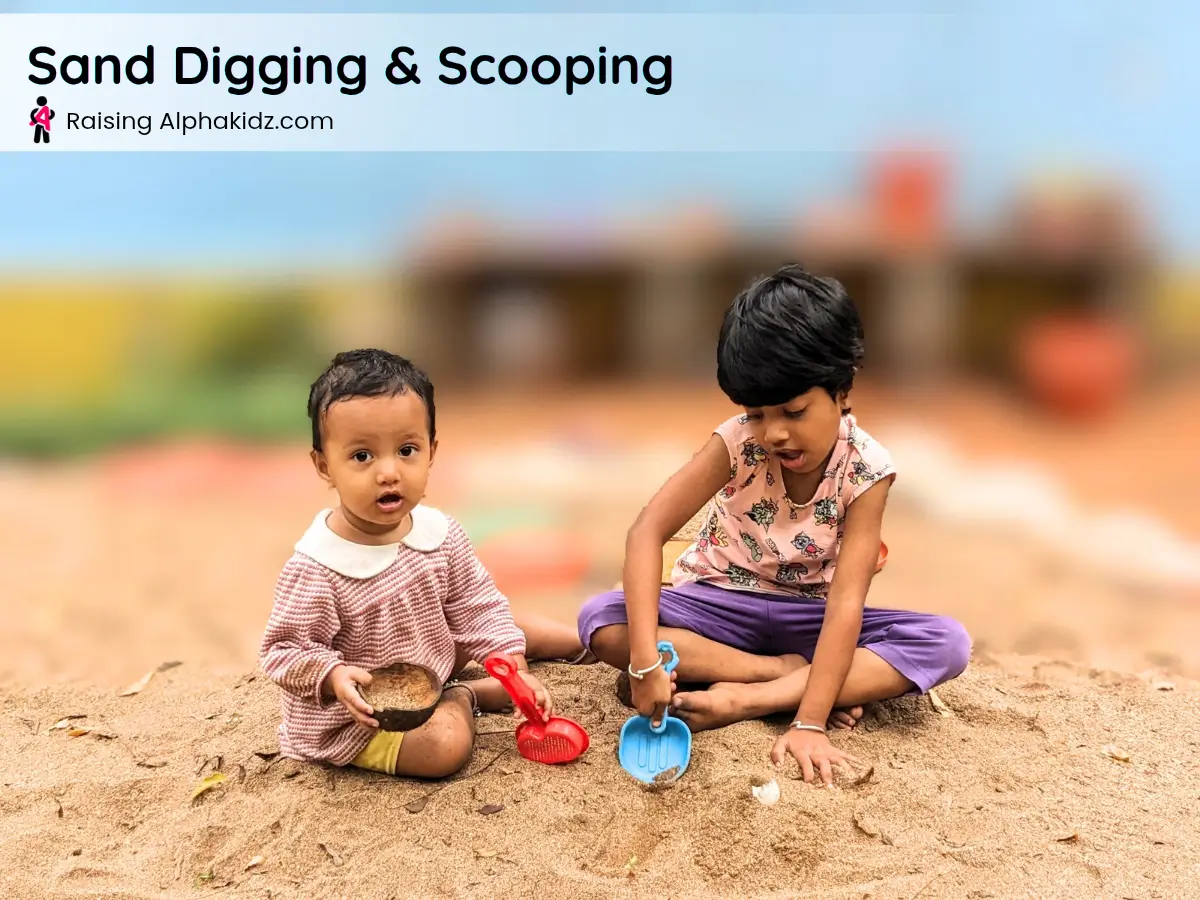
Sand play activities often begins with two simple actions: digging and scooping. Children don’t need instructions to start—it feels less like a learned activity and more like instinct. There’s something deeply natural about running hands or tools through sand.
To add more fun and extend the learning, provide simple sand play equipments and tools like shovels, buckets, measuring cups, and funnels. These encourage a range of new actions—digging, filling, pouring, and measuring. Each action builds fine motor skills, hand-eye coordination, and early math concepts like volume and comparison (full vs. empty, more vs. less).
Children can experiment with dry sand for smooth, flowing activities—watching it pour through a funnel or sift between fingers. To take the play further, mix sand with water. This creates a moldable, shapeable texture perfect for building, sculpting, and creative construction.
From instinctive scooping to intentional molding, sand play grows with the child—offering endless exploration through simple, sensory-rich actions.
Texture Experiments
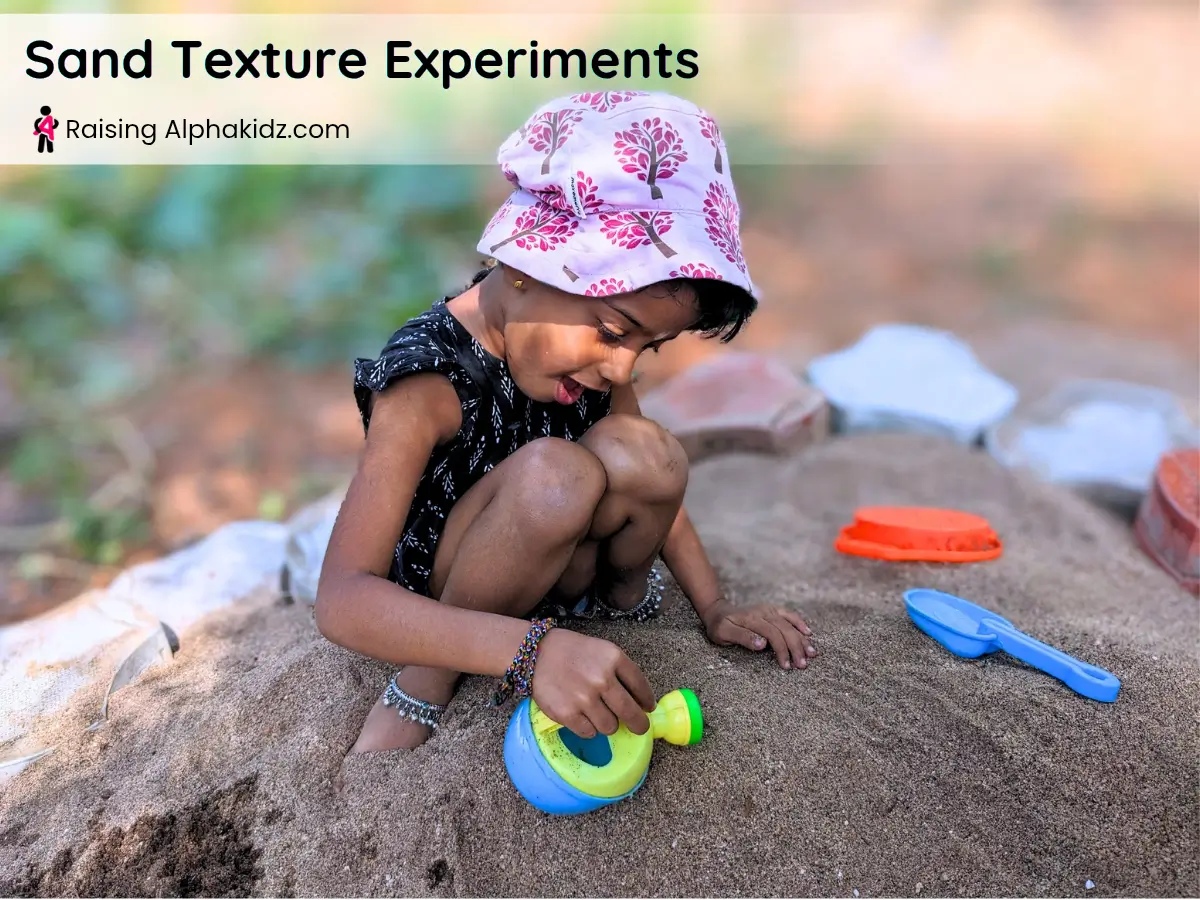
Dry sand is fun, but adding water takes play to the next level. Mixing water with sand turns sand grains into sand doh which unlocks open-ended adventures—molding shapes, building castles, and more.
These sand play texture experiments of making sand dough or Kinetic sand aren’t just play. They teach cause and effect, problem-solving, and sensory integration.
From sandy fingers to proudly lopsided castles, texture play invites children to experiment, fail, adjust, and succeed—all in a single afternoon in the sand pit.
Sand Shapes & Molds
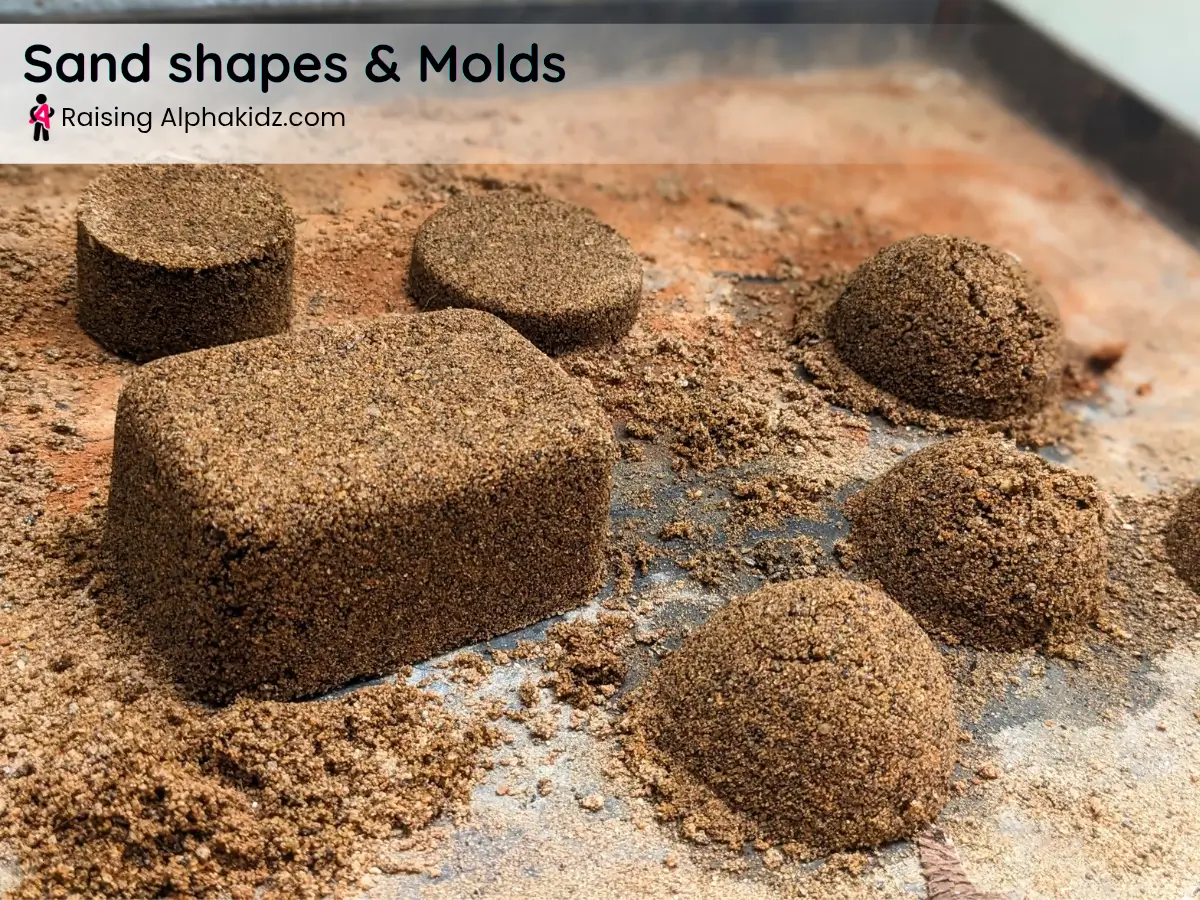
Once the sand is wet and ready, the real magic begins: making shapes.
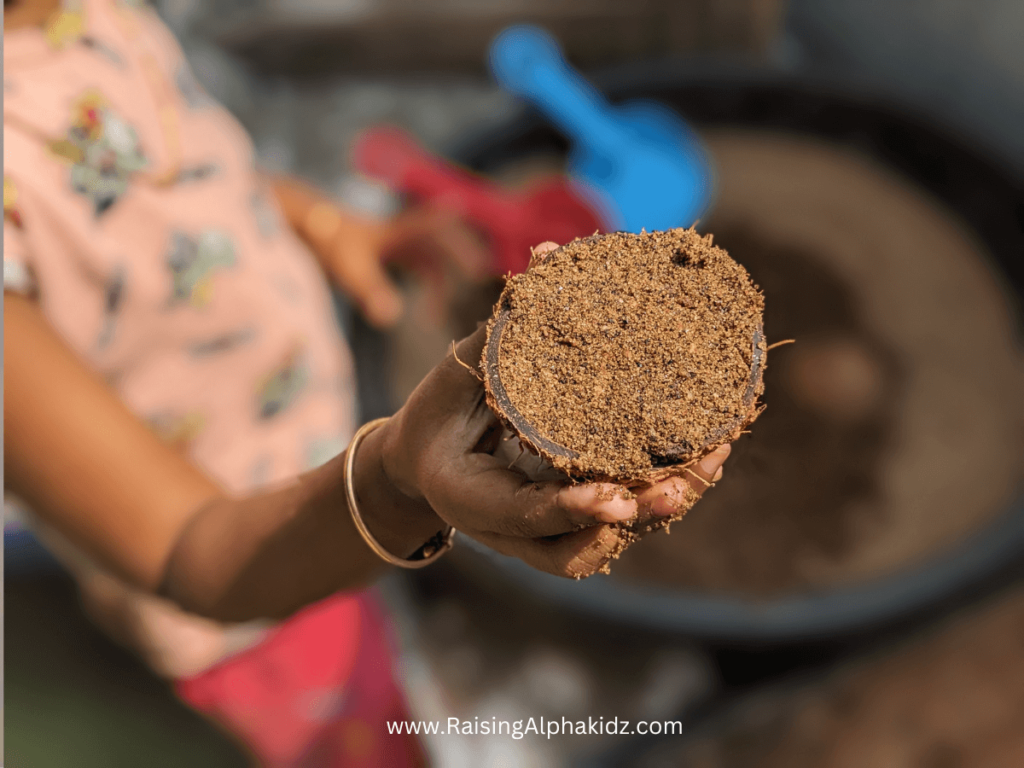
Everyday objects become molds—cups, buckets, bowls, or cookie cutters. Kids pack wet sand inside, flip it over, and lift carefully. Out comes a perfect tower, dome, or star.
The excitement of that first clean mold is hard to put into words. Their eyes widen. “Look! I made it!” They repeat the process again and again, refining each time.
In a child’s world, this is their first real art project. Not a coloring page with lines to follow. Not a copy of someone else’s drawing. But something born entirely from their own creative process: mixing sand and water, choosing a mold, packing it just right, and revealing a shape they alone brought into existence.
Related Posts: Exploring Sand & Shapes: A Sensory Sand Play Activity
No right or wrong. Just the joy of making, and the quiet pride of saying, “I did that.”
Sand Play Footprint Caves
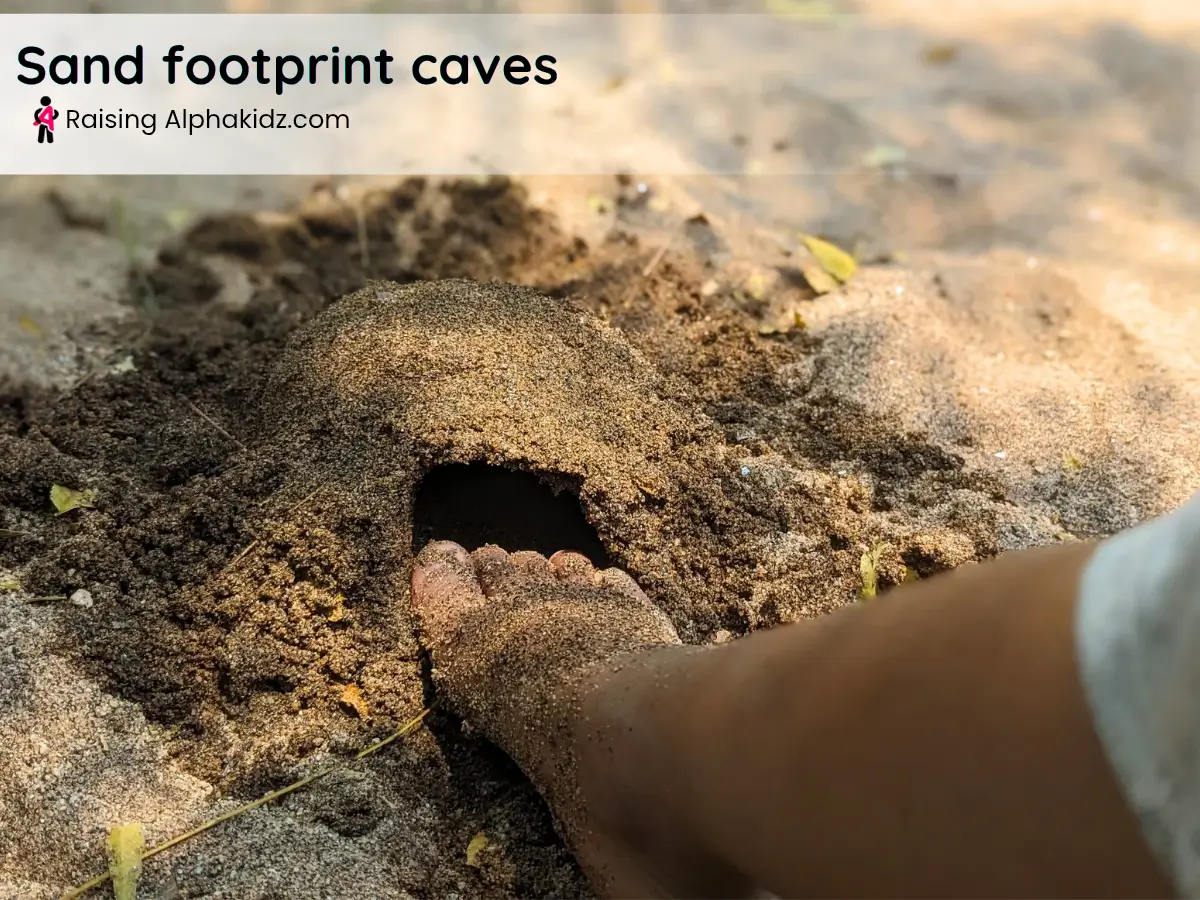
When kids get wet sand, their first instinct is to feel it—with hands, then feet.
Hands soon get busy mixing and digging, but legs become part of the play too. A child presses a foot deep into wet sand, then slowly pulls it out. What remains is a perfect hollow—a sand cave. A hideout for a toy, a finger, or just a cool dark hole to explore.
I know this because it was my favorite childhood sand play activity. Turning my own footprint into a cave, then a tunnel, then a whole underground world.
Sometimes the cave crumbled. Sometimes it was perfect. But it never mattered. The play never ended. You simply patched the sand and started over.
Wet Sand Bowls
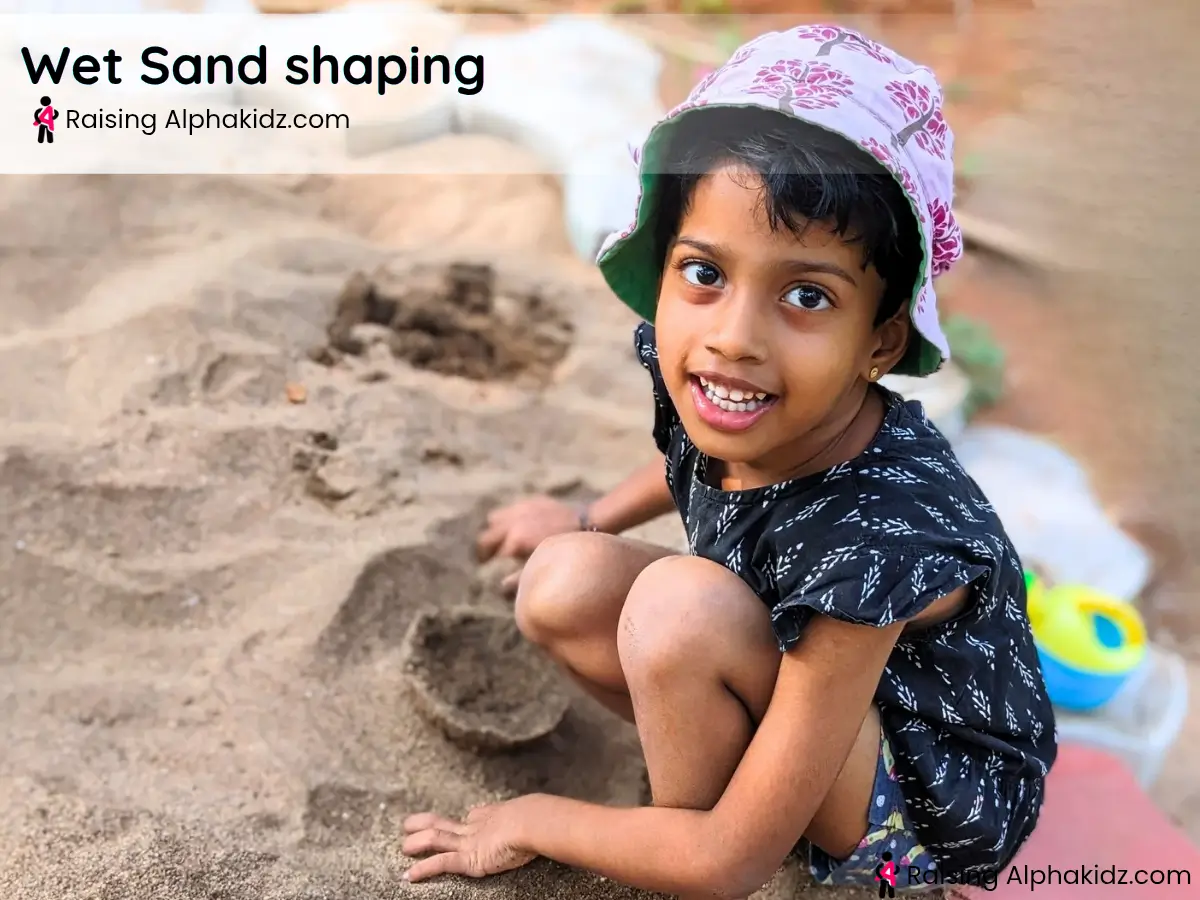
Here’s another exciting sand play activity: heap up a small sand mountain, poke a hole in the center, and pour water into it. Then, carefully remove the dry sand from around the edges. What forms is a bowl—much like pottery, but made entirely of wet sand.
The more water you add, the bigger and deeper the bowl becomes. Kids love watching the shape emerge, experimenting with just how large they can make their creation before it collapses. It’s messy, hands-on, and endlessly satisfying.
Mud Kitchen / Bakery Pretend Play
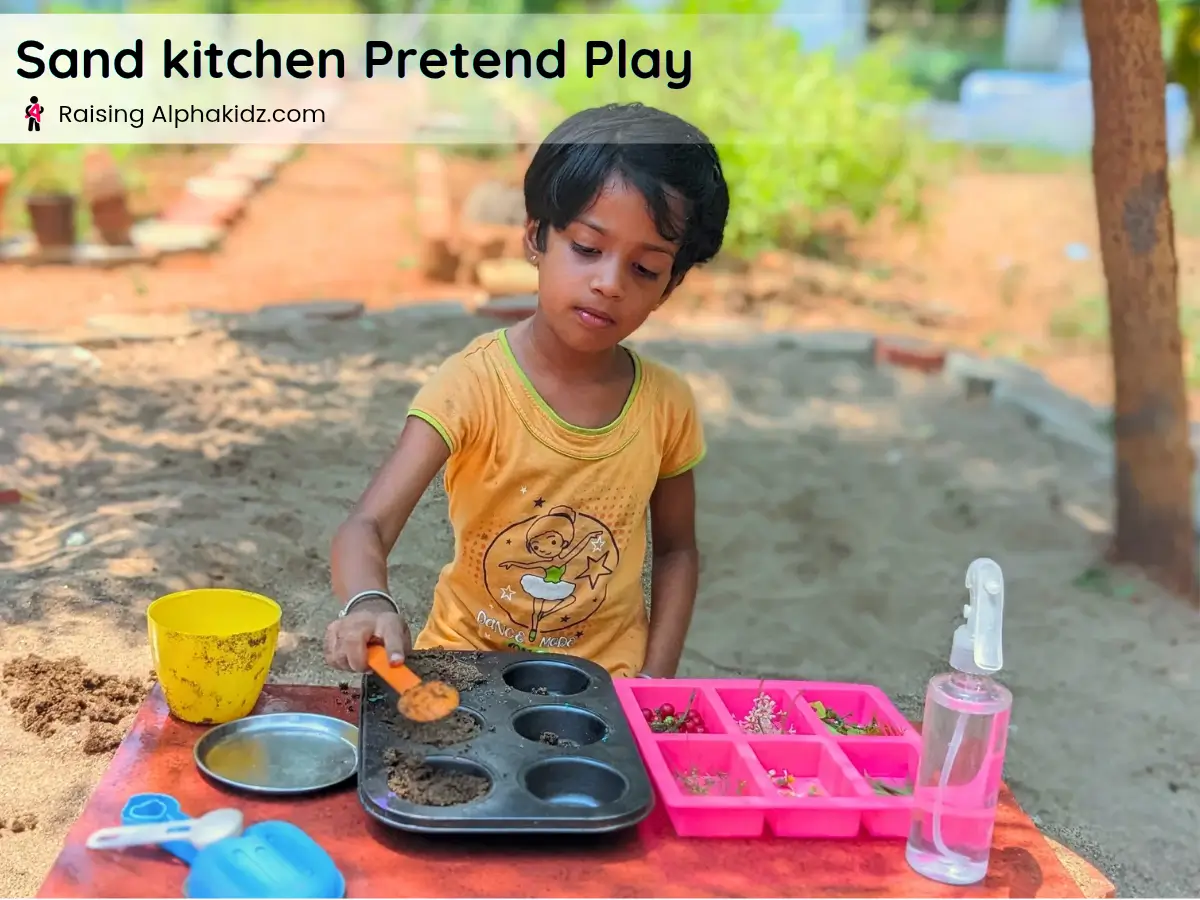
A mud kitchen turns wet sand into a world of culinary imagination. Here’s how each creation comes to life:
Sand Cakes
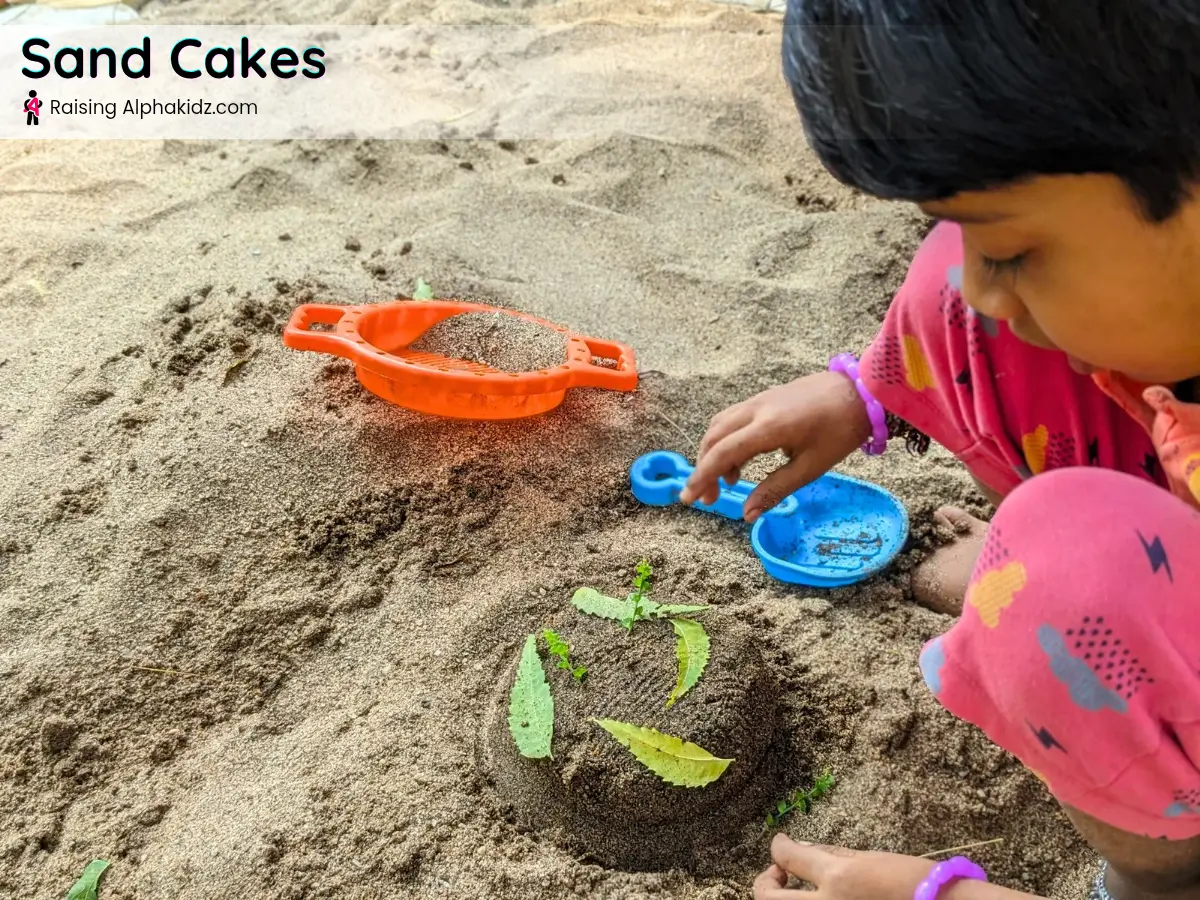
Kids pack wet sand tightly into a round bowl or bucket, then flip it over onto a flat surface. The moment they lift the mold, a perfect cake layer appears. They can stack multiple layers, each one smaller than the last, to build a tiered cake. Decoration follows: leaf sprinkles, flower petals as frosting, twig candles. A birthday cake is ready in minutes—no oven required.
Pretend Play Sand Pizza
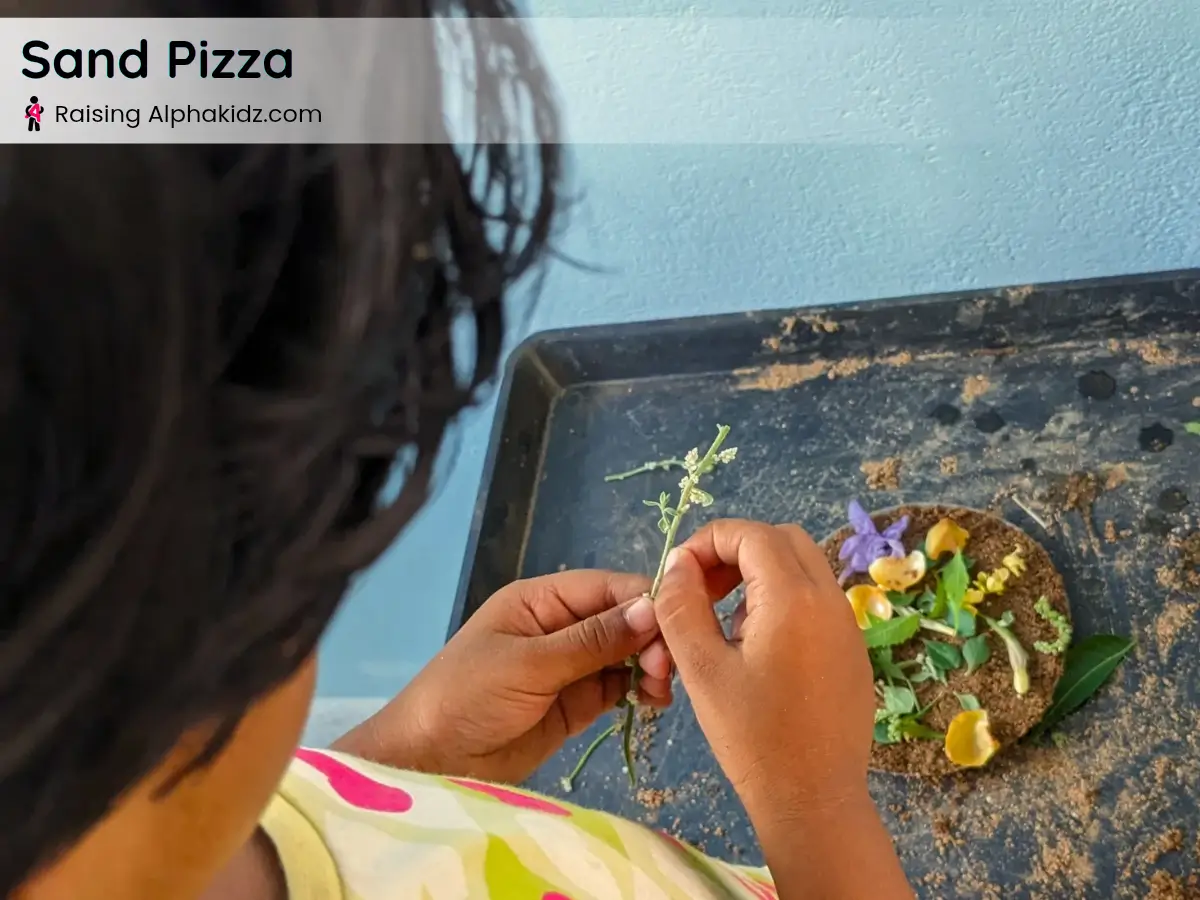
A shallow bowl or lid becomes the pizza pan. Kids press wet sand flat and smooth into a circle. They top it with pebble pepperoni, shredded leaf “cheese,” and small flower toppings. A stick slices it into wedges. Every pizza is unique, and every slice is served with pride.
Sand Cupcakes
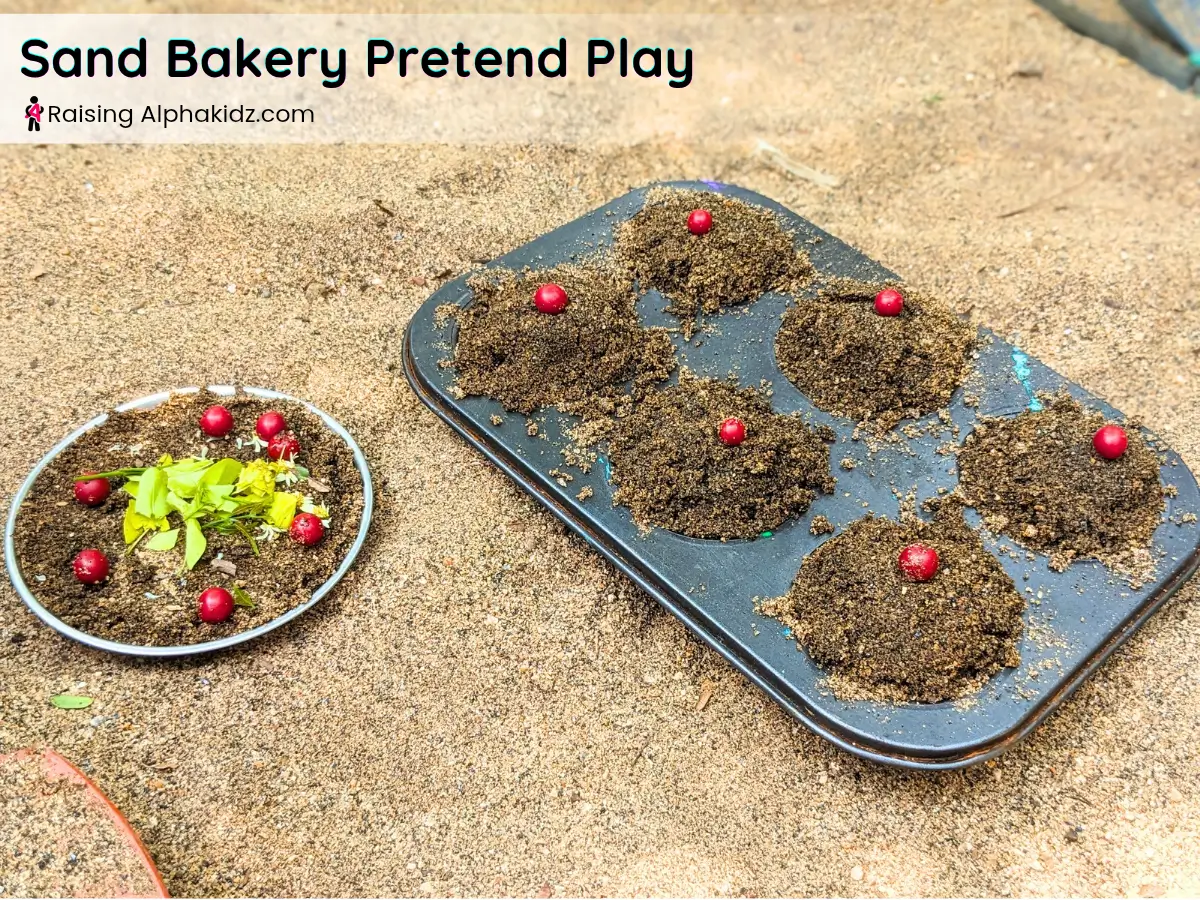
Small cups or muffin liners work best. Kids fill each with wet sand, pat it down, then flip or scoop to reveal a mini cake. A single leaf or berry on top becomes the cherry. Line up several, and you have a whole bakery tray of colorful, imaginary cupcakes.
Tea Cafe
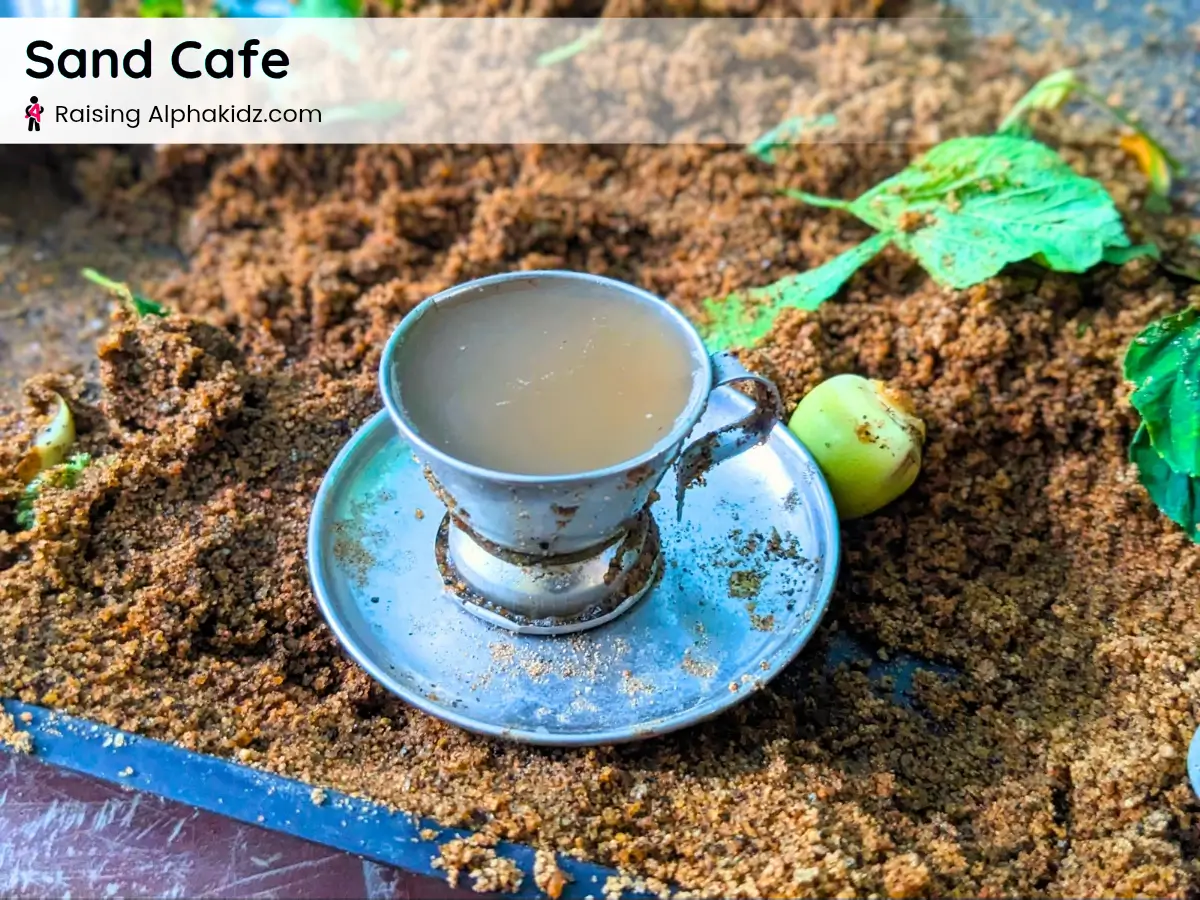
For drinks, kids mix sand with water in tiny cups or teapots. They stir with twig spoons and “pour” for their guests. A flat stone becomes a cafe menu. Leaves serve as pretend bills. They can host a tea party for stuffed animals or run a mocktail stand for friends. The cafe is always open, and the special of the day is anything they dream up.
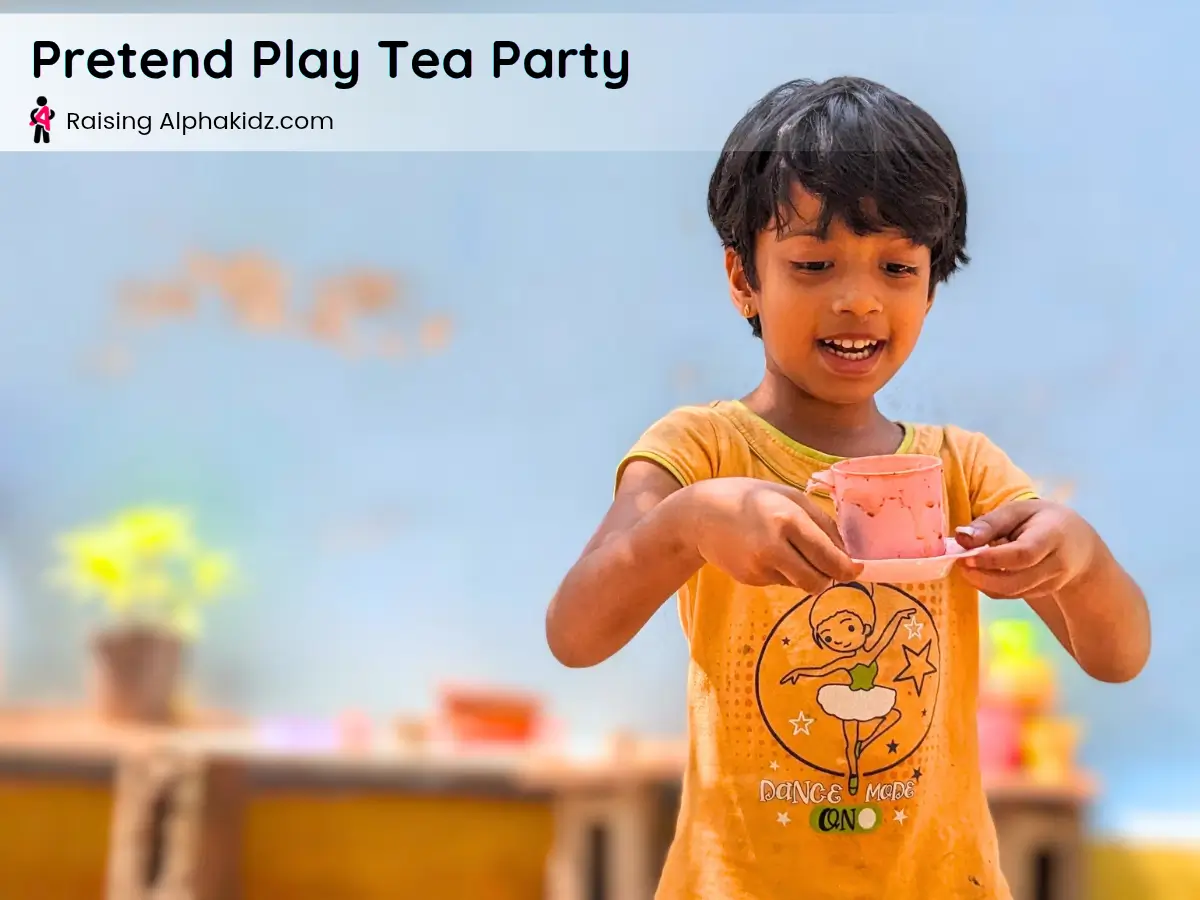
From layered cakes to tea parties and mocktails, every dish is made with one magic ingredient—sand—and unlimited imagination.
Sand Play Construction Site
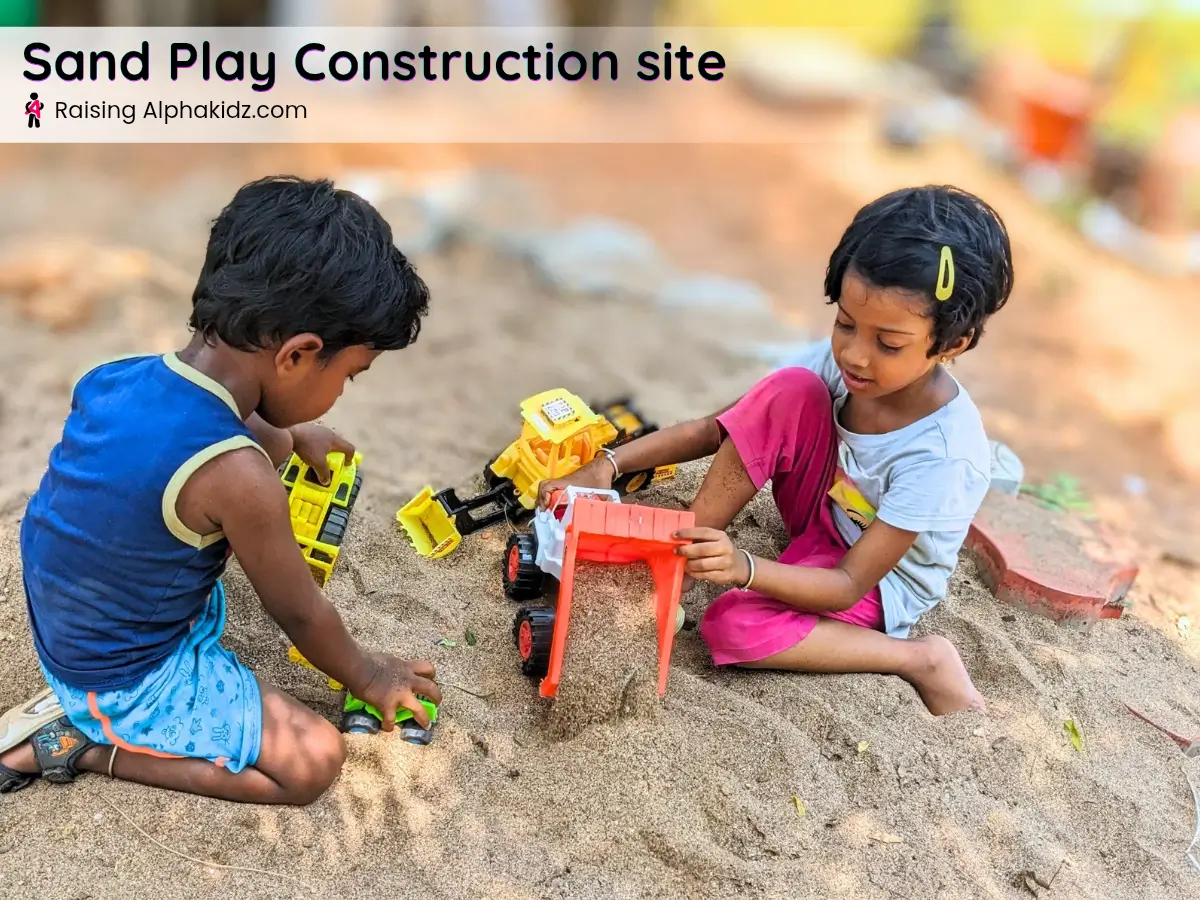
Next up—the sand play construction site.
Equip your little drivers with trucks, JCBs, and diggers, and get ready for some serious “labor.” A construction site is the perfect miniature pretend play of mechanical work.
Kids scoop up a handful of sand and imagine it’s a ton of earth. They drive their trucks a few feet across the sand pit, but in their minds, it’s kilometers away. And of course, there are the glorious sound effects—vroom, beep-beep, crash—all made proudly by mouth.
Load, haul, dump, repeat. Every scoop is a job done. Every truck movement is a mission accomplished. No heavy machinery required—just sand, toys, and a very busy imagination.
Sand Play Treasure Hunt
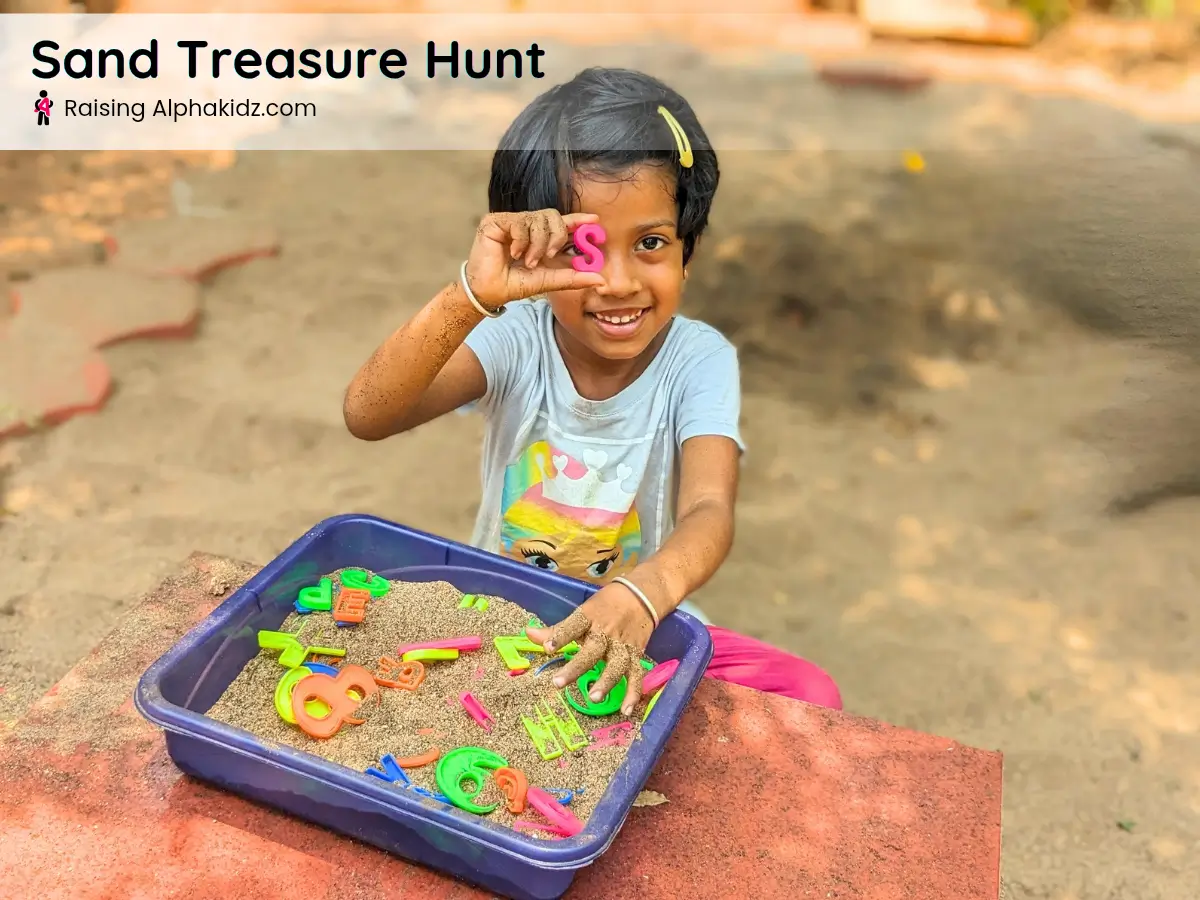
You can play hide-and-seek with sand too. Hide a toy, alphabet, or number in the sand tray and ask your child to find it—or let them hide it and demand that you search.
For a fun twist, make a long stretch of sand heap, hide a toy somewhere along it, and ask your child: “Is it at the start, middle, or end?”
But the real treasure isn’t the toy they find. It’s the fine-tuning of sensory skills and the regulation of their nervous system—benefits that add up with every single treasure hunt.
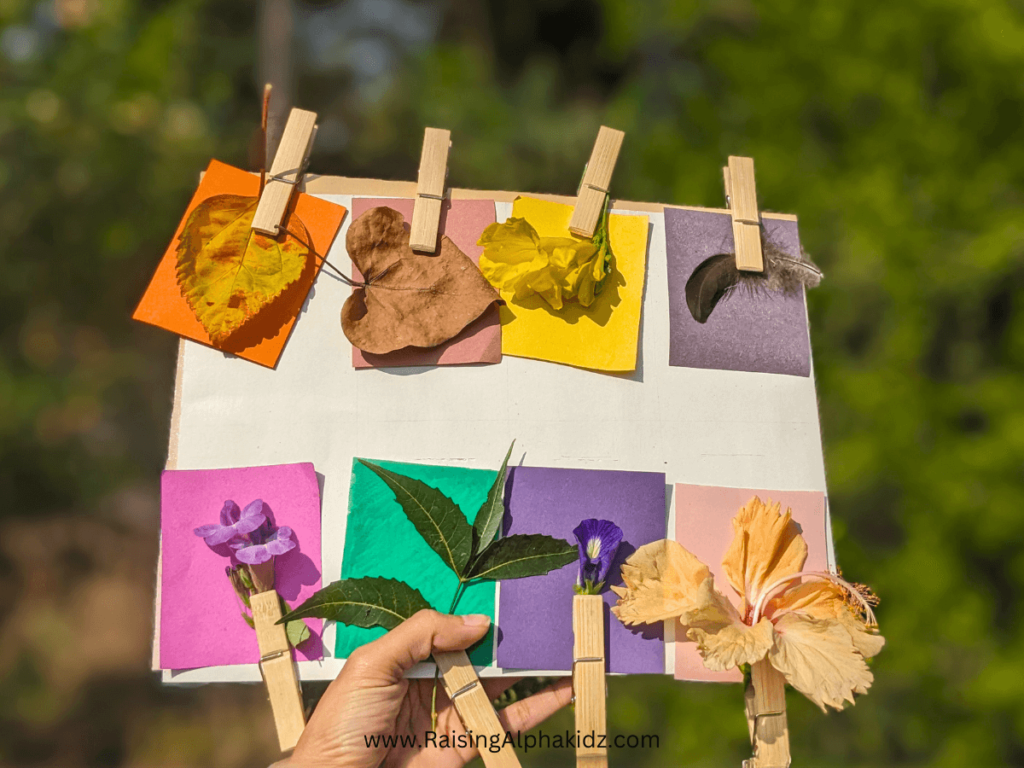
Related Posts: Nature Color Scavenger Hunt For Preschool
Sand Mandela Patterns
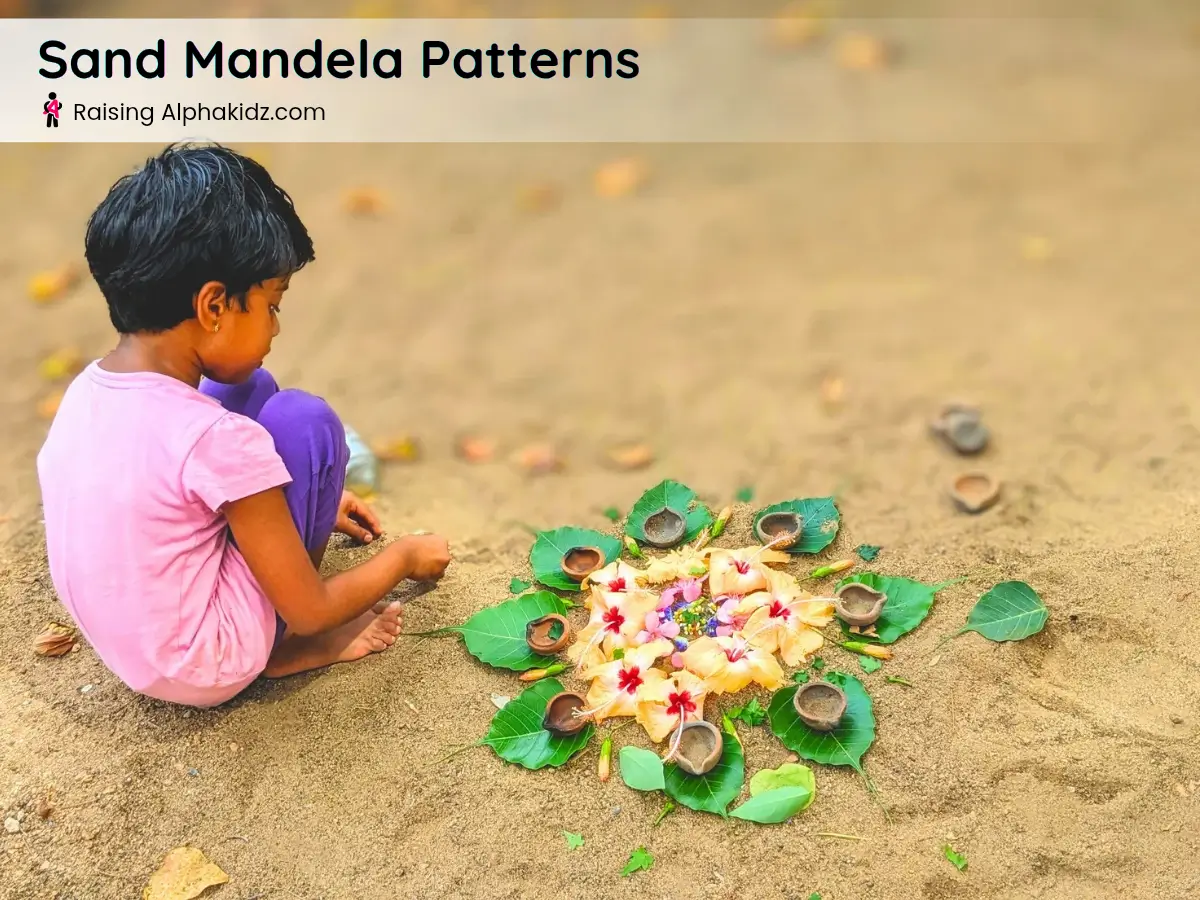
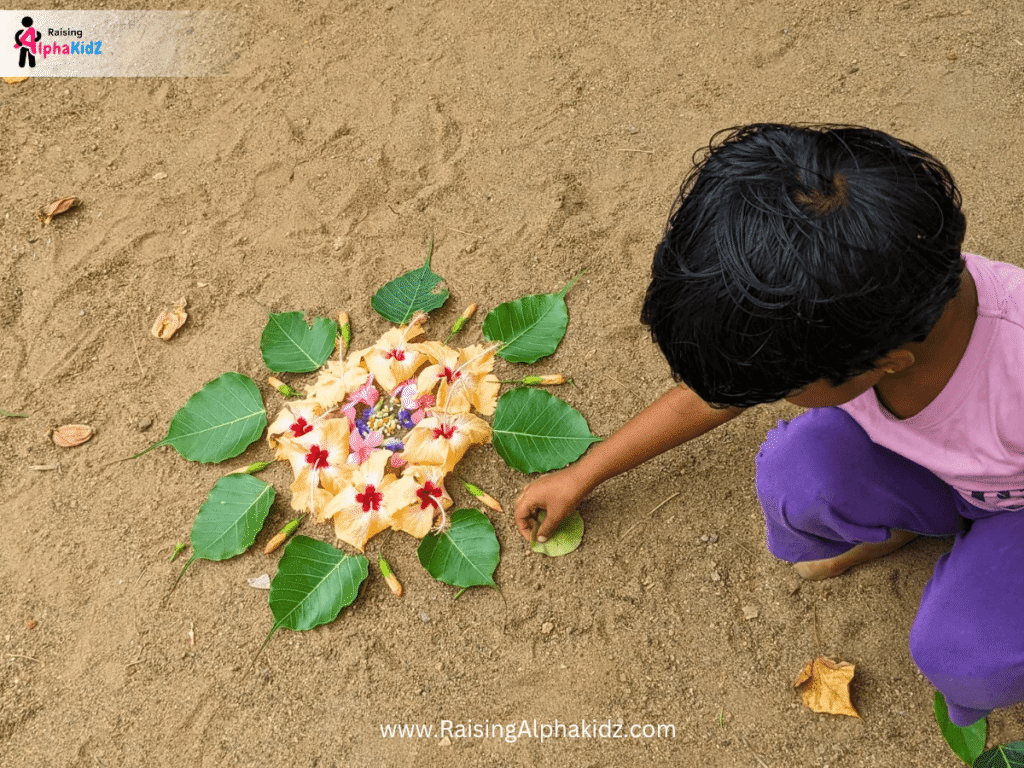
Sand play mandela pattern activity is a natural extension of a nature walk or scavenger hunt. Kids collect different natural items—stones, leaves, flowers, twigs—and arrange them on a flat sand surface to create beautiful mandala or rangoli patterns.
Guide them gently, but let their creativity lead. A circular design here, a radial pattern there. Each placement is a small decision, each finished mandala a little masterpiece.
It’s creative and sensory play rolled into one. Plus, as they touch sand and natural materials, grounding happens naturally. Creativity and calm—in one go.
Sand Play Miniature World
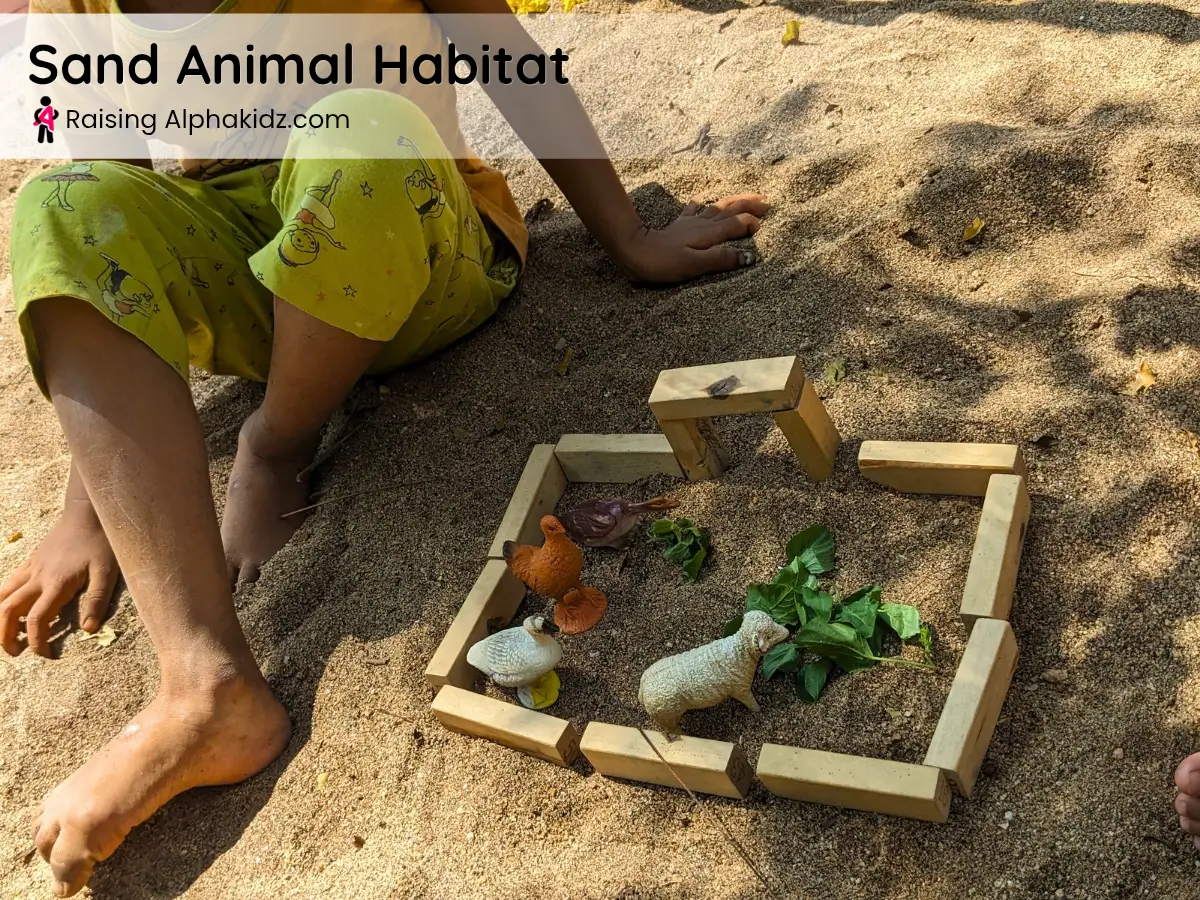
After all the creative making, now comes the creation of a tiny world on sand.
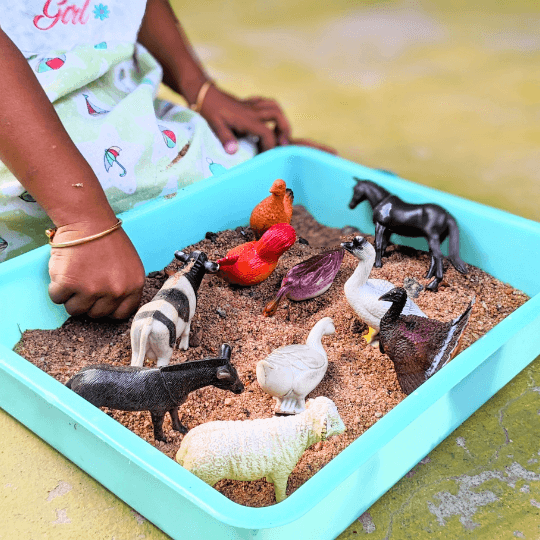
Grab some small animal toys. Then, let your child build a habitat where their animal can thrive. A fenced area for domestic animals. Small twig trees for wild animals. Or a desert village with huts, a few plants, animals, and a winding road leading home.
Any habitat—from deserts to fertile lands—is possible within the small space of a sandpit.
Here, my kid made a farm animal habitat with a fence and plenty of plants to feed on. The sand becomes their world. The animals, their story.
Sand Sketches & Writing
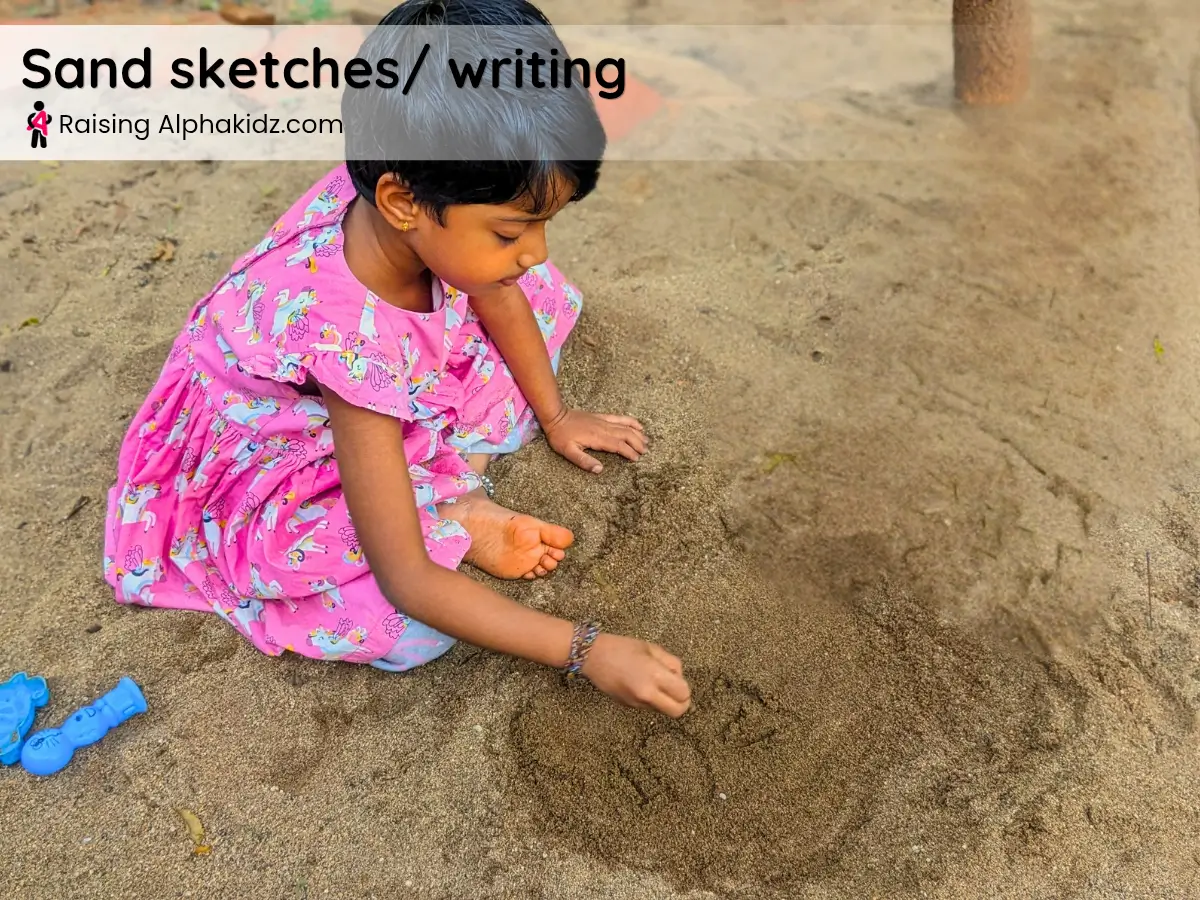
A sand pit isn’t just a sensory bed—it’s also a canvas for drawing and writing. Long before paper existed, early humans spread their imagination across sand. Kids today can do the same.
Give them a stick. They can write ABCs and 123s. Draw shapes, balls, happy faces—whatever they wish. No pressure. No erasers. Just pure expression.
What they gain? Fine motor skills and pre-writing skills, all without a pen or paper in sight. The sand forgives every mistake and celebrates every stroke.
Sand Glue Art
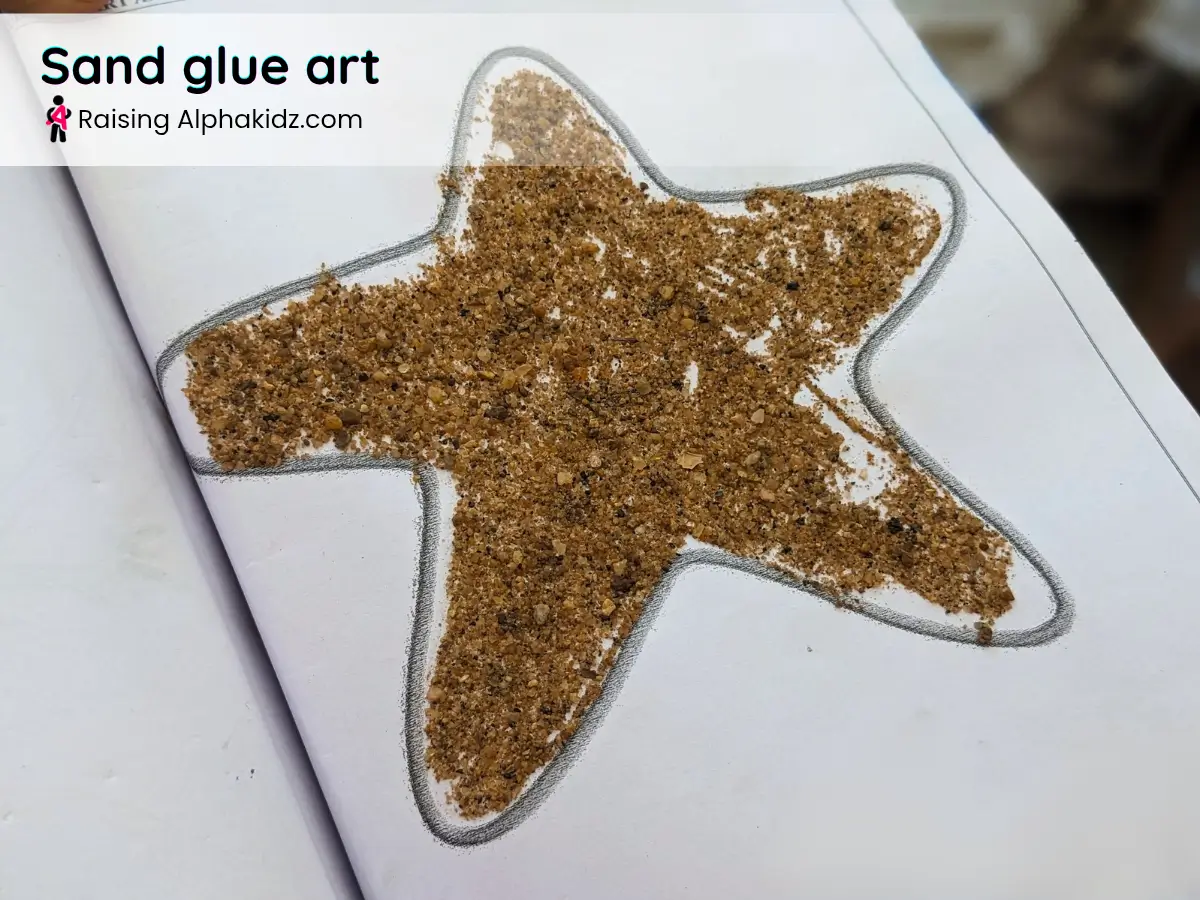
After all the hands-on fun in the sandpit, let’s move to paper art with sand grains and glue.
Here’s how: use glue to draw or paint the outline of any shape or design. Then, spread grains of sand over the glue and let it dry. The sand sticks to the glue strokes, creating a beautiful, textured, sand-painted look.
Here’s an exciting example—a starfish sand glue art, completely textured with sand strokes. Simple, messy in a good way, and absolutely satisfying for little hands.
Story Scene Setup on Sand Tray
Now, let’s move from free play to something quietly magical—storytelling.
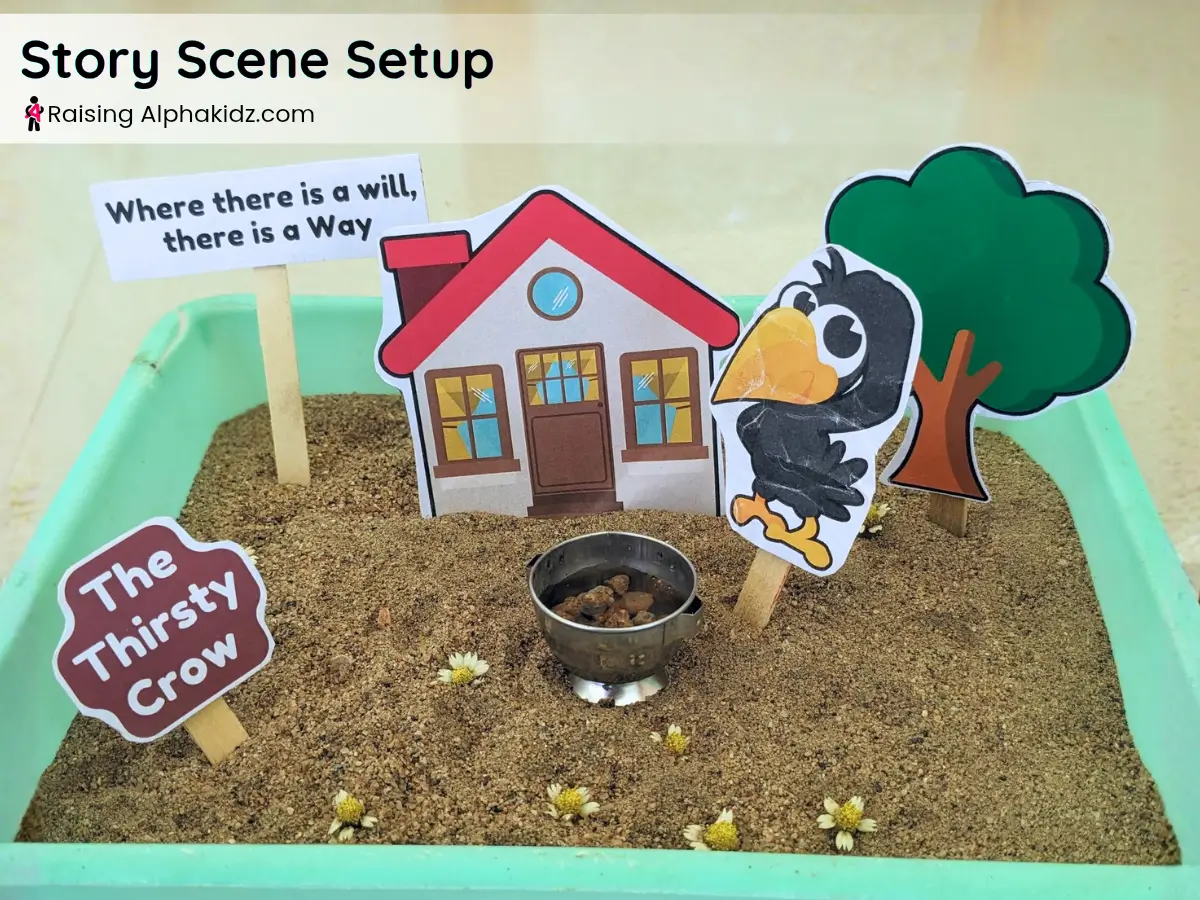
Take a sand tray or sandpit. Place a few toys or paper cutouts on the sand. Then begin…
“On a hot summer day, a thirsty crow found a pot with low water. His beak couldn’t reach it.”
Move a crow toy across the sand. Let your child feel the crow’s frustration.
“He dropped small pebbles into the pot. One by one… the water rose.”
Let your child drop real pebbles into a cup buried in the sand. Each plop raises the water—and their excitement.
“Finally, the crow drank and flew away happily.”
No screens. No pressure. In just minutes, your child absorbs vocabulary, a moral, emotions, and cause-and-effect.
Soon, they’ll want to tell their own stories. And that’s when the real magic begins.
More Earth Element Activities To Try Out
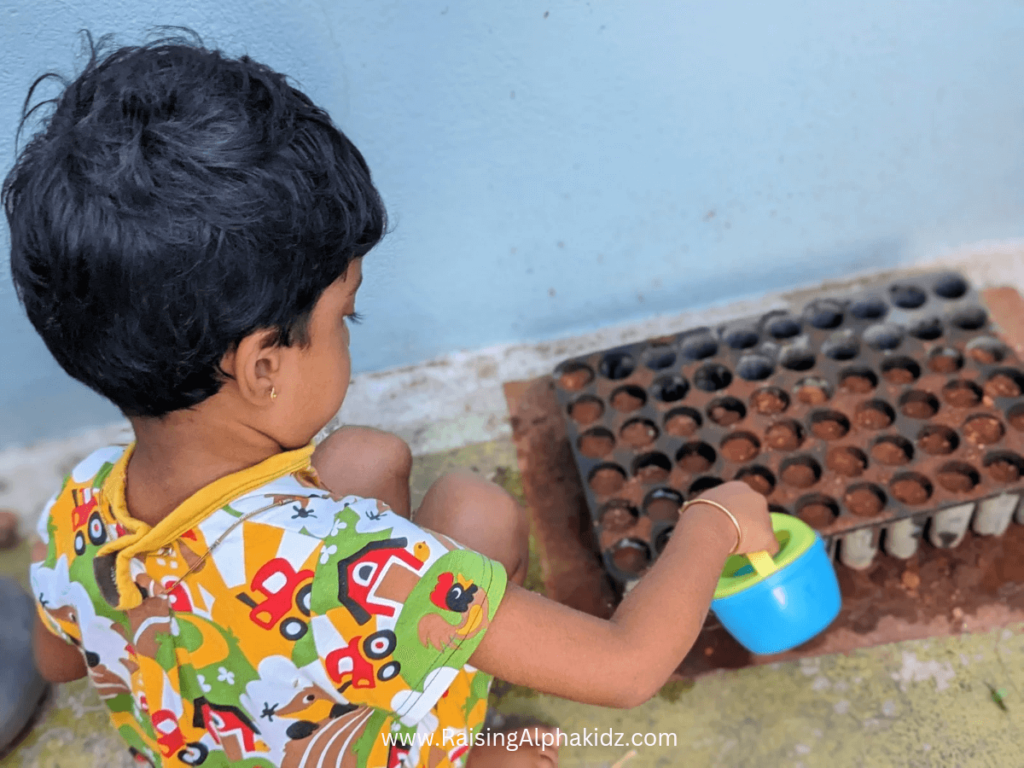
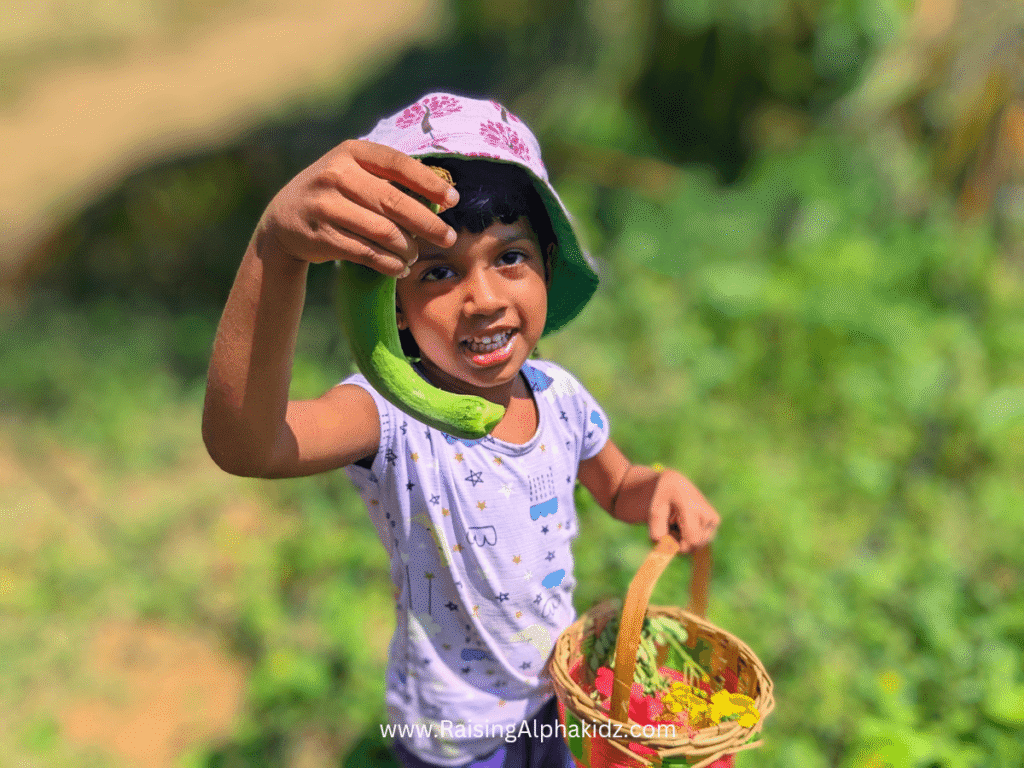
So go ahead, let the sand spill between little fingers and dreams take shape in tiny hands.
Let every scoop, every story, and every castle be a quiet celebration of childhood itself.
Because in a world that rushes, sand play whispers: slow down, create, and simply be.
And really, what could be more magical than that?