
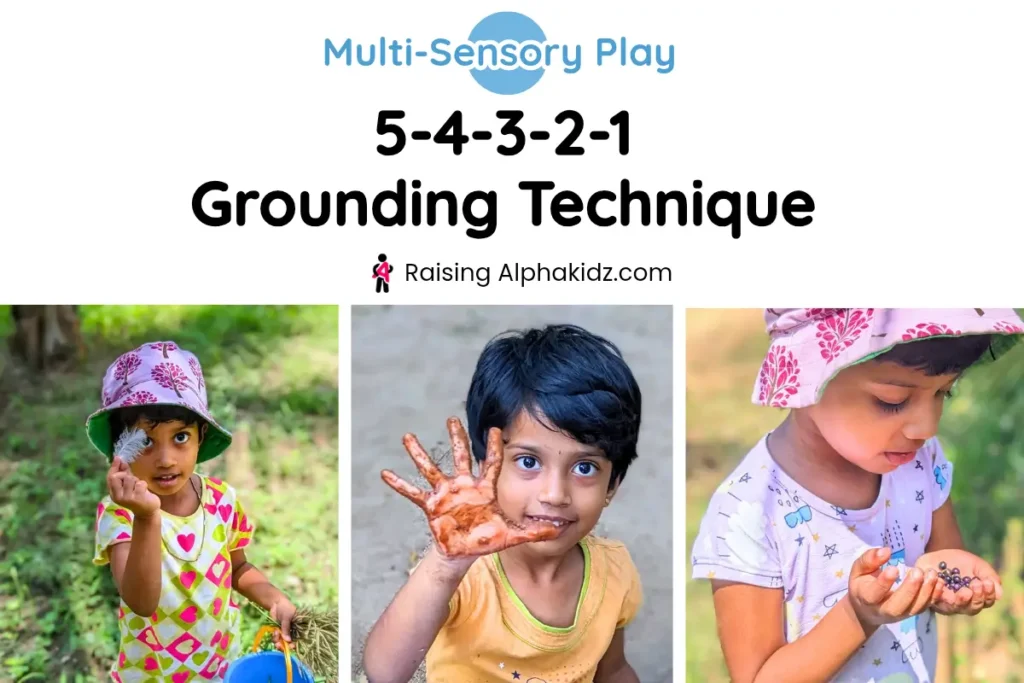
5-4-3-2-1 Grounding Technique for Kids to calm down, reduce anxiety and stress using 5 senses grounding
Key Takeaways
Element: Earth (Sensory)
Core Skill Developed: Emotional regulation through five-senses grounding
Supporting Skills: Body awareness, attention shifting, sensory processing, calm-response building
Age Group: Preschool (guided sensory naming), Kindergarten, Elementary (independent 5-4-3-2-1 walkthrough)
Life Connection: Learning to return to the present moment during overwhelm — building lifelong coping skills for anxiety, stress, and sensory overload using nature as the calming tool
Why Kids Need 5-4-3-2-1 Grounding Technique
As parents, we all know that we live with two versions of the same child.
One is calm, composed, and humble. That’s the child we love talking to, the one who makes us feel proud in ways words can’t quite capture.
But then there’s the other version.
This child throws tantrums, melts down over small things, and becomes irritable or even aggressive out of nowhere. And honestly, we often find ourselves wondering—where did these traits come from? They seem to appear out of thin air.
So we struggle. We try everything we can think of to bring them out of that anxiety and stress. Sometimes it works. A toy, a kind word, a quick hug—and just like that, they can cope up and come back to their calm selves
But other times? Other times anxiety and stress feels much harder to handle. Nothing seems to reach them. And we are left feeling exhausted and stressed.
Still, deep down, we suspect there must be a reason behind these meltdowns. And perhaps, there is a standard, gentle way to help our children gradually step out of that overstimulated zone—and even reduce how often those moments happen in the first place.
That is exactly what we are going to explore today.
So let’s dive in and understand how we use 5-4-3-2-1 method of grounding for reducing anxiety in kids and how we can practice grounding using 5 senses which helps to calm a child from that turbulent space , without losing our own calm in the process.
What is 5-4-3-2-1 Grounding Technique For Kids
The 5-4-3-2-1 grounding practice is a simple, gentle method of grounding exercise designed for children who feel anxious, panicked, or deeply overwhelmed. Instead of telling them to “calm down,” this method guides them develope coping skills by shifting their attention to the present moment—using nothing more than their own five senses.
Here’s how it works. The child pauses and looks around. Then, step by step, they notice:
- 5 things they can see
- 4 things they can touch
- 3 things they can hear
- 2 things they can smell
- 1 thing they can taste
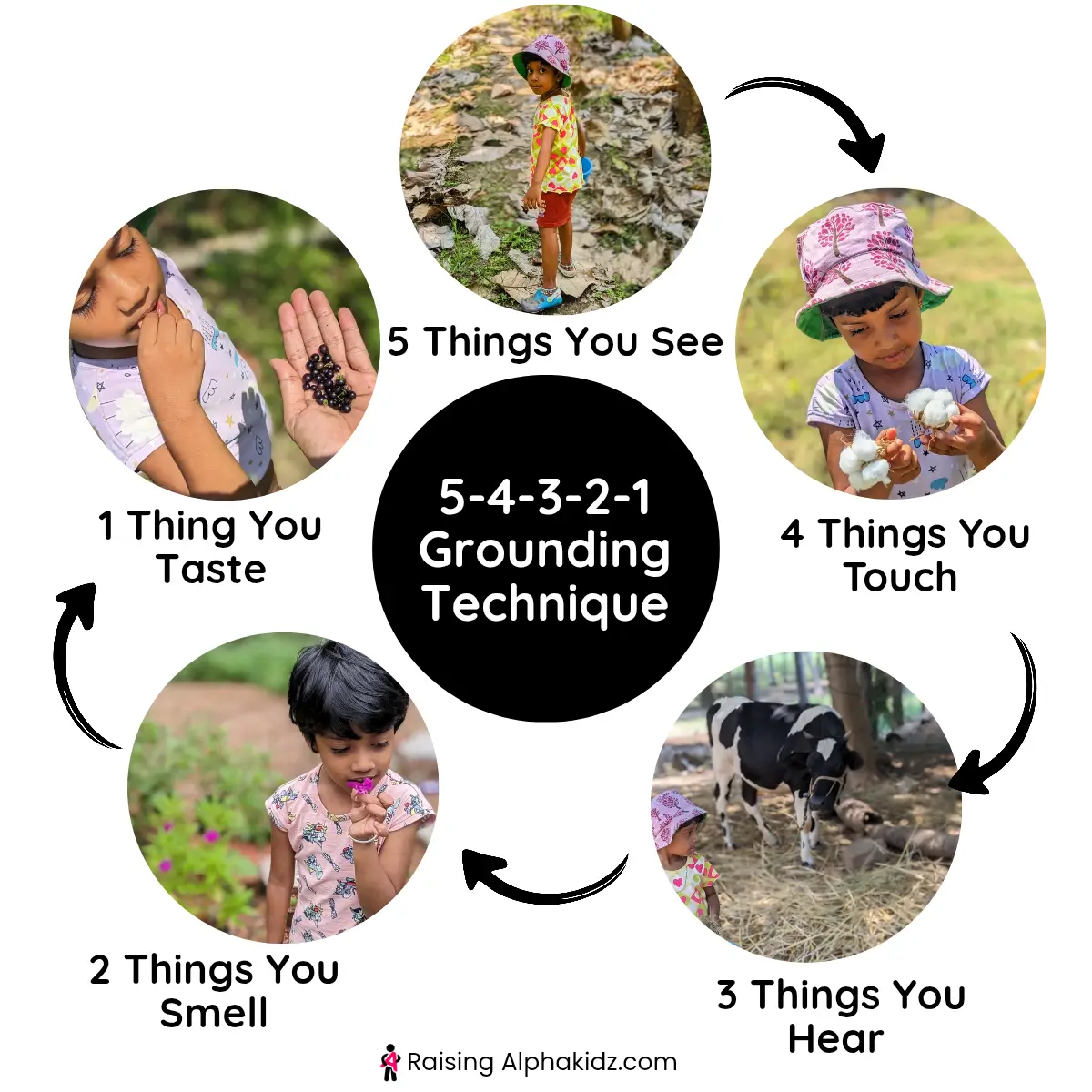
This 54321 grounding exercise for children interrupts the cycle of racing thoughts and gently pulls the child back into their physical surroundings, supporting emotional regulation and mindful presence. Kid’s anxious mind slowly steps aside, and the present moment takes over. No fighting. No force. Just a quiet return to here and now.
How 5-4-3-2-1 Grounding Technique Works
Basically as a humans we are evolved to shift between two brain states: survival mode and safe mode. When faced with danger, the body switches to survival mode, triggering a fight-or-flight response—either to fight the threat or escape from it. When safe, the body will be relaxed and calm.
In modern life, however, most “dangers” are mental or emotional stressors that we need to handle differently. For children, these “dangers” can include sensory overload from overstimulating environments like loud noises, excessive mobile phone or video game use, academic pressure, or parental pressure to enforce discipline.
A child’s nervous system may interpret these as minor harmless threats into danger and activate survival mode. This leads to fight-or-flight responses in nervous system—shown as aggressive behavior (fight) or withdrawal (flight).
In such situations, children need support to return to a calm safe mode. Because, when children are in survival mode, their thinking brain shuts down. The only responses they can access are to fight or escape the situation.
To support them, a grounding method called 5-4-3-2-1 grounding technique is used to shift the brain out of this shutdown state into a thinking state by engaging the five senses—seeing, hearing, touching, smelling, and tasting.
When children use their senses, they receive calming sensory input (especially from nature), which signals to the brain that the environment is safe.
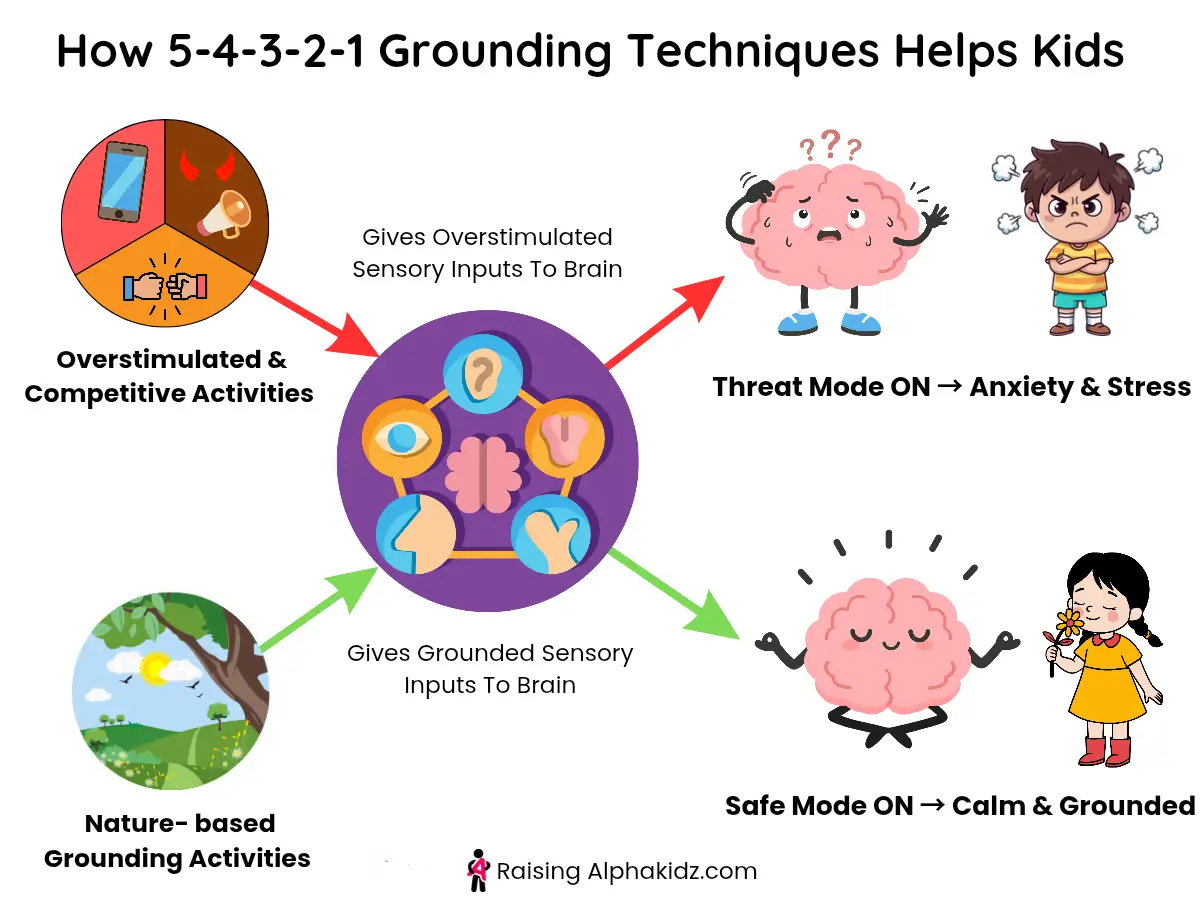
As the brain begins to feel safe, children become more calm, connected, grounded, and curious. This shift brings them back into a thinking mode—where they are more open to listening, understanding, and learning without resistance.
How To do 5-4-3-2-1 Grounding Technique
To do 54321 grounding technique, we should encourage kids to make use of all five of their senses in the following ways.
5 Things You See
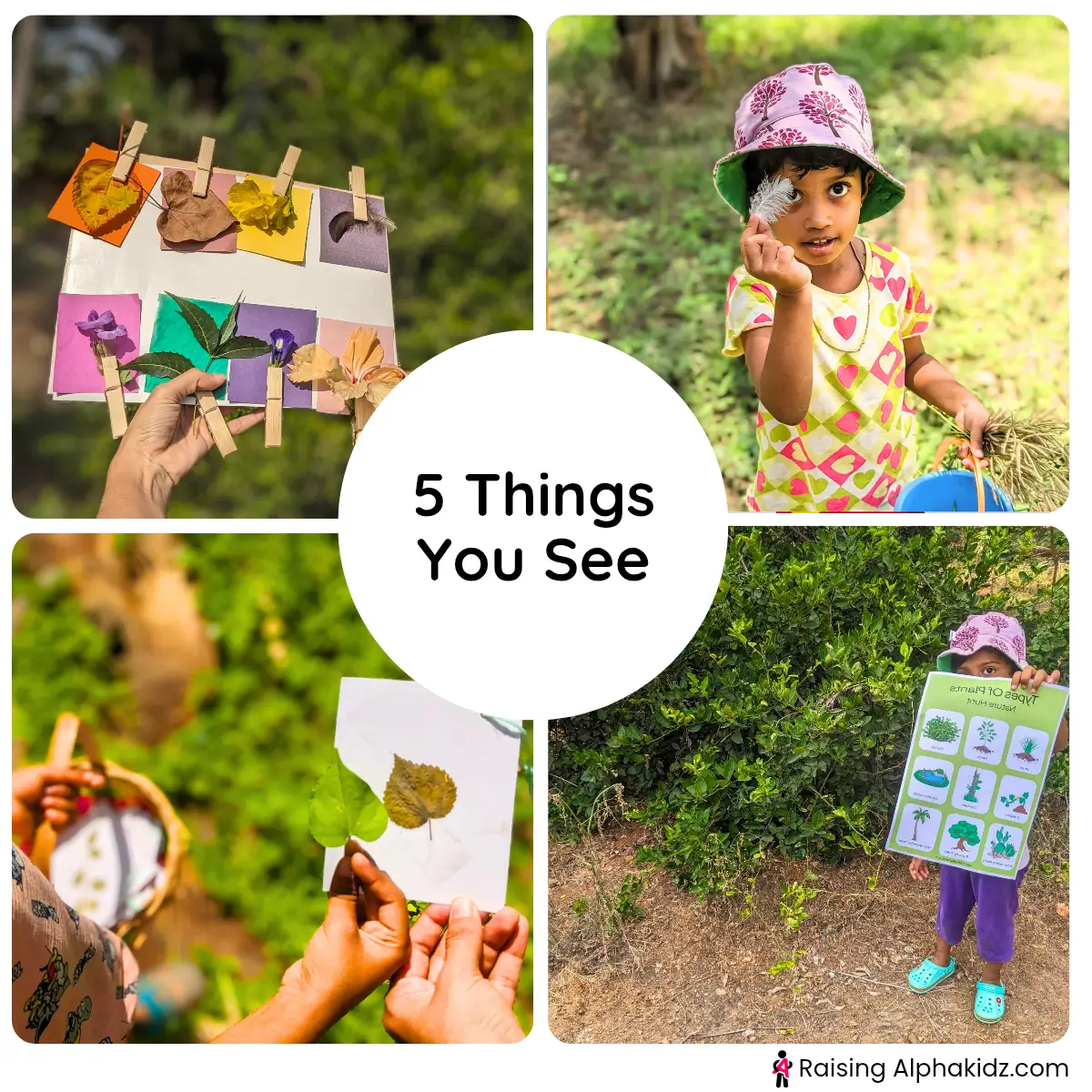
Begin with sight. Ask your child to find five things around them—a bright flower, a moving cloud, a fluttering butterfly, or any small detail they notice.
With each new thing their eyes land on, their mind steps further away from anxiety.
It brings their attention back to the present moment, sending a quiet signal to their nervous system: You are safe. Relax and switch to safe mode.
4 Things You Touch
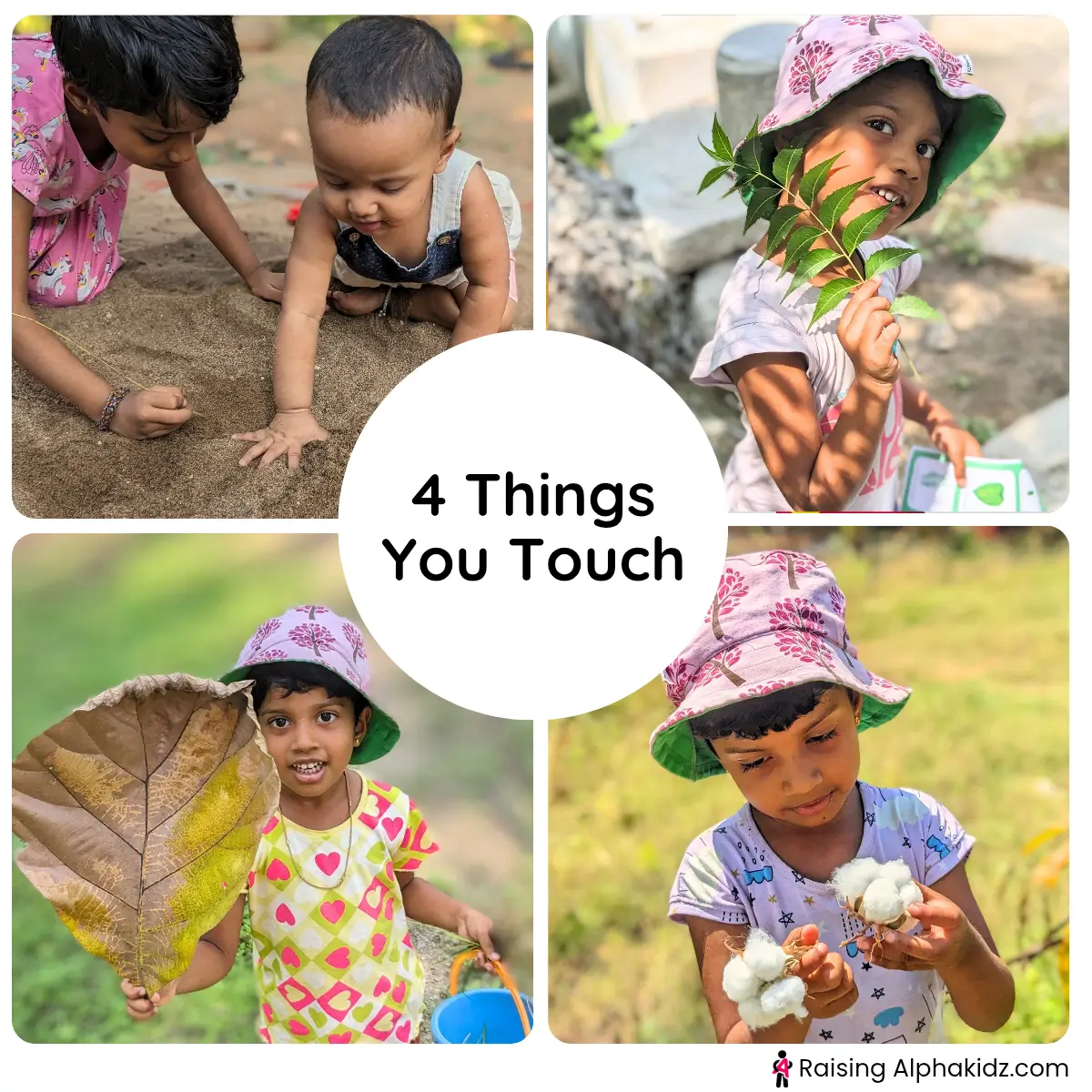
Next, guide your child to touch four different things—a soft cotton, a hard stone, rough dried leaf, course sand, a smooth stone.
As their fingers explore each texture, their sensory nervous system wakes up and begins receiving real, physical input from the environment. Those inputs send an indirect signal to the brain: There is no danger here. It is safe.
3 Things You Hear
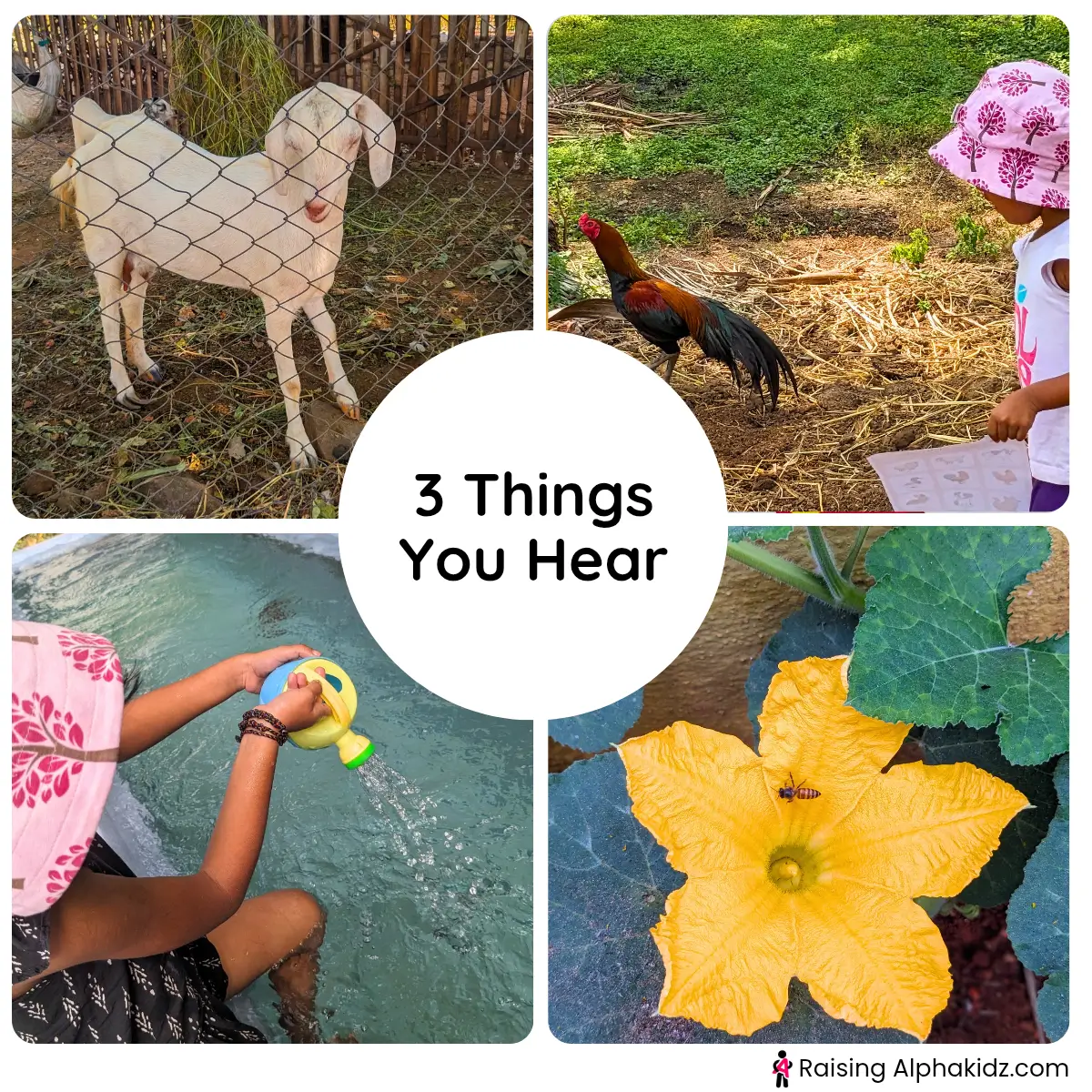
Now, ask your kid to listen for three sounds in the environment — a sound of animals, birds chirping, leaves rustling in the breeze, or the distant hum of insects.
When the mind picks up familiar, everyday sounds, it reads them as signs of safety. No alarm. No danger. Calm behavior then quietly takes over—without the child ever consciously trying.
2 Things You Smell
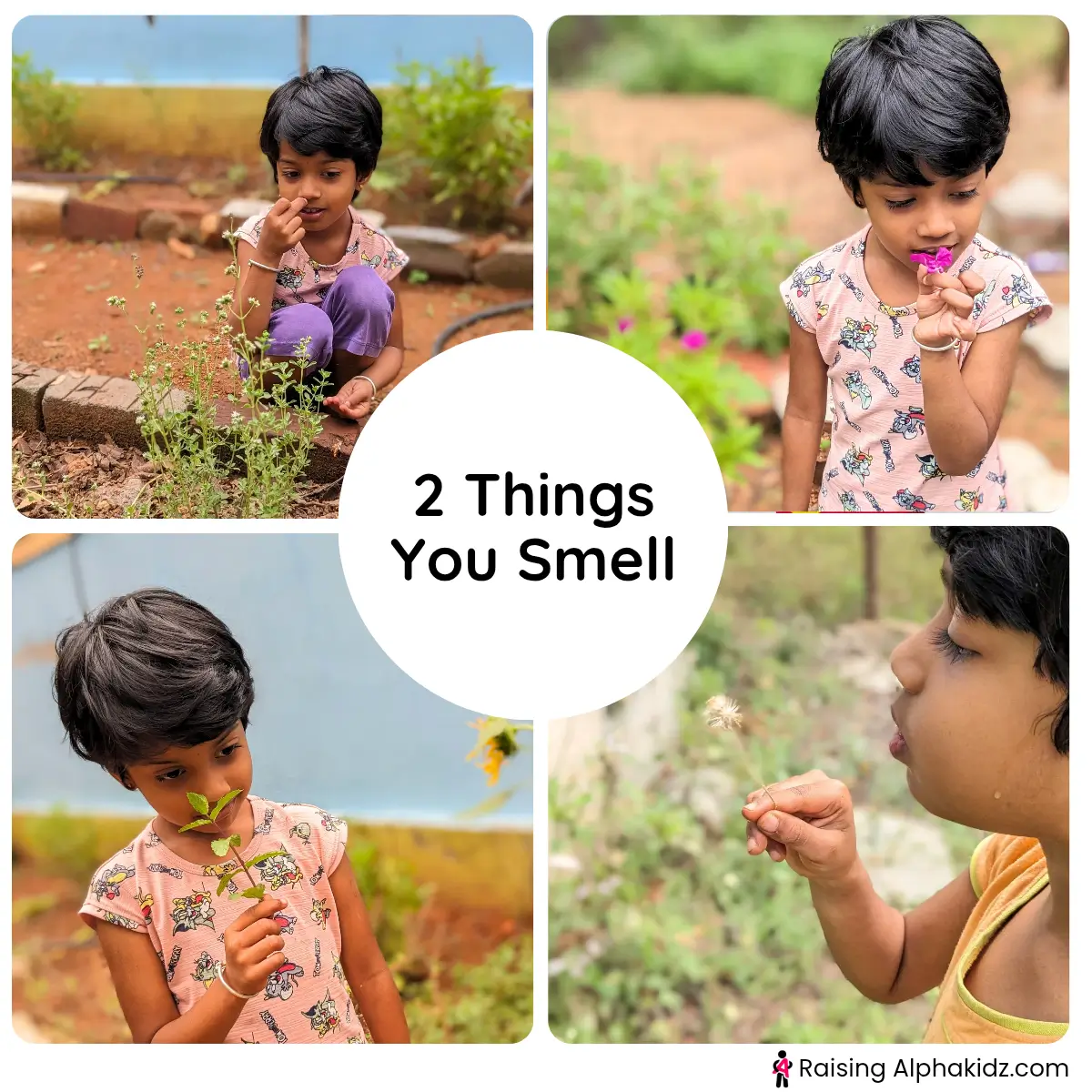
Let your kid try to smell any two prominent scents in the air — smell of washes clothes, a recipe smell from kitchen, or the earthy smell after watering plants.
A single familiar smell can redirect the entire brain. The mind lets go of threat mode, untangles its anxious knots, and slowly remembers that all is well.
1 Things You Taste
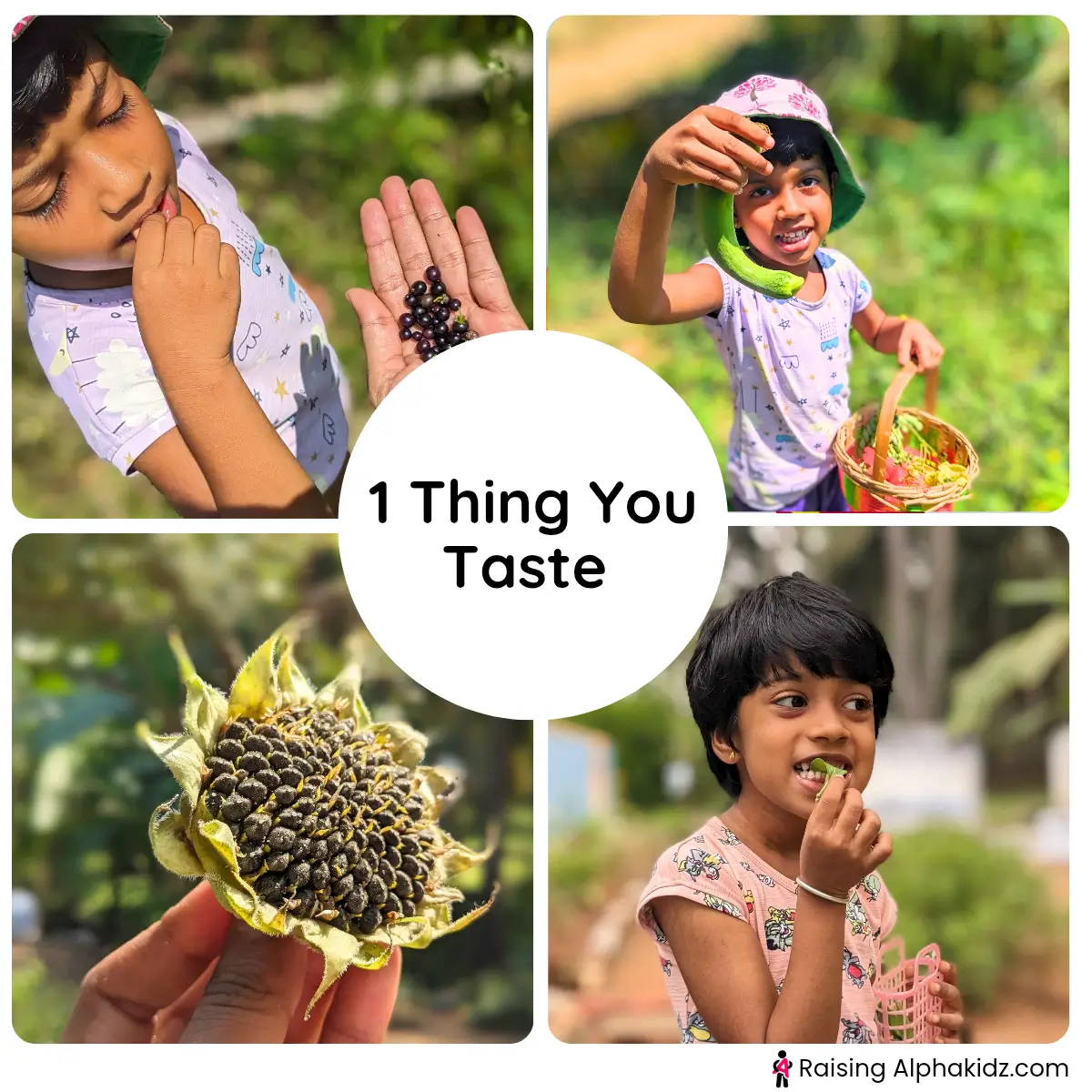
Let your child sip water, taste a fruit, or feel the fresh air on their tongue after a deep breath.
As soon as the taste buds wake up, the threat dissolves. Calmness rushes back in.
5-4-3-2-1 Grounding Technique Poster For Kids – Free Download
Get your free 5-4-3-2-1 Grounding Technique poster to make the exercise easier and more engaging for children.
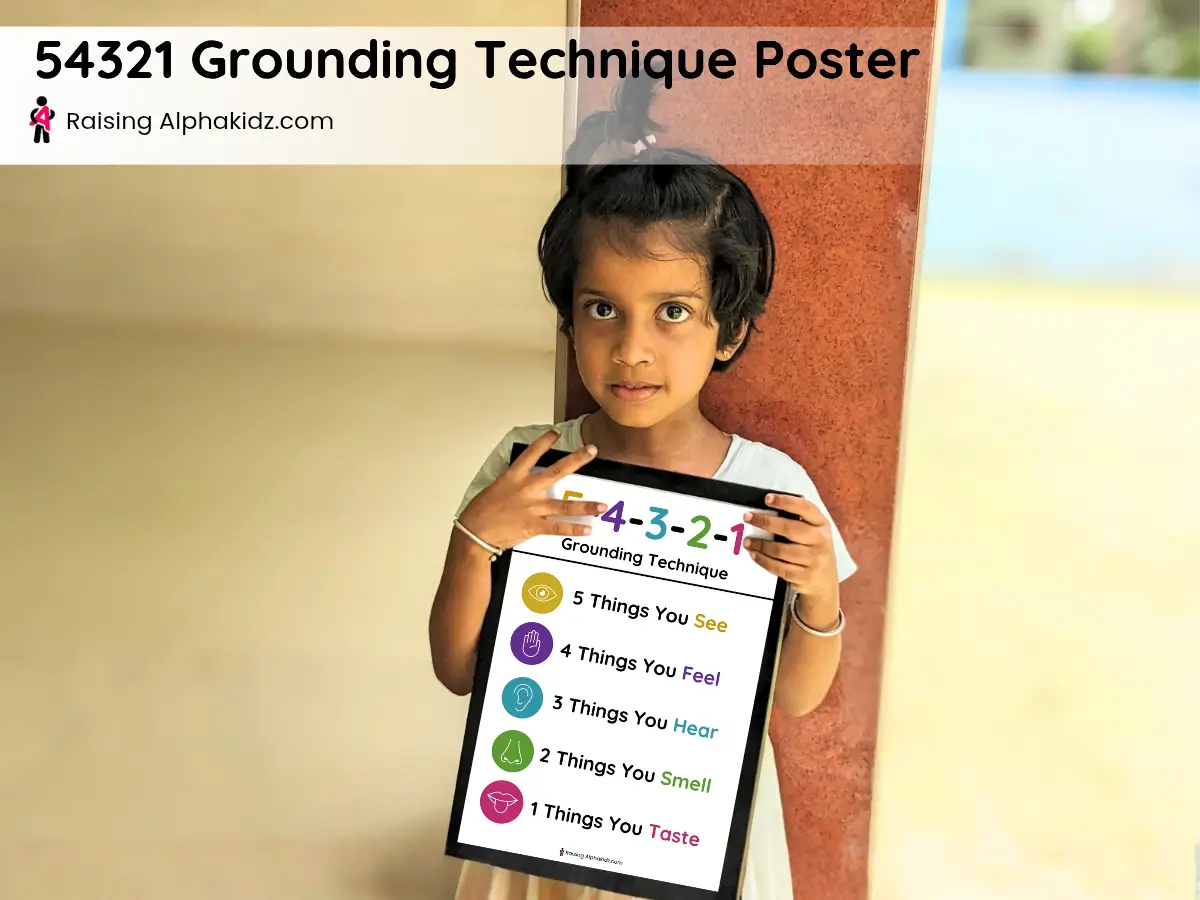
A colorful PDF version gives kids a simple visual reminder they can use at home, in classrooms, or during stressful moments. Click download button to get access to the free printable pdf.
Additional Activities Related to 5-4-3-2-1 Grounding Technique
5 Things You See
Nature Walk Activities
A nature walk can become a living expression of the 5-4-3-2-1 grounding method. Instead of asking children to formally “name five things you see,” the environment itself invites curiosity and discovery.

Related Post: 10+ Nature walk activities for kids
When children explore outdoors, they naturally notice colors, shapes, textures, and movement. Grounding happens organically through play. Rather than feeling like they are practicing a structured technique, children feel like explorers observing and interacting with the living world around them.
Some of the Playful activities that naturally make kids notice things in nature are listed below.
Nature Scavenger Hunt
Invite children to find five different natural objects during the walk—such as a stone, a feather, a leaf, a twig, or a flower. This playful search mirrors the “five things you see” step of the 5-4-3-2-1 technique while encouraging curiosity and observation.
Nature Colour Hunt
Ask children to spot five different colors in nature. They might find green leaves, brown soil, yellow flowers, or a blue butterfly.
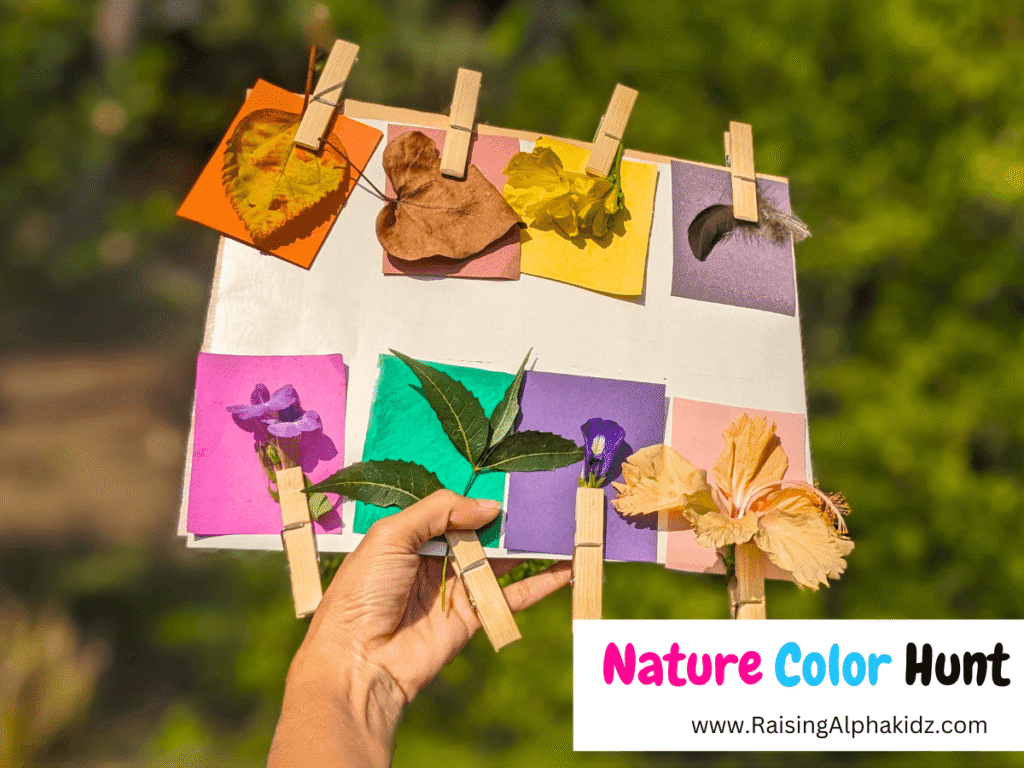
Related Post: Nature Color Scavenger Hunt For Preschool
This activity gently guides them to look closely at their surroundings and notice visual details, incorporating 54321 grounding technique in play.
Nature Leaf Hunt
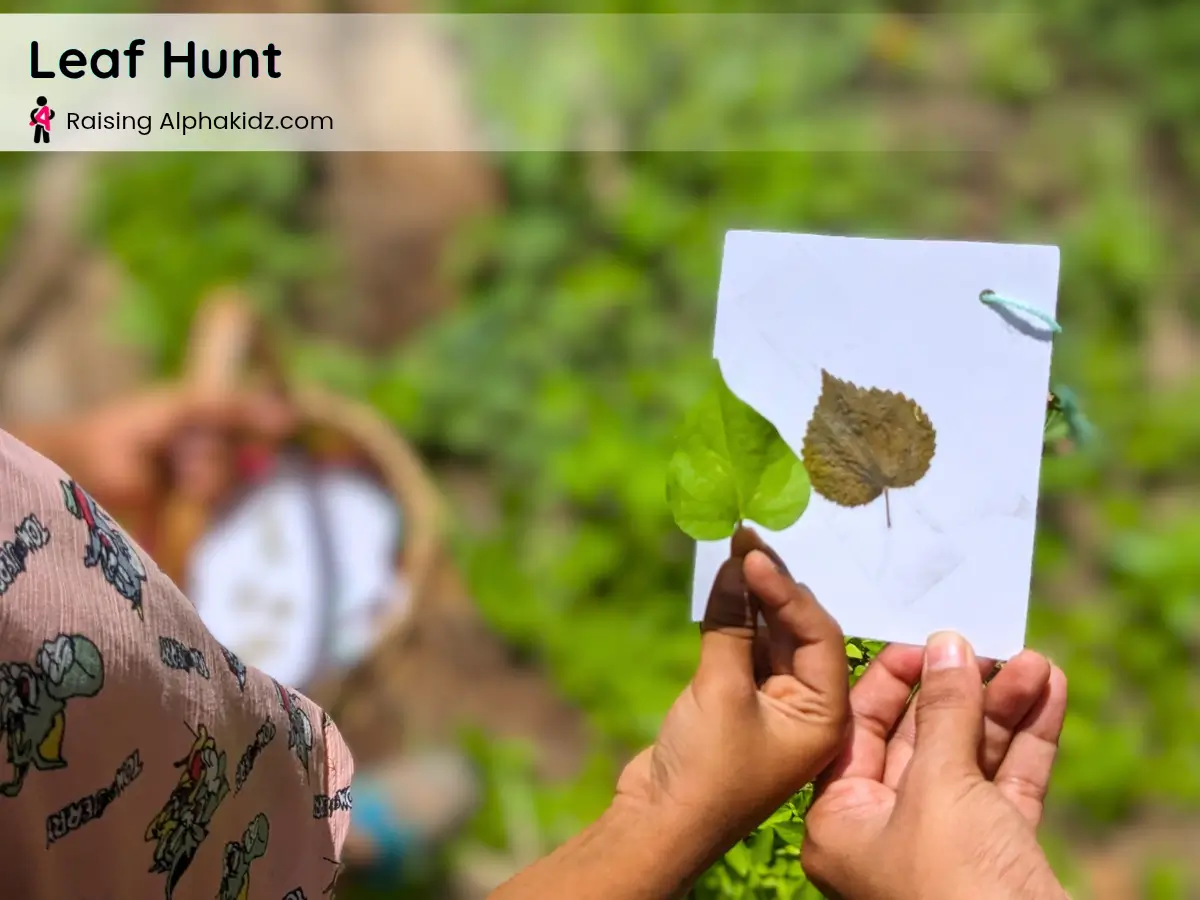
Children can search for five different types of plants—such as grass, shrubs, flowering plants, vines, or trees. This helps them slow down, observe shapes and structures, and become aware of the diversity of plant life around them.
Plant Types Hunt
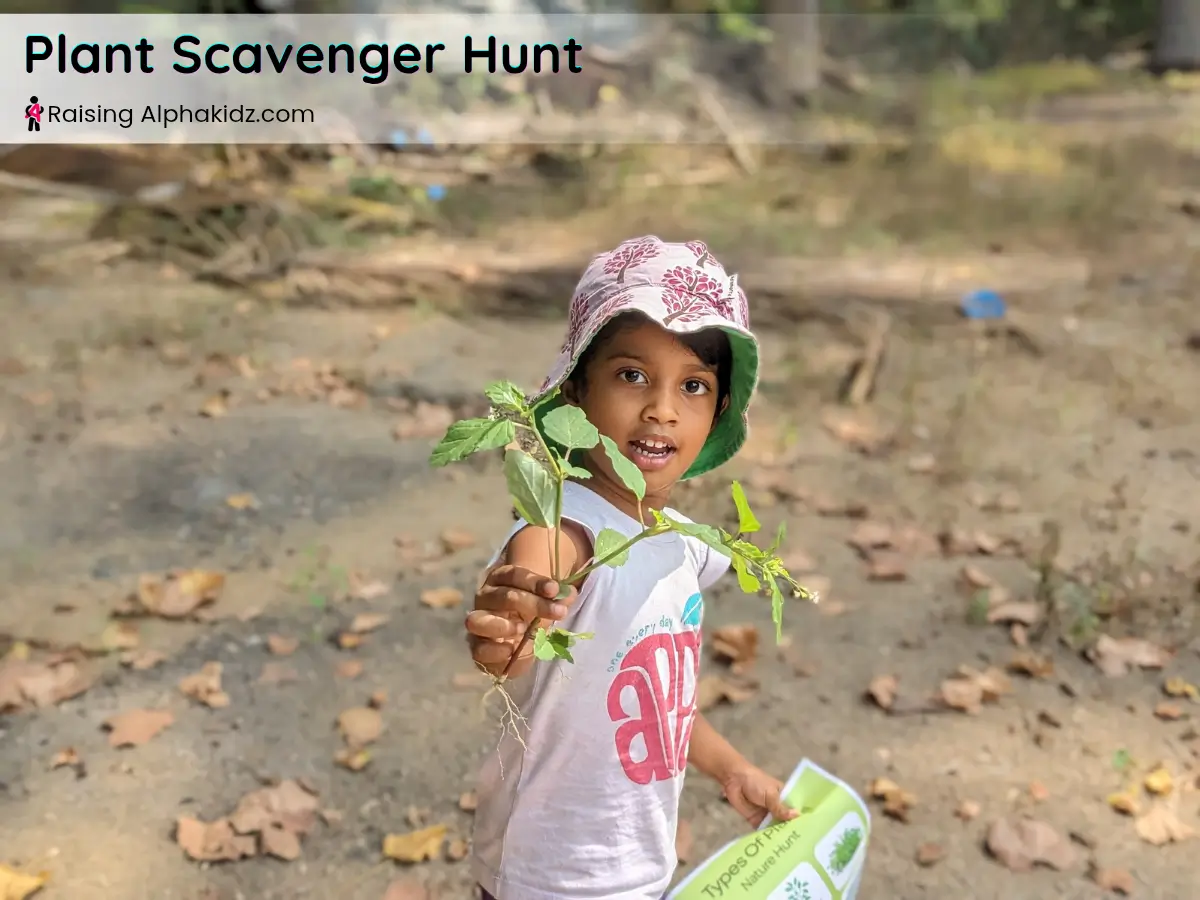
Invite children to collect or observe five different kinds of leaves. They may notice differences in size, color, edges, or texture. This activity strengthens attention to detail and encourages mindful observation.
Nature Eye Spy – Bugs Hunt
Encourage children to look for five small creatures like ants, beetles, butterflies, spiders, or caterpillars.
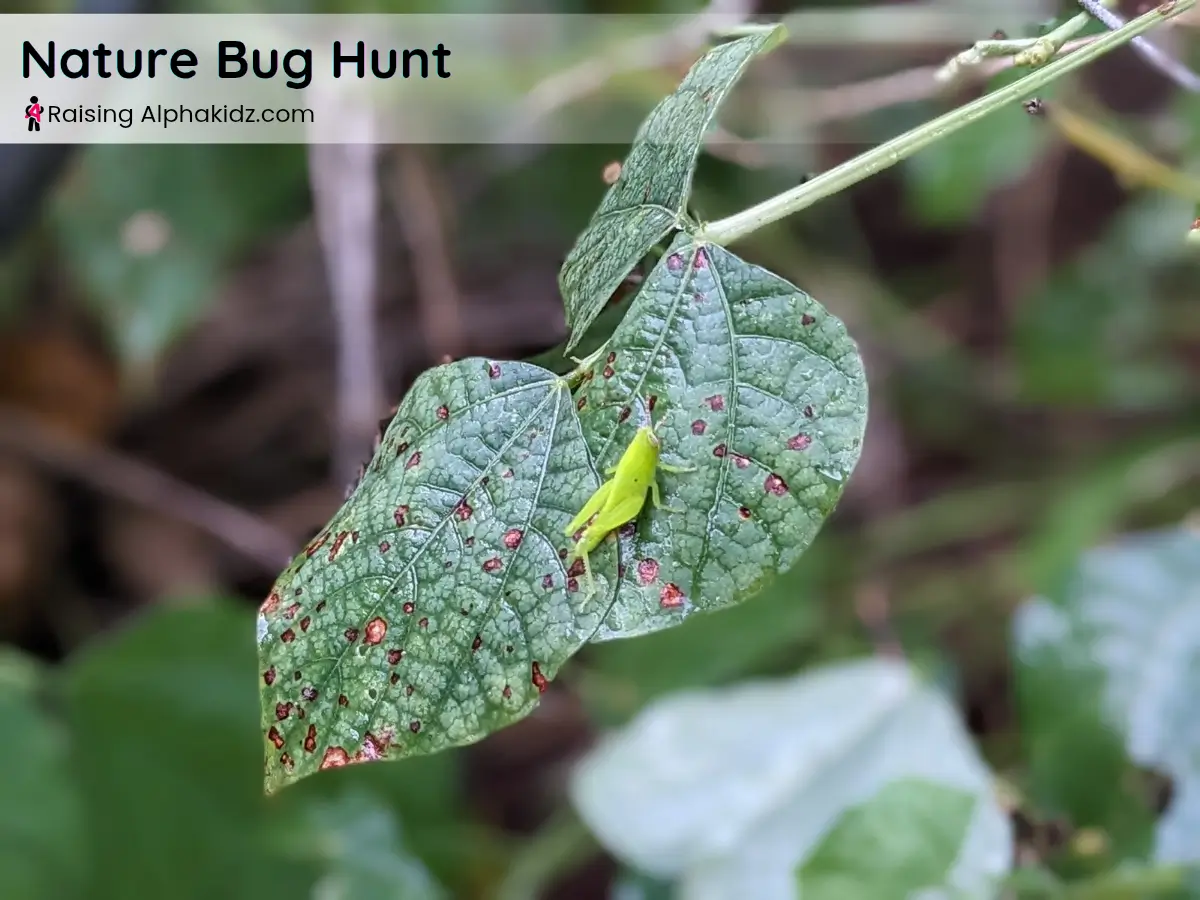
Watching how these tiny creatures move and interact with their environment deepens focus and engagement with the natural world.
Try these playful explorations, to unfold the 5-4-3-2-1 grounding method naturally in kids through curiosity, movement, and discovery in nature.
4 Things You Hear
The “4 things you can hear” step of the 5-4-3-2-1 coping technique helps children slow down and listen to the sounds around them. During a nature walk, the outdoors becomes a gentle soundscape where children can notice and enjoy different natural rhythms.
Sound Hunt
Invite children to pause and listen for various nature sounds like birds chirping in the trees or nearby branches, water flowing, sound of leaves etc. They can try to notice how the sounds change—luke some birds chirp quickly while others sing slowly.
Listen & Guess Game
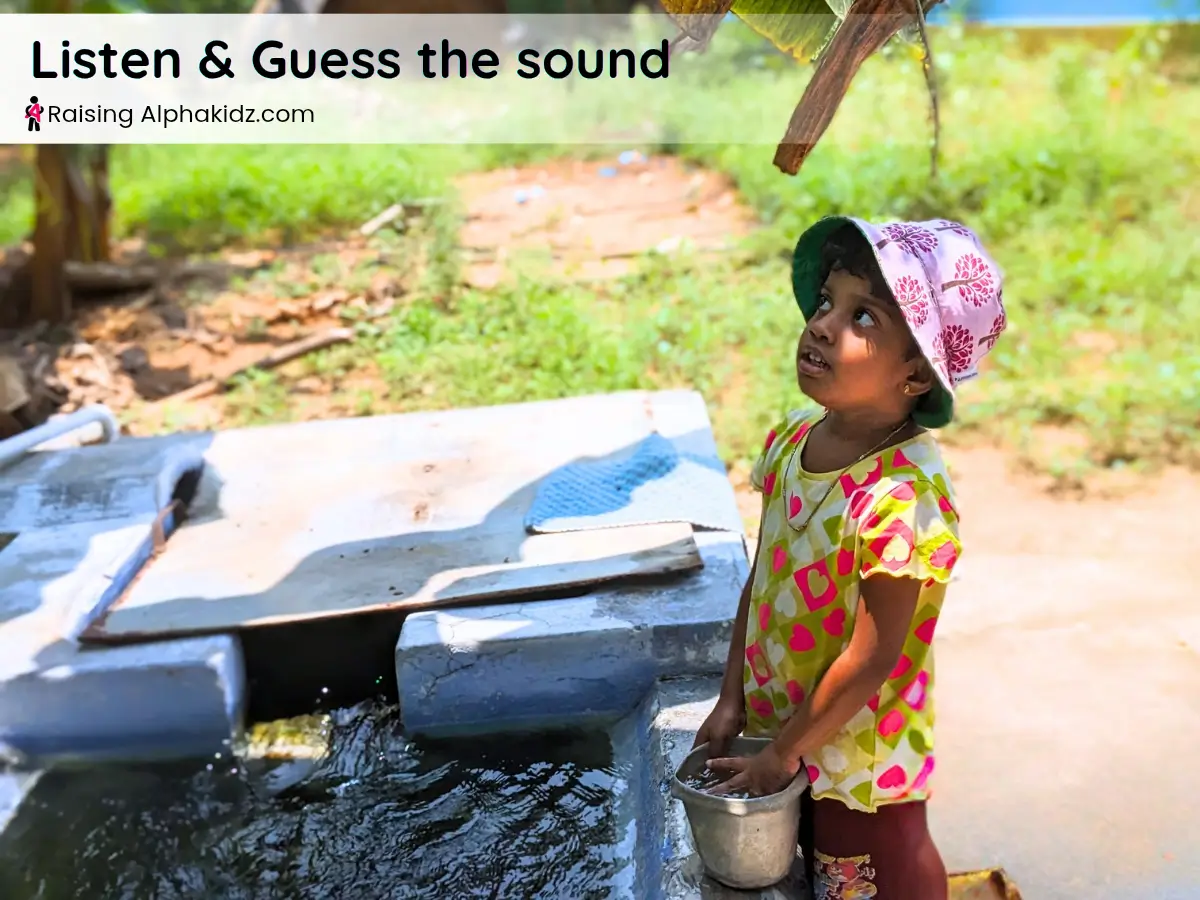
Encourage children to listen for the insects, birds and animals sounds and guess the name of it. This helps them tune into the quieter, subtle sounds of nature.
Go on Sound Safari
Take children for sound safari and let them make sounds like jumping into small puddles, stricking with sticks, throwing rock into water and listen to the splash they create. The playful sound adds fun while helping them become aware of the sounds created by their own movements.
3 Things You Touch
Barefoot Walking
Encourage children to walk barefoot on:
- Grass
- Sand
- Soil
- Stones
This provides sensory input to the brain while allowing grounding benefits through direct contact with the earth.
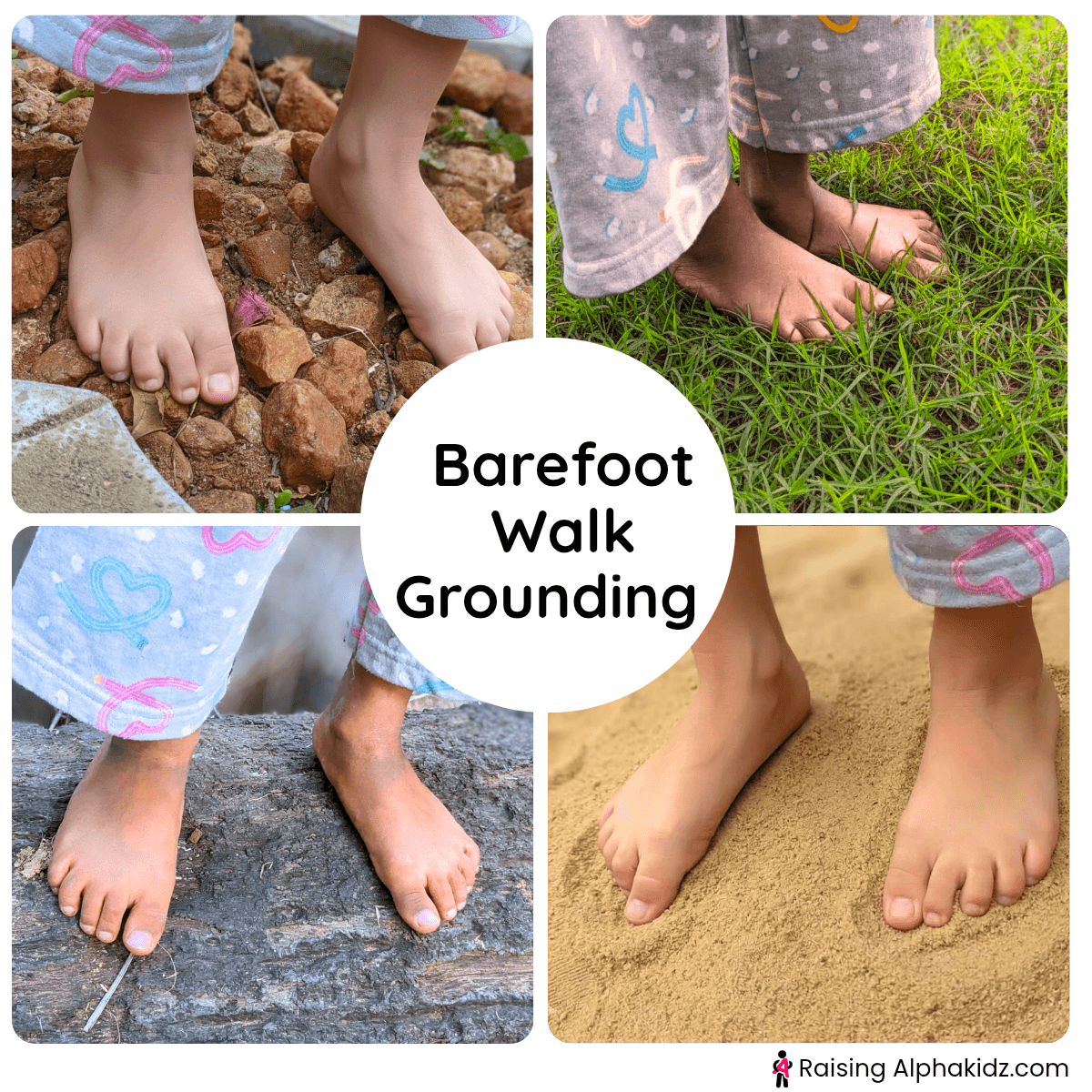
Encouraging children to walk barefoot on natural surfaces allows:
- Direct grounding with the earth
- Sensory input to the brain
- Improved nervous system regulation
So, simply remove your child’s footwear and go for a short walk outside-on soil, grass, sand, or stone. Even a few minutes daily can be deeply regulating..
Other playful activities that involves kids Touching natural elements like trees, leaves, water, or stones includes,
Sand Pit Play
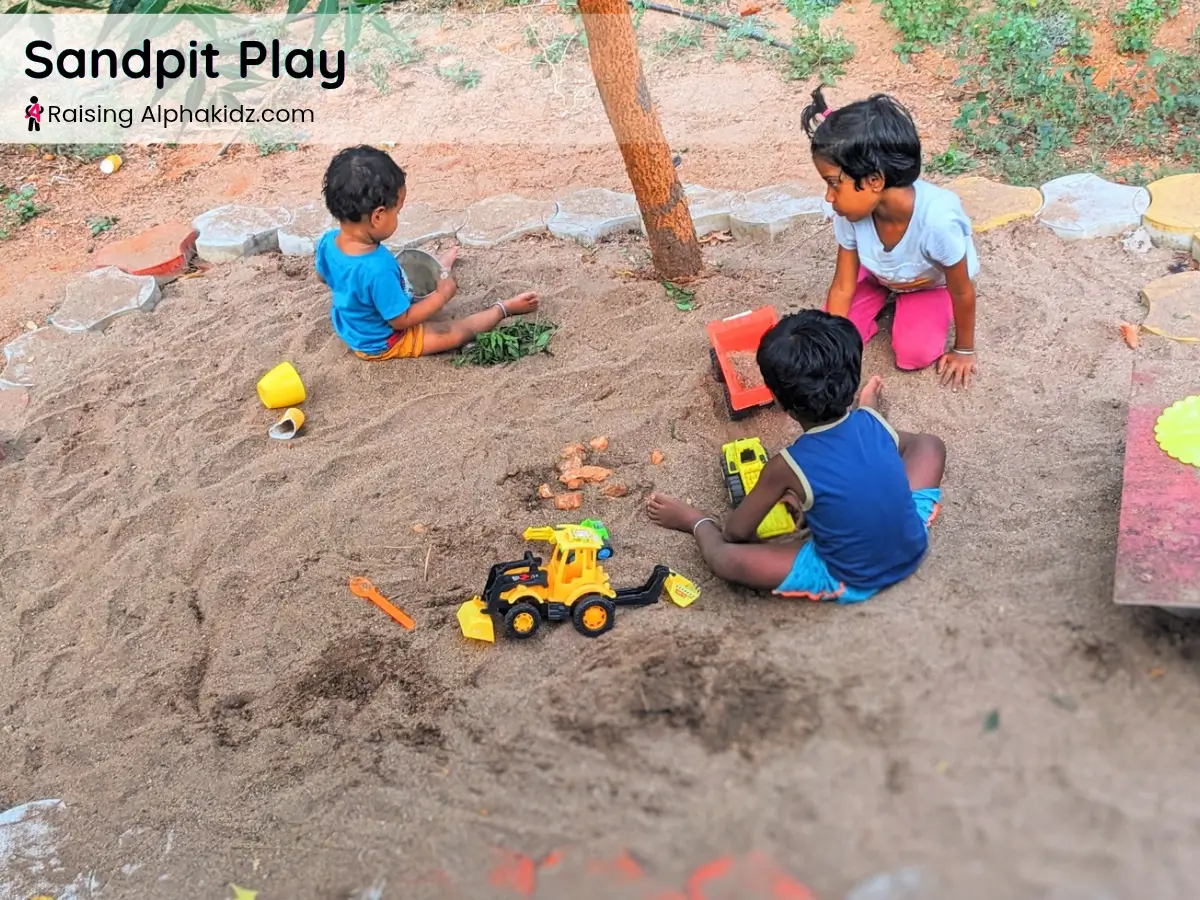
Sandpit play is one of the most ancient forms of play known to humankind. As humans evolved, sand and soil were among the very first natural materials we interacted with — building, shaping, running, digging, and working with our hands directly in the earth. Long before modern toys existed, the ground itself was the playground.
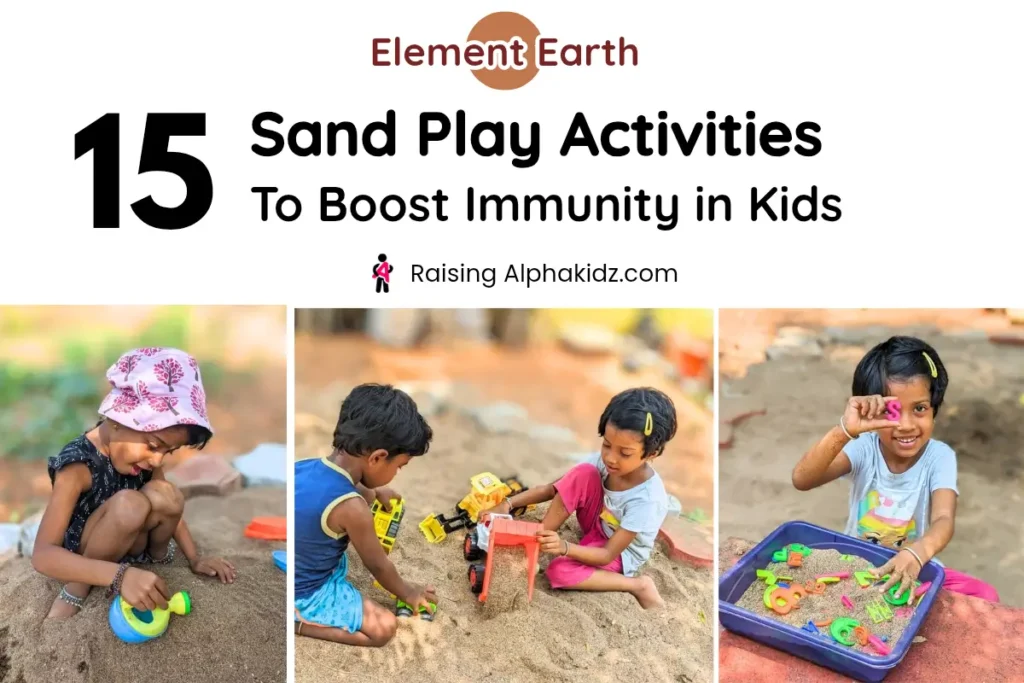
Sand offers innumerable creative possibilities for a child. It invites building, pouring, sculpting, burying, discovering, imagining, and experimenting — all while providing deep sensory input and natural 5 4 3 2 1 grounding technique.
Sand play activities include:
- Digging, filling, scooping, pouring
- Making molds, Sand cakes and castles
- Writing or drawing on sand
- Buried treasure hunts
Playing in Soil
Let your child pick up a handful of mud and feel it with their fingers. Soil is not foreign to us — we evolved with it. Children rarely find it strange or uncomfortable.
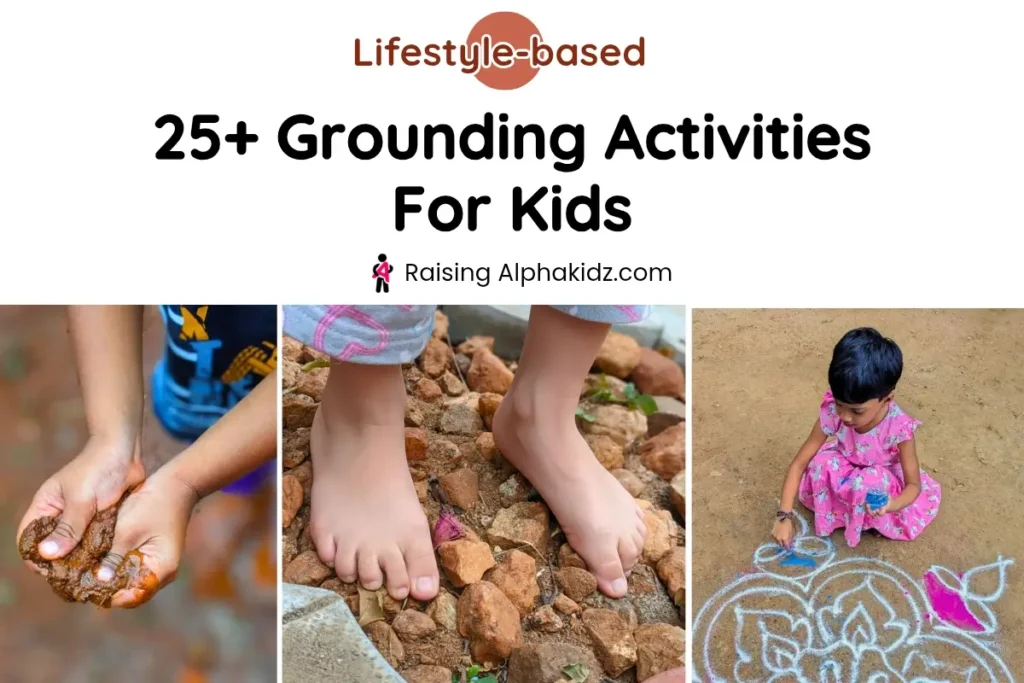
In fact, they connect with it instinctively, almost as if remembering something ancient that skipped a generation or two. There is no need to over-instruct. This kind of play is deeply intuitive. Let them squeeze it, mold it, shape it, crumble it, smell it, or even apply a little on their hands or feet. Let them explore its texture and temperature.
Nature Bracelet
Wrap a piece of tape (sticky side out) around the child’s wrist and invite them to stick small flowers, leaves, or grass onto it.
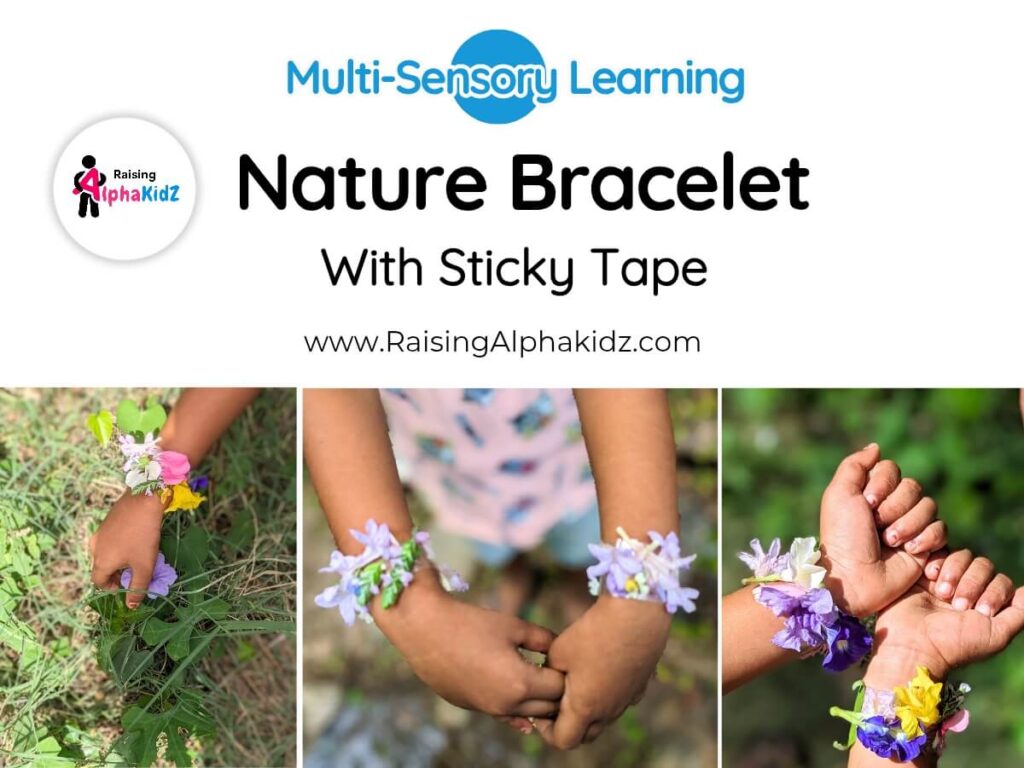
Related Post: Making Nature Bracelet with Sticky Tape
As they collect and press natural items onto the bracelet, they explore textures and shapes through touch.
Nature Mandala
Encourage children to collect leaves, petals, seeds, and small sticks and arrange them into a circular mandala on the ground.
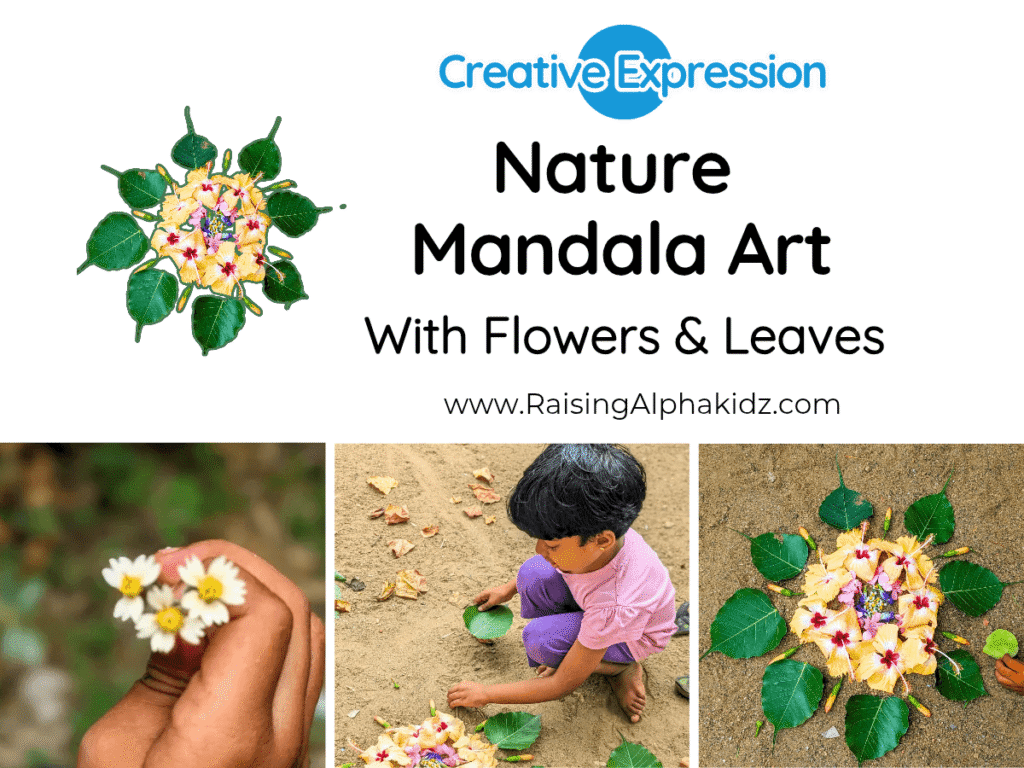
Related Post: How To Create A Nature Mandala | Kids Flower Art
Arranging and placing each item helps them slow down and mindfully experience the feel of nature materials.
Nature Hanging
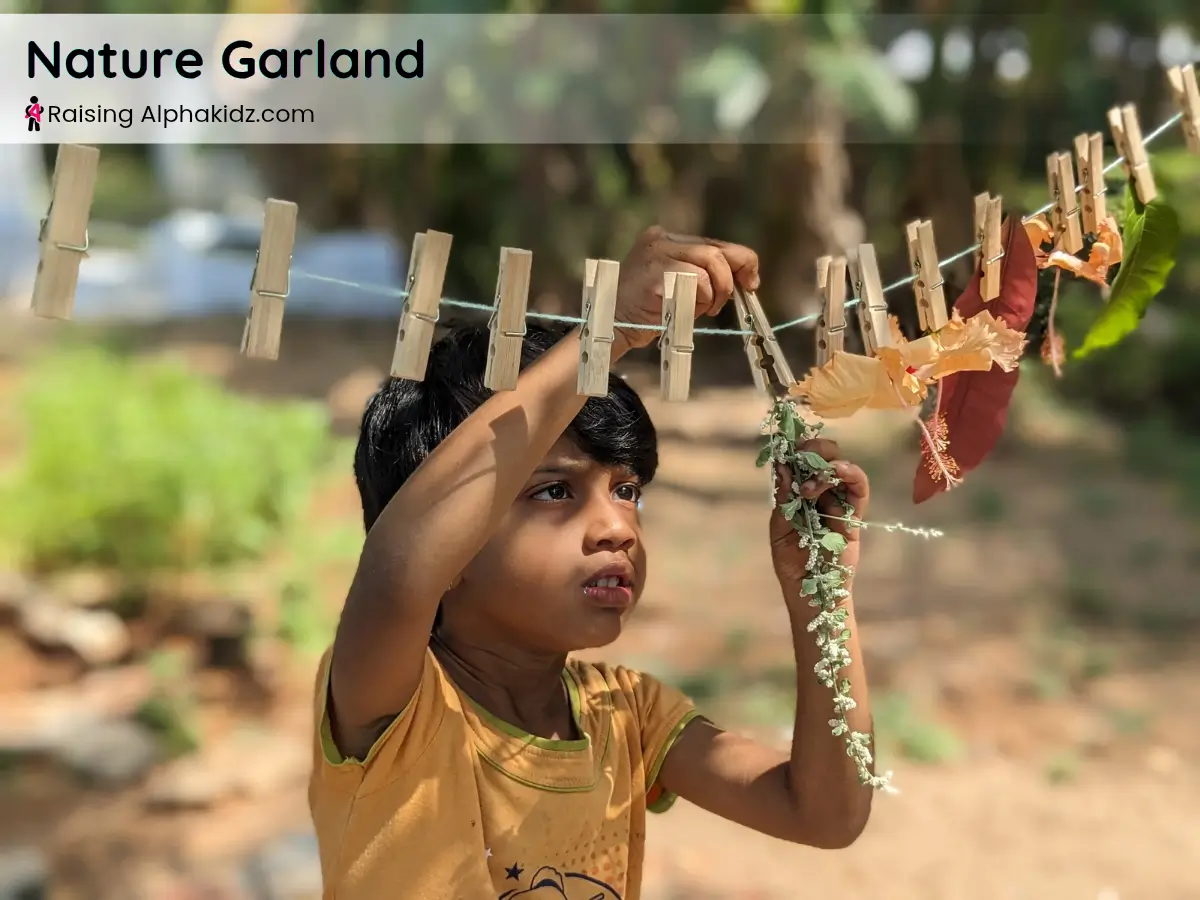
Use cloth pegs or string to hang collected leaves, flowers, or small twigs on a branch or line. Clipping and arranging the items creates a playful nature display while allowing children to handle and explore different natural textures.
Sand Drawings & Sketches
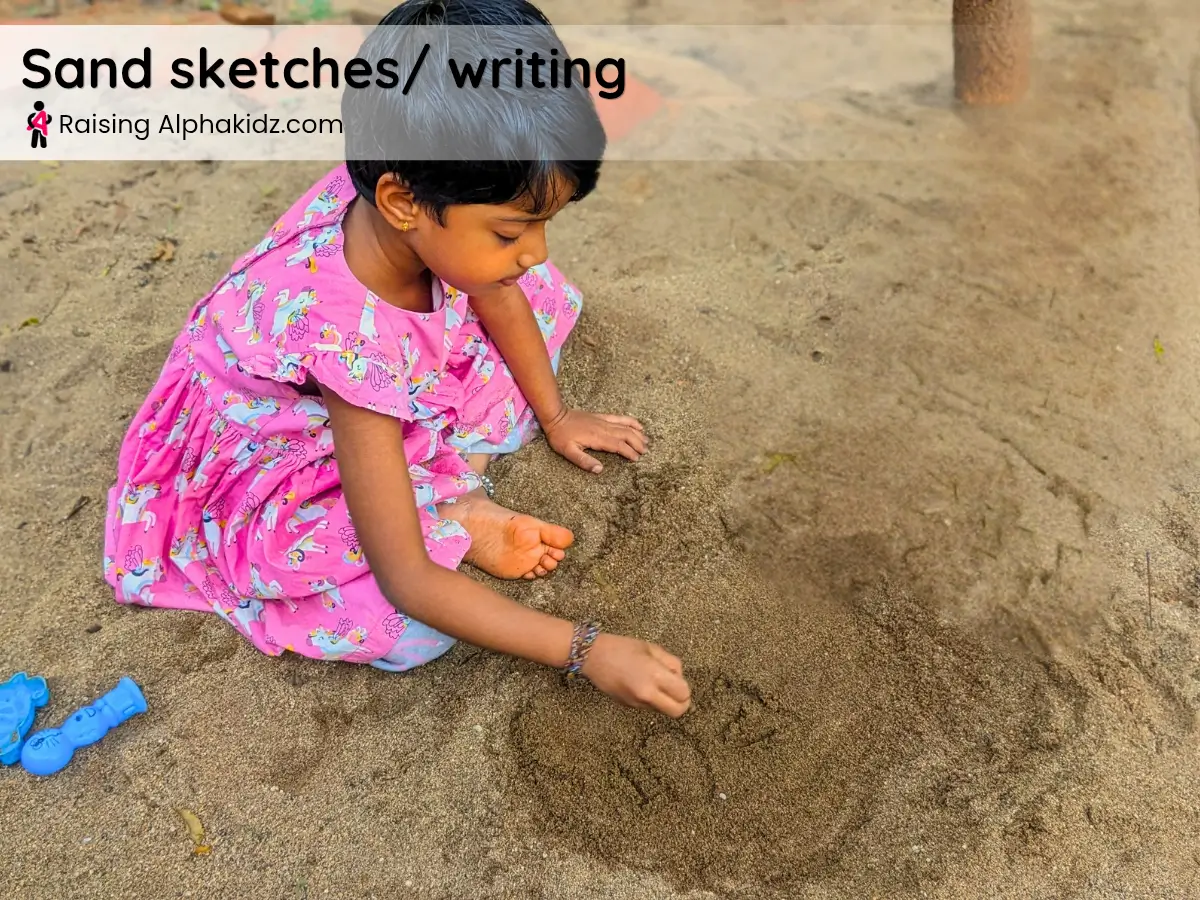
Long before paper, notebooks, and whiteboards existed, sand served as one of the earliest writing and drawing slates. I remember my grandfather telling me that during his early childhood education, children were first taught to write in sand. It helped them gain better control over their fingers and develop fine motor skills before transitioning to paper.
There is something deeply grounding about sitting on the sand and sketching out your imagination. It never feels repetitive or forced. The texture beneath the fingers, the freedom to erase and redraw instantly, and the openness of the space make it both calming and creative.
Drawing in sand offers multiple developmental benefits at once:
- It supports grounding through tactile sensory input
- It ignites imagination and creativity
- It strengthens fine motor skills
- It improves hand-eye coordination
- It builds early pre-writing confidence
Once you’ve created your sandpit, consider planning a simple “sketch date” with your little one. Sit together, draw shapes, letters, patterns, or even entire imaginary worlds. There is no pressure for perfection — just exploration.
In that shared space, the sand becomes more than a play material. It becomes a bridge between generations, imagination, and natural development.
2 Things You Smell
The “2 things you can smell” step of the 5-4-3-2-1 grounding activity invites children to slow down and notice the scents around them.
Play various games listed below involving natural fragrances from plants, flowers, and soil can create a calming sensory experience for both children and adults.
- Sniff & Smile
- Guess the Scent
- Smell Adventure
- Nose Knows Game
Smell of Herbs and Fragrant Plants

Encourage children to gently smell fragrant plants like mint, basil, lemongrass, or marjoram. When lightly touched, these herbs release soothing scents. Invite your child to rub a leaf between their fingers and breathe it in.
Planting a few aromatic herbs in your garden creates a small sensory space that brings calm for the whole family.
Smell of Wet Soil and Mud
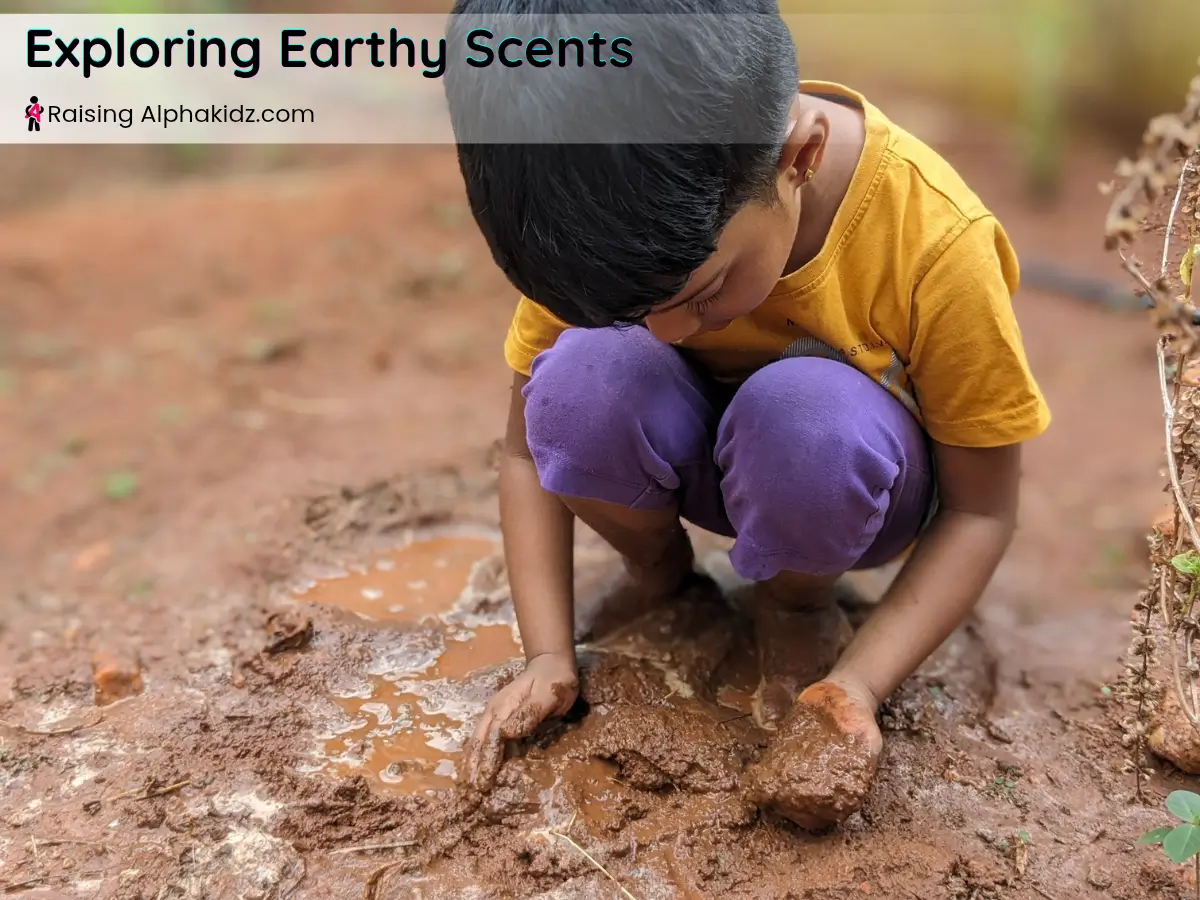
After watering plants or after rainfall, invite children to notice the fresh earthy smell of wet soil and mud. This natural scent is one of the calming & comforts grounding activity of 5-4-3-2-1 grounding technique. Taking a moment to breathe in this smell helps children feel more connected to nature and the present moment.
Dandelion Blow
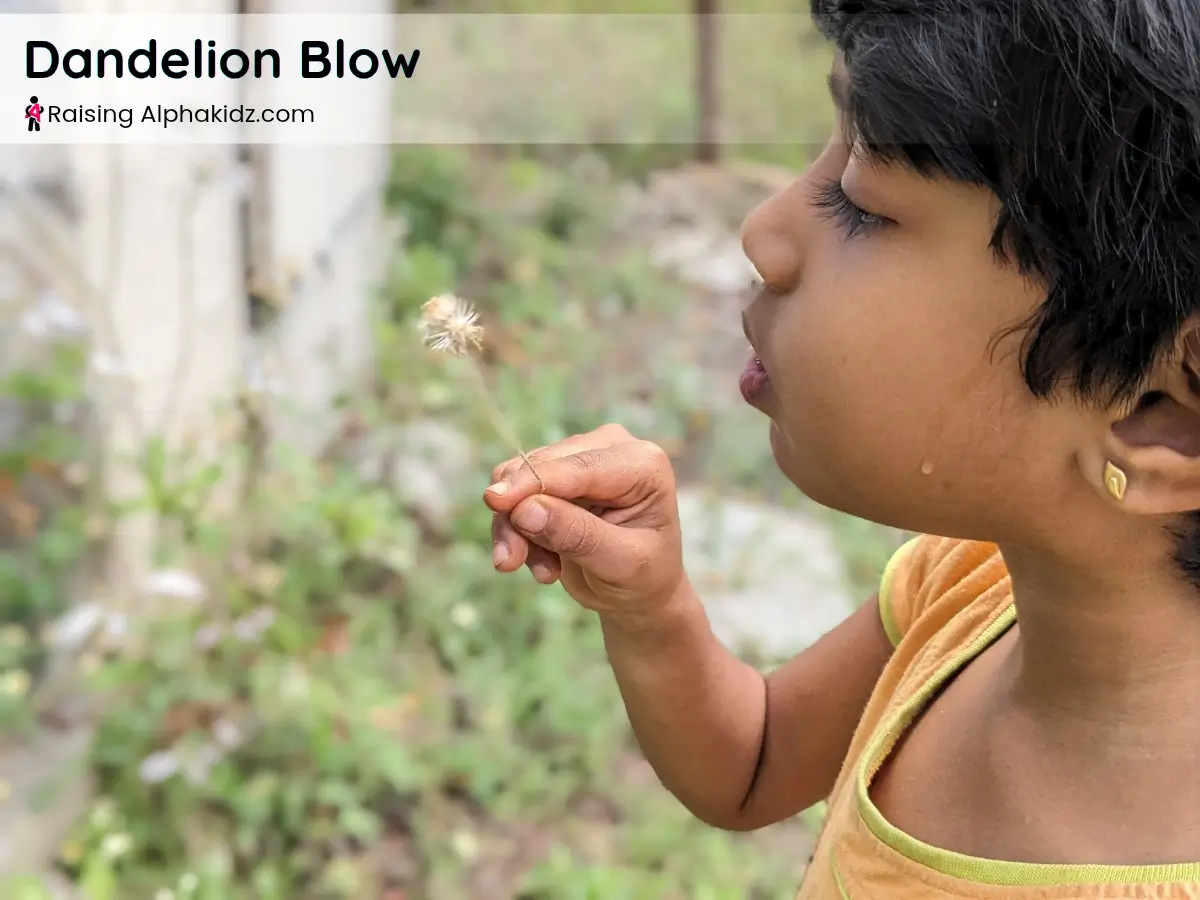
Breathing and blowing are naturally calming. Deep breaths regulate the nervous system, but kids learn best through play.
A dandelion hunt is a playful way to practice the 5-4-3-2-1 method. Search for mature dandelions in the backyard or a nearby field. The process encourages walking, observing, and moving with purpose.
When they find a fluffy dandelion and blow the seeds away, that long exhale becomes a joyful breathing exercise—without ever calling it a “technique.”
1 thing you can taste
The “1 thing you can taste” step of the 5 4 3 2 1 grounding technique invites children to mindfully experience a safe, simple flavor from nature. Tasting something fresh outdoors helps them slow down and engage their senses in a gentle, memorable way.
Taste from Nature
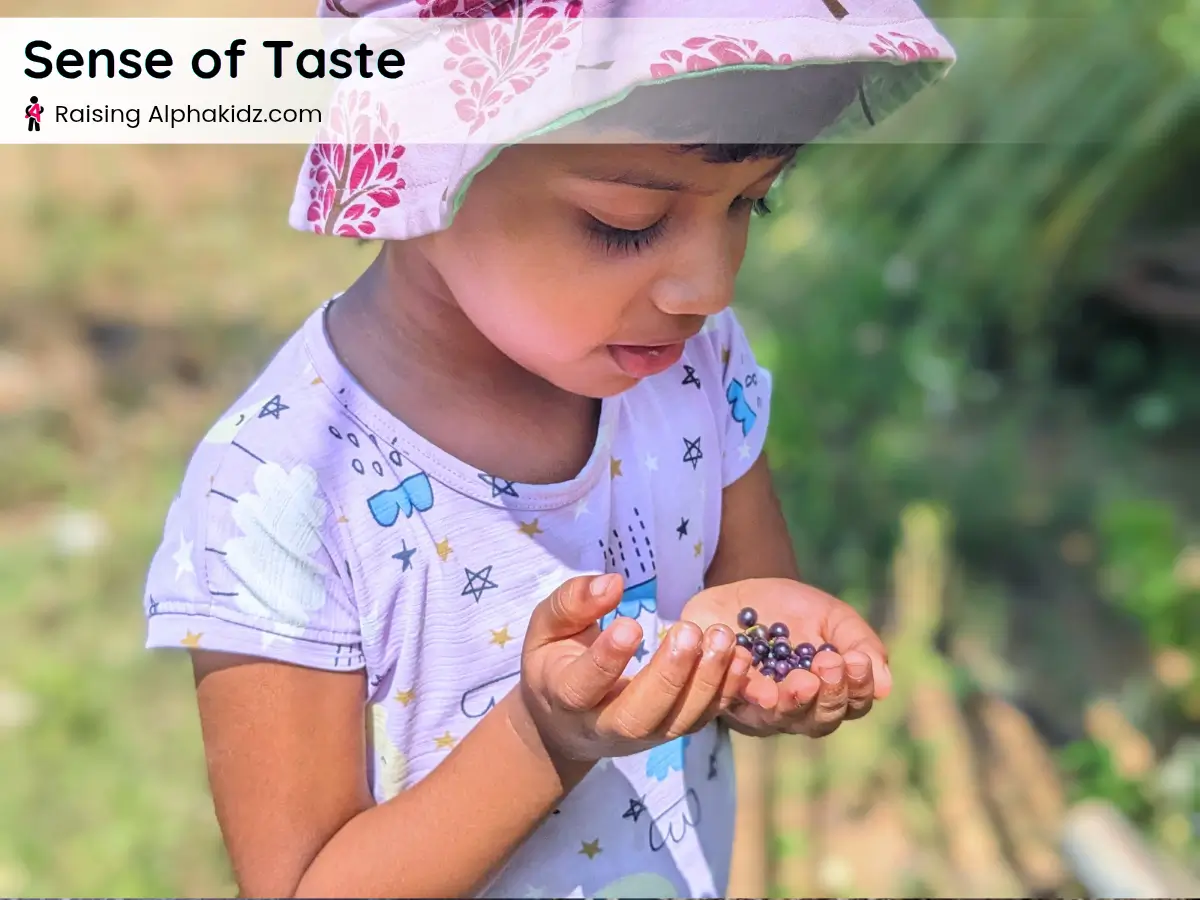
Offer children one safe edible item from the garden or nature to taste. This could be a freshly harvested fruit, a few sunflower seeds, or an edible herb leaf such as mint or basil. Older children may also enjoy tasting a tiny drop of nectar from safe, pesticide-free flowers under adult guidance.
Related Post: In The Age Of AI, Why Kids Need A Kitchen Garden
Encourage them to notice the flavor, texture, and how it feels as they chew—turning a small bite into a calming sensory moment.
In tending to plants, they are also tending to their own grounded presence.
The 5 4 3 2 1 Coping Method Benefits
5 4 3 2 1 Grounding method is not an “extra” activity—it is a natural biological need, especially for growing children.

By allowing kids to walk barefoot, play in sand and mud, garden, and connect with nature daily, we support:
- Nervous system regulation
- Reduced Anxiety, stress, panic, PTSD & ADHD behaviour
- Better Coping skills
- Emotional balance
- Better learning capacity
- Mindfulness and Deeper connection to the natural world
Sometimes, the most powerful grounding experiences don’t need to be taught. They unfold naturally when children are given space to experience.
Let’s bring grounding back into childhood through these 54321 grounding technique.
FAQs
The 3-3-3 rule is a simple grounding technique that helps kids calm down when they feel anxious. Here’s another way to explain it:
Notice 3 things you can see: Ask the child to look around and point out three objects nearby, like a book, a fan, or a toy.
Listen for 3 sounds: Encourage them to pay attention and name three different sounds they can hear, such as a bird, a car, or their breathing.
Move 3 parts of your body: Have them gently move three body parts—for example, stretch their fingers, tap their feet, or roll their neck.
This method helps shift focus away from anxious thoughts and brings attention back to the present moment.
Rainbow grounding is a calming technique that helps reduce anxiety by bringing your attention back to the present. Look around and find one object for each rainbow color — red, orange, yellow, green, blue, indigo, and violet. Pause with each item and notice its shade, texture, details, and how it makes you feel before moving to the next color.