
25+ Lifestyle-based Grounding Activities For Kids
Takeaways
- Child’s Behaviour: Aggression, shouting, crying, resistance, defiance, or emotional shutdown, anxiety, fatigue, restlessness, resentful, withdrawal ,a feeling of being “spaced out” or overwhelmed.
- Reason Behind: This behaviour is a natural fight–flight–freeze response, where the child’s nervous system senses a threat from environment and activates survival mode.
- Support Needed: Lifestyle -based Grounding activities for kids break this “Alarm circuit” by shifting focus from perceived danger to the present moment.
Hi Parents, before jumping into all those cognitive “push-up” activities for your child, let’s first pause and notice something important. Have you ever wondered why children sometimes seem aggressive, clingy, or unsettled in certain moments? Well, let’s take a closer look at what’s really happening.
To begin with, children live in their own world, constantly absorbing sensory input to make sense of everything around them. However, when free exploration is limited and replaced with constant correction, peer pressure, frequent “no’s,” and excessive screen time, their system can gradually become overwhelmed due to imbalanced sensory experiences.
How Children Behaviour & Grounding are Linked
As a result, this overload may show up as aggression, shouting, crying, resistance, defiance, or even emotional withdrawal. In other words, these behaviors are often signs that children are struggling with too much pressure to perform and too little space to simply be.
If we trace back to how humans evolved, one thing becomes clear—our nervous system didn’t develop through cognitive sensory overload, but through connection with the Earth… the ground beneath us. That’s why “grounding activities” play a vital role in shaping the behaviour of today’s modern little humans!
Further, giving children grounding experiences, we’re not slowing them down, instead we’re strengthening their base. Therefore, just like a strong foundation holds up a skyscraper, a well-grounded nervous system supports all the big learning, focus, and thinking skills that come later.
Highlights
- Balances: Earth Element (Grounding & Stability)
- Age: 2+
- Toddlers (2–4) → sensory + movement
- Young kids (5–8) → play-based grounding
- Older kids (9–12) → awareness + reflection
- Requirements: Nature & Organised living space
- Solves: Sympathetic Fight or Flight responses (Anxiety & Stress)
- Outcomes: Parasympathetic Responses (Calm, Connect, Curious)
What are Grounding Activities For Kids
Grounding activities are simple actions that help children (and adults) calm down and feel safe in the present moment.
- Grounding is
- Feeling safe in the body
- Being present in the moment
- Connecting with environment + senses
Hence, Grounding activities helps kids come out of overwhelm and “come back to now” by using their body, senses, or simple thinking activities.
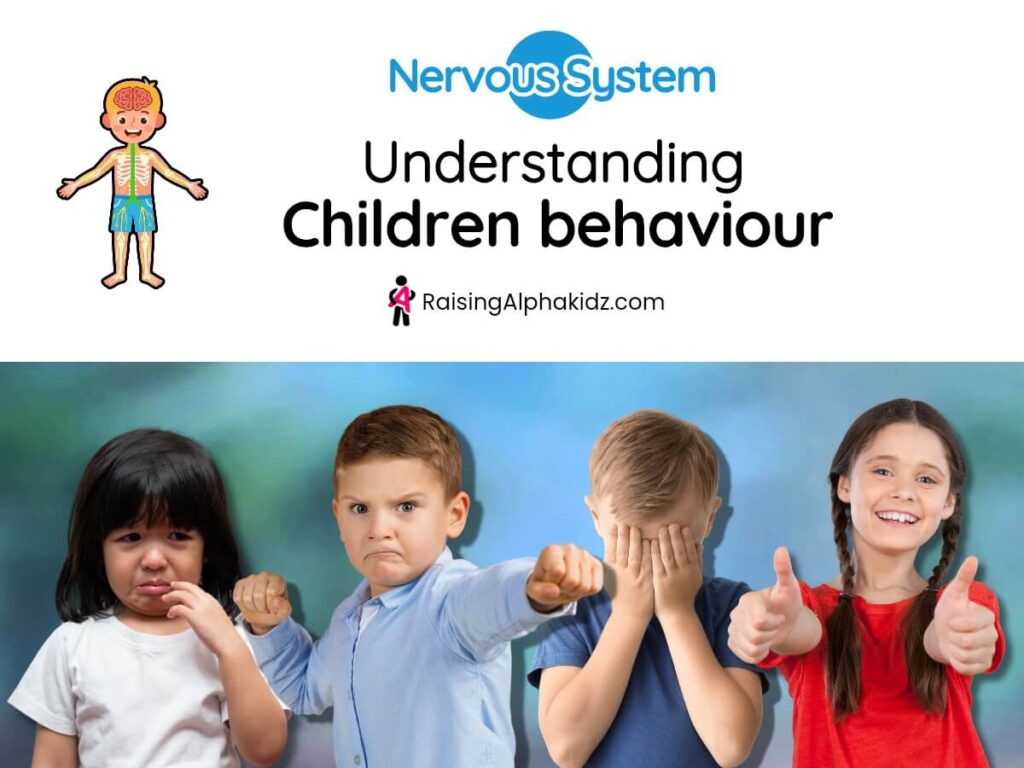
Related Posts: Understanding Children Behavior & role of Nervous System
How Grounding Activities Help Kids
When children are exposed to overstimulated circumstances—such as loud environments, screens, or pressure, where they receive unpredictable inputs. This overload creates anxiety and stress, which can lead to a shutdown state, where the child’s thinking brain is not fully active.
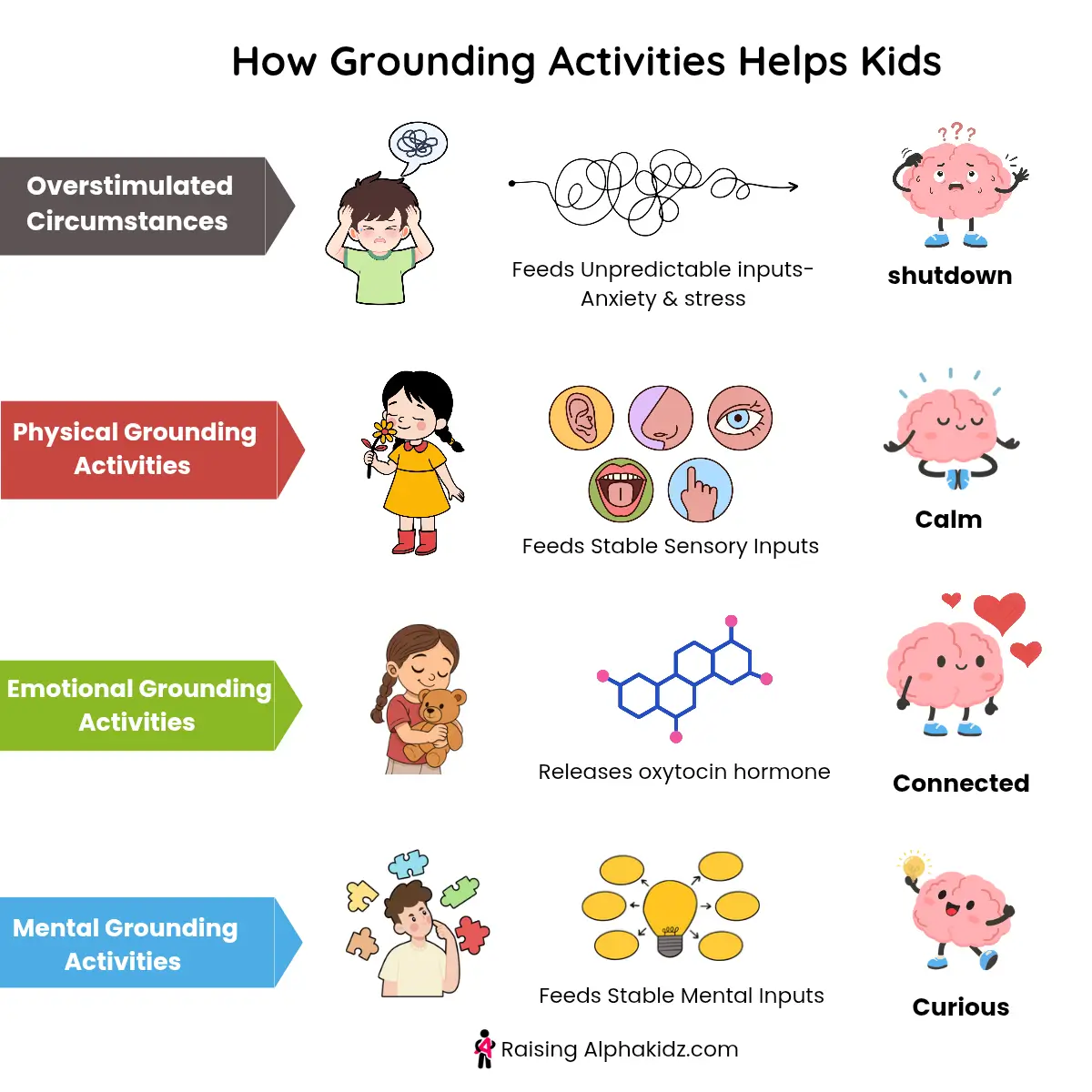
Introducing physical grounding activities (like using the five senses—seeing, hearing, touching, smelling, tasting) provides stable sensory inputs. These inputs signal safety to the brain, helping the child feel calm and regulated.
Further, mental grounding activities (like thinking, problem-solving, or organizing thoughts) provide stable mental inputs. This helps the brain re-engage, shifting the child into a curious, thinking, and learning state.
Overall, the image shows a clear transition:
Overstimulation → Anxiety → Shutdown → Grounding → Calm → Curiosity
Types of Grounding Activities For Kids
Grounding activities are mainly of two types:
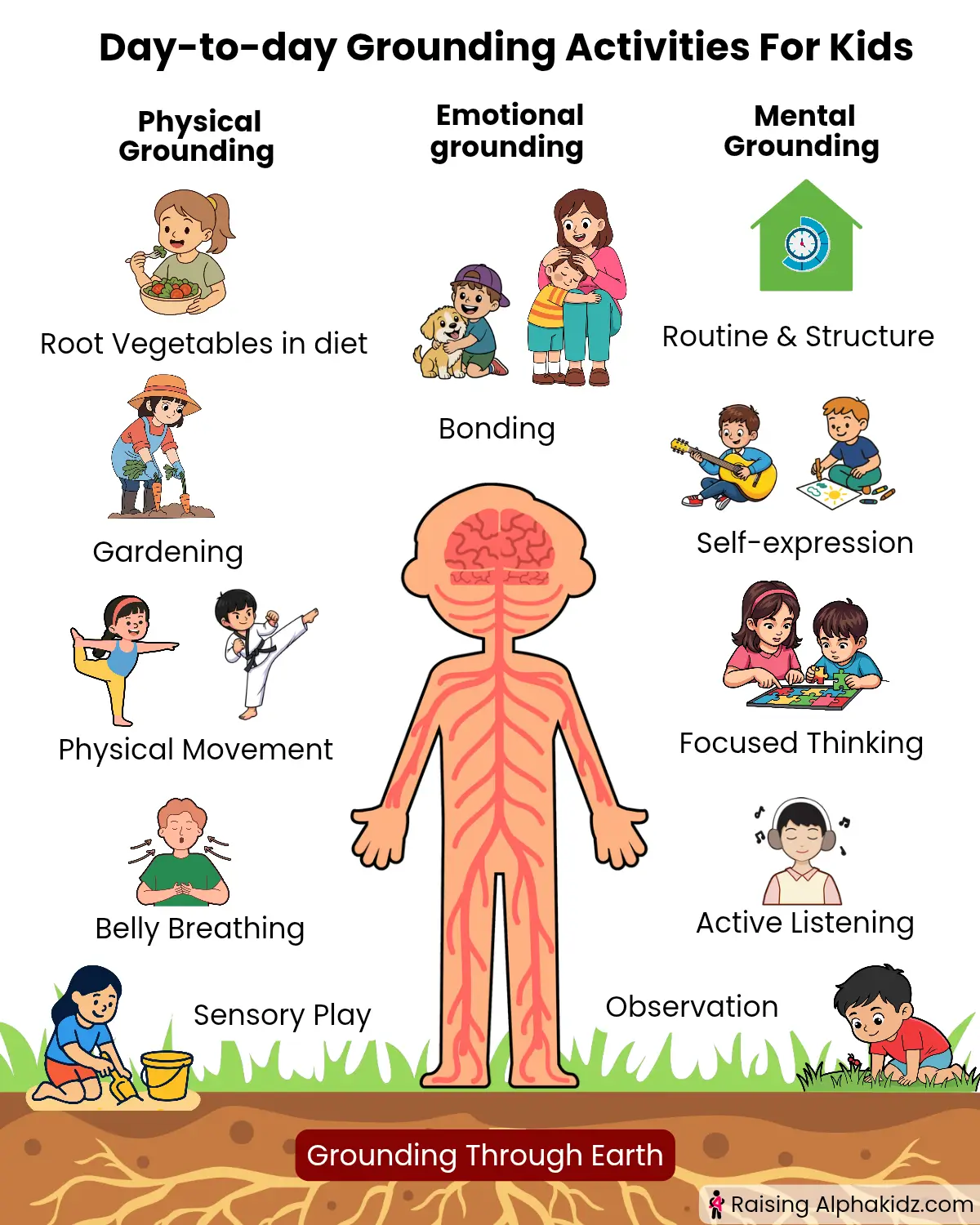
- Physical grounding activities
- Emotional grounding activities
- Mental grounding activities
Physical Grounding
This involves using the body and senses to calm down.
Physical grounding activities includes,
- Walking barefoot,
- Touching Soil
- Using senses
- Deep breathing,
- Hugging,
- Physical Movement
Emotional Grounding
Emotional grounding and bonding are deeply connected parts of a child’s sense of safety and stability. This creates a feeling of connection, bonding strengthens it through consistent care and presence, and grounding helps the child stay calm, secure, and regulated within that relationship—even during stressful moments
Emotional grounding activities includes
- Bonding with pets
- Feeding animals and birds
- Hugging parents
Mental Grounding
This involves using the mind and thinking skills to shift focus away from stress.
Mental grounding activities includes
- Observing
- Describing things
- Counting, listing, planning, solving puzzles,
- Focused thinking
- Self-expression
- Maintaining routine & structure
List of Grounding Activities For Kids
All physical, emotional and mental grounding activities work together to help children feel calm, focused, and in control by regulating the children nervous system.
Physical & Sensory Grounding
Barefoot Walking
Barefoot Walking (Grounding, or earthing), is a natural way of connecting with the Earth that our ancestors practiced in everyday life. However, In modern times, paved floors and footwear have made barefoot contact with natural ground much less common. To make it common, we have to let children walk barefoot on natural surfaces such as grass, sand, or soil to reconnect with the Earth, making grounding possible.
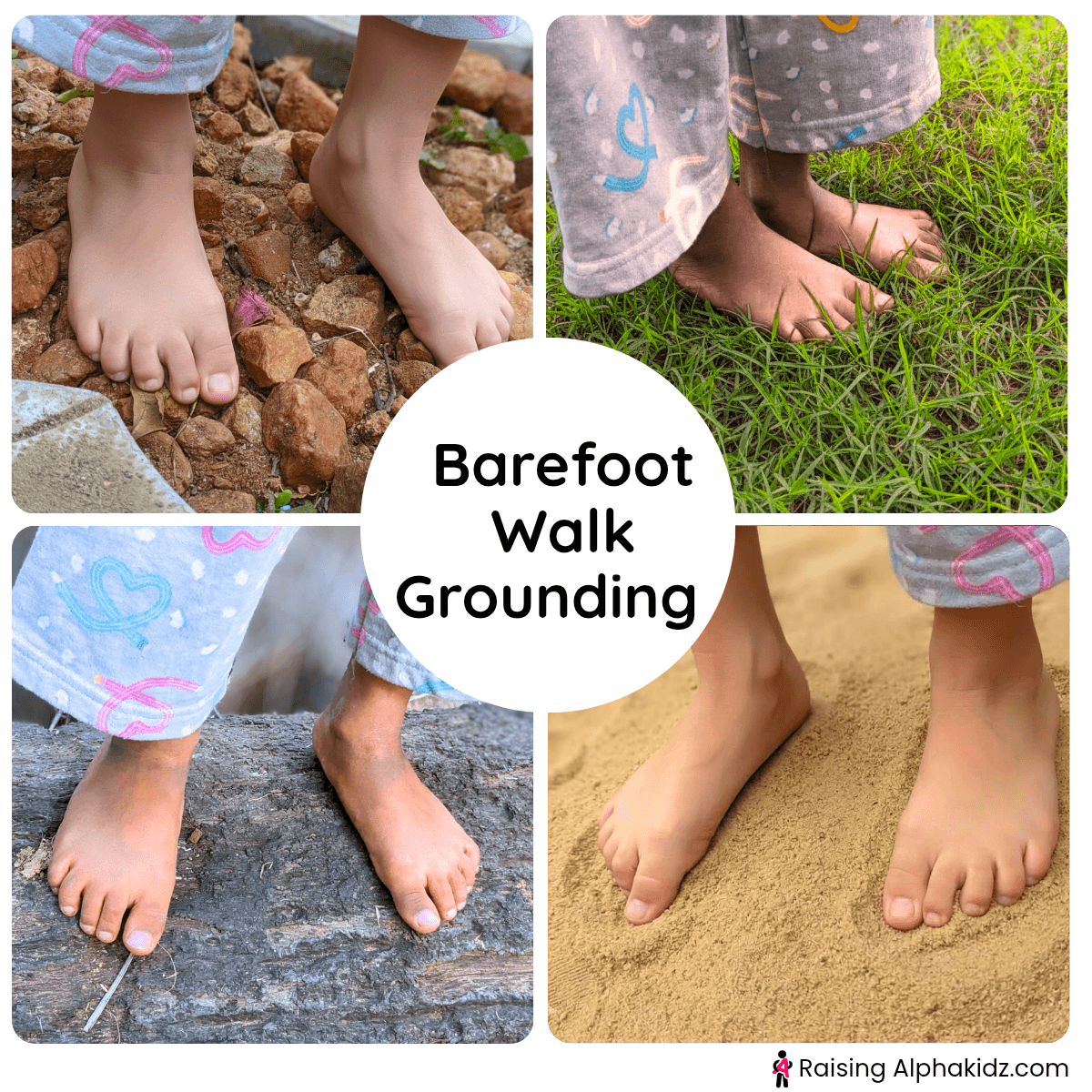
Walking barefoot outdoors allows the body to directly experience natural textures and sensations. Hence, this practice is often associated with calming effects such as reduced stress, improved sleep, better circulation, and overall relaxation. Therefore, spending about 10–30 minutes a day barefoot on safe natural ground can help children feel refreshed, balanced, and energized.
While modern solutions like earthing mats exist for indoor use, children don’t need special products to experience these benefits. But, simply stepping outside and letting their feet touch the Earth offers a free, joyful, and sensory-rich way to unwind, regulate emotions, and reconnect with the natural world.
Always choose clean, safe areas free from sharp objects, chemicals, or extreme temperatures, and supervise young children during the activity.
Tree Grounding
Tree grounding is a simple and gentle practice that helps children feel calm, stable, and connected to nature. It involves spending a few quiet moments with a tree—touching it, leaning on it, or hugging it.
Alternatively, If children are indoors and need quick grounding, they can imagine themselves as a tree, visualizing roots growing from their feet into the ground, helping them feel steady and safe.
Deep Belly Breath Grounding for Kids
Belly breathing is a simple practice that helps children become aware of their body during moments of anxiety or stress. Also called diaphragmatic breathing, it involves slow, deep breaths that gently expand and relax the belly, helping the body calm down which act as a excellent grounding activity for kids.
How to Make Belly Breathing Easy and Playful For Kids
- Smell the flower, Blow out the candle breathing
- Baloon Belly Breathing
- Toy Belly Breathing
- Box Breathing
- Starfish Breathing
- Somp stomp BLOW Breathing
- Spaghetti Breathing
Sensory Grounding for Kids
5-4-3-2-1 Grounding Technique
5-4-3-2-1 Senses: This one of the classic grounding activities for kids which uses movement to engage the senses:
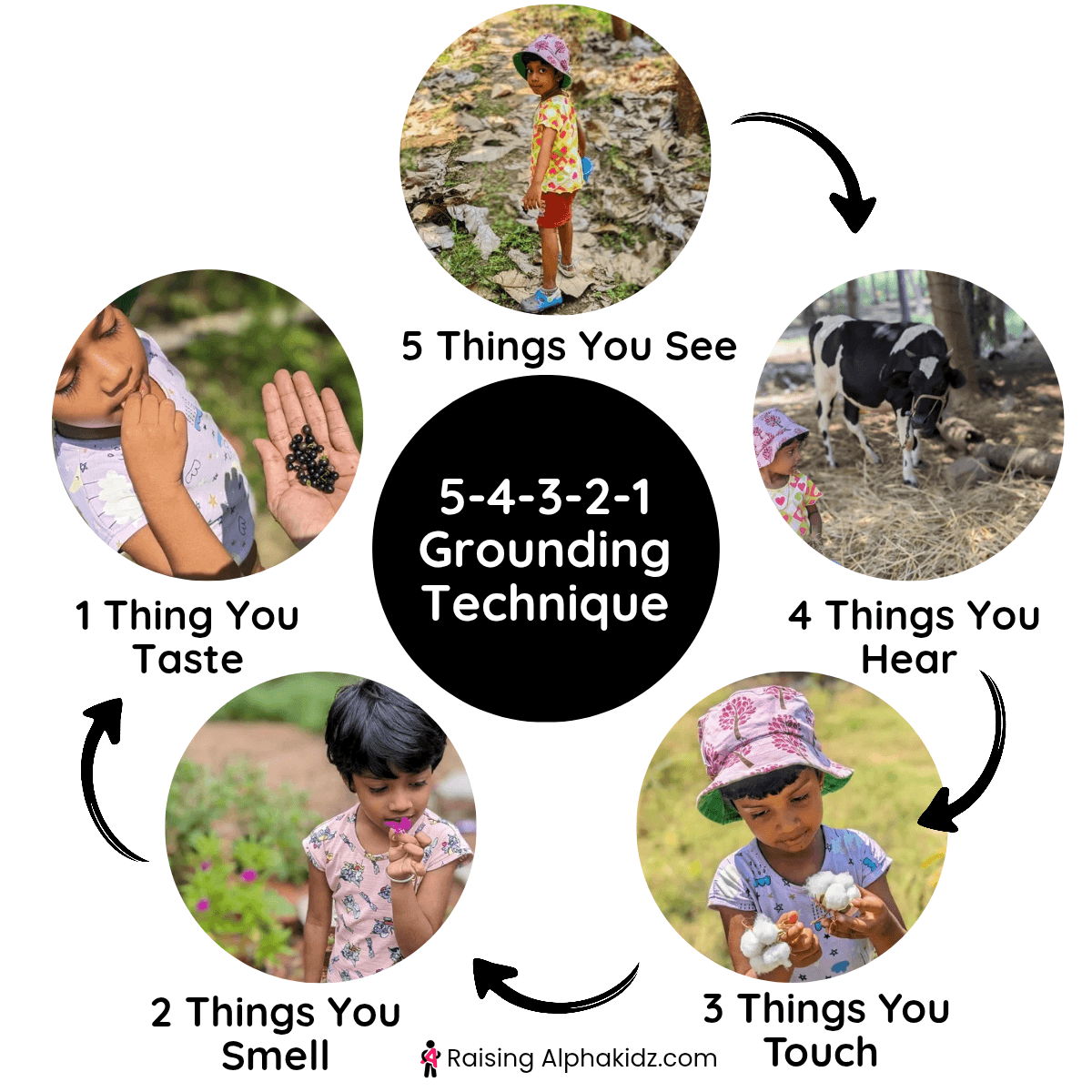
- 5 things they can see (point to them).
- 4 things they can touch (walk over and feel them).
- 3 things they can hear (cup ears to listen).
- 2 things they can smell.
- 1 thing they can taste.
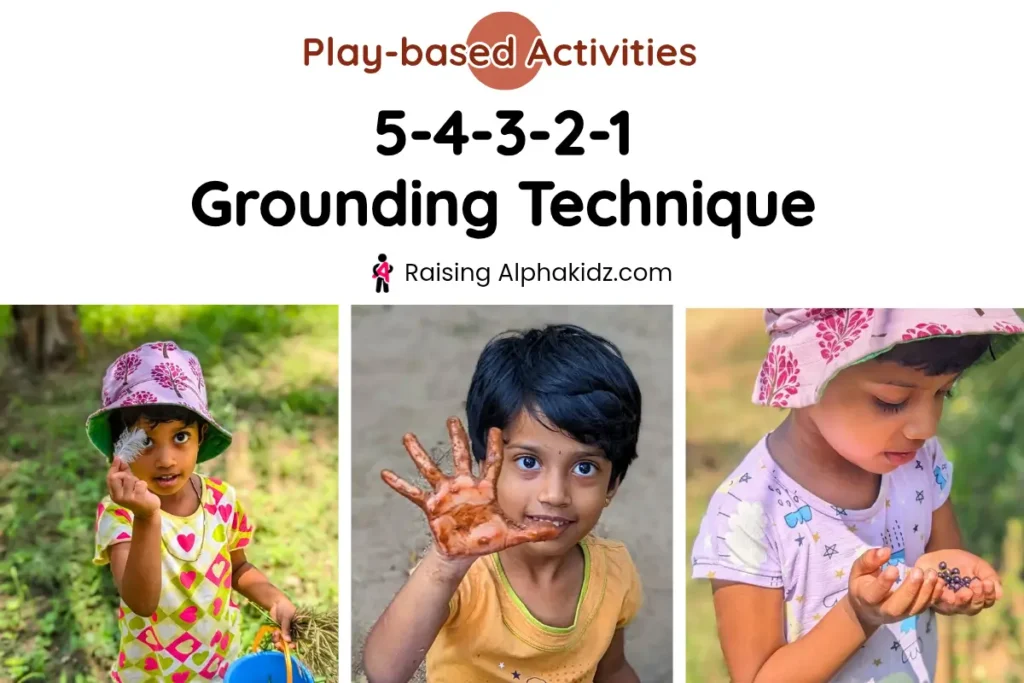
Related Posts: Play-based 5-4-3-2-1 grounding technique for kids to cope with anxiety & stress
Sensory Play Grounding
Sensory play grounding uses direct contact with natural elements to calm the body and anchor the mind in the present moment. Mud, sand, and water provide rich tactile input—temperature, texture, weight, and pressure—that helps release tension and regulate the nervous system.
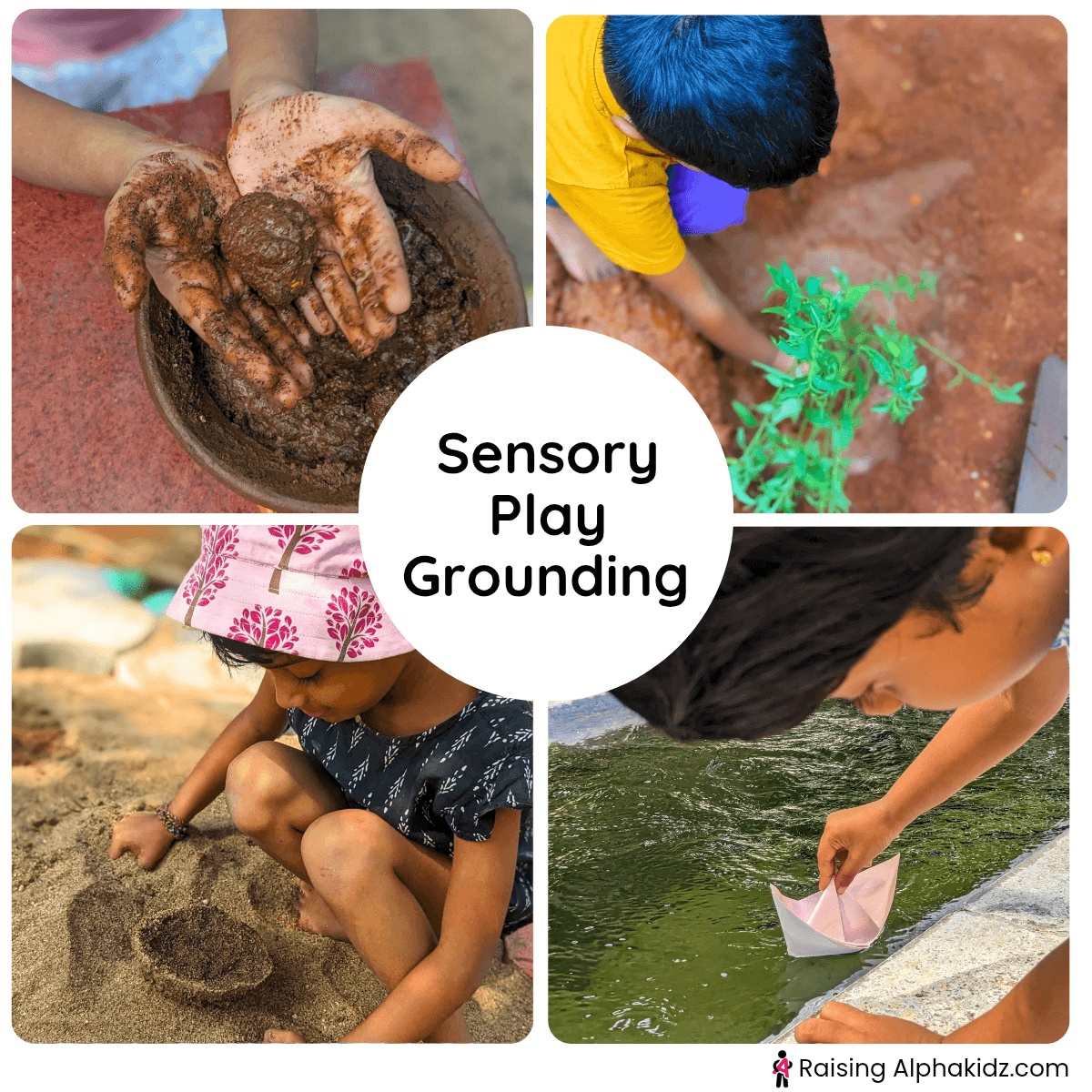
Puddle & Outdoor Water Play: Jumping and splashing in puddles, playing with garden hose or irrigation water (supervised), immersing hands or feet for a cooling effect
Mud Sensory Play: Mixing, squishing, shaping mud; mud kitchen, mud pizza, mud bakery pretend play; mud painting; clay or soil modeling
Gardening Play: Digging soil, sowing seeds, planting saplings, watering plants, pulling weeds
Sand Sensory Play: Playing with sand sensory bin, making sand molds, building sandcastles or structures; digging, scooping, pouring, sifting; drawing or writing in sand; burying hands or feet
Water Sensory Play: Bucket play (pouring, filling, transferring), washing toys or stones, floating and sinking experiments

Related Posts: Five Senses Printable Activity For Kindergarten
Movement Grounding For Kids
Grounding through movement helps children release big emotions—such as anxiety, anger, or stress—by shifting attention from racing thoughts to physical sensations in the body.
Active grounding is especially helpful for high-energy children or those with ADHD, as it channels energy in a positive, regulating way while bringing them back to the present moment.
Nature Walk & Active Outdoor Play
A simple nature or “noticing” walk becomes powerful when combined with playful nature-connection activities. Thus, invite children to move, explore, and discover through:
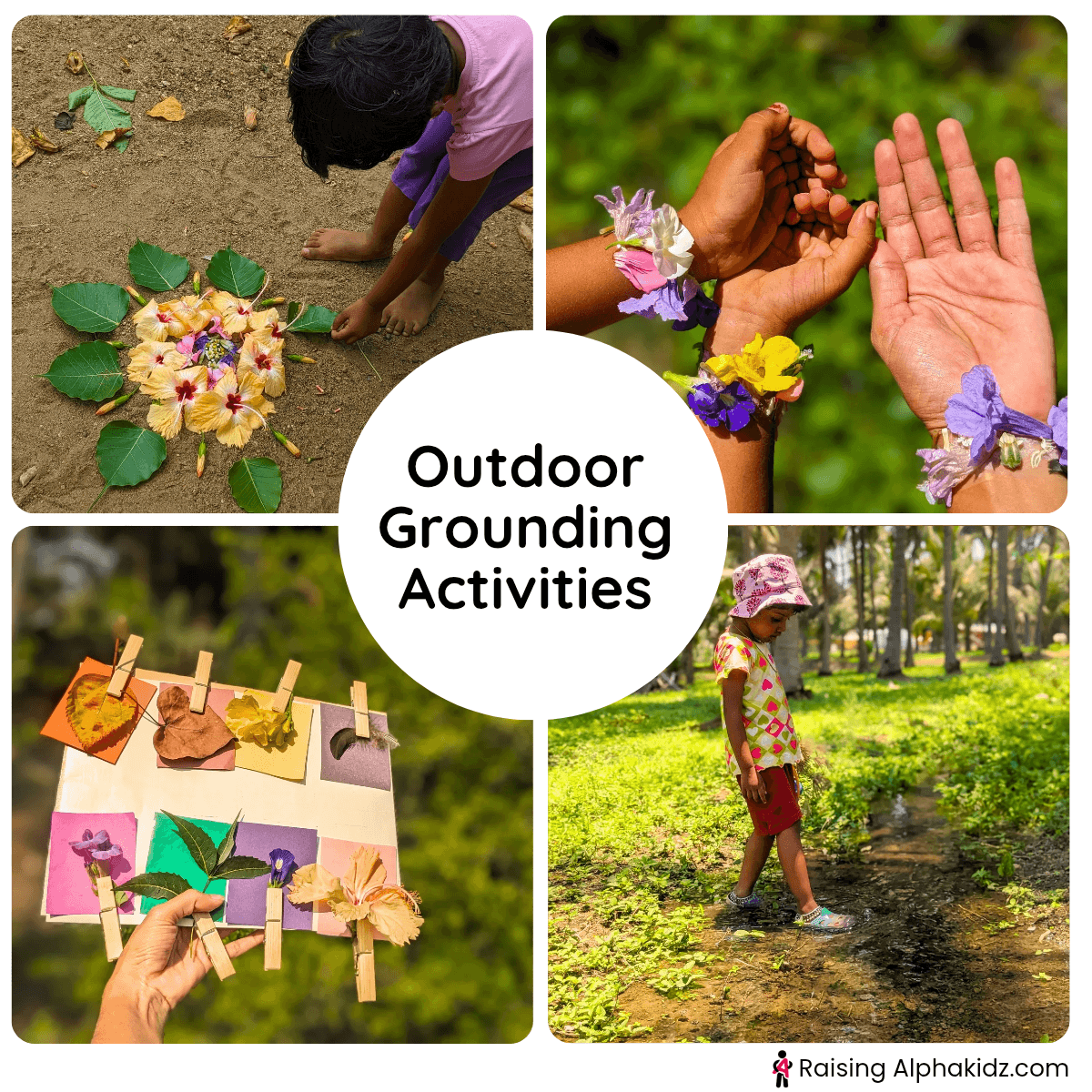
- Scavenger hunts — nature color hunt, plant hunt, bug hunt, leaf hunt, or finding natural treasures
- Nature creative play — making a nature bracelet, creating nature floral mandala, or hanging garland
- Nature crafts on the go — floral bouquets, flower crowns, or simple nature sun-catchers

Related Posts: Nature Walk Activities For Kids
These activities combine movement, sensory input, and curiosity, making grounding feel like an adventure rather than a technique.
Grounding Yoga Poses for Kids
Yoga poses acts as a structured physical grounding activities for kids where simply playful movement using simple poses paired with slow breathing or imagination helps both mental and physical grounding for kids.
Animal themes and storytelling make the practice engaging while helping children feel calm, safe, and centered.
Child-Friendly Basic Poses
- Tree Pose
- Mountain Pose
- Airplane Pose
- Child’s Pose
- Self-Hug Pose
- Stomp-Stomp-Blow (stomp feet, then blow out a big breath)
These poses build body awareness, stability, and emotional regulation.
Animal-Themed Yoga Poses
Animal poses are especially appealing and fun-filled grounding activities for kids because children can pretend, move, and express energy safely.
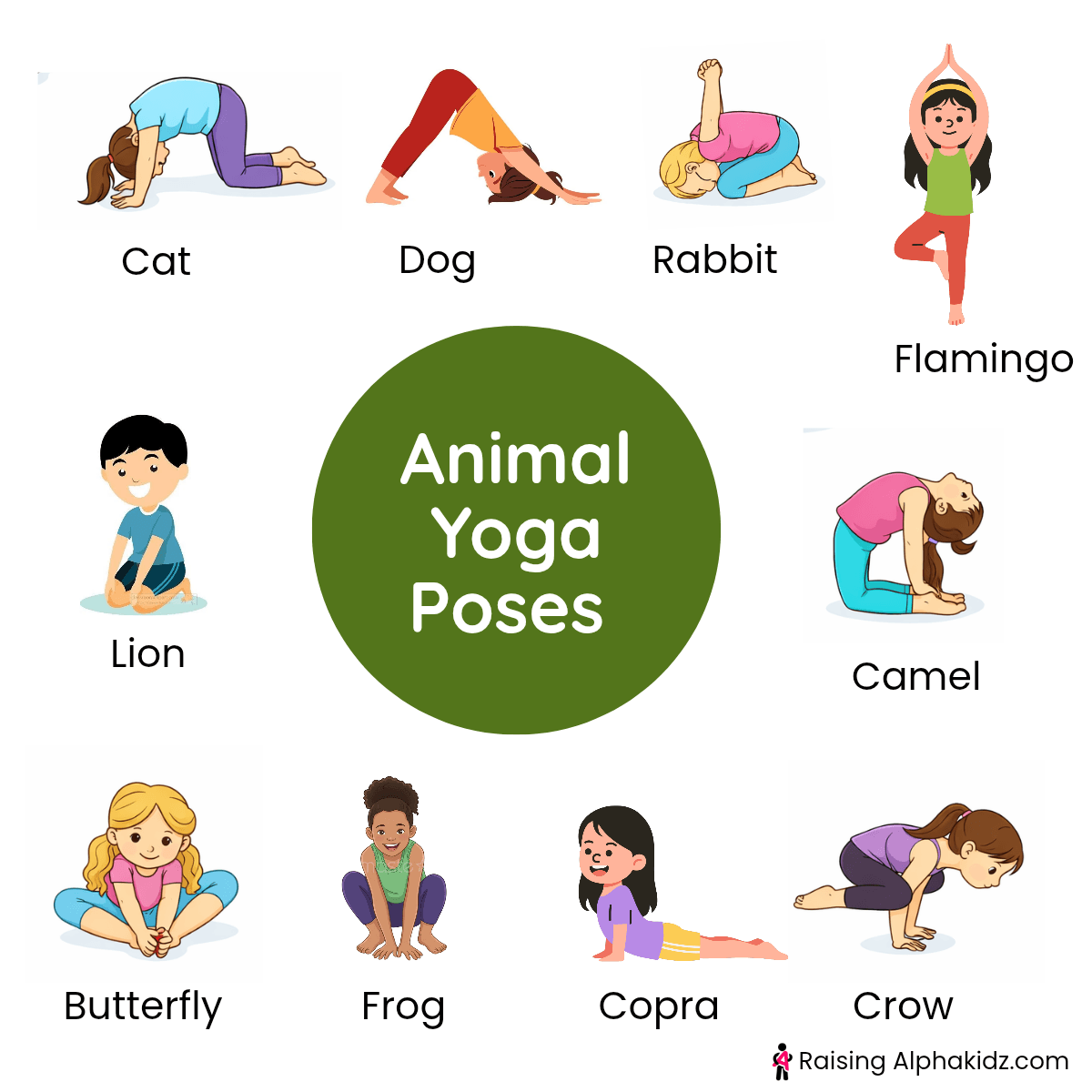
- Duckling / Duck (Squat)
- Foal / Horse (Three-Legged Dog)
- Rabbit Pose
- Butterfly
- Lion
- Snake
- Monkey
- Giraffe
- Flamingo
- Cow
- Dog
- Puppy Pose
- Cat Pose
- Kangaroo / Joey (Chair Pose)
- Elephant Pose
Imitating animals encourages deep breathing, stretching, and playful release of tension.
Stretching & Balancing Activities
Simple balance and stretch games also provide strong grounding input by engaging muscles and focus.
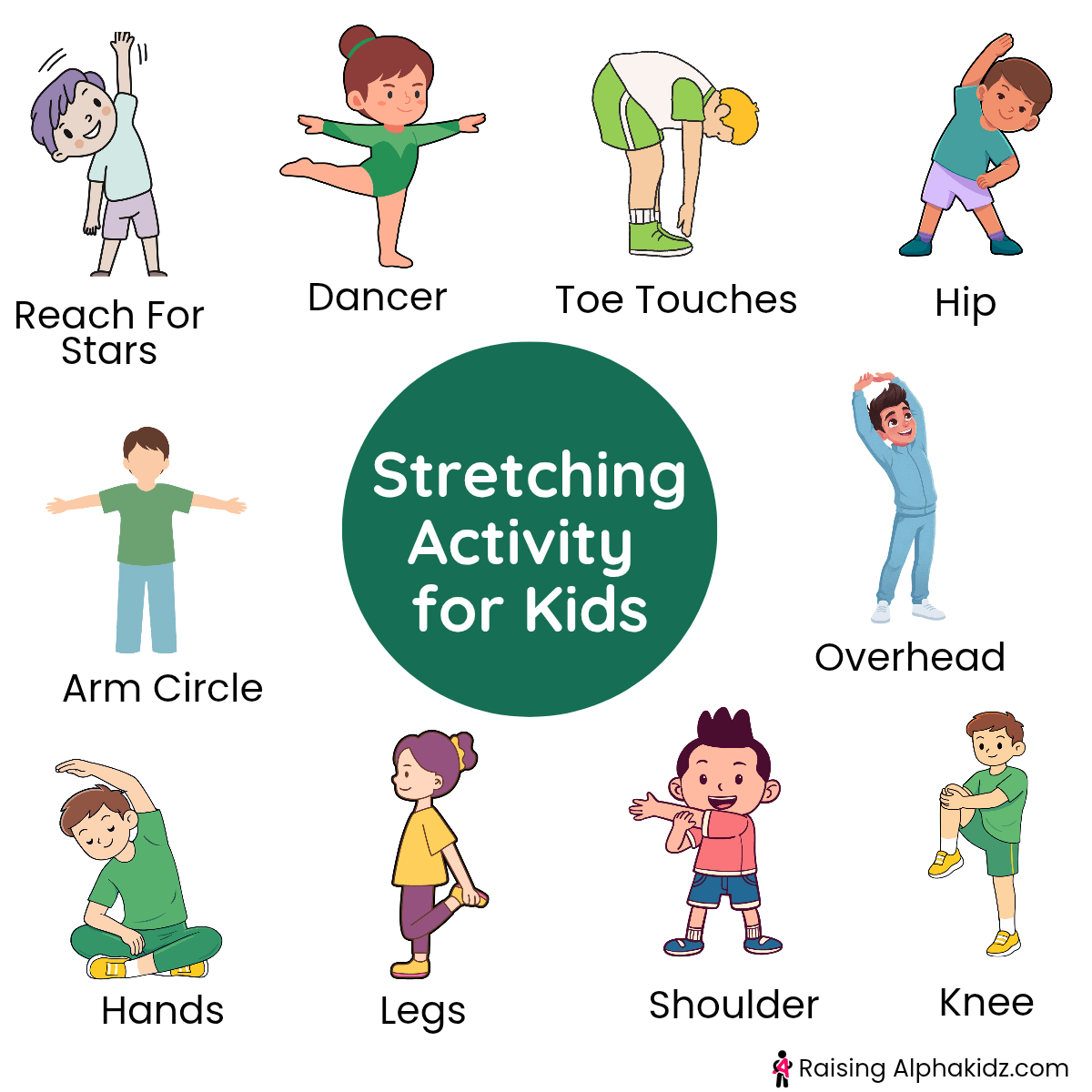
- Dancer Pose
- Reach-for-the-Sky Stretch
- Hop on One Foot
- Balance a Ball on the Head
- Walk on a Straight Line
These activities improve coordination, concentration, and body awareness while helping children feel steady and in control.
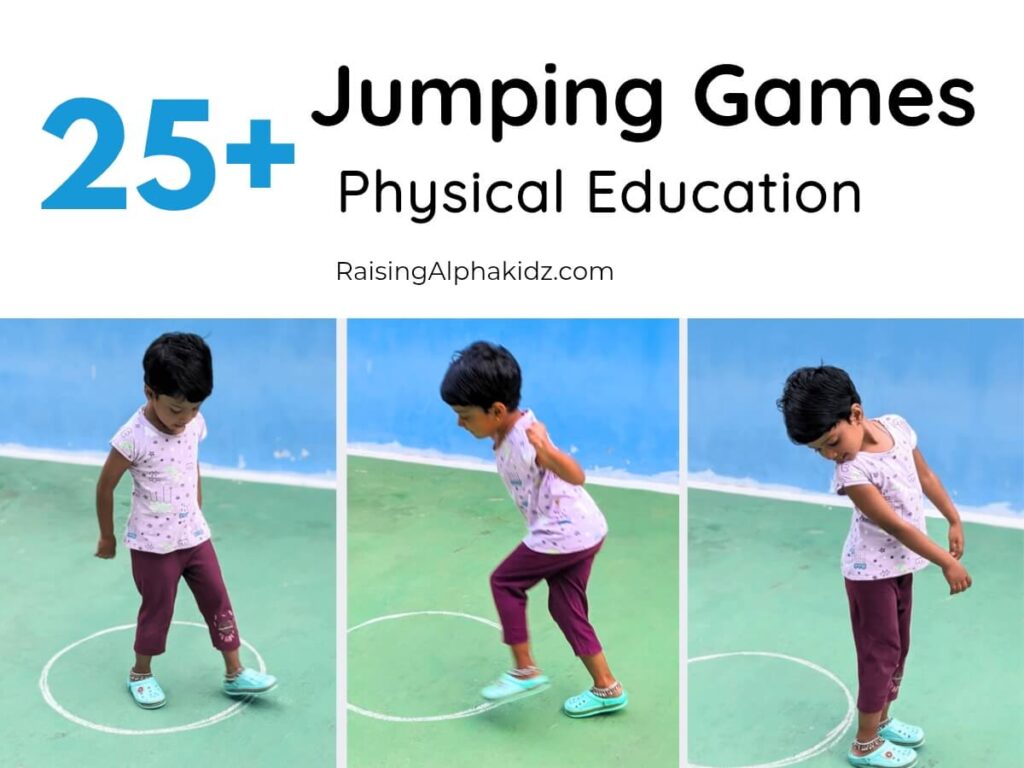
Related Posts: 25+ No equipment jumping games for kindergarten kids
Through movement, play, and imagination, children can discharge excess energy, reconnect with their bodies, and return to a calmer emotional state—naturally and joyfully.
Martial Arts
Martial arts can be a powerful grounding practice for children because it combines structured movement, breathing, focus, and self-control. Therefore, practicing kicks, punches, stances, and forms directs intense emotions—such as anger, anxiety, or restlessness—into purposeful physical action. Therefore, this helps children reconnect with their bodies, release excess energy, and feel calm yet strong.
Furthermore, the disciplined and repetitive nature of martial arts builds concentration, balance, and body awareness while teaching children to pause, listen, and respond rather than react impulsively. In addition, respectful routines, clear rules, and predictable sequences also create a sense of safety and stability, making martial arts especially helpful for emotional regulation and confidence building.
Emotional Grounding
Grounding Through Hugs
Whenever a child has a burst of big emotions, a warm hug can help them feel safe and calm. Therefore, hugging provides firm, compassionate physical contact that supports emotional regulation and soothes the nervous system.
Grounding Through Pets
Since ancient times, humans have domesticated animals for protection and companionship. Over time, pets became much more than helpers—they became trusted emotional companions. For children, pets can provide a steady, comforting presence that feels safer and more predictable than complex human interactions.
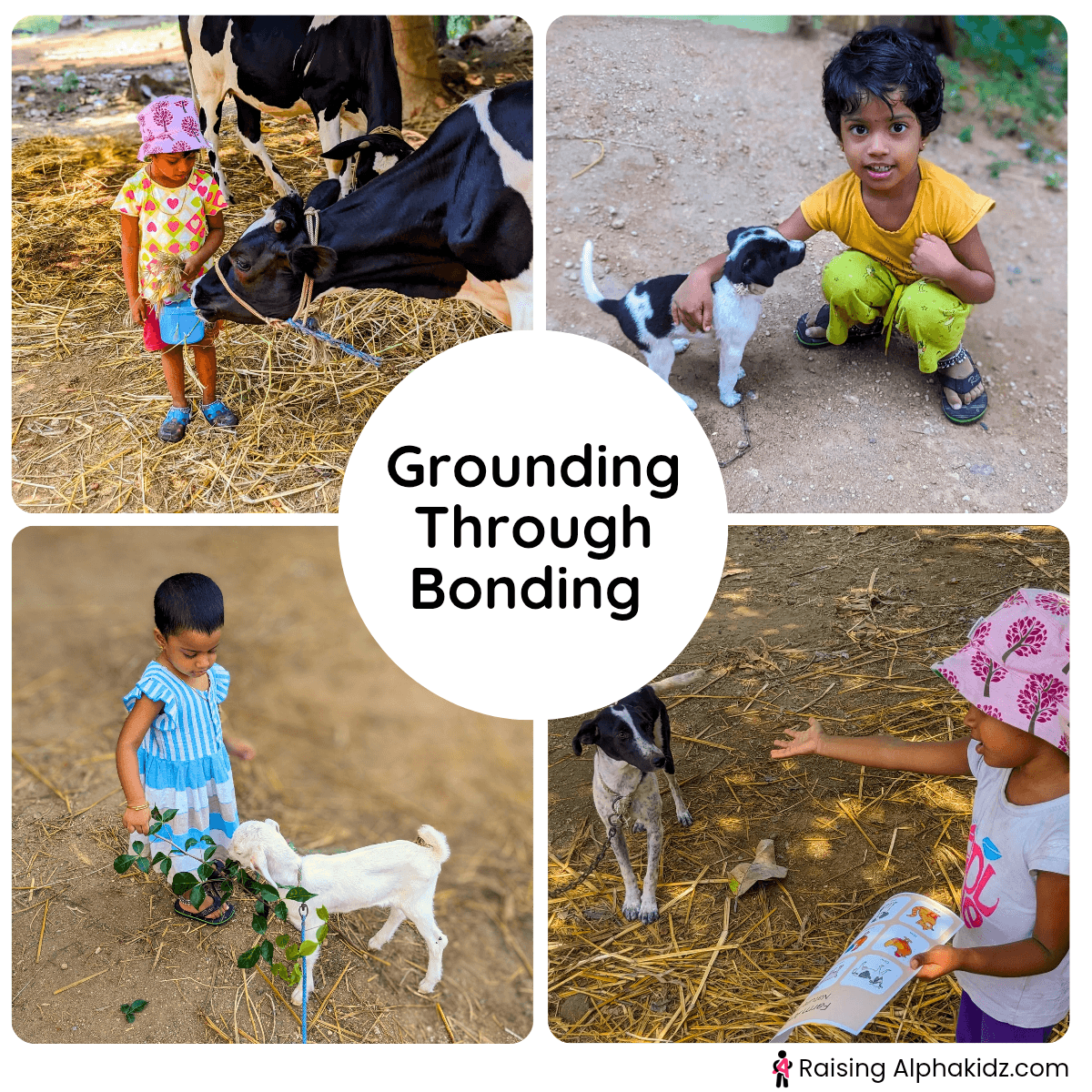
Grounding through pets helps regulate emotions by offering a calm, non-judgmental connection. Thus, gentle interaction with animals can lower stress hormones like cortisol and increase oxytocin—the “bonding hormone”—which promotes relaxation, trust, and a sense of security. Because pets respond in consistent and predictable ways, they help create the emotional stability needed for a calm nervous system.
Mental Grounding Activities
Grounding Through Listening
Mental grounding for kids can be supported by helping children focus on sounds around them. During a nature walk, invite them to listen for birds, wind, insects, or water. If indoors, you can play animal or nature sounds and turn it into a fun guessing game.
How to Make Sound Awareness Grounding Playful
Sound Identification Game
Play sounds of animals, rain, rivers, chirping birds, or bells and ask children to guess what they hear. This playful activity shifts attention away from worries to the present moment.
Therefore, focusing on external sounds interrupts racing thoughts and helps the brain filter distractions, improving concentration and emotional calm.
Grounding Through Self-Expression
Grounding through self-expression helps children return to the present moment when they feel anxious, overwhelmed, or distressed.
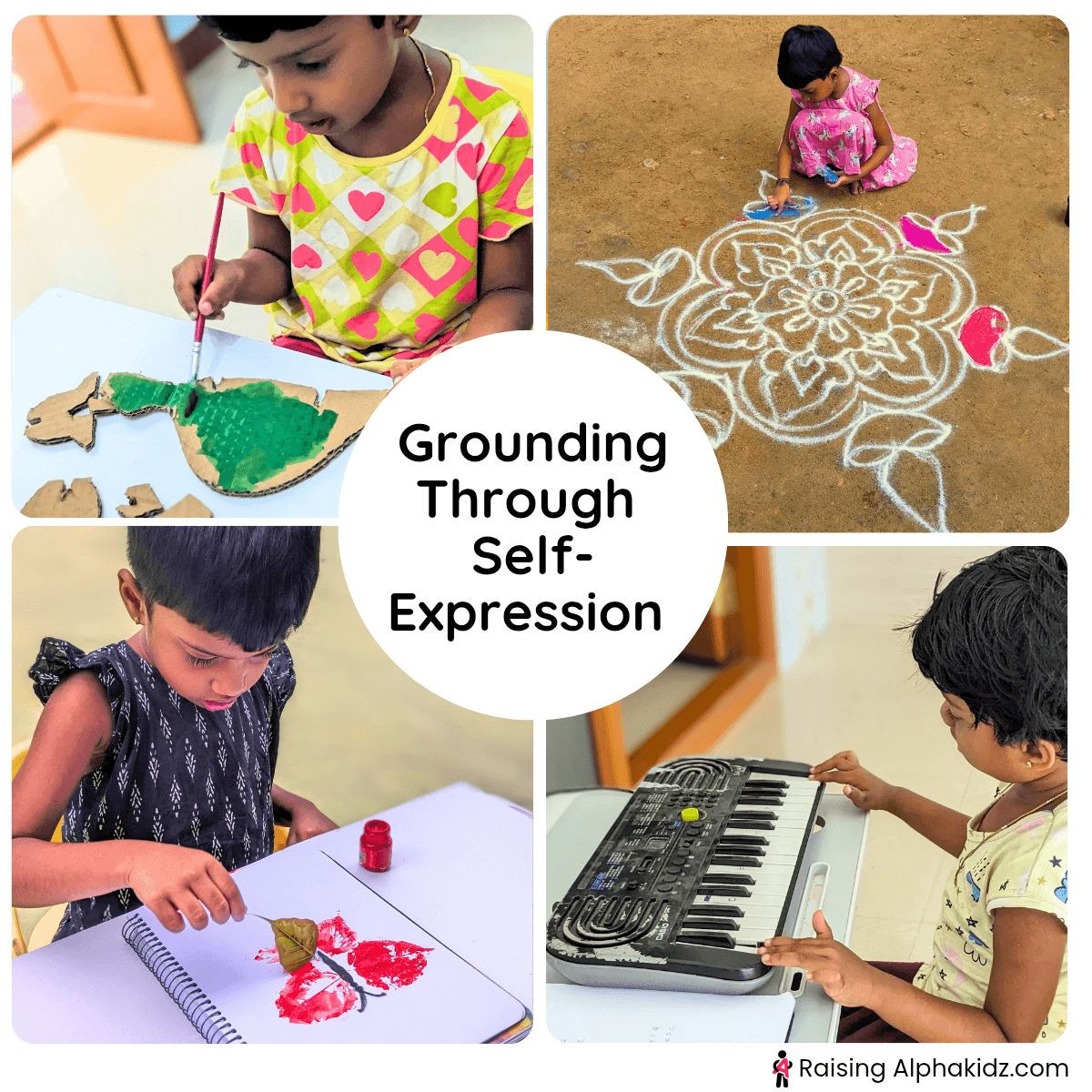
By putting thoughts and feelings into words, sounds, movement, or creative forms—such as talking, storytelling, singing, playing musical instruments, drawing, or even practicing martial arts—children shift attention away from worries or past events and connect with what is real and happening now.
Hence, expressing themselves in safe, active ways releases emotional pressure, regulates the body, and restores a sense of calm, confidence, and control.
Descriptive Grounding for Kids
Expressing themselves through words shifts attention away from distress and reconnects them to the present moment. Further, it helps children feel heard, understood, and calmer. Therefore, you can involve kids in descriptive Grounding by the below ways.
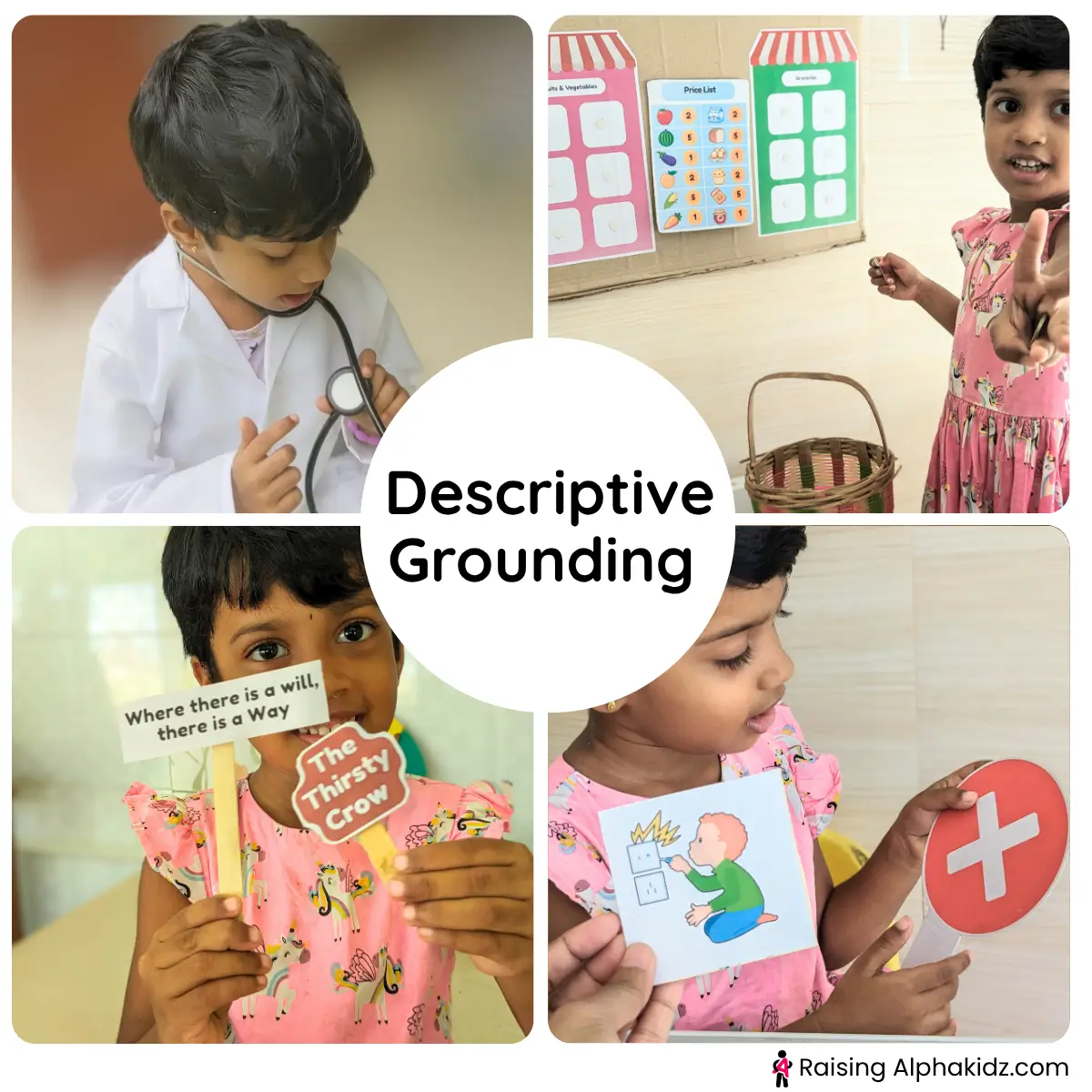
- Talking about their feelings
- Describing a favorite object or memory
- Storytelling (real or imaginary)
- Creating and narrating their own stories
- Singing songs or rhymes
- Reciting poems or prayers
- Role-play or pretend conversations
- Puppet shows or dramatic play
- Pretend play games
- Sharing about their day or experiences
- Self-introduction or talking about favorites (food, friends, games)
These expressive activities allow children to “empty out” emotional buildup safely while staying grounded and connected.
Creative Grounding for Kids
Creative activities allow children to express emotions safely while staying focused. Making something tangible transforms restless energy into calm engagement, while artistic expression helps release inner tension. Creative play also builds confidence and provides a soothing sense of accomplishment.
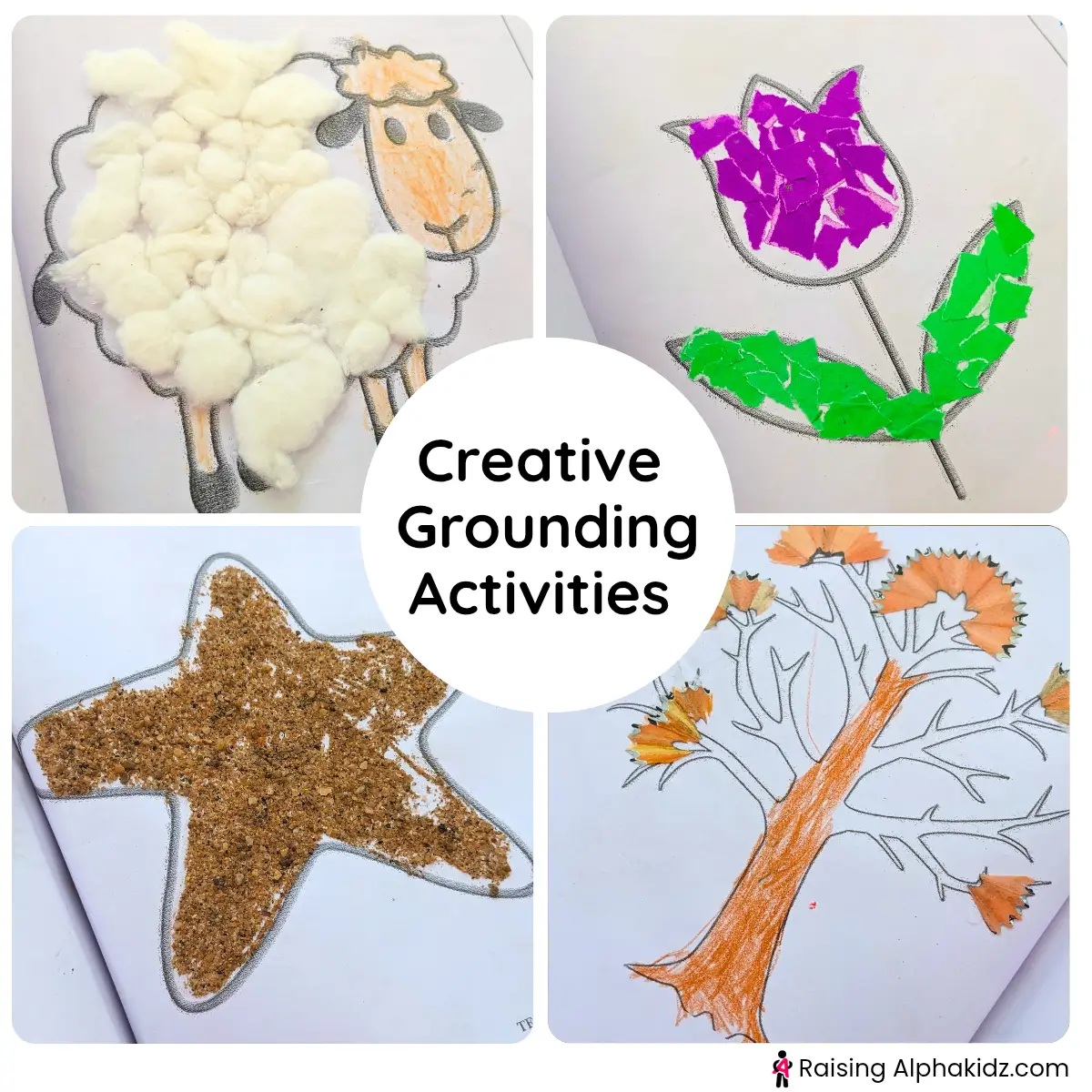
- Coloring pages,
- Free drawing or doodling,
- Painting or watercolor play
- Clay or play-dough modeling
- Craft using paper, leaves, or recycled materials.
- Bead threading or jewelry making
- Singing favorite songs or rhymes
- Playing musical instruments (drum, keyboard, flute, etc.)
- Dancing freely to music
- Acting, role-play, or puppet shows
Cognitive Grounding For Kids
Mental grounding helps children manage anxiety, stress, or overwhelm by shifting attention from distressing thoughts to focused thinking activities.
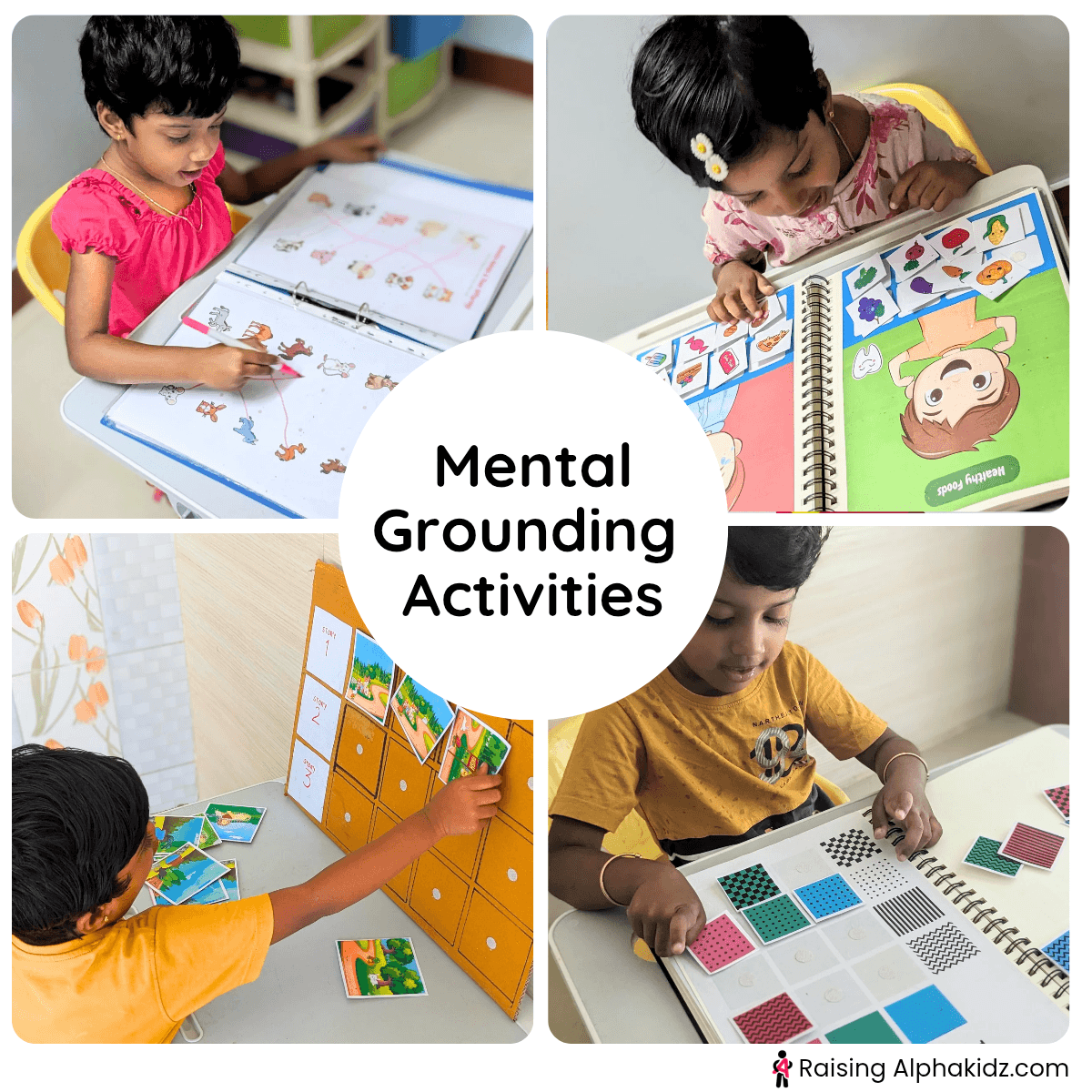
It engages the brain in tasks that require concentration, helping interrupt worry cycles and bring awareness back to the present moment. These activities provide a sense of control, structure, and calm.
Observation
Careful observation redirects attention from internal distress to the external world. Also, noticing details in real time anchors the mind in what is happening now. This quiet awareness can quickly reduce anxiety and restlessness.
- Watch clouds moving, rain falling, or shadows changing
- Observe birds, butterflies, bees, ants, or animals
- Look for moving objects (cars, people, leaves in wind)
- Describe objects in the room (color, shape, size, use)
- Window watching — notice what is happening outside
- Spot changes in surroundings (lights on/off, before/after rain)
Planning
Planning organizes scattered thoughts into clear steps and goals. It gives children a sense of purpose and direction. Therefore, focusing on “what to do next” helps the brain shift away from worry.
- Design and build a structure with blocks
- Plan a pretend game (grocery store, school, hospital, restaurant)
- Arrange a play corner or toy shelf
- Plan steps to get ready for school or bedtime
- Plan a picnic menu or snack plate
- Pack a bag for an outing or sleepover
Listing
Listing creates mental order and structure. Also, naming items keeps the mind busy in a simple, predictable way. This repetitive thinking pattern is calming and stabilizing.
- List favorite foods, animals, games, or friends
- List places to visit during holidays
- List items needed for a task (school bag, art kit)
Categorizing
Sorting real objects organizes both the environment and the child’s thoughts. Hands-on grouping activities provide strong cognitive and sensory input. This helps reduce mental clutter and improve focus.
- Sort toys by type, color, shape, or size
- Separate clothes while loading the washing machine
- Classify garbage (biodegradable vs. plastic)
- Sort groceries (fruits vs. vegetables)
- Categorising land and water animals
- Unhealthy & healthy food sorting
- Group animals by habitat (land/water/air)
- Categorize transport (road/rail/air/water)
- Story sequencing activity
- Matching fruits & vegetables activities
- Matching Animals Skin pattern activity
- Matching animals and their foods
- Matching animals & young ones
- Alphabet to object matching
Problem-Solving
Problem-solving engages logical thinking and attention. Also, working toward a solution redirects energy away from distress. Completing a task also builds confidence and calm.
- Puzzles
- Mazes
- Activities that involve Pattern completion, Pattern Matching, Pattern Recognition, Pattern Making.
- Sudoku or number puzzles (age-appropriate)
- Matching card games
- Construction or assembly challenges
- Tangram or shape puzzles
- Fixing or assembling a toy
These real-time mental grounding activities combine thinking, play, and hands-on engagement to help children refocus, calm down, and regain emotional balance in a natural way.
Grounding For Kids Through Routine
Routine is the foundation that supports all other grounding practices. Also, consistent, predictable daily patterns help children feel safe, stable, and in control of their world. As a result, when life follows a rhythm, anxiety reduces, stress lowers, and emotional regulation improves.

Discipline and effective habits act as the “roots,” giving children a steady base from which confidence, calmness, and independence can grow.
Essential Grounding Routines for kids
- Consistent sleep schedule — sleep and wake at the same time every day
- Calm bedtime routine — bath, story, prayer/quiet time, lights off
- Mindful nutrition — regular meal times; include nourishing foods like root vegetables (carrot, beetroot, sweet potato)
- Morning routine — wake up, brush, get dressed, make the bed
- Reducing rush — start tasks early to avoid last-minute stress
Structure & Organization
- Defined areas — specific places for play, study, sleep, and storage
- Organized spaces — everything has a fixed place
- Planned time slots — regular times for meals, play, study, rest, and sleep
- Daily tidy-up time — cleaning room, arranging toys, clearing study table
- Visual schedules or charts for younger children
Responsibility & Life Skills
- Wash their own plate after meals
- Fold and put away their clothes
- Keep shoes organized in the rack
- Pack and unpack their school bag
- Take care of personal belongings
- Help with simple household chores (watering plants, setting the table)
Emotional & Mental Stability Habits
- Daily outdoor time or physical activity
- Quiet time for reading, drawing, or reflection
- Screen-free periods during the day
- Regular family time (meals together, conversations)
- Gratitude practice — sharing one good thing about the day
- Planning the next day before bedtime
Personal Care & Self-Reliance
- Bathing and grooming at regular times
- Keeping personal space clean
- Choosing clothes for the next day
- Learning simple self-care tasks independently
A stable routine acts like an inner compass for children. Hence, when daily life is predictable, their nervous system relaxes, confidence grows, and they develop lifelong skills for calm, organization, and resilience.
When Do Kids Need Grounding?
- Meltdowns / tantrums
- Anxiety / fear
- Overstimulation (screens, noise)
- Trouble focusing Bedtime restlessness
How to Build a Daily Grounding Routine
- Morning: barefoot / oudoor nature play
- Afternoon: movement play
- Evening: breathing + calm activity
How to Find your Child’s Temperament
| Trait | Too Little Grounding | Too Much Grounding |
|---|---|---|
| Energy | Hyper, restless | Slow, lazy |
| Focus | Easily distracted | Stuck on one thing |
| Emotions | Anxious, overwhelmed | Clingy, stubborn |
| Routine | Inconsistent habits | Too rigid without flexibility |
| Social | Impulsive | Dependent/shy |
| Learning | Scattered Thinking | Slow Processing |
| Eating | Irregular appetite & forgets to eat | Strong appetite & Slow eating |
| Sleep | Irregular | Sleeps a lot |
| Play-style | Chaotic, fast-changing, Uncoordinated | Repetitive, slow-paced, prefers familiar activities |
| Behavior | Restless, Chaotic, scattered, inconsistent, overstimulated | Indecisive, overthinks, resistant to change, avoids challenge, seeks comfort |
| Reaction to Stress | Outburst | Shutdown/ Withdrawal |
Activities to Balance Grounding in Kids
| State | What Your Child Needs |
|---|---|
| Underactive Earth Impulsive, anxious child | Body + Sensory + Routine grounding |
| Overactive Earth Stagnant, clingy child | Movement + Flexibility + Independence |
Finally, here is my concluding note. Please don’t view my suggestions as complex rocket science; they are simply evolved human traits passed down to our children. It is not strange for them to behave this way. Let’s teach our kids that it’s okay to feel overwhelmed or stubborn, but that they have the power to bring balance by grounding themselves back to safety