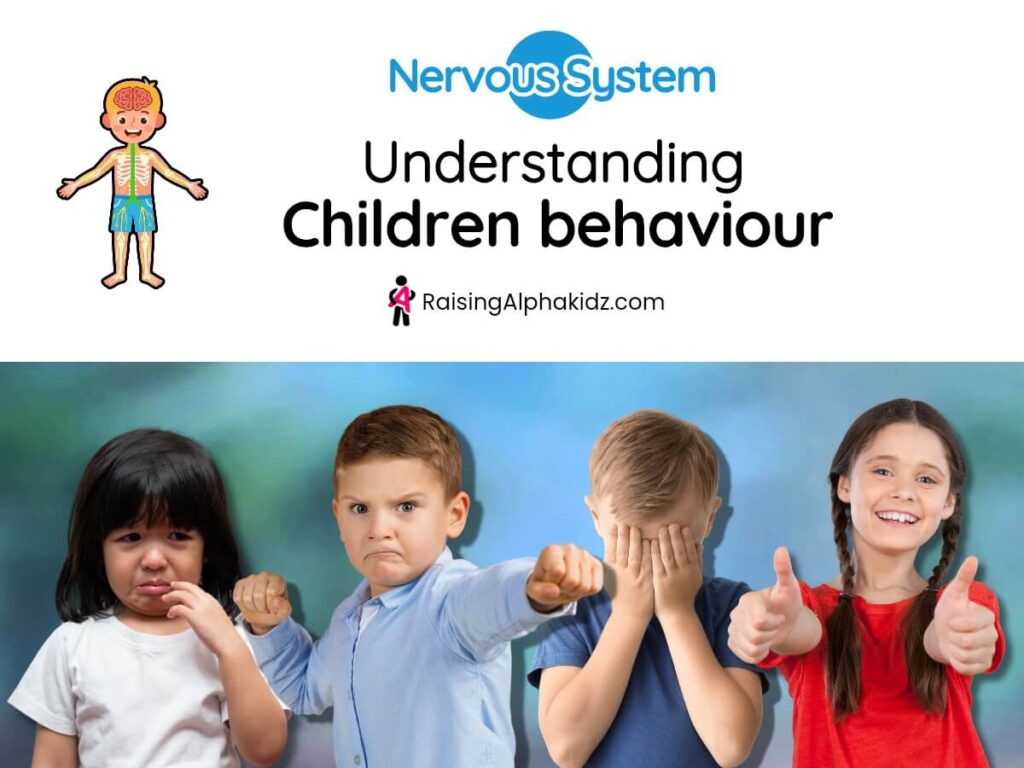
Understanding Children Behaviour & Knowing how child’s Nervous System Shapes It
As parents, we try to give the very best to our children — from food and education to safety, emotional support, values, routines, guidance, and countless daily decisions. Every parent is doing the same, just in different ways, shaped by their experiences, beliefs, and circumstances.
It’s like building a home, brick by brick, block by block. Every education method, parenting ideology, nurturing environment, and piece of advice adds another brick toward building a whole, human child.
As parents in the modern era, we constantly focus on adding more complex blocks while building this house. But what we might forget to keep an eye on the foundation. We ignore it because, like a basement, the foundation is not visible. In children, what we call the base foundation is the nervous system. Every child is born with an interconnected nervous system, but not operating in the same way. It inherits behavior from ancestors and shaped by experience.
Understanding Children Behaviour
- How to understand a child’s behavior?
- How to fix a child’s bad attitude?
- How to correct a rude child?
These are some of the million-dollar questions among parenting mothers. You can’t answer these questions with one fixed solution, because every child operates with a different nervous system pattern.
When parents try to fix behavior using one rigid answer without understanding the child’s nervous system, they end up managing symptoms instead of causes.
But when you understand how a child’s nervous system processes stress, safety, and stimulation, the need for rigid answers disappears.
You don’t react—you respond.
You don’t correct the child—you support regulation, and behavior reorganizes on its own.
Parenting doesn’t need more rules.
It needs more nervous system understanding. (ie. Understanding children behaviour)
Evolution of the Nervous System
Long, long ago, our ancestors survived in forests among dangers every now and then. So, our nervous system evolved to match their needs, not our modern lifestyle needs.
In such an era, there were only two responses needed for survival:
- Rest mode
- Action mode
When they saw danger, they had to take action — like hunting, running, chasing, pleasing, acting, and much more. Once they got their food for the day, all they had to do was rest and connect with the community. That’s all.
Two Modes of the Nervous System
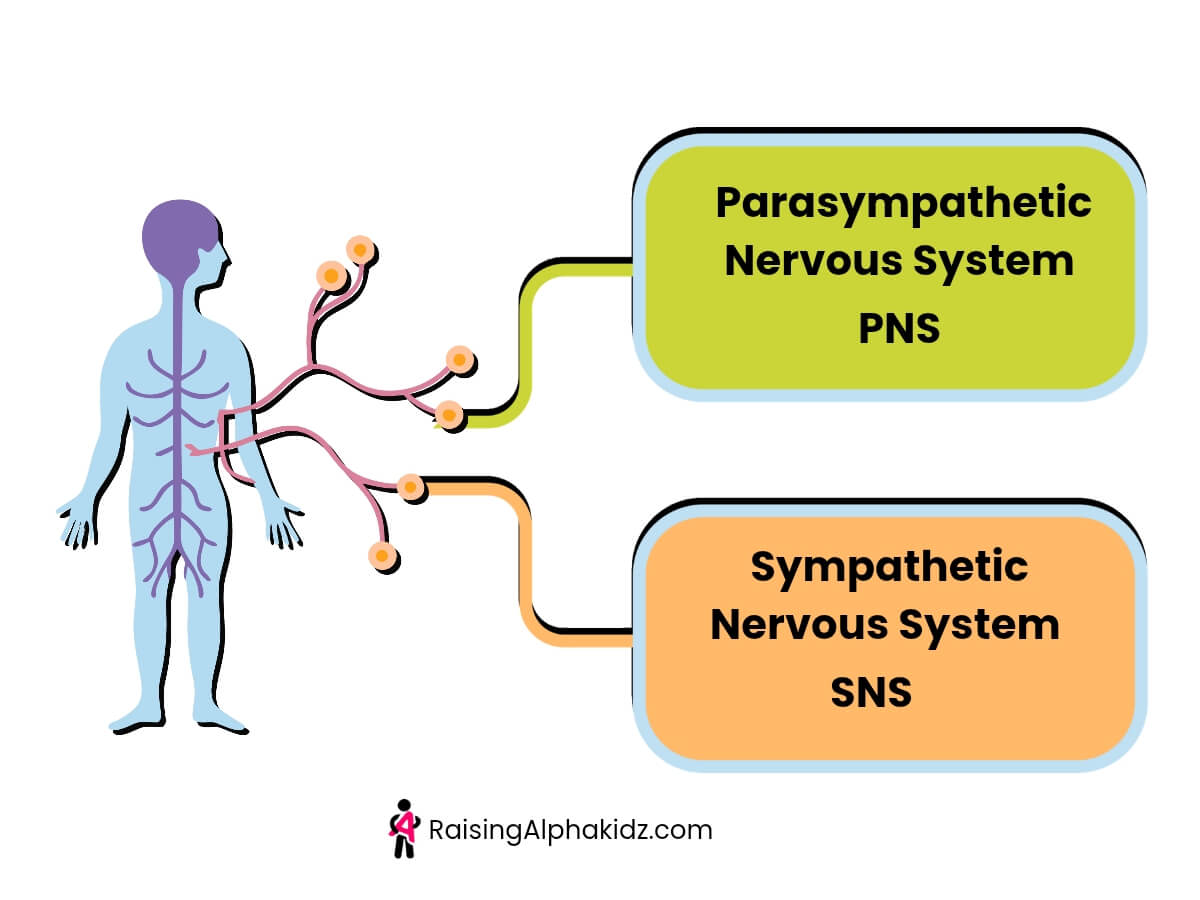
Our nervous system evolved to have two modes:
- Parasympathetic Nervous System (PNS)
- Sympathetic Nervous System (SNS)
The nervous system is made of the vagus nerve, which has two nerve chains:
- Ventral vagal nervous system
- Dorsal vagal nervous system
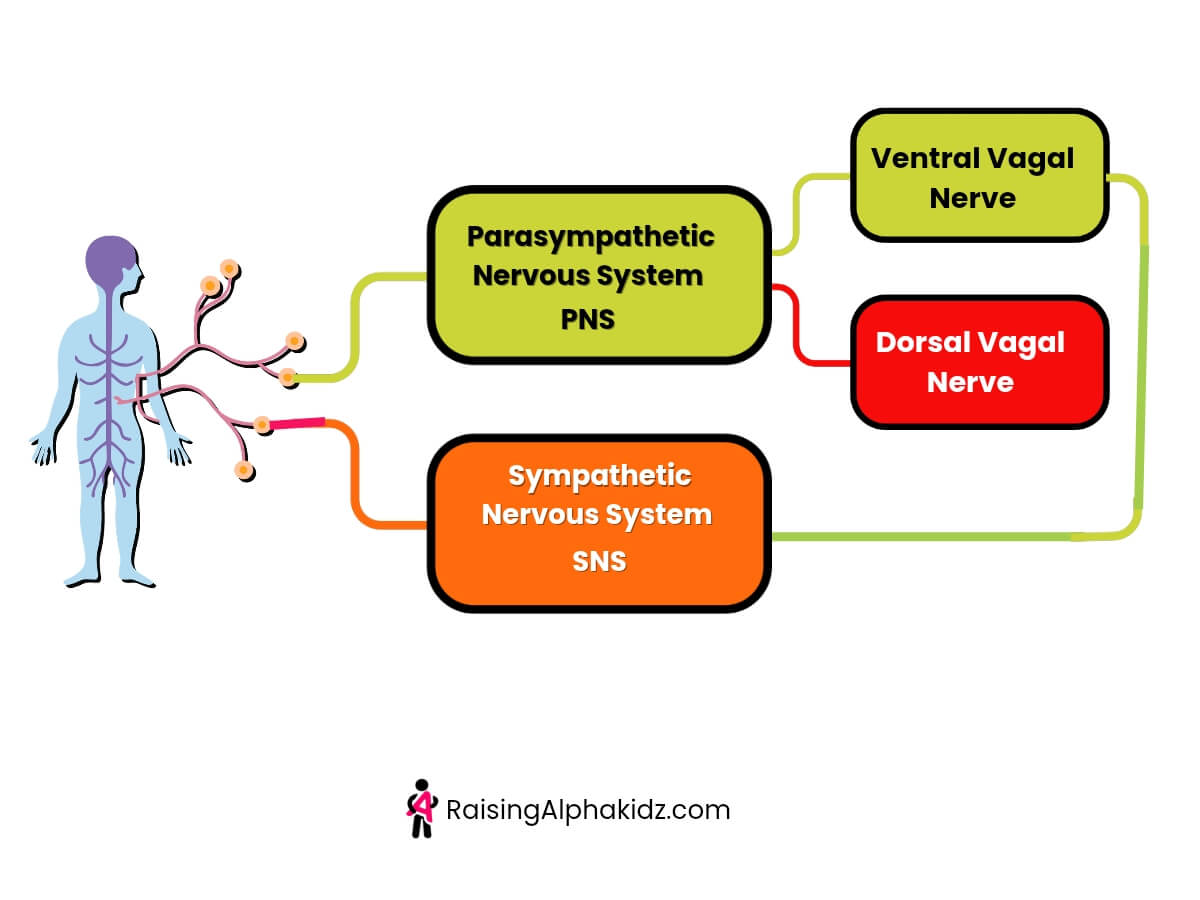
PNS responses and SNS responses choose their neural pathway based on the situation.
How PNS Responds
- Ventral pathway: Activated when there is no sign of danger around.
- It instructs the brain: “I’m safe.”
- Promotes connection with the community, and integration between thinking and feeling.
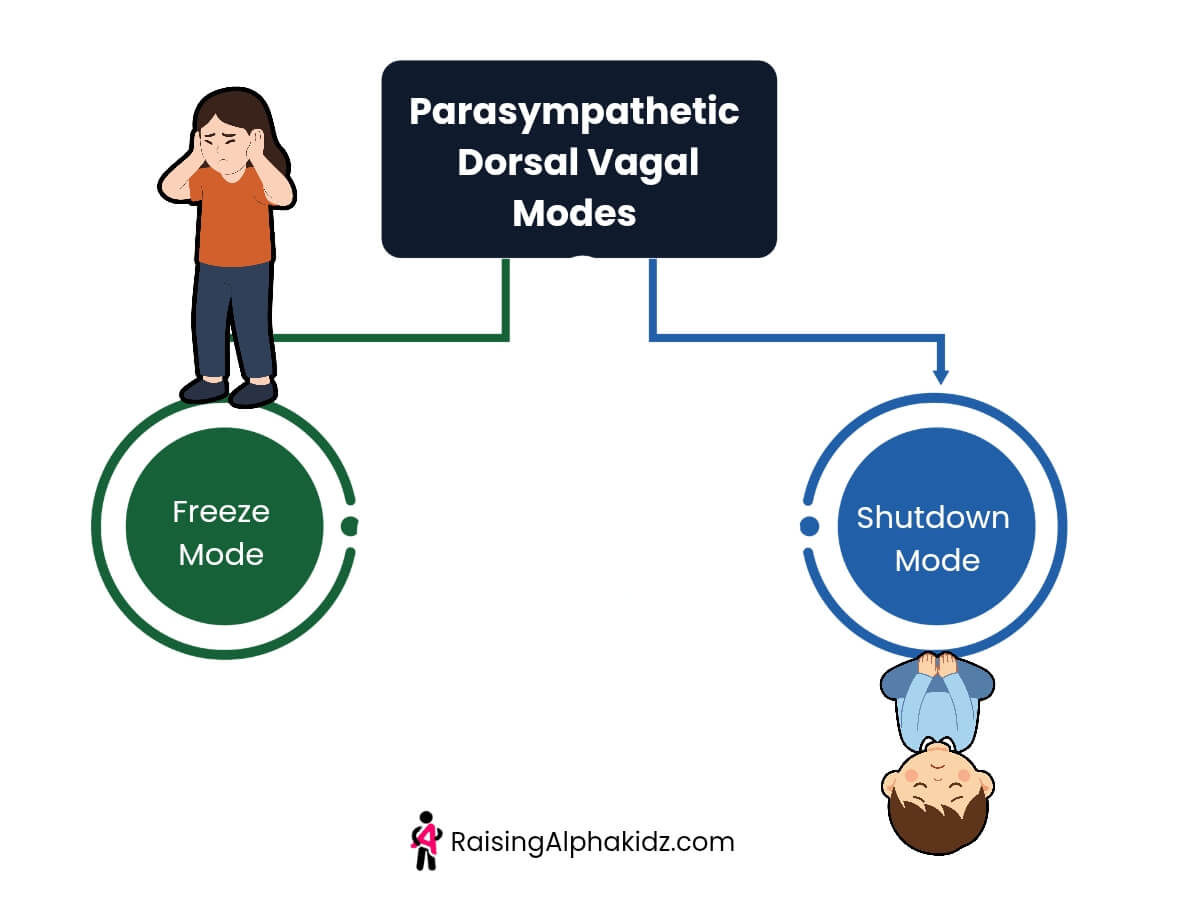
- Dorsal pathway: Activated when there is a great, dreadful situation and no sense of escape is possible.
- Last-resort survival strategy involving immobility
- Freeze – Staying completely still to avoid detection by predators
- Shutdown – Conserving energy when there is no possibility of survival through action
How SNS Responds
SNS is active when our ancestors had to execute an action with deep concentration, conviction, determination, and planning.
- Ventral pathway: Activated when there is a circumstance requiring action
- Focus on strategies to hunt, problem-solving for survival, making plans, leading a group, learning skills like using tools, etc.
- It instructs the brain: “Here is the challenge, focus, concentrate, and solve it.”
- Over evolution, SNS developed a more complex role.
- SNS Unregulated: Activated when there is a challenging situation around
- It instructs the brain to take action according to the situation.
- Unlike PNS dorsal (immobility), it is an active defense mechanism
- Responses: fight, flight, or fawn
- Fight – attack or confront
- Flight – escape, hide, avoid
- Fawn – please, comply, agree, manipulate
Responses in Life
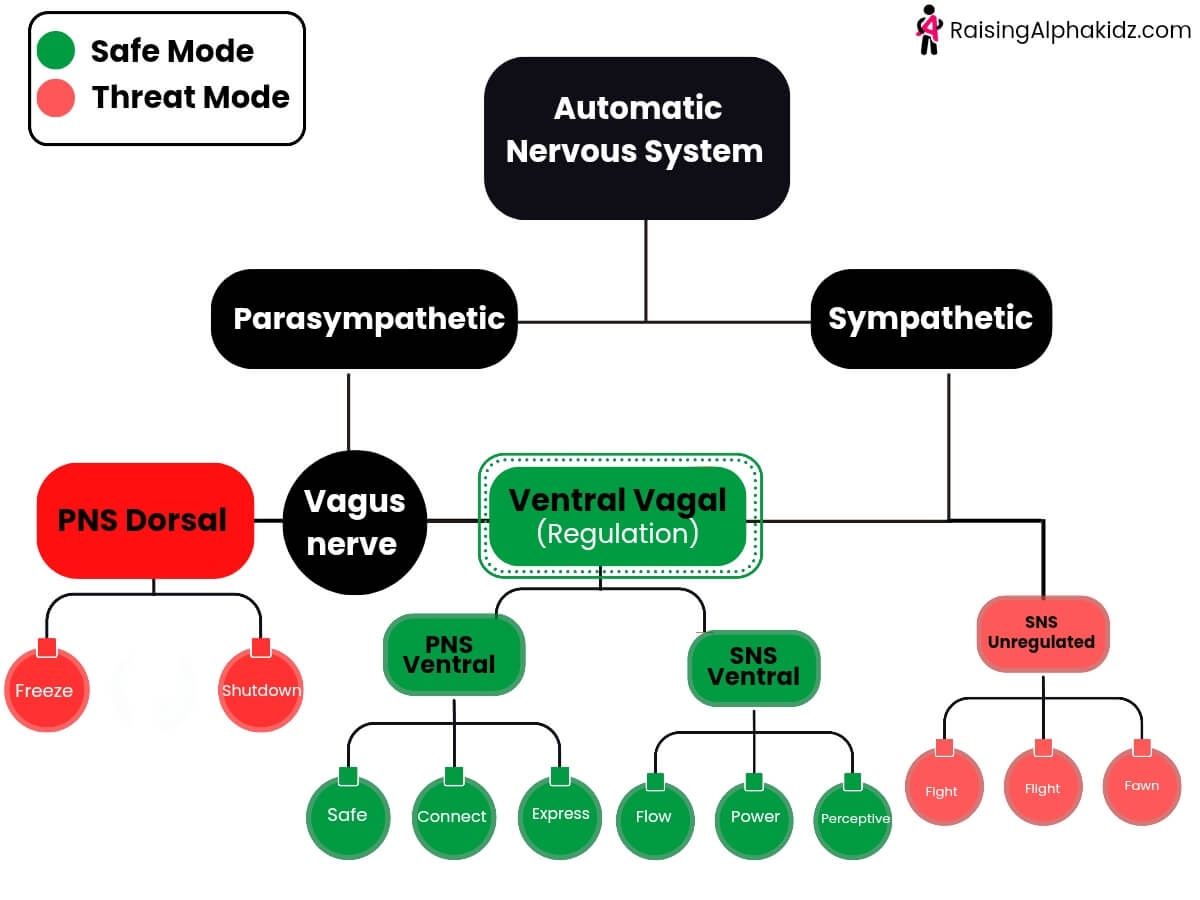
For every situation we face in life, there are 10 primary modes of response, categorized under Safe or Threat.
Safe Mode
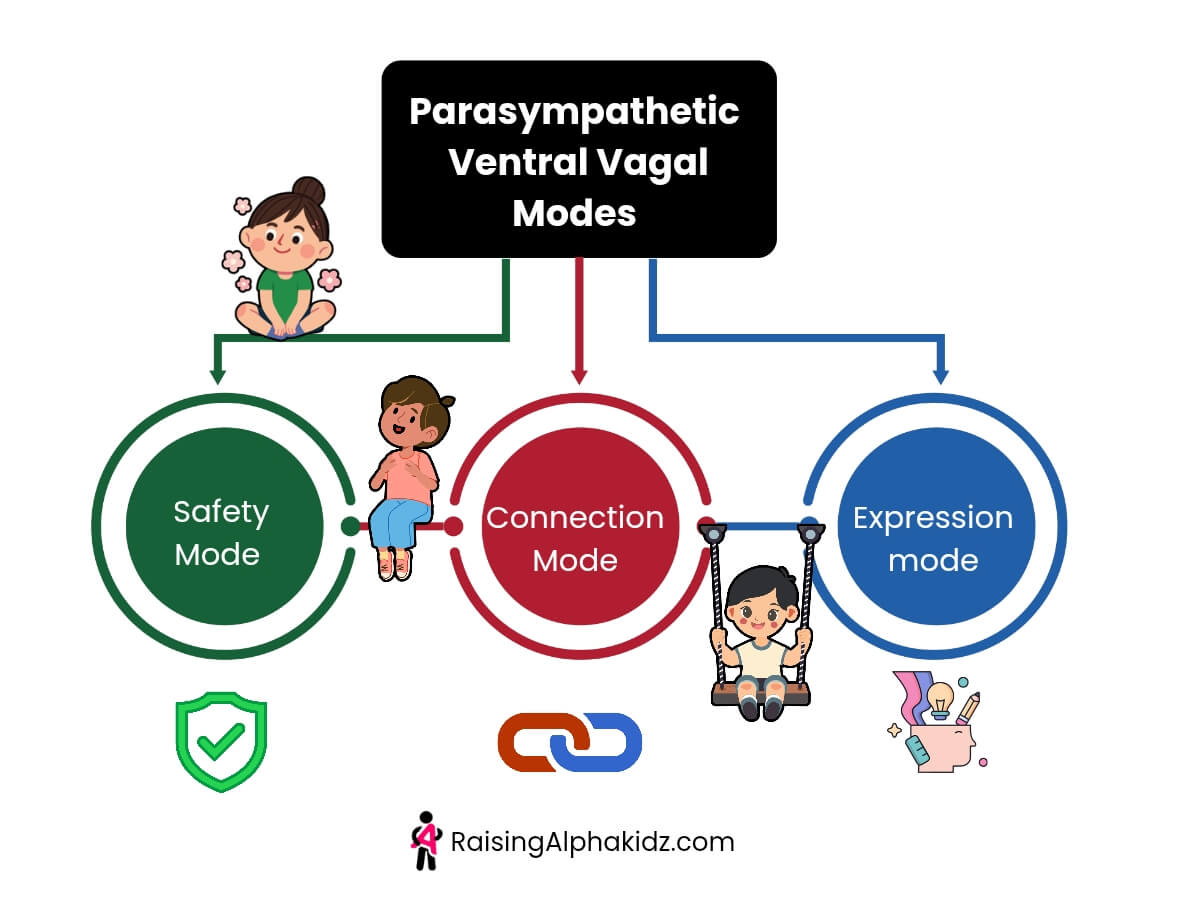
PNS Ventral:
- Safe (Rest) Mode
- Connection Mode
- Expression Mode
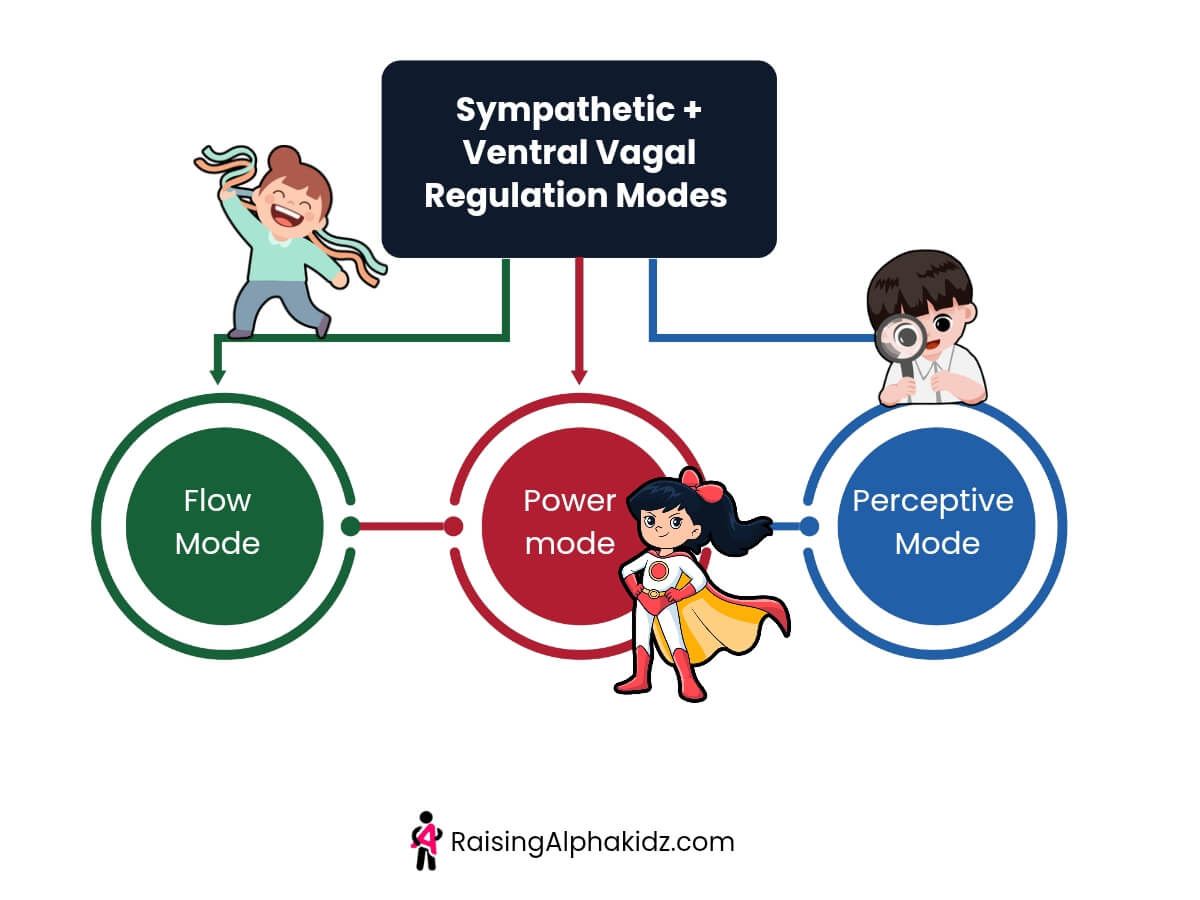
SNS Ventral Regulated:
- Flow (focus, concentrate,learn )
- Power (plan & action)
- Perception (vision/ insight)
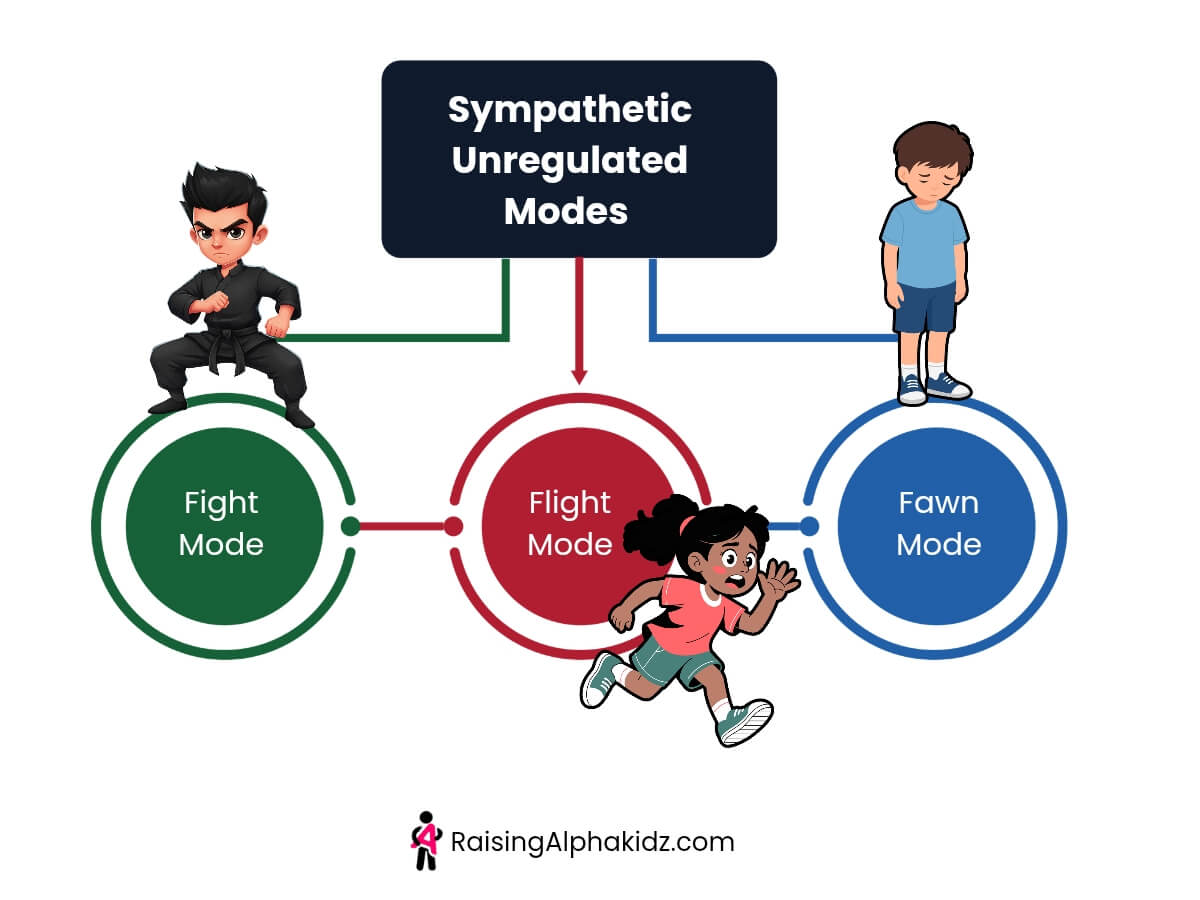
Threat Mode
SNS Unregulated:
- Fight – confront danger
- Flight – escape, avoid, hide
- Fawn – people-please, comply, agree, manipulate
PNS Dorsal:
4. Freeze – stay completely still
5. Shutdown – conserve energy, immobility
Even in modern life, playtime, learning, or social situations are filtered through these responses.
- If children feel safe → learning is possible
- If they feel threatened → nervous system prevents learning
Before adding more blocks to building a child’s future, make the foundation strong.
- Strengthen the ventral pathway so children treat every threat as a safe challenge to overcome, not as a threat triggering fight, flight, fawn, freeze, or shutdown.
Regulating the nervous system to make children choose the ventral pathway is key to making learning possible (adults too).
Parasympathetic Ventral Vagal State (Safety & Social Engagement)
When the parasympathetic ventral vagal system is active, children feel safe in their bodies. From this sense of safety, they naturally move into connection with others. When connection feels harmonious and secure, children begin to express themselves freely. This flow happens in levels: Safe → Connect → Express. Each mode has clear, observable traits that help caregivers identify where the child is emotionally and neurologically.
Safe Mode Traits
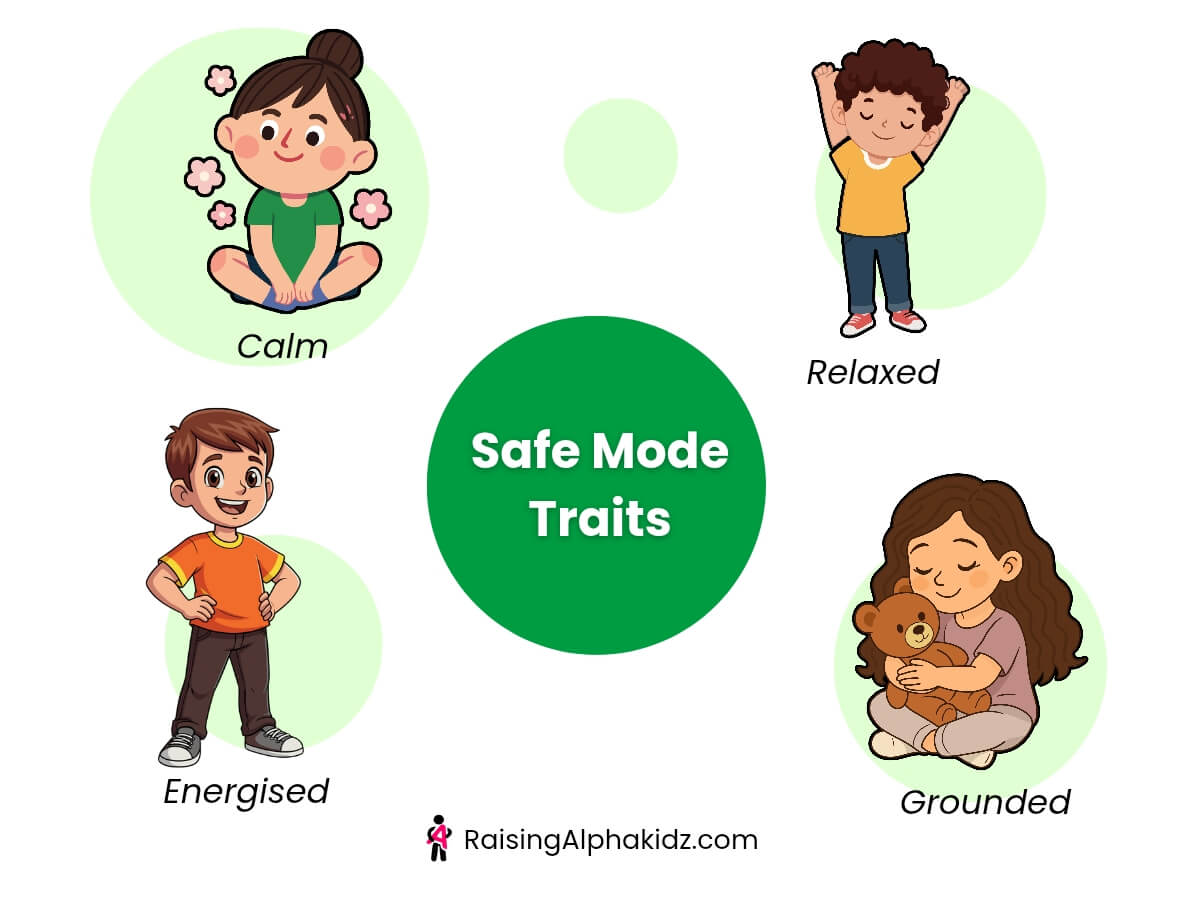
In safe mode, the child’s nervous system feels regulated and settled. The body and mind are at ease, creating the foundation for learning and relationships.
Traits include:
- Calm
- Grounded
- Relaxed
- Energized
Connect Mode Traits
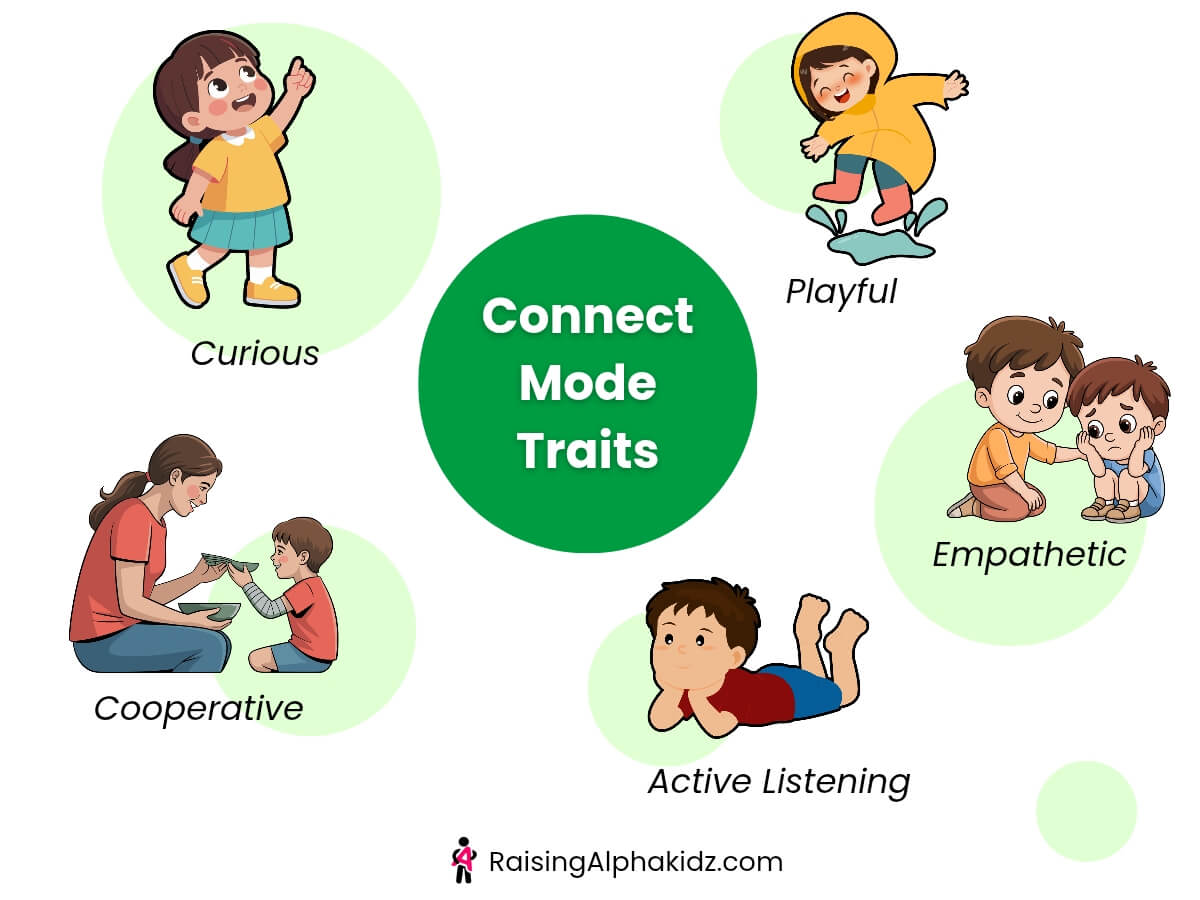
When safety is established, children move into connection. They become socially engaged and emotionally open with others.
Traits include:
- Active listening
- Curious
- Playful
- Cooperative
- Empathetic
- Emotional Openness
Express Mode Traits
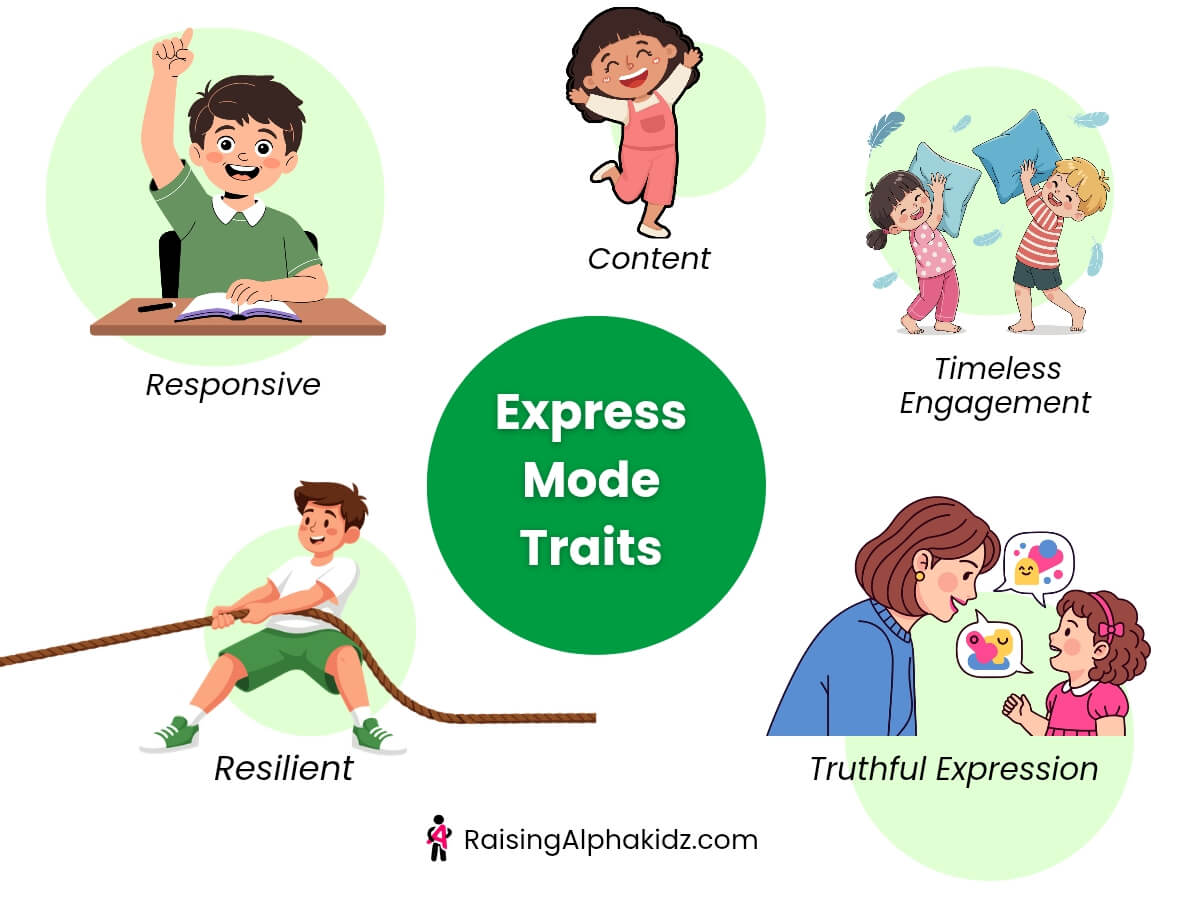
When connection is stable and mutual, children begin to express themselves authentically. They share ideas, emotions, and creativity with confidence.
Traits include:
- Ability to respond rather than react
- Content
- Timeless engagement
- Creative Immersion
- Resilient
- Truthful expression
These three modes are the best state for learning because children:
- Feel grounded in their bodies
- Connect easily with the outside world
- Express themselves clearly
Parasympathetic Dorsal Vagal State (Immobilization Response)
When the dorsal vagal system becomes dominant, the child’s body shifts into immobilization. This happens when stress feels overwhelming and escape or connection does not feel possible.
Freeze Mode Traits
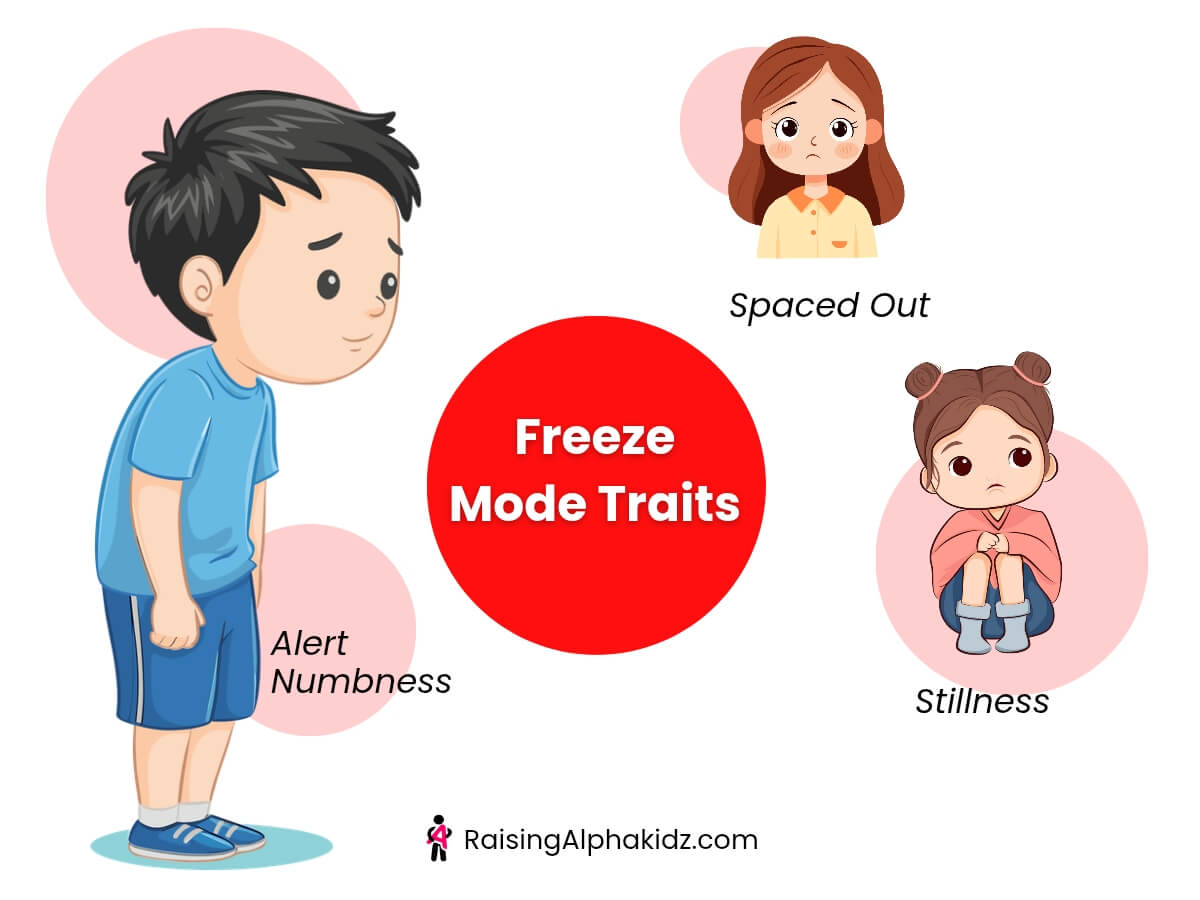
Freeze is a protective response where the child appears still but internally overwhelmed.
Traits include:
- Alert numbness
- Spaced out
- Dissociation
- Creative Blocks
- “Deer in headlights” stillness
Shutdown Mode Traits
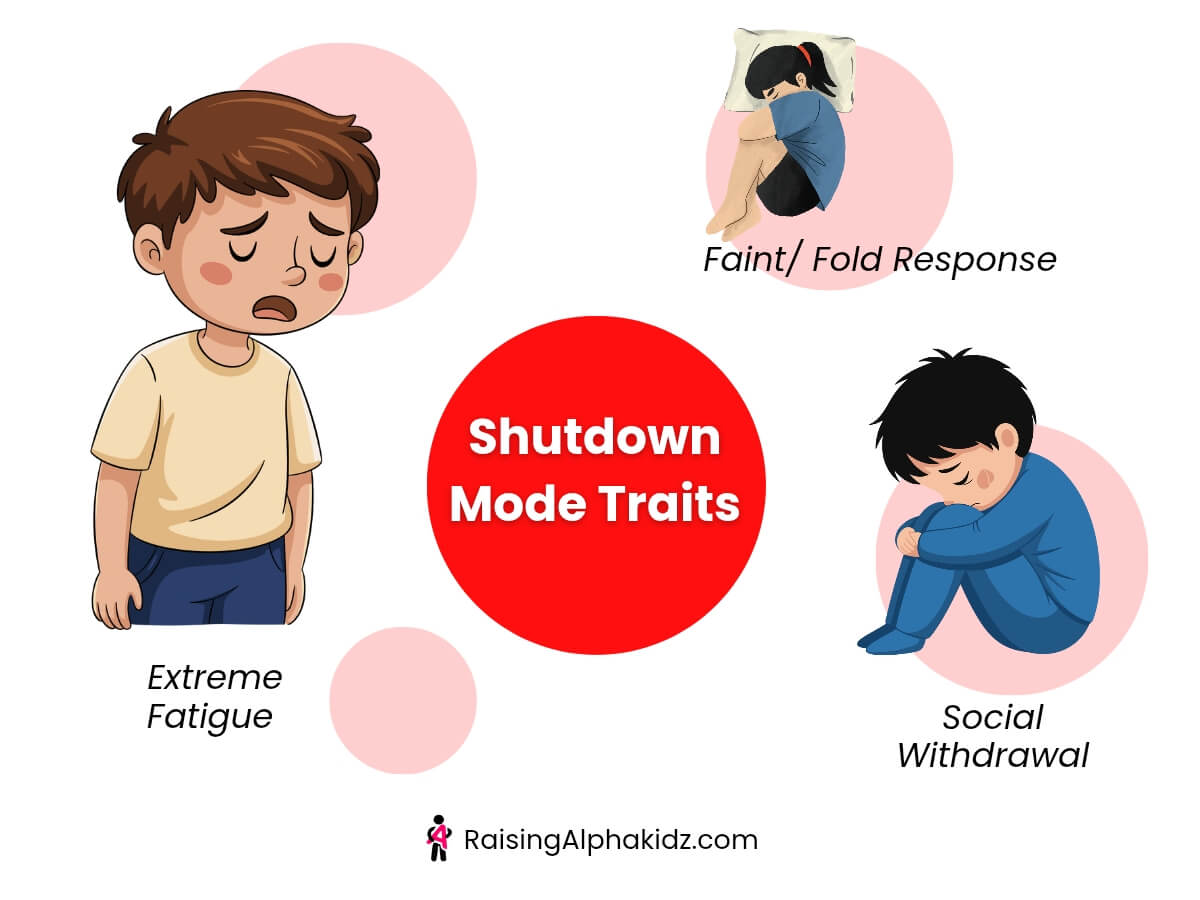
Shutdown is a deeper collapse response where the body conserves energy to survive stress.
Traits include:
- Extreme fatigue
- Social withdrawal
- Performance shutdown
- Lack of motivation
- Faint or fold response
This is the worst state for learning.
Children in this state often:
- Feel pressure to “be good”
- Do not feel safe expressing big emotions
What they need is gentleness, predictability, and emotional safety—not pressure. Discipline does not work here. Connection does.
Sympathetic Nervous System – Regulated Activation
When the sympathetic system is active but regulated, children have energy, motivation, and engagement without overwhelm.
Flow Mode Traits
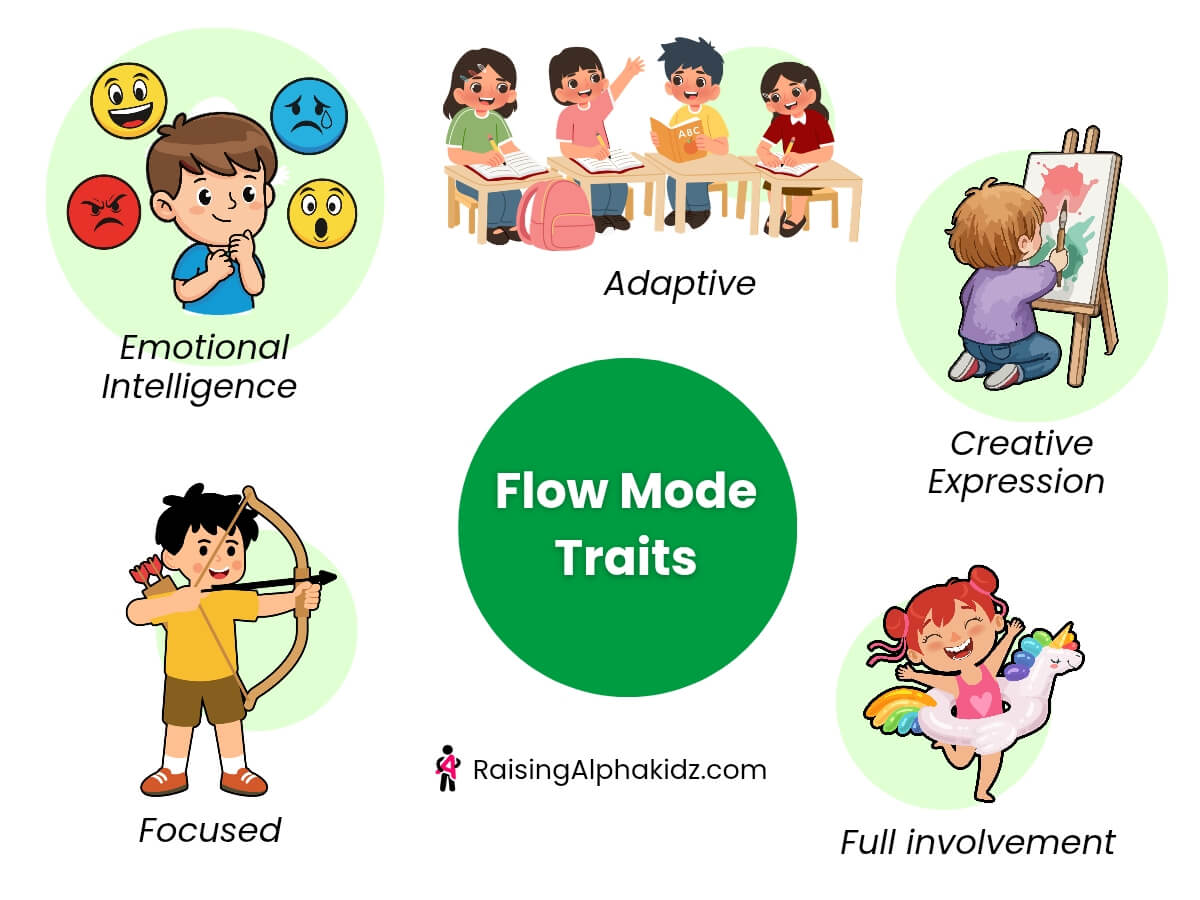
Flow mode reflects balanced activation, where effort and enjoyment coexist.
Traits include:
- Emotional intelligence
- Flow and creativity
- Focused on work or play
- Adaptive to circumstances
- Full involvement and enjoyment
- Creative expression
Power Mode Traits.
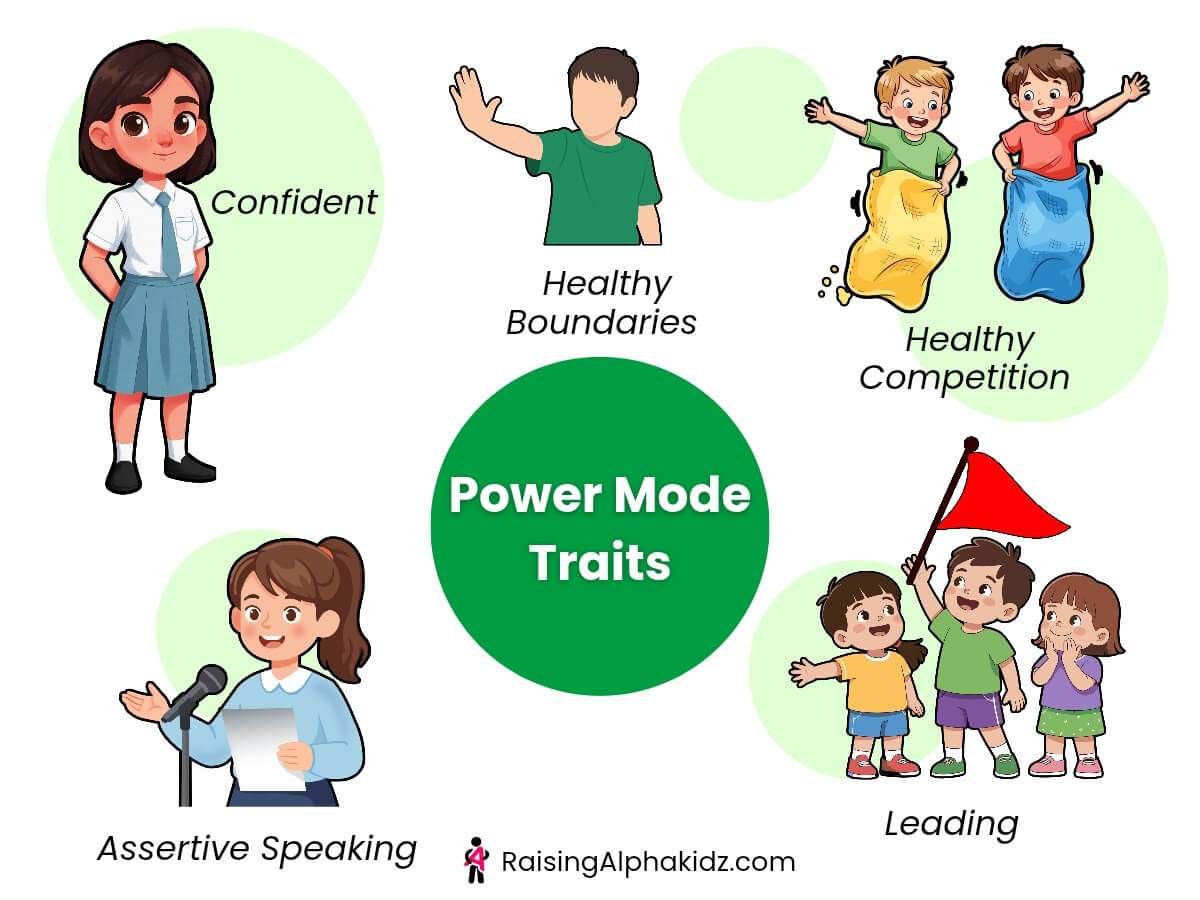
Power mode shows confident, healthy use of energy and agency.
Traits include:
- Bold and confident
- Confidence and leadership
- Healthy boundaries
- Passion and motivation
- Assertive speaking
- Healthy competition
This is the energy behind:
- Learning new skills
- Public speaking
- Sports and performance
Children thrive in this state. It is essential for facing everyday challenges with confidence, willpower, and physical and mental energy.
Perceptive Mode Traits
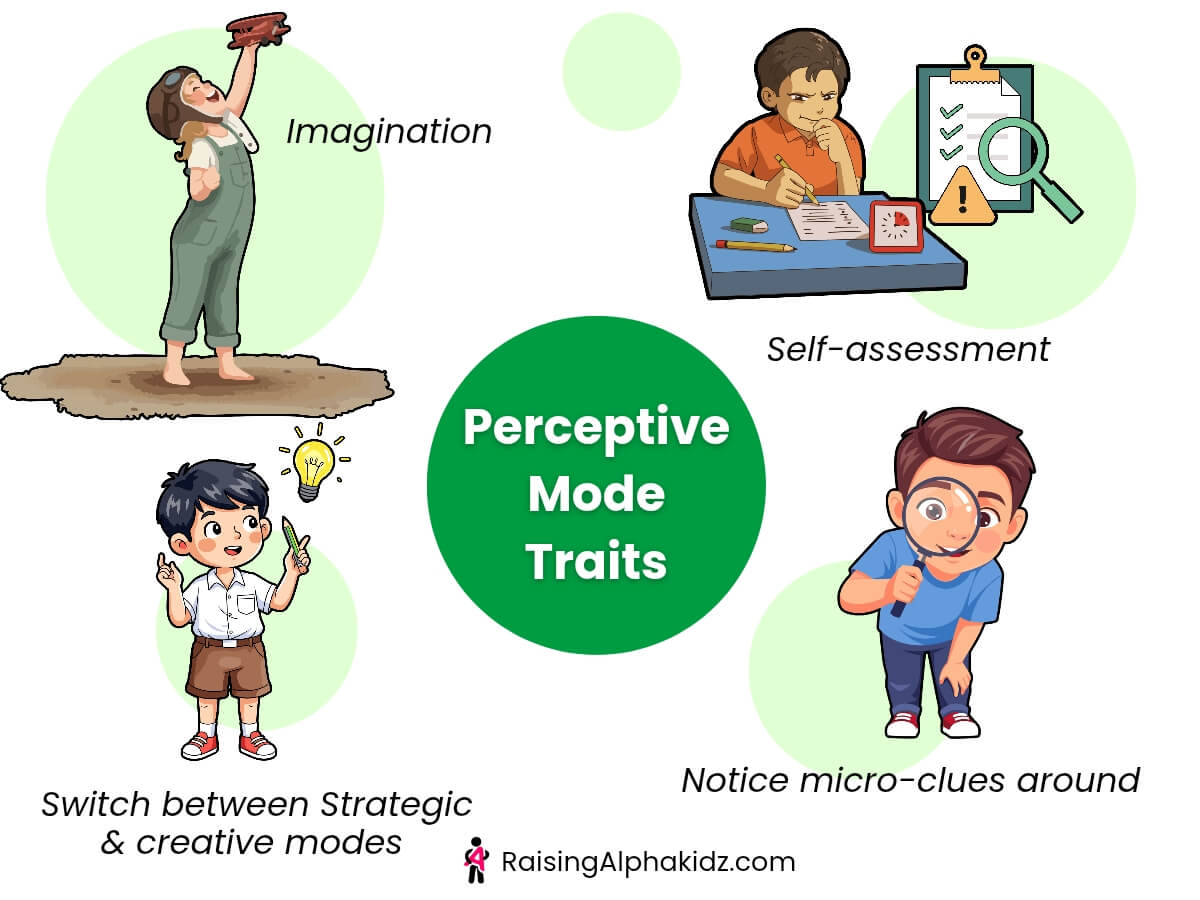
Perceptive mode reflects higher-order awareness and insight.
Traits include:
- Vision and imagination
- Self-assessment
- Switching between strategic and creative thinking
- Noticing micro cues and subtle details
Children thrive in this state. It is essential for facing everyday challenges with confidence, willpower, and physical and mental energy.
This is the energy behind:
- Learning new skills
- Public speaking
- Sports and performance
- Creative expression
Sympathetic Nervous System – Unregulated Activation.
When sympathetic energy becomes unregulated, children move into survival responses driven by threat.
Fight Mode Traits
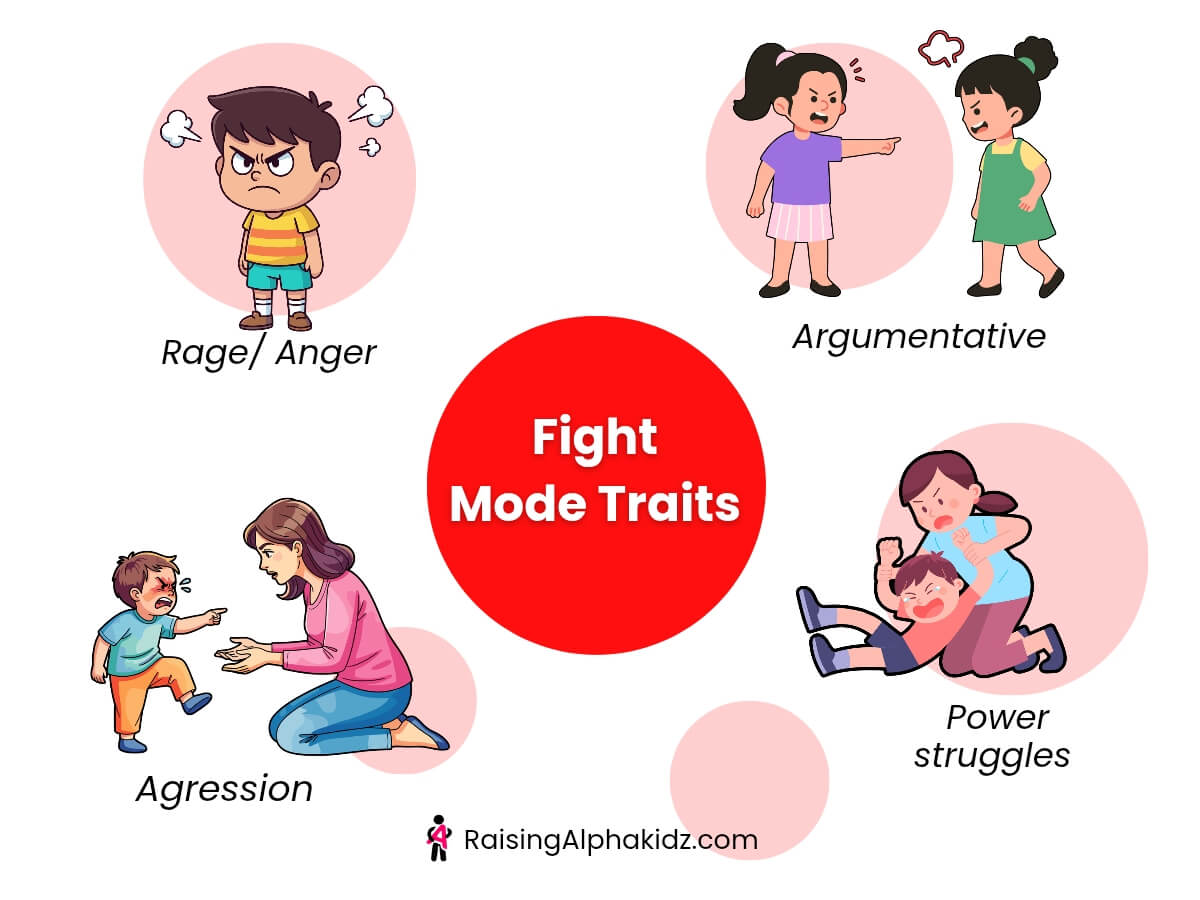
Fight mode emerges when a child attempts to overpower the threat.
Traits include:
- Anger or rage
- Defiance
- Argumentative behavior
- Controlling tendencies
- Aggression
- Power struggles
This is often labeled as “bad behavior,” but underneath is the message:
“I don’t feel safe, and I need power.”
Children in this state need:
- Clear boundaries
- Emotional validation
- Safe outlets for power and choice
Flight Mode Traits
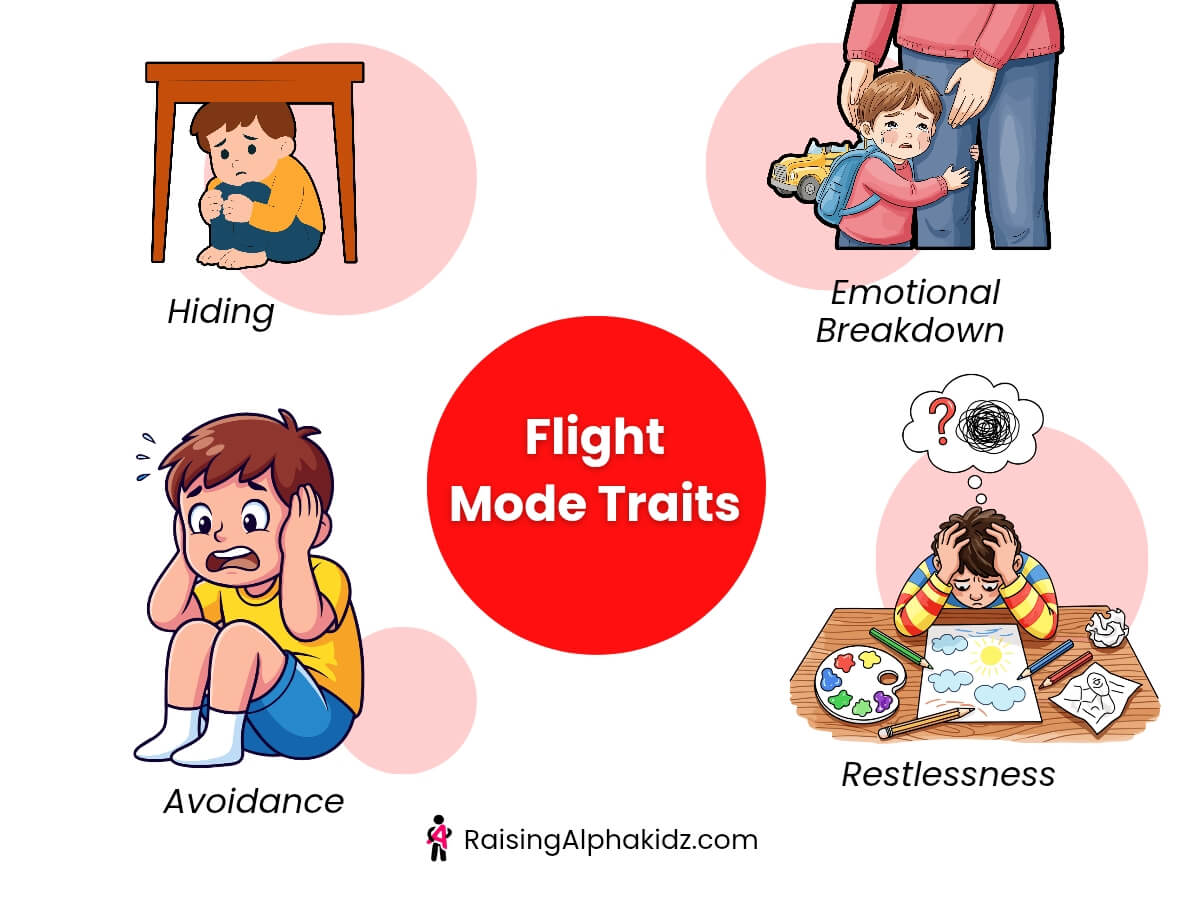
Flight mode appears when a child tries to escape or avoid the perceived danger.
Traits include:
- Hiding or escaping from situations
- Anxiety
- Overthinking
- Perfectionism
- Avoidance or hesitation
- Emotional breakdown
- Restlessness
They need:
- Slowing down
- Reassurance
- Support in staying present in their body
Fawn Mode Traits
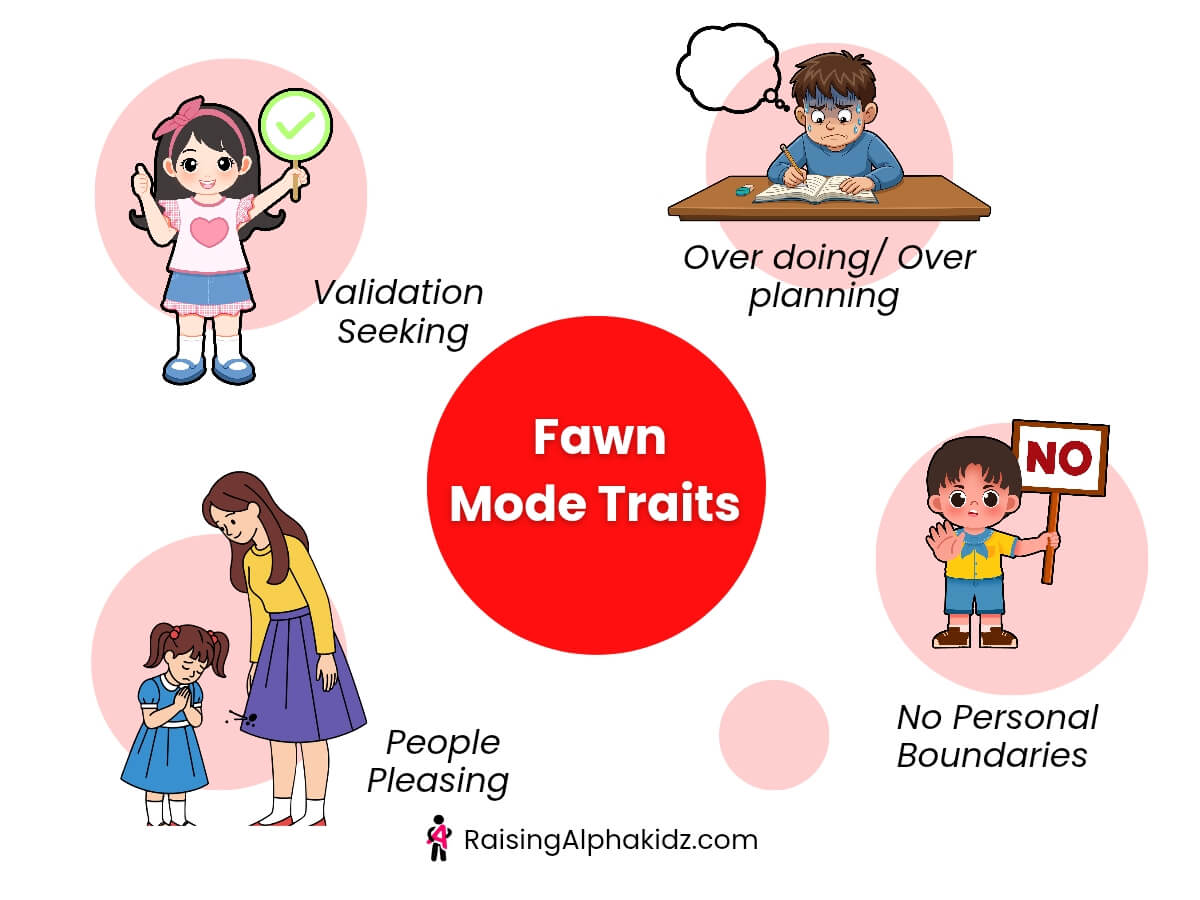
Fawn mode develops when a child seeks safety by pleasing others and minimizing themselves.
Traits include:
- People-pleasing
- Are highly attuned to others
- Fear conflict
- Feel responsible for adult emotions
- Excessive apologizing
- Validation seeking
- Lack of personal boundaries
- Overdoing or overplanning
- Merging with others’ needs
These children are often praised but quietly stressed.
They need:
- Permission to say no
- Modeling of healthy boundaries
- Reassurance that love is not conditional
Children move through many nervous system states each day, depending on how safe they feel.
Safety is the foundation—from safety comes connection, and from connection comes expression.
When stress overwhelms, children may fight, flee, freeze, or shut down to protect themselves.
These behaviors are signals, not problems.
With calm support, empathy, and regulation, children can return to balance.
When children feel safe, they naturally grow, learn, connect, and thrive.
Nervous System Patterns and Temperament
Prolonged nervous system responses create strong neural pathways, which manifest as consistent child behaviors or temperaments. Finding the predominant neural pathways is equal to understanding children behaviour. This is where children are classified into temperaments such as sanguine, choleric, melancholic, and phlegmatic.
There is no need to reinforce temperament—only to regulate the different nervous system needs.
Nervous System Patterns and Alpha State
When the ventral vagal system is active, the body feels safe. A sense of safety allows the brain to downshift from high-beta stress patterns. This often leads to increased alpha state in brain.
What is Alpha State in Kids and why do we have to raise Alpha kids?
Between ages 2–7, children live naturally in a calm, open, imaginative brain state often called the Alpha state — where:
- Learning feels effortless
- Creativity flows
- Emotions are clear
- Empathy comes naturally
This calm, playful state is their birthright—but modern environment and lifestyle pulls them away from alpha to beta state where learning turns into pressure.
Ventral vagal activation supports and facilitates alpha states.
In regulated ventral vagal states, children commonly show:
- Calm alert attention
- Curiosity and engagement
- Playfulness and social connection
These behavioral patterns often correlate with alpha-dominant brain states, which are optimal for learning.
So, Raising AlphaKidz not going to teach anything new, but guide parents to bring the children nervous system into alpha state where learning happens naturally.
What Parents Can Do: Co-Regulation Before Self-Regulation
Children learn regulation through relationship.
Before understanding children behaviour, it is essential to understand your own behaviour. Before asking your child to calm down, ask yourself:
- Do they feel safe with me right now?
- Am I regulated? What state am I in?
- How do my parenting strategies push different nervous system responses?
- Which neural pathways have become strong, and which need regulation?
When this awareness develops, practical parenting shifts occur:
- Connection before correction
- Naming the state, not the behavior
- Modeling regulation instead of demanding it
- Creating predictable rhythms
- Honoring recovery time
Your calm nervous system is the most powerful regulation tool your child has.
Your child’s reactions are not character flaws. They are survival strategies. Understanding these strategies is understanding children behaviour.
With understanding, patience, and connection, these strategies can help you to maintain alpha state in kids.
And Raising Alphakidz begins with you.
Understanding the Autonomic Nervous System and Neural Pathways
After this deep understanding of the autonomic nervous system, you may now recognize the significance of neural pathways and the regulation of the vagal nerve system.
To regulate the vagal nerve, the primary focus is to strengthen the neural pathways of the ventral vagal connection.
The foundation for building a balanced and resilient human system lies in regulating the ventral vagus nerve. This leads to the important question: how do we regulate the vagus nerve?
Vagus Nerve Regulation and Nature
Vagus nerve regulation does not come from activities alone or modern external solutions, but from nature itself. Our nervous system evolved from nature and can be regulated only through alignment with nature. This, understanding children behaviour needs understanding of nature elements.
All of our body is made up of these natural components in balanced proportions. But changes in our lifestyle gradually move us away from that balance. This imbalance is reflected first in the nervous system, and then gradually in our behavior, body, and mind.
To restore balance, the essential step is to rebalance the natural elements within the body.
Elements of Nature
The elements of nature are:
- Earth
- Water
- Fire
- Air
- Ether
- Space
- Cosmos
All living beings are formed from these elements and ultimately return to them. While living, the goal is to maintain balance among these elements within the body.
Balancing the Elements Through Energy Centers
Balancing the elements is achieved by regulating the energy centers in the body, also known as chakras. There are seven primary energy centers.
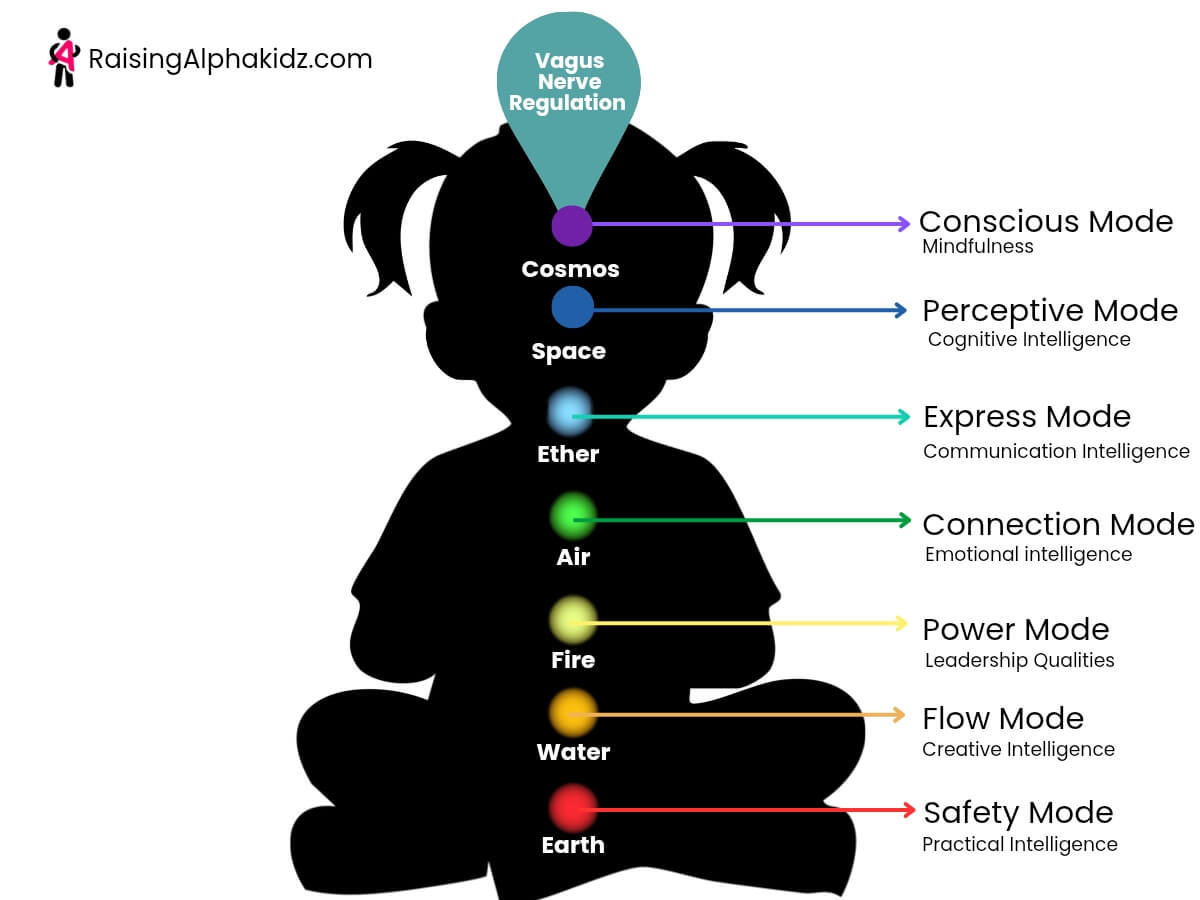
| Energy Center | Element | Core Function | Intelligence Type |
|---|---|---|---|
| Root | Earth | Safety | Practical Intelligence |
| Sacral | Water | Emotions | Creative Intelligence |
| Solar Plexus | Fire | Action | Leadership Intelligence |
| Heart | Air | Compassion | Emotional Intelligence |
| Throat | Ether | Expression | Communicative Intelligence |
| Third Eye | Space | Imagination | Cognitive Intelligence |
| Crown | Cosmos | Consciousness | Mindful Living |
When each energy center aligned with its natural element is balanced, the nervous system becomes regulated. This regulation reshapes neural pathways, which then manifests as balanced behavior and healthy emotional responses in children.
Regulating Energy Centers Through Activities
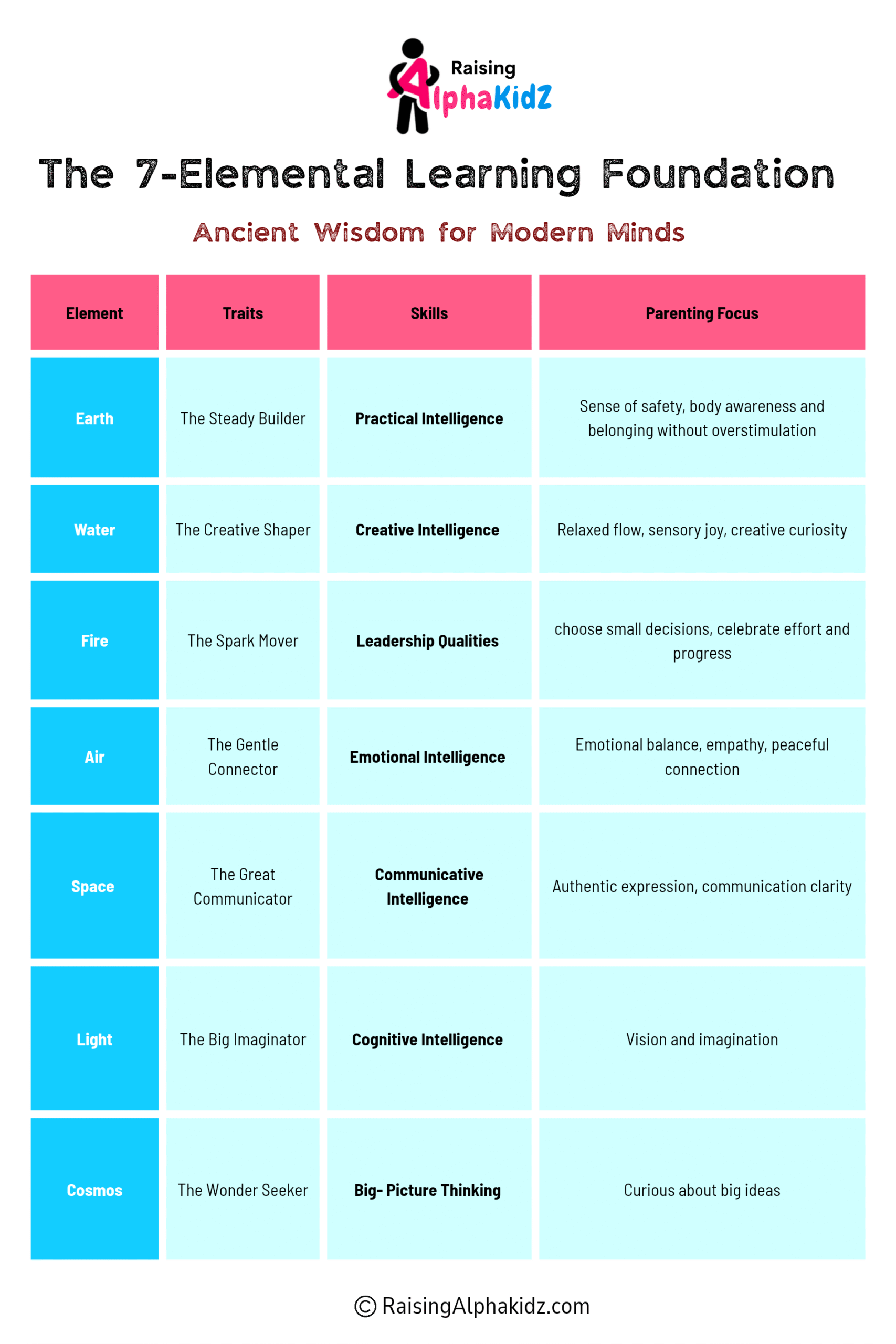
Each energy center can be regulated through a combination of physical interaction with natural elements and supportive mental activities.
Root Center – Earth Element
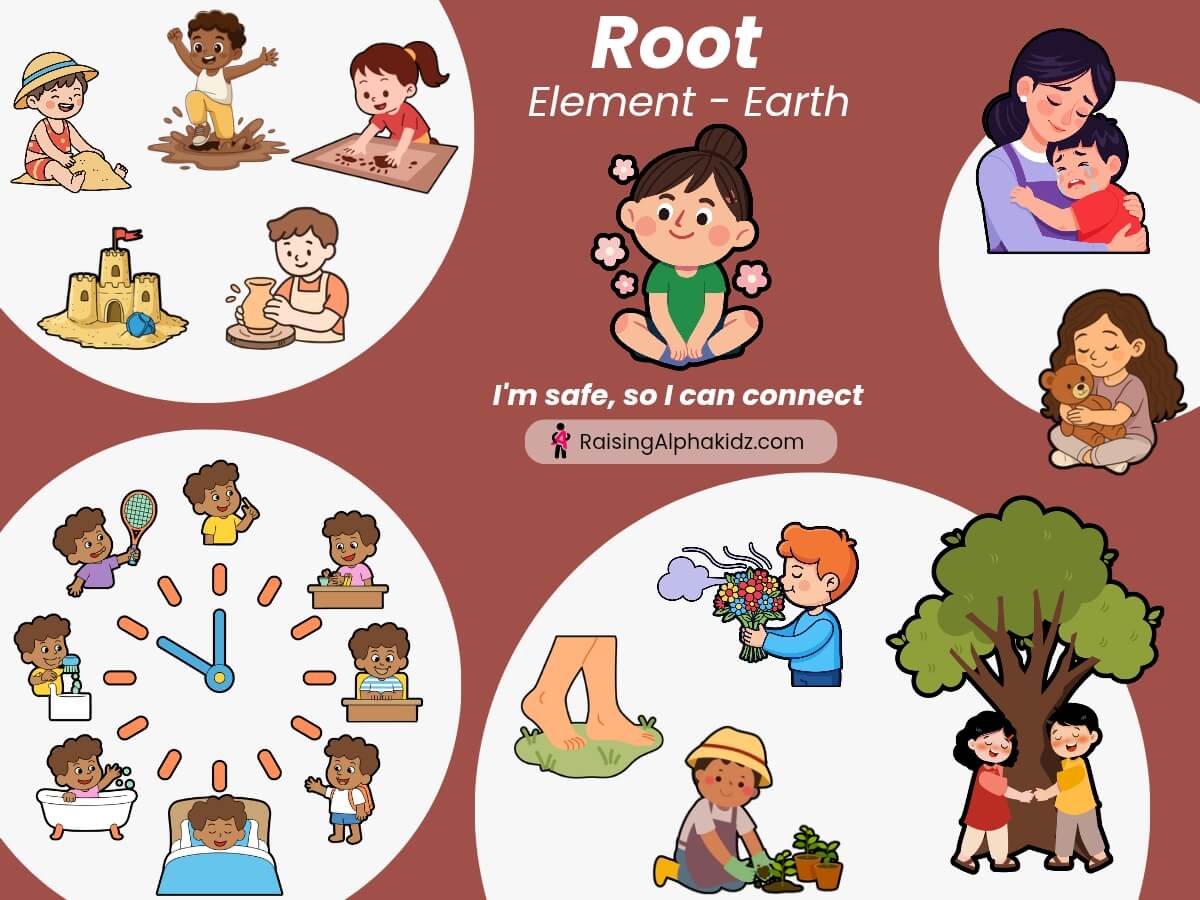
The root center is associated with safety and grounding. Strengthening this center involves direct contact with the earth.
Physical activities include:
- Playing with sand, mud, stones, and clay
- Barefoot walking in nature
- Gardening and outdoor play
Mental and lifestyle activities include:
- Predictive games
- Consistent routines
- Structured daily rhythms
These activities provide predictability and reinforce a sense of safety within the home environment.
Sacral Center – Water Element
The sacral center governs emotions and creativity.
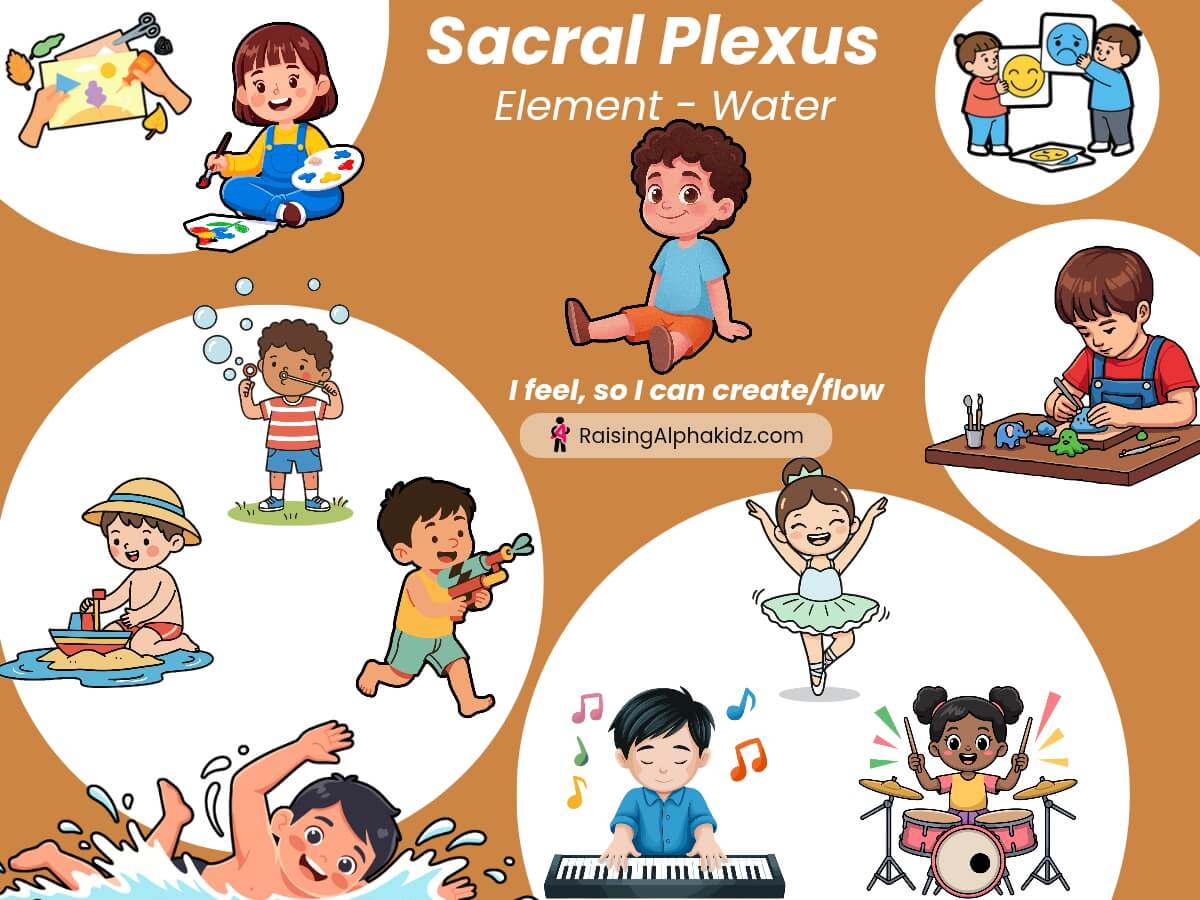
Physical activities include:
- Water play
- Splashing, pouring, and sensory water activities
Creative activities include:
- Painting and drawing
- Clay modeling and sculpting
- Play dough activities
These strengthen emotional expression and creative intelligence.
Solar Plexus – Fire Element
The solar plexus is responsible for action, confidence, and leadership. The fire element is closely linked to digestive fire and physical vitality.
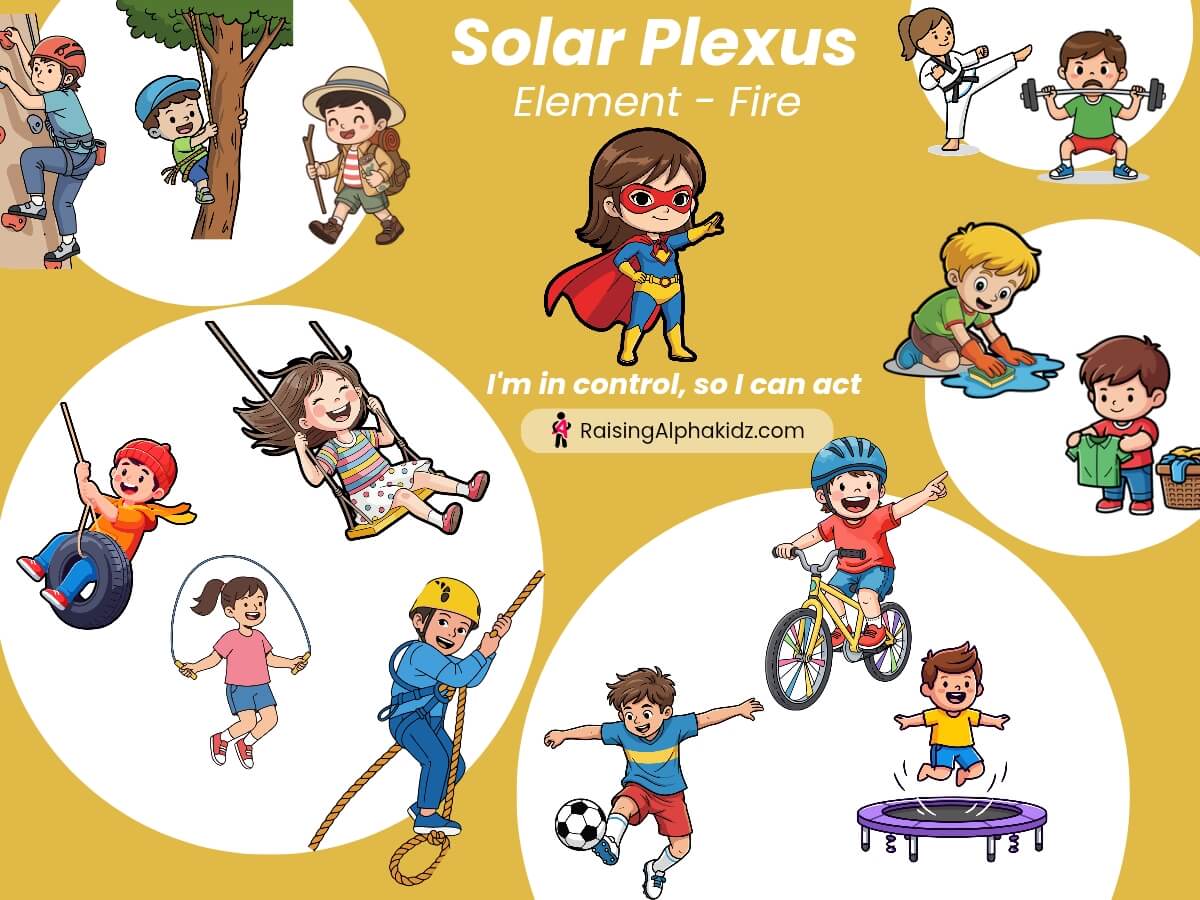
Physical activities include:
- Jumping, skipping, running
- Cycling and sports
Mental activities include:
- Strategy-based games
- Planning and problem-solving tasks
- Leadership and decision-making activities
These activities build confidence, willpower, and action-oriented intelligence.
Heart Center – Air Element
The heart center supports compassion, emotional regulation, and connection.
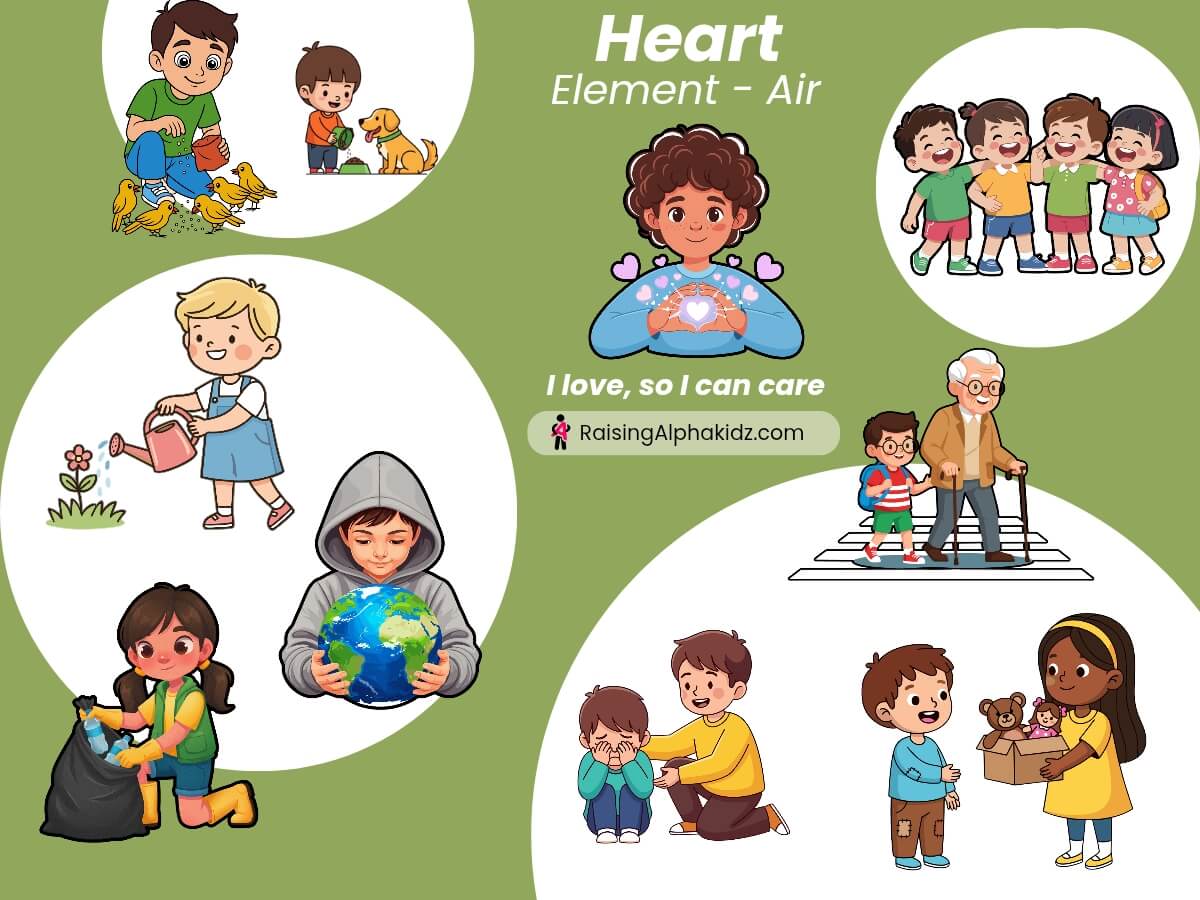
Activities include:
- Breath-based activities
- Cooperative games
- Acts of kindness and empathy-based play
- Emotional awareness and sharing exercises
These enhance emotional intelligence and relational safety.
Throat Center – Ether Element
The throat center governs expression and communication.
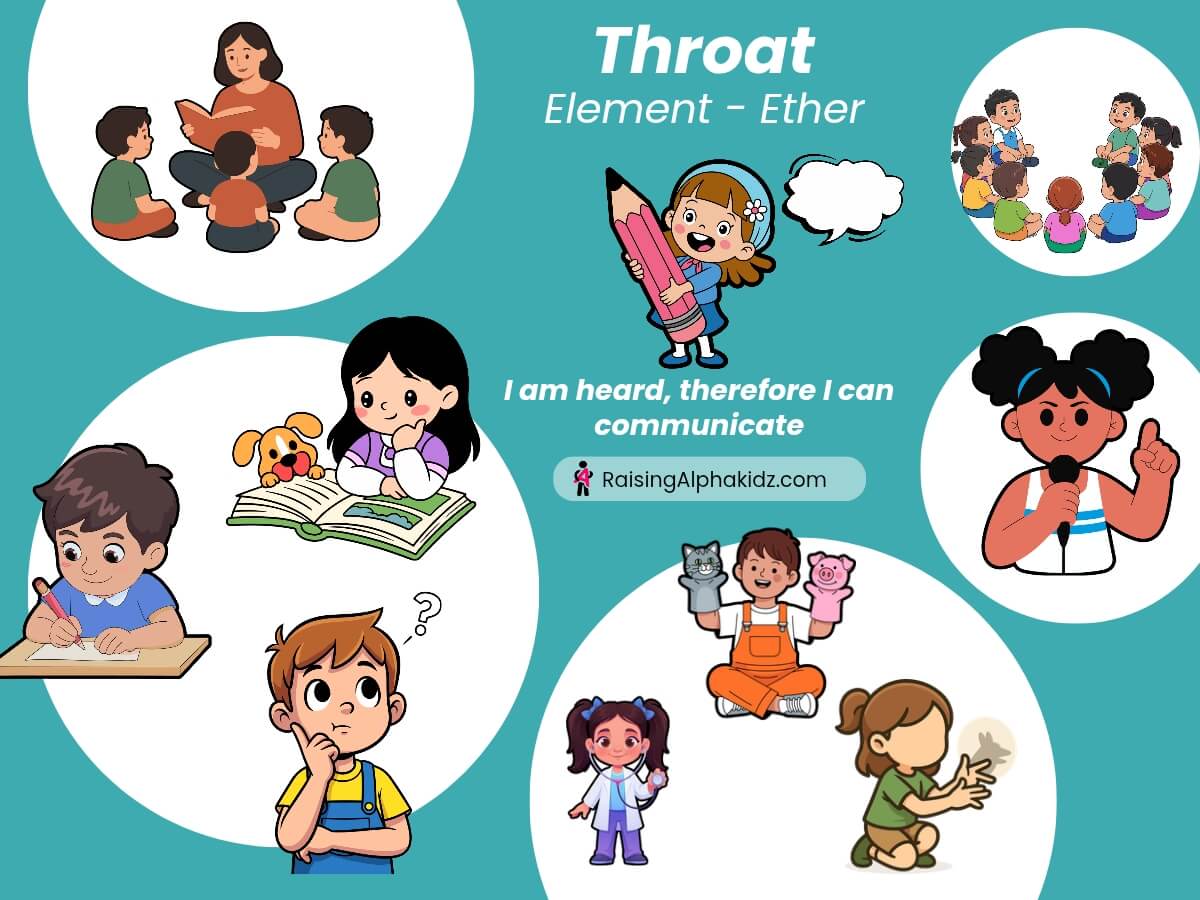
Activities include:
- Writing and storytelling
- Public speaking and group discussions
- Creative expression through voice
- Communication and language-based activities
These strengthen communicative intelligence and authentic self-expression.
Third Eye Center – Space Element
The third eye center is associated with vision, imagination, and cognitive processing.
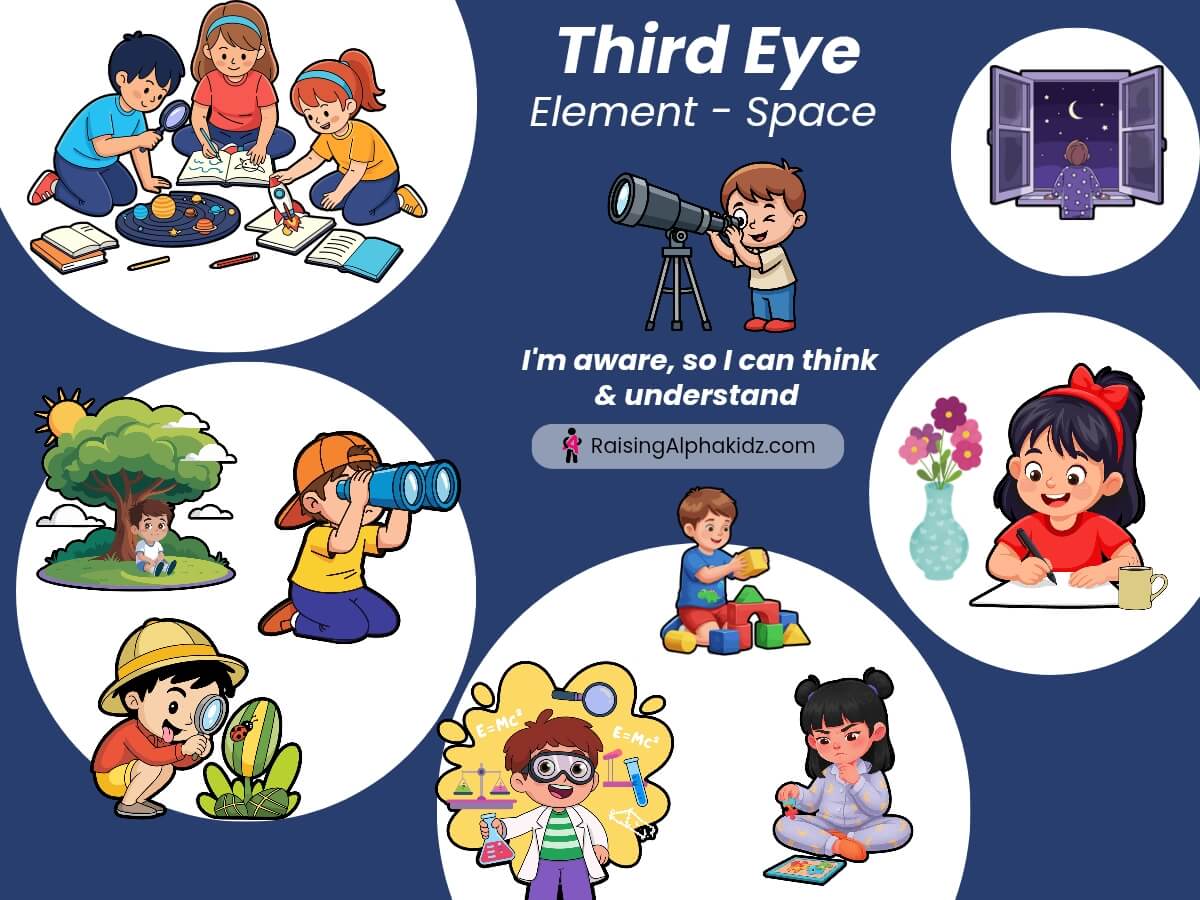
Activities include:
- Problem-solving games
- Visualization exercises
- Planning and strategy games
- Imaginative play and creative thinking tasks
These enhance cognitive intelligence and mental clarity.
Crown Center – Cosmos Element
The crown center supports consciousness, awareness, and mindful living.
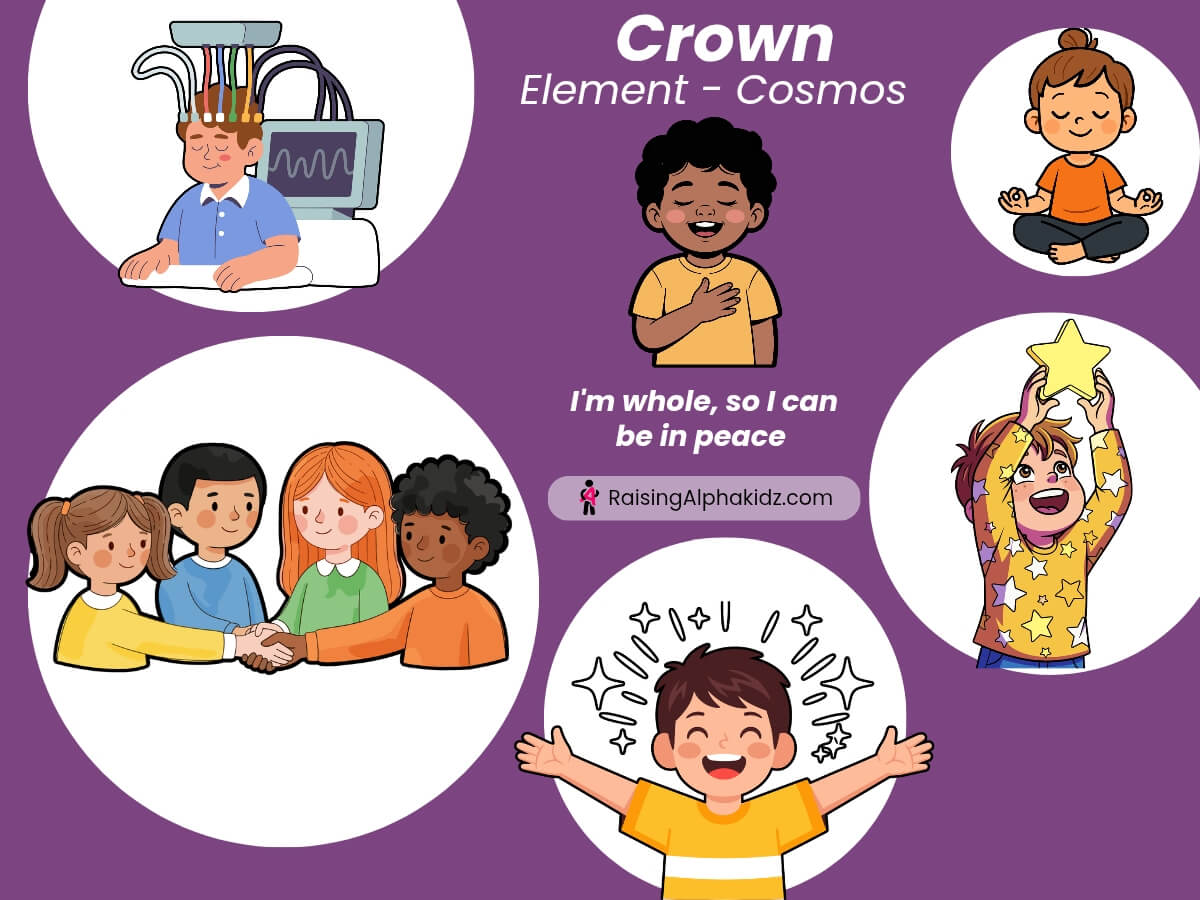
Activities include:
- Observation and reflective practices
- Meditation and mindfulness
- Yoga and stillness-based activities
These cultivate presence, awareness, and conscious living.
Integrating Nature-Based Regulation in Children
When children consistently engage in activities that balance natural elements, the neural pathways of the ventral vagal system are reinforced. This restores the nervous system to its innate state of regulation, allowing behavior and daily living to remain aligned with nature.
This integration supports the child as a whole being, ensuring personal life and professional growth are not in conflict. Children learn balance, resilience, and adaptability, enabling them to face challenges with confidence, without stress or mental depletion. Thus, understanding children behaviour needs understanding of whole nervous system.