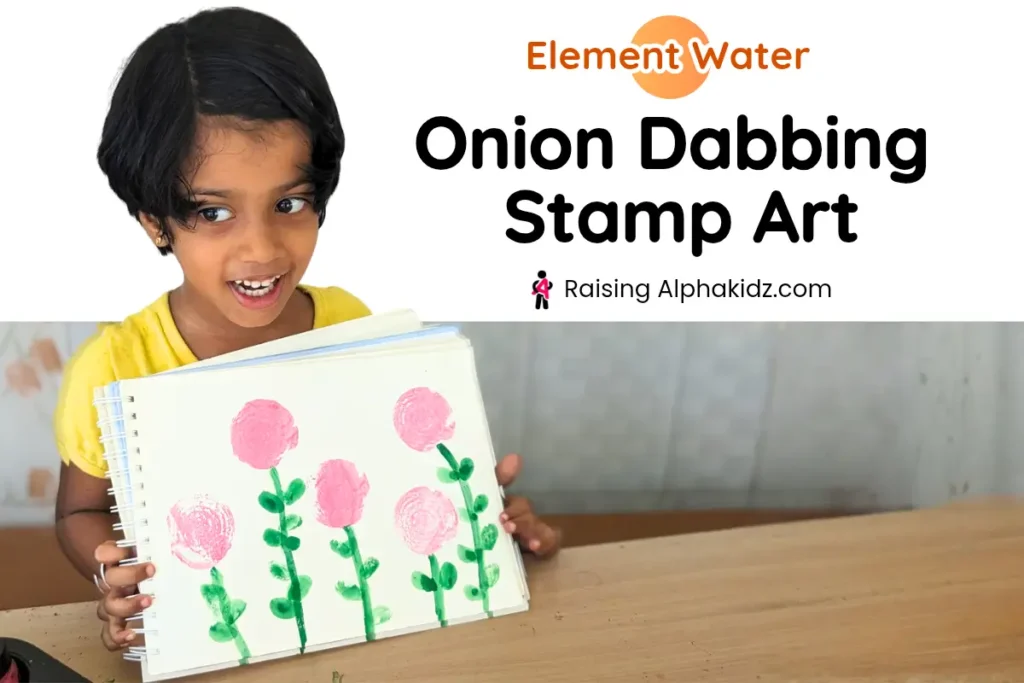
Onion Stamp Art: Dabbing, Printing & Stamping Fun for Kids
Takeaways
Element: Water (Process Art)
Core Skill Developed: Imaginative expression through repeated pattern and print
Supporting Skills: Grip control, hand-eye coordination, sensory awareness, focus through repetition
Age Group: Preschool (open-ended stamping), Kindergarten (cutting and printing)
Life Connection: Turning an everyday kitchen scrap into a tool for art — building resourcefulness and an eye for possibility in ordinary things
Hi parents!
In childhood years, art never takes a back seat. Often, Kids are naturally fond of recreating things on paper that they see around them. Actually, it’s the very first creative work their brain learns to do. So, let’s reinforce that instinct with an easy art technique. If you’re bored cutting onions for cooking, cheer up—you can create wonderful artwork with your little ones right now. Let’s make onion stamp art using a simple dabbing and printing method, then bring those prints to life with a splash of creativity. Here’s how.
What Is Onion Stamp Art?
Onion stamp art is a vegetable stamping process art technique where you use a cut half-onion to create prints. It’s a relaxing, process-oriented painting activity that gently steers a child’s mind into a flow state, making it a wonderfully mindful and creative experience. Unlike precise brush painting, onion dabbing printing celebrates the imperfect rings and layers of the onion, turning them into petals, shells, or swirling lollipops. Think of it as onion print stamp magic!
Art Essentials for Onion Stamp Painting
Before you start, gather these simple supplies:
- Onion – a medium or large fresh onion works best
- Kitchen knife – for adult use only
- Paints – tempera, acrylic, or non-toxic kids’ paint (acrylic gives bolder results)
- Paintbrush – flat or wide brush for even application
- Tray or plate – for mixing and dipping paint
- Watercolor paper or thick cardstock – withstands the moisture of the stamping
How to Make an Onion Dab Painting Rose
Follow these simple steps to turn an onion half into a blooming rose using the onion stamping painting technique.
1. Cut the Onion
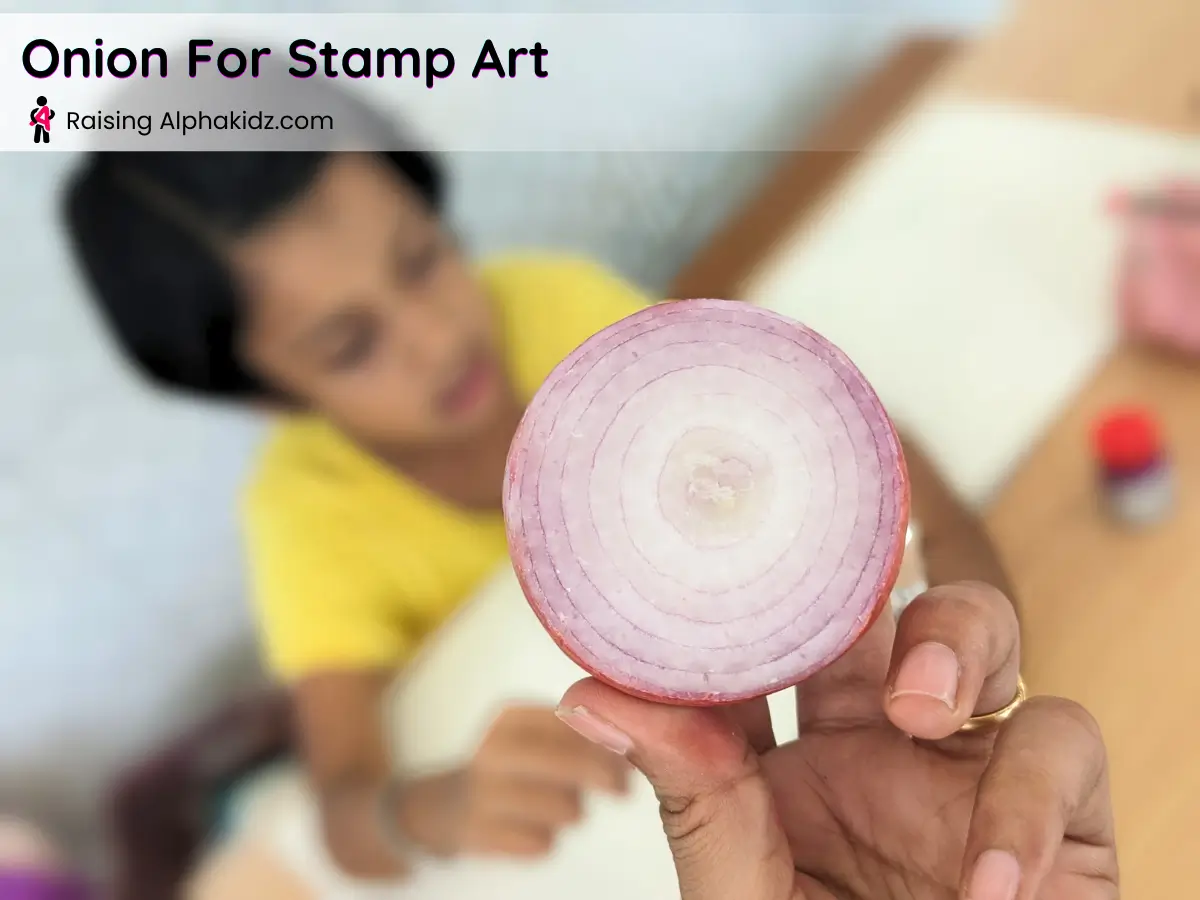
Using a kitchen knife, slice the onion cleanly into two equal halves. You’ll notice beautiful natural rings on the cut surface—these will give the rose its swirly petal look. Pat the cut side with a paper towel to remove excess moisture, so the paint adheres better.
2. Apply Paint to the Onion Stamp
Now, it’s time to load your onion stamp with color. You have two easy methods:
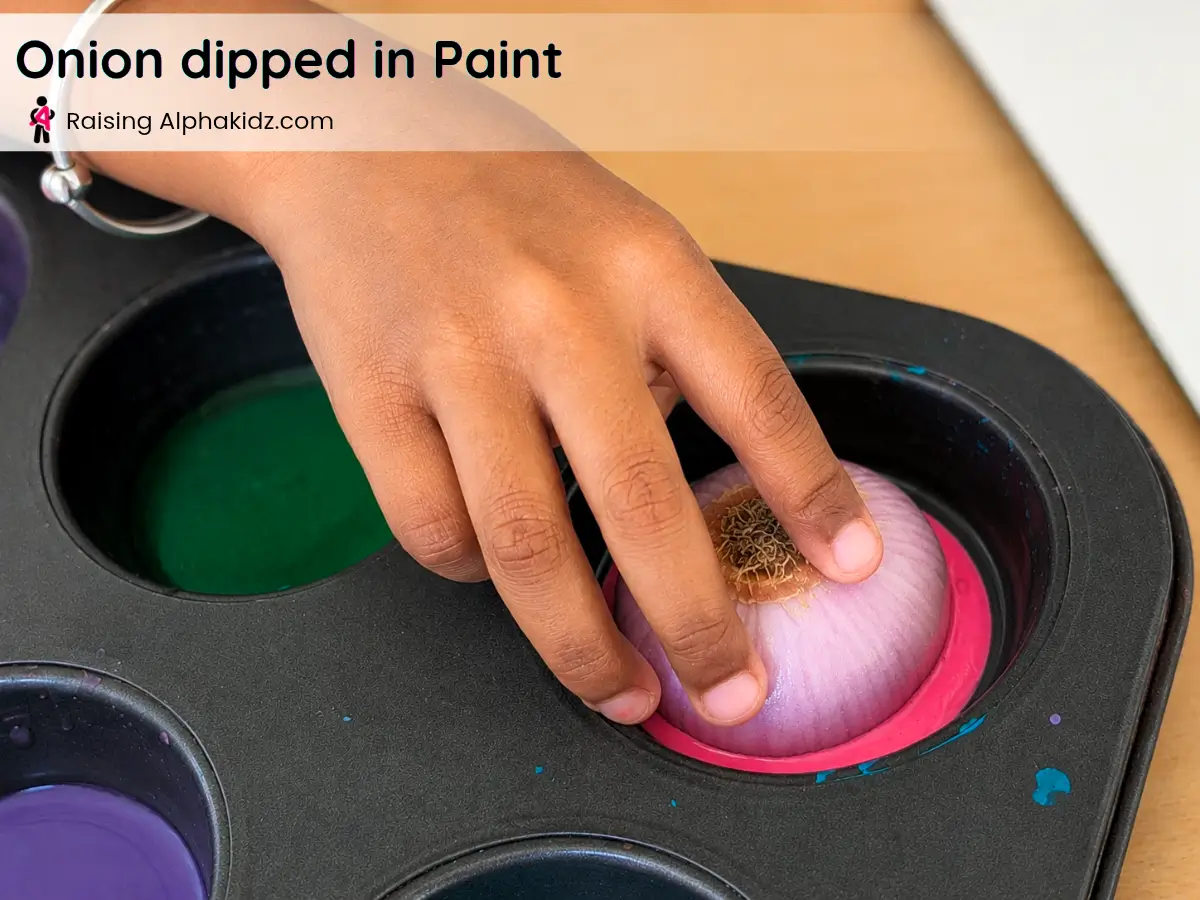
- Tray dipping: Mix paint with a tiny bit of water in a shallow tray, then let your child gently dip the onion cut-side down. Immediately dab off any excess on a folded paper towel or sponge. This avoids slippery, blobby prints.
- Brush method: Ask your child to use a brush and apply a thin, even coat of pink paint (or any rose color) directly onto the onion’s cut surface. This gives you the most control and crisp prints, especially helpful if you want the ring details to show.
3. Dab the Onion onto Paper
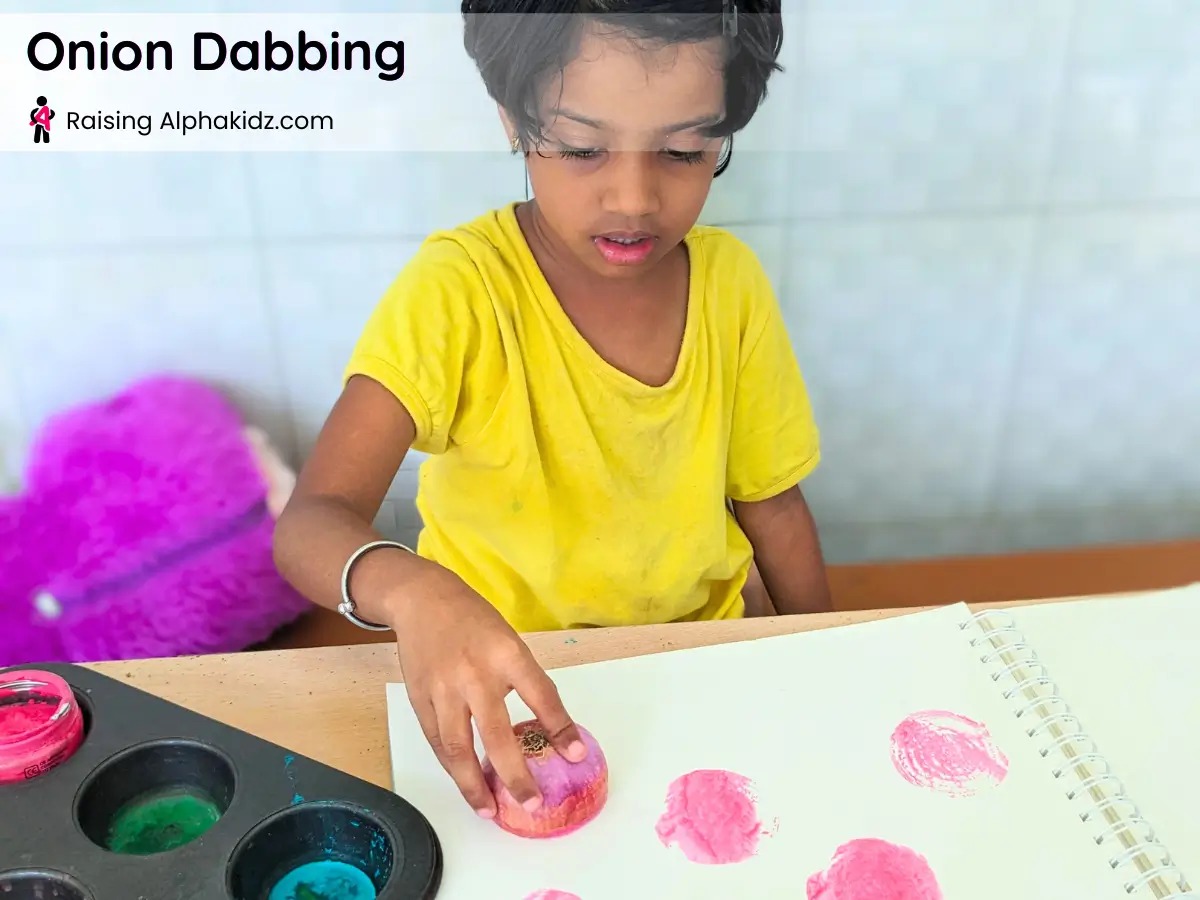
Let your child press the painted onion firmly onto the watercolor paper, then lift it straight up to reveal a coiled ring pattern.
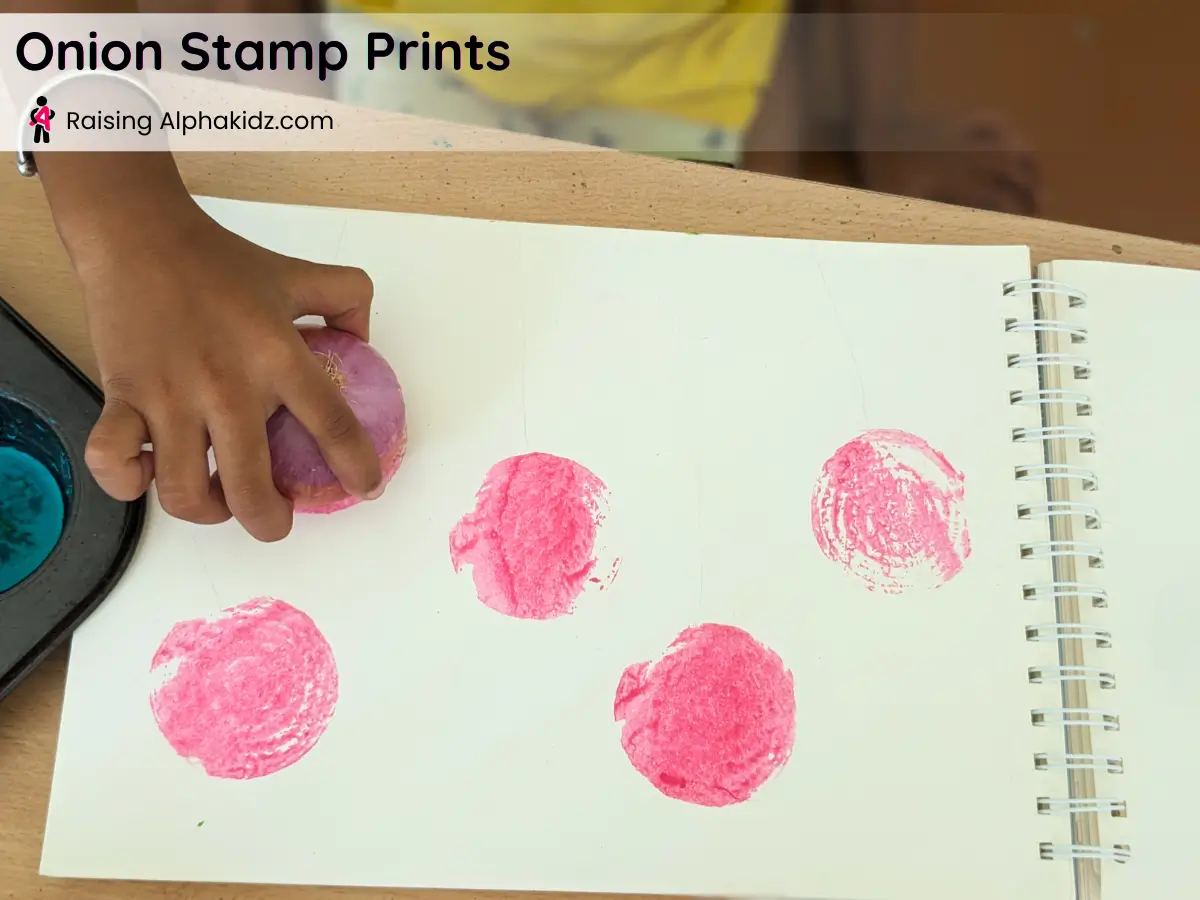
That’s your first onion dabbing stamping art rose! For a softer, lighter shade, press a second time without reapplying paint—this creates lovely depth and looks like a faded blossom.
4. Draw the Stems
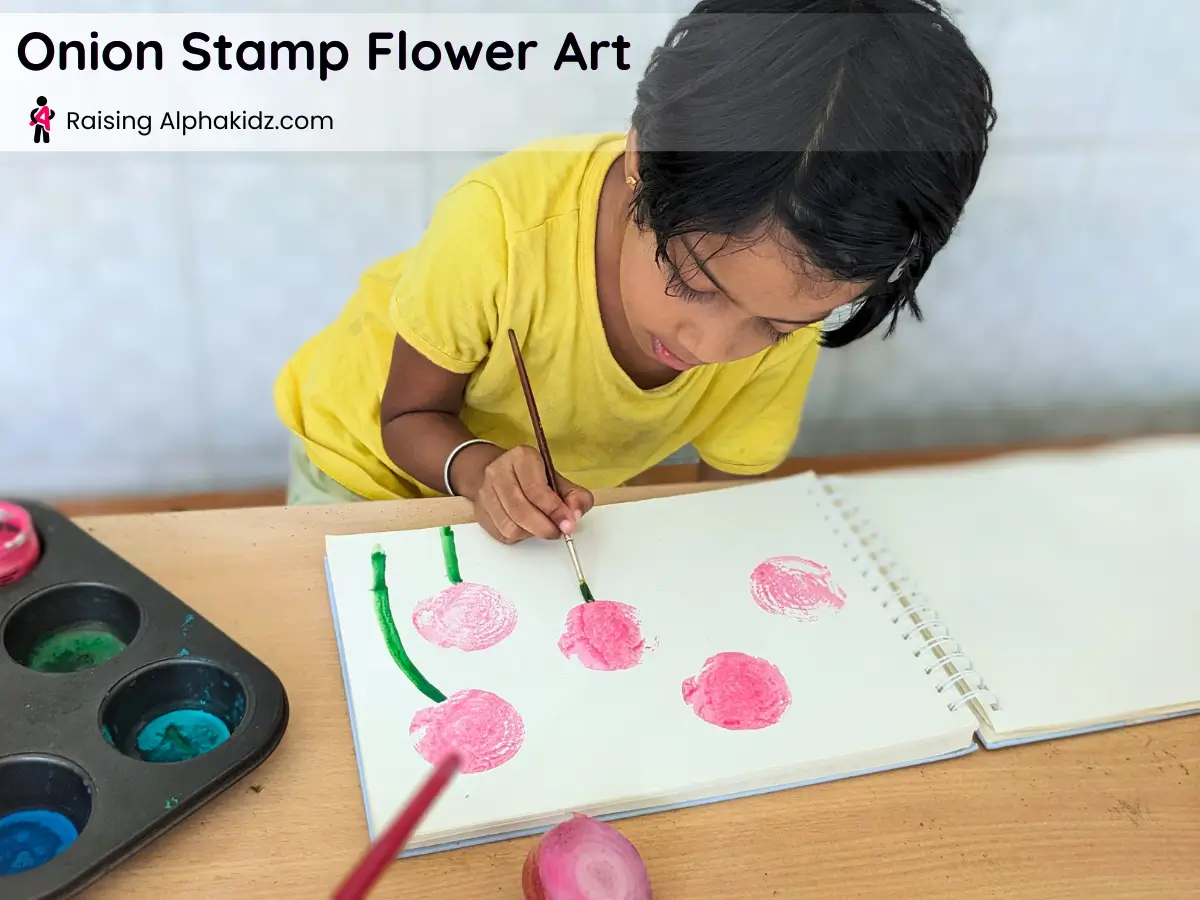
Once the rose prints are in place, take green paint and a fine brush. Guide your child to draw a simple, slightly curved stem extending down from each onion print flower. This simple step instantly transforms the onion stamp painting into a recognizable floral piece.
5. Add Fingerprint Leaves
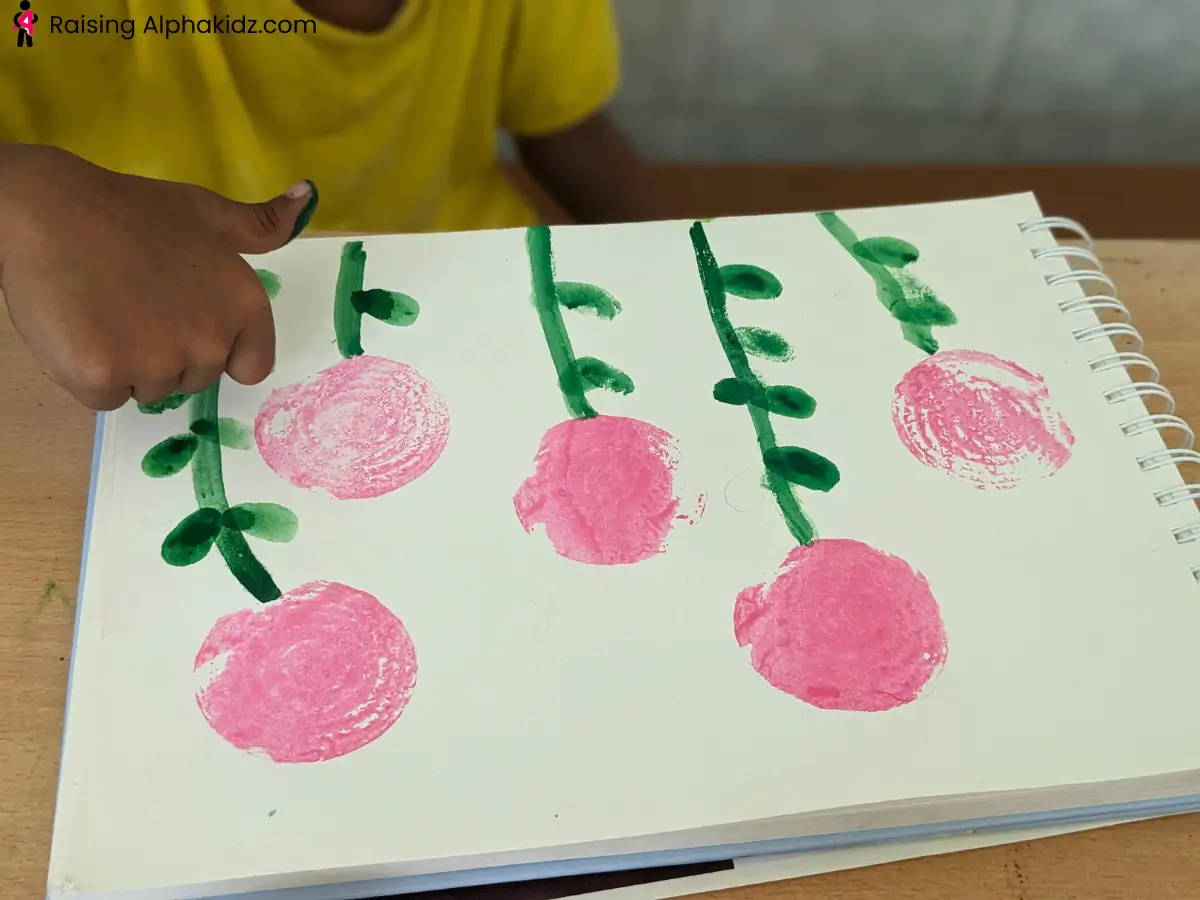
Now, let’s add leaves. Apply green paint to your child’s fingertip using a brush, then press fingerprints along both sides of each stem, leaving comfortable space between the leaves. The fingerprint texture adds a charming, handcrafted touch to the entire artwork.
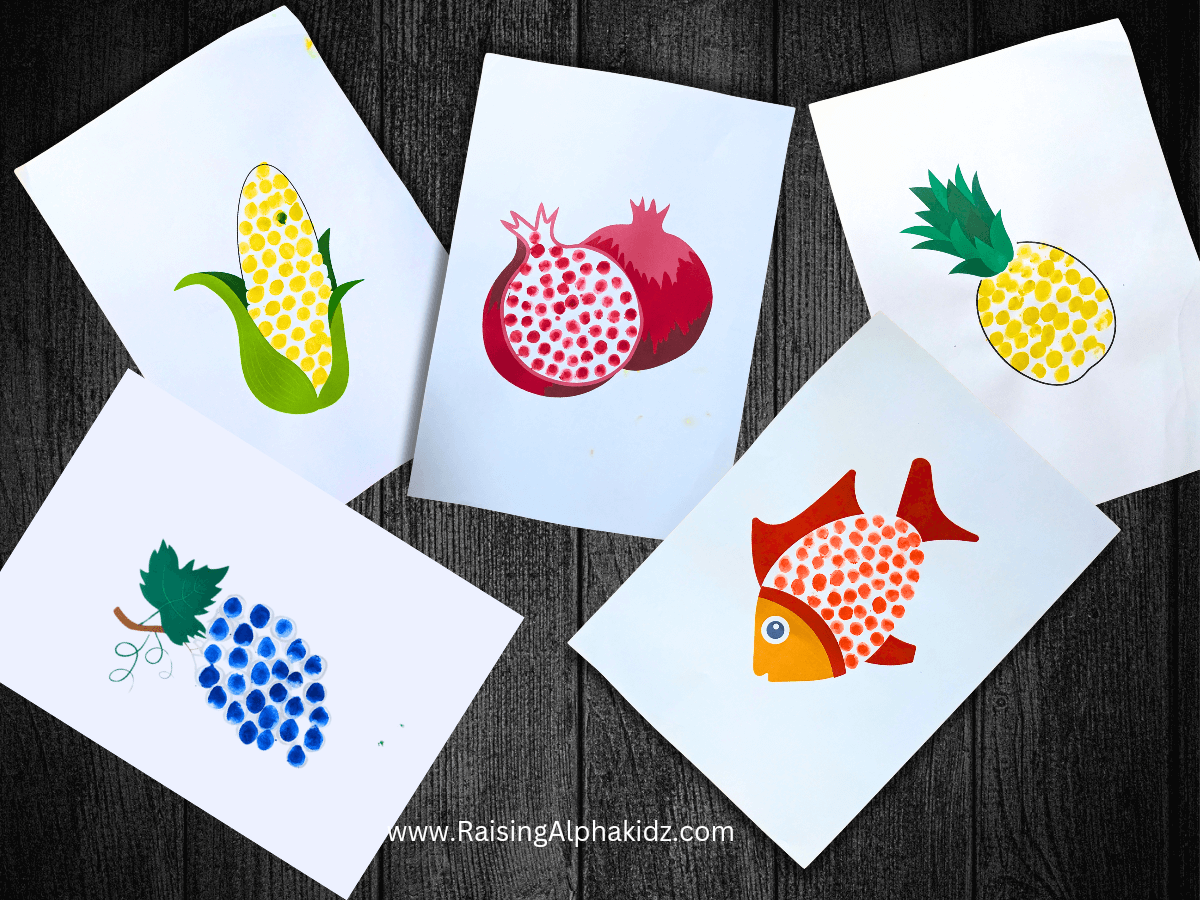
Related Posts: FingerPrint Art Ideas – Free Templates
6. Let the Art Dry
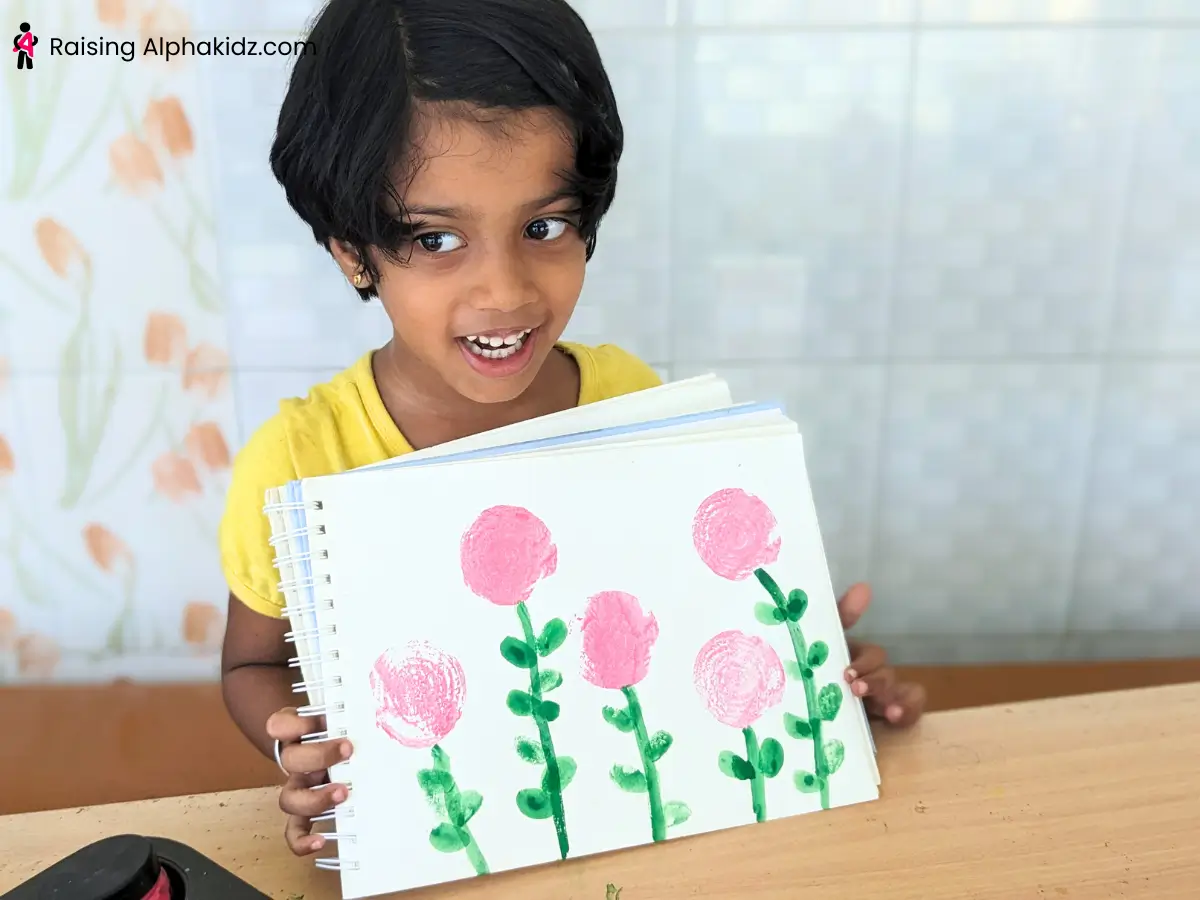
Allow the paint to dry completely. If you wish, you can later trace the onion’s coil pattern with a darker sketch pen to make the rings pop. Your onion stamp art rose is now ready to display!
More Onion Stamping Art Ideas to Try
Once your child masters the basic dabbing method, the fun continues. Here are several creative directions for onion printing that use the same core technique.
Onion Stamp Snail
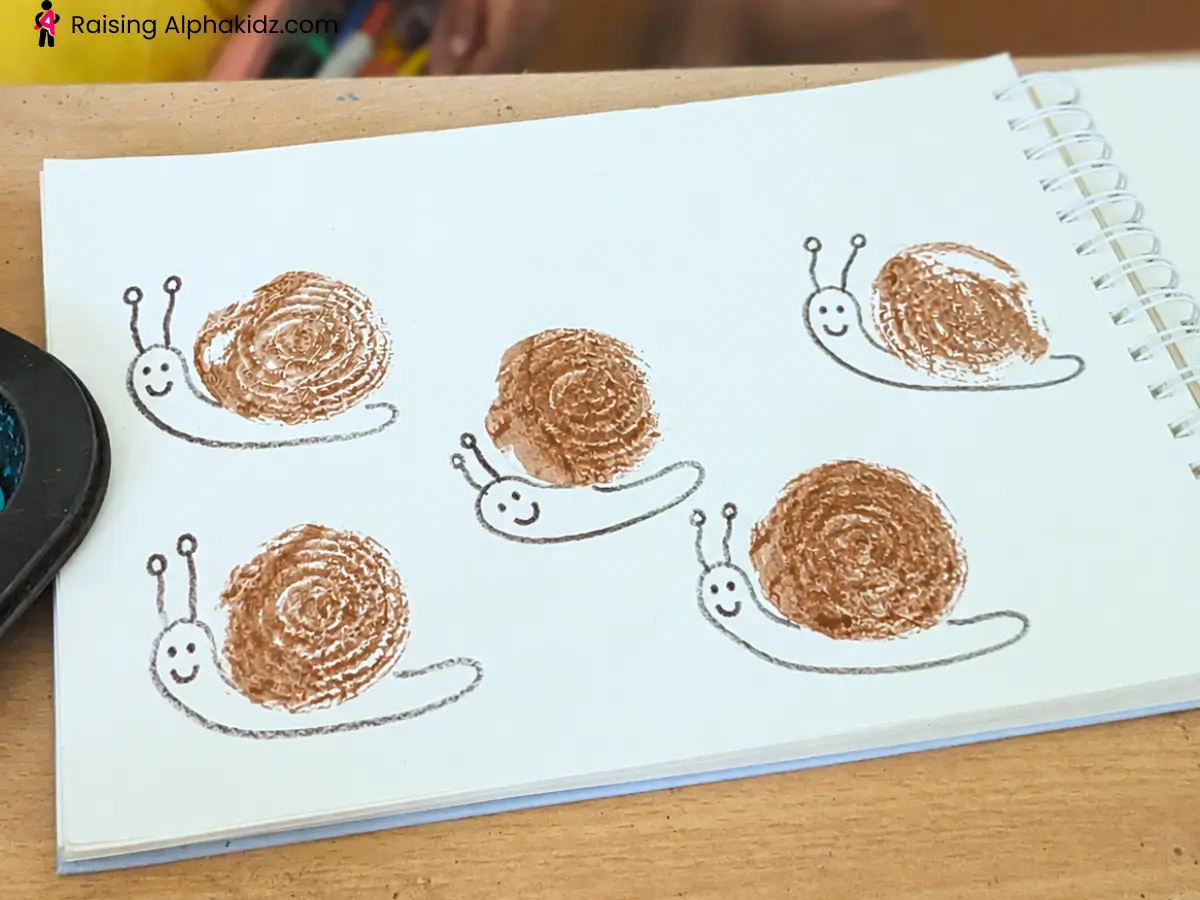
Use the same circular onion dabbing printing to create a cheerful snail. The onion’s ringed print naturally looks like the spiral shell on a snail’s back. Simply add a little body, two tentacles, and a smile with markers or paint. It’s an adorable onion stamp art project for preschoolers.
Lollipop Candy Prints
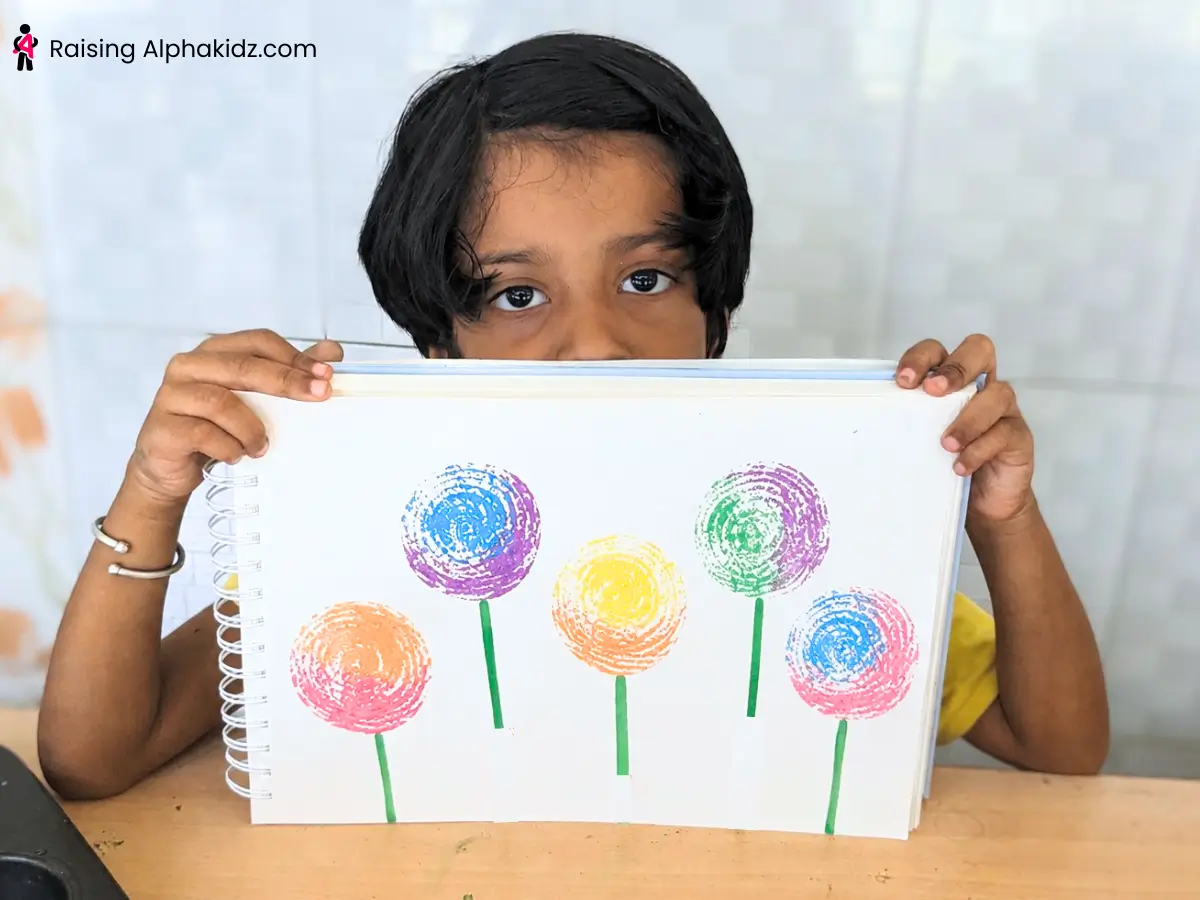
Make colorful lollipop candies by using bright, varied colors for each onion print stamp. The coiled pattern of the onion cut perfectly mimics the swirl of a round lollipop. Add a stick drawn with a marker, and you have a sweet candy shop scene—kids love this one!
Flower Buds Using Vertical Cuts
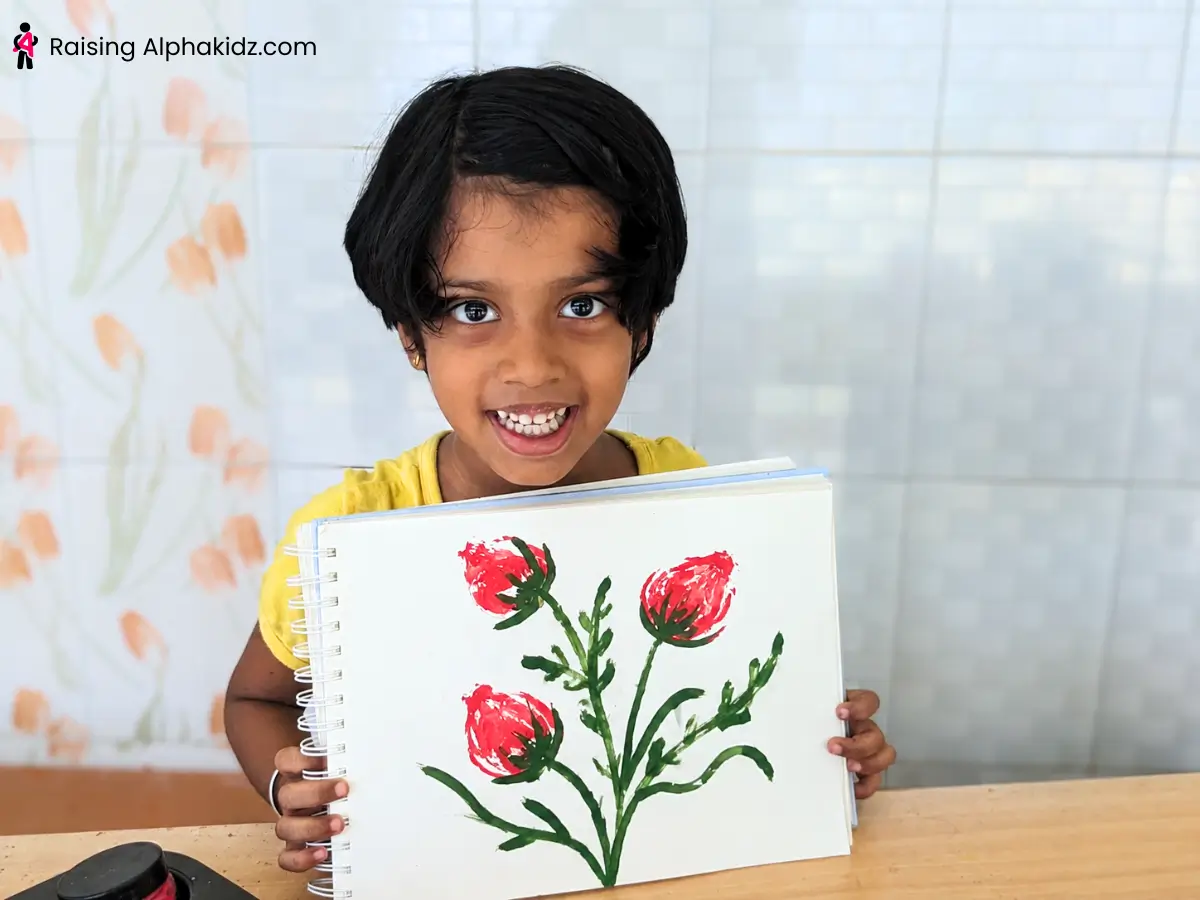
If you cut the onion vertically instead of across the middle, the layers create an elongated, bud-like shape. Combine these vertical onion stamp painting prints with painted stems and leaves to create a beautiful bouquet. It’s a wonderful way to explore how cutting direction changes the print’s look.
Rainbow Onion Stamp Prints
For a vibrant variation, cut the half-onion into another half, giving you a semicircle wedge. Paint sections of the straight edge and curved part in different rainbow colors, then press down. Repeat to form a full rainbow arc. This onion dabbing activity is perfect for teaching colors and sequences.
Real-Life Applications of Onion Dabbing Stamping Art
You can easily take onion stamp art beyond paper. Use acrylic fabric paint and let your child stamp onto plain handkerchiefs, T-shirts, or cloth tote bags. Heat-set the paint as per the manufacturer’s instructions, and you’ll have a custom, wearable piece of art. Everyday items become canvases for your child’s creativity, and the onion print stamp patterns add a stylish, organic touch.
Frequently Asked Questions
What vegetables are good for stamp painting besides onion?
Vegetables that make excellent stamp painting tools include okra, potato, carrot, capsicum (bell pepper), lemon, and even broccoli. Each produces unique textures.
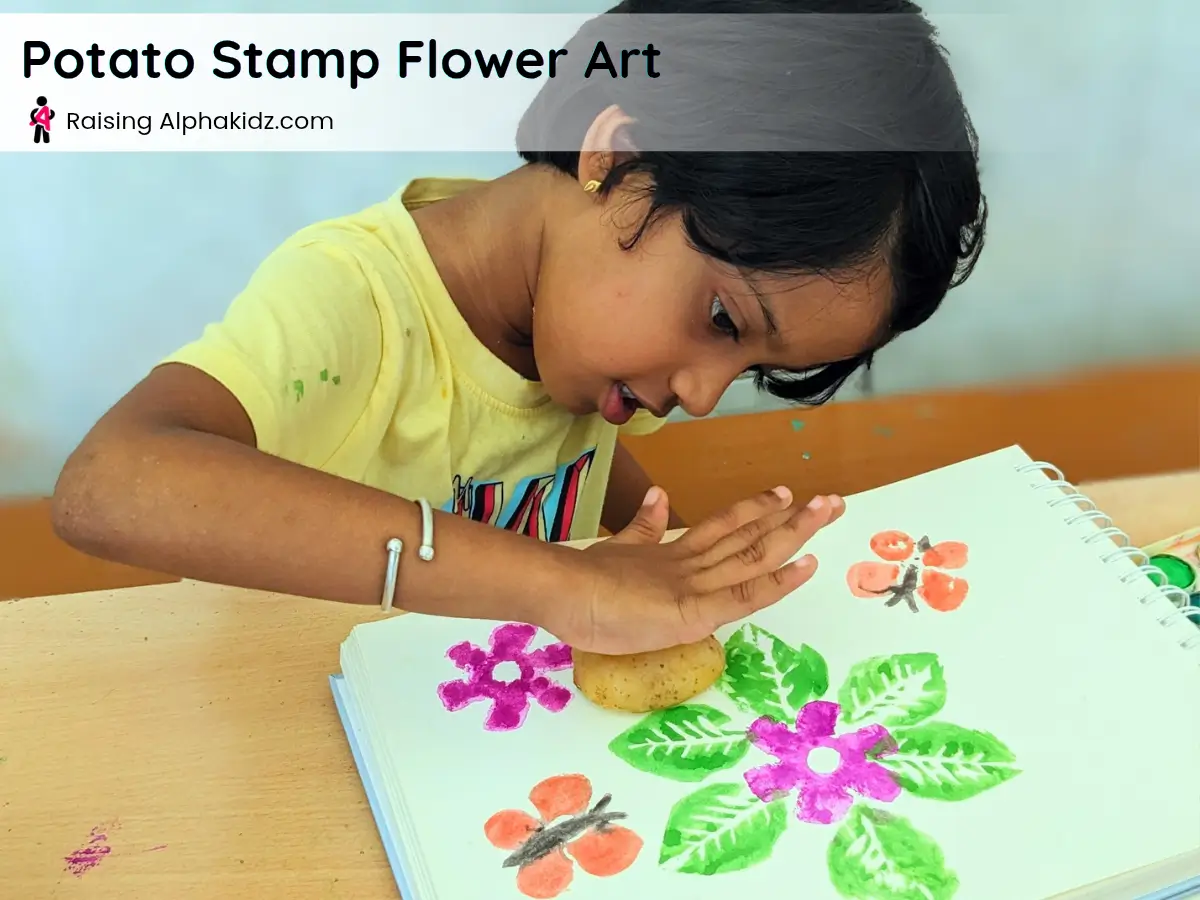
Related Posts: Lady Finger Painting: 5 Exciting Art Ideas To Try
What paint is used for vegetable stamp painting like onion dabbing?
For temporary paper prints, watercolors or tempera paints work well. If you want long-lasting prints on fabrics, opt for acrylic paint or fabric-specific paint. For onion stamp painting with younger kids, always choose non-toxic, washable formulations.
Now you’re all set to enjoy the simple delight of onion stamp art—a process art activity that’s as easy on the parent as it is engaging for the child. Happy onion printing!