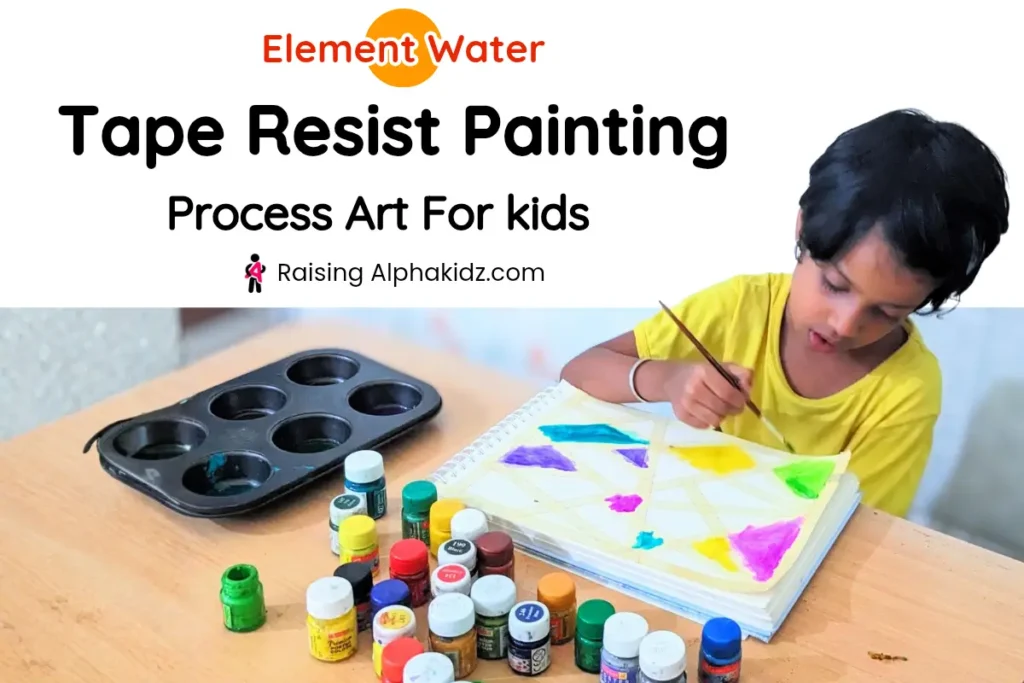
Tape Resist Art: A super easy process art to try with your little one today!
Key Takeaways
Element: Water (Creativity)
Core Skill Developed: Understanding of contrast and reveal through layered process art
Supporting Skills: Fine motor control, color awareness, planning and anticipation, delayed gratification
Age Group: Kindergarten
Life Connection: Learning that structure and boundaries can create beauty — introducing the idea that limits (like tape lines) can spark rather than restrict creativity
Hi parents!
Today, let’s take a deep breath and set aside our mentor mind away and just watch our kids. What we are going to watch is the process, not the product our kids are going to make. Today we can make tape resist art, a popular process art technique to bring the creative flow out of little minds. And make sure, you are not going to impose any right or wrong way of doing it, even in mess. Puzzling why? Let’s find the why behind in detail.
Because when we stop directing, kids start discovering. They learn to trust their hands, not our instructions. And that tiny moment of freedom? That’s where flow state begins. So let’s just observe. No fixing. No guiding. Just watching the magic unfold.
What is Tape Resist Art
Tape resist art is a process art technique that involves using tape on paper, canvas, or cardboard and painting the area around the tape. After painting, the tape is removed to reveal white or negative spaces, creating unique abstract patterns and colorful designs. It is an interesting, easy, and fun art activity that helps kids enter creative flow state, a primary stage of deep flow state while creating.
What Is Process Art
Process art is an art form that allows children to express themselves freely without definite rules or expectations. It focuses more on experimenting with materials and enjoying the creative process rather than achieving a perfect final result. Smush art, bubble wrap art, and vegetable stamp art are some popular process art activities that encourage kids to explore creativity and focus on the joy of making art.
What is Flow State
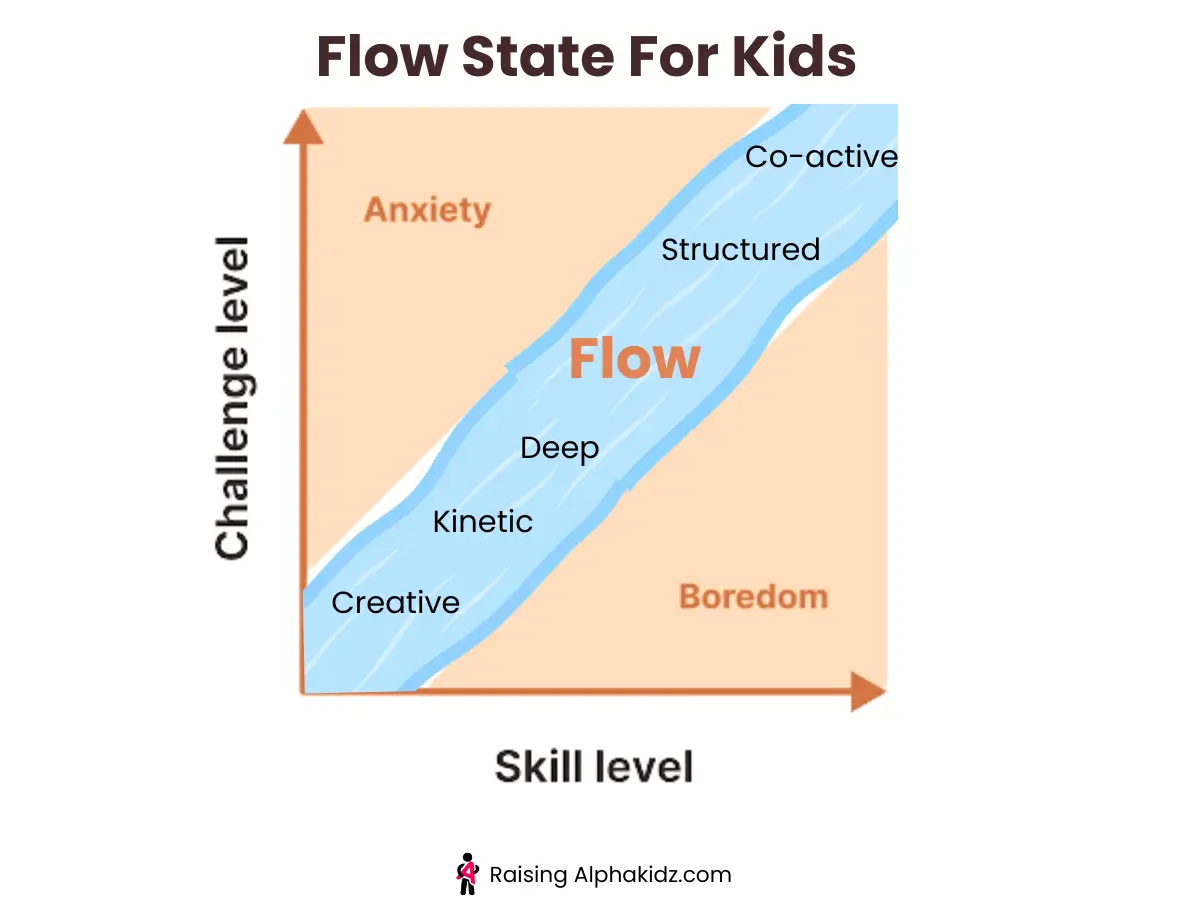
Flow state is a form of meditation achieved through self-expression. In this state, your kids lose awareness of their identity, their chattering minds, and their surroundings, immersing themselves entirely in the act of creation—whether painting, practicing martial arts, solving problems, or dancing. The water element embodies this self-expression, creativity, and joy, naturally inviting flow state. Here, the sense of self dissolves into the action, and their inner essence moves freely without conscious effort.
Process art serves as a beginner-level flow activity, ideal for introducing children to shallow flow state. It helps your kids enter creative flow for just a few seconds to a few minutes, which serves more like joyful mediation for kids.
Why flow state is needed for kids.
Flow state is essential for kids because it cultivate self-contentment from within. When children enter flow through self-expression—like painting, dancing, or building—they stop seeking external validation or rewards. The activity itself becomes the joy. In those moments, their restless mind settles, self-judgment fades, and they experience pure satisfaction in simply doing. This internal sense of fulfillment teaches them that happiness isn’t about outcomes or praise but about being fully present in an activity they love.
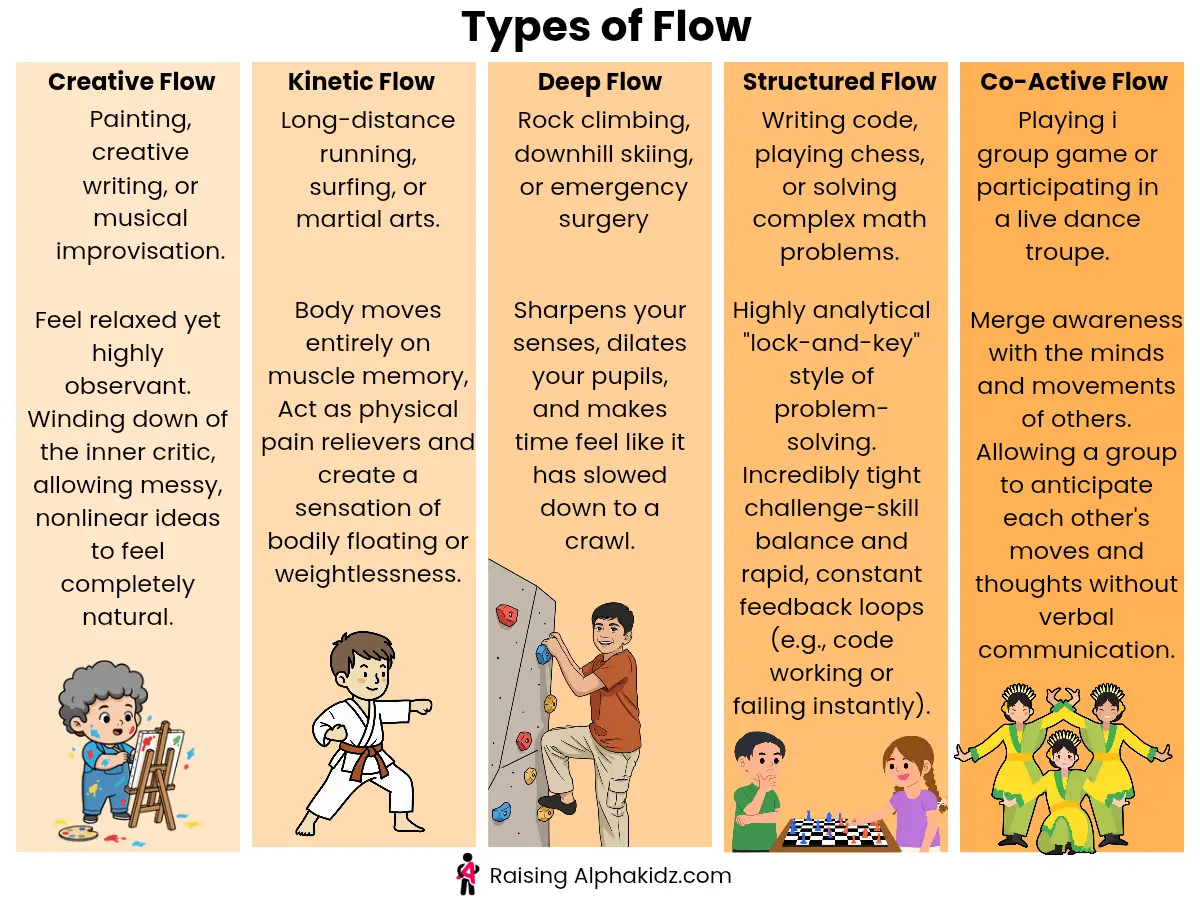
Over time, flow becomes a lifelong inner resource for contentment, resilience, and emotional balance—independent of achievements or others’ opinions.
Supplies Needed
- Paint: Watercolors
- Tape: Masking Tape/ Painter’s tape
- Thick Paper: Canvas/ Watercolour paper/ Cardboard
- Painting Brush: Any size
- Others: Water, tray, scissors
How to Make Tape Resist Art
The Set-up
Prepare the Space: To create tape resist art, the first step is setting up the space with art essentials. Make sure the space is clutter free to reduce the sensory overload.
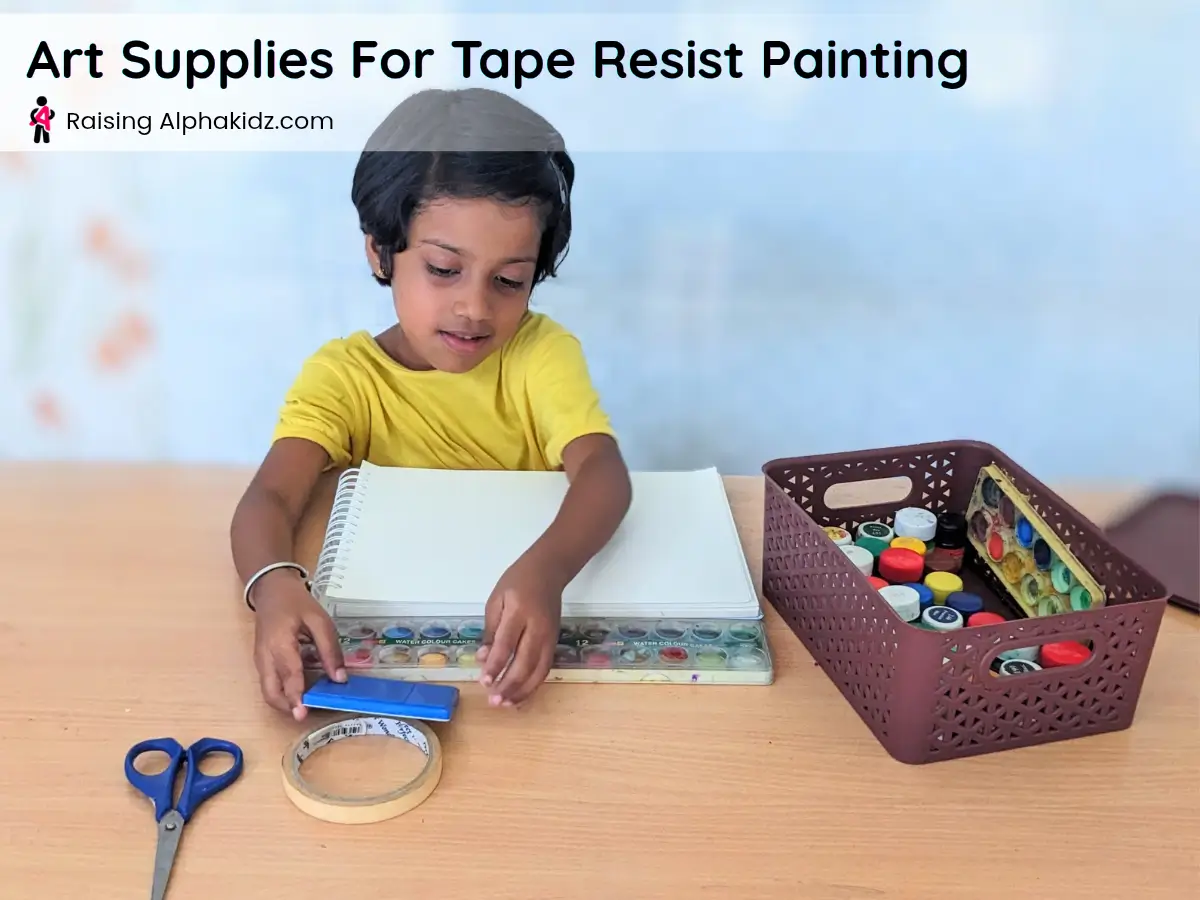
A calm and organized environment encourages focus, creativity, and a deeper flow state by reducing distractions and racing thoughts.
A spacious painting area also allows for freer movement and more expressive art-making.
Protect The Desk: If you are working with younger children, cover the table or painting desk with newspaper to keep the space clean and easy to manage.
Step-by-Step Guide
Fix the Tape
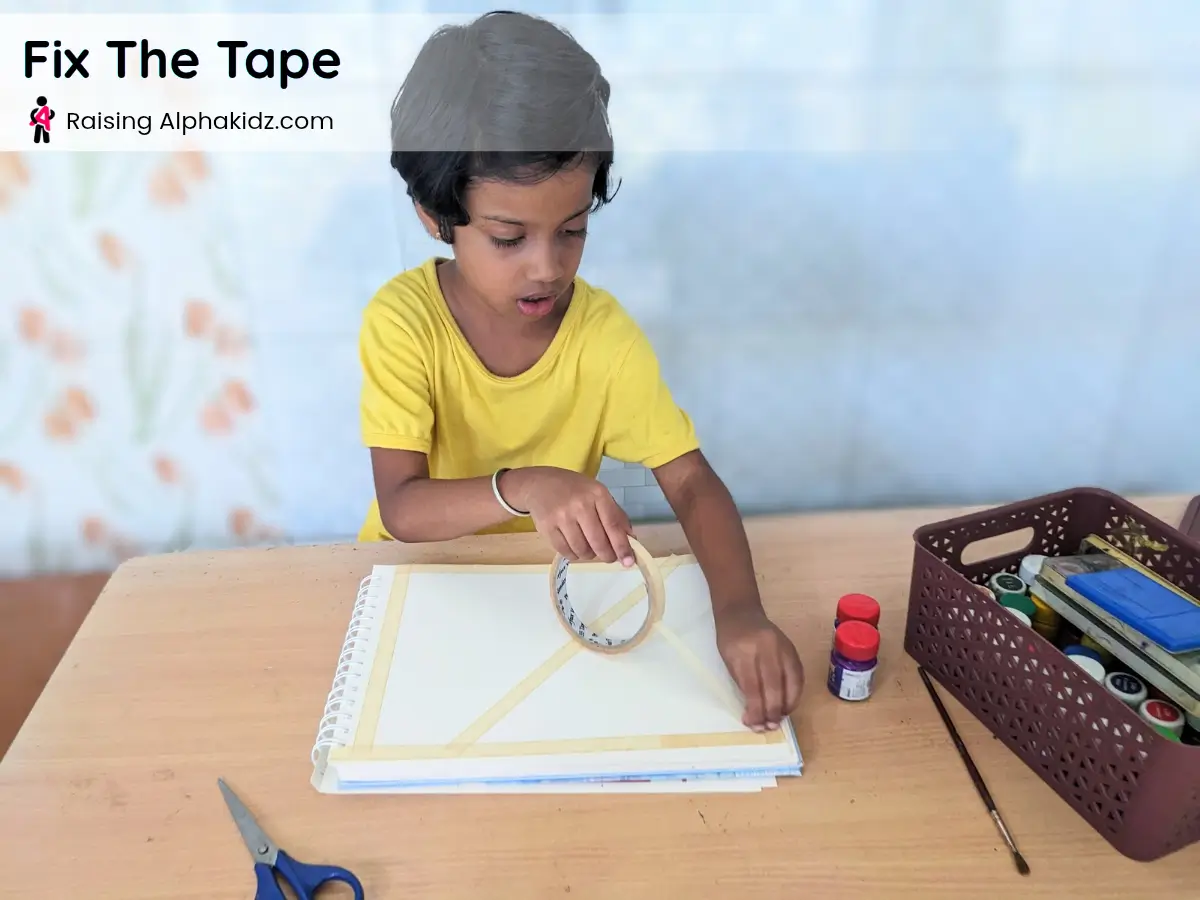
Start by sticking masking tape onto the painting canvas or paper in different patterns and directions.
If you are creating tape resist art with preschoolers, help them place and press the tape firmly. For kindergarten or elementary-aged children, encourage them to do it independently while offering suggestions to create unique and abstract designs.
What Tape Is Best for Tape Resist Art?
Masking tape or painter’s tape works best for tape resist art because it is gentle on paper and less likely to tear the surface when removed.
Seal the Edges
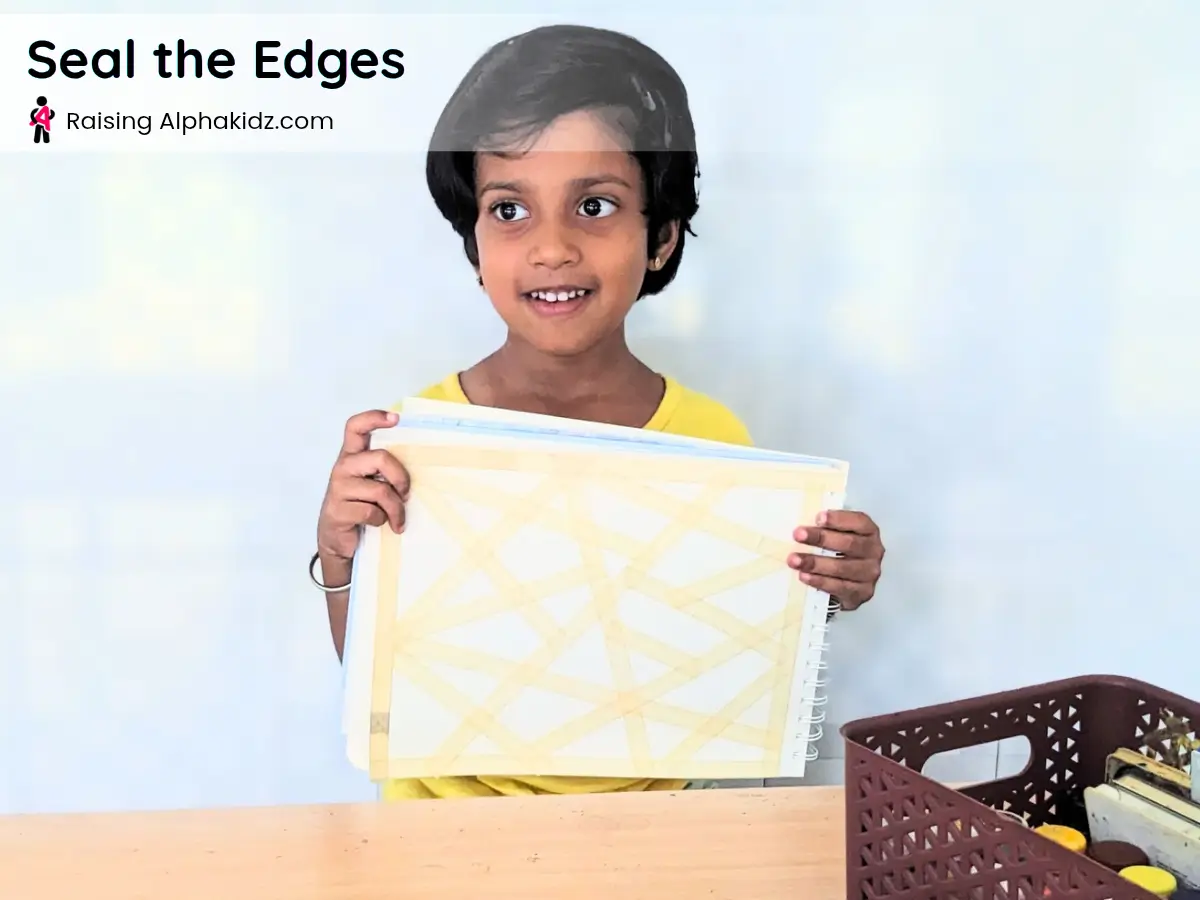
Do not forget to secure the edges of the canvas or paper with masking tape. This helps prevent paint from spreading beyond the surface or soaking into unwanted areas.
What Paper Is Best for Tape Resist Art?
Use thick watercolor paper or canvas for tape resist painting, as these surfaces remain stable when wet. Thin paper can wrinkle, tear, or get damaged while removing the tape.
Cardboard is also a great alternative because it provides a stronger and sturdier painting surface for young children and layered artwork.
Paint the Spaces
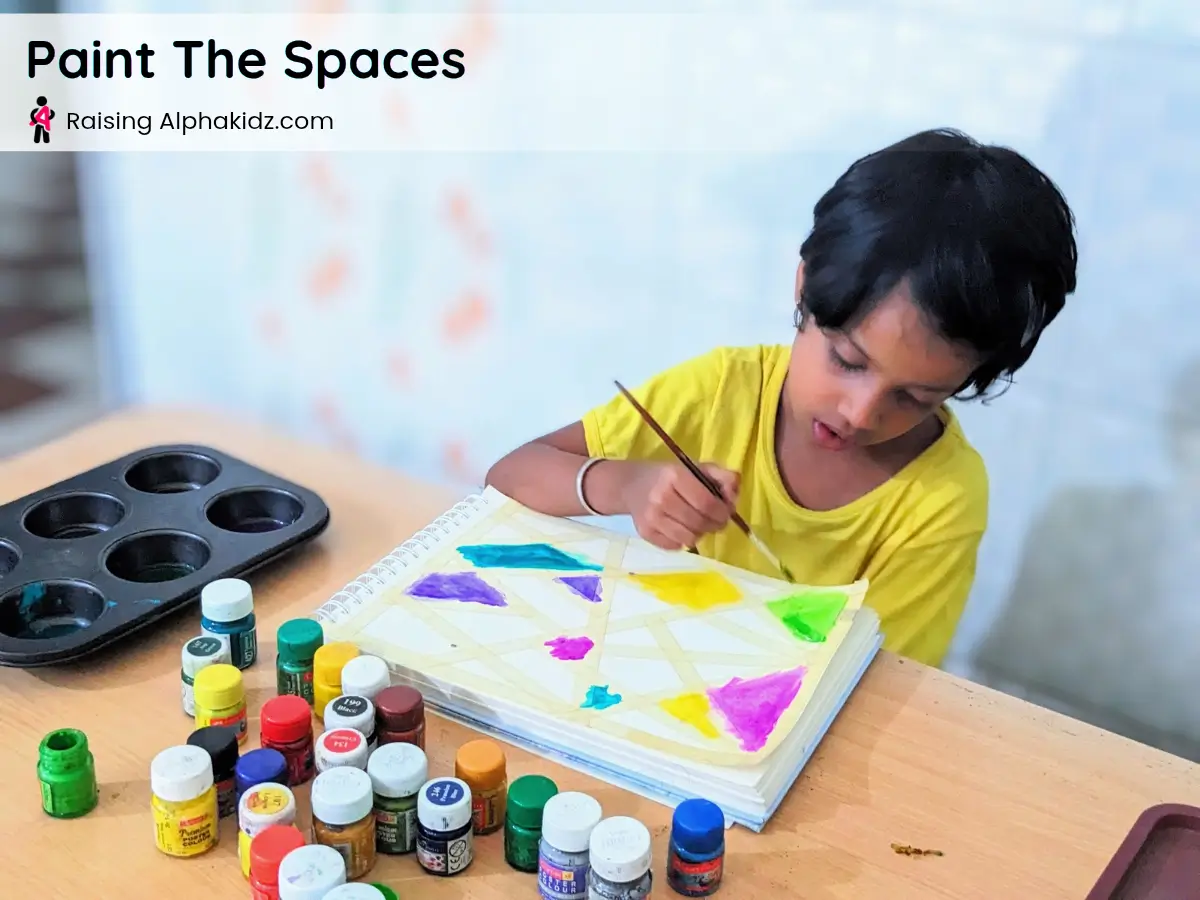
Paint the spaces between the tapes using different watercolor shades. There is no need to aim for perfection—children can freely paint over the tape as part of the creative process.
What Paint Is Best for Tape Resist Painting?
Watercolors and poster colors are the most suitable paints for tape resist art. They spread easily, blend beautifully, and create vibrant layered textures that work especially well with this tape resist technique.
Explore with Different Colors
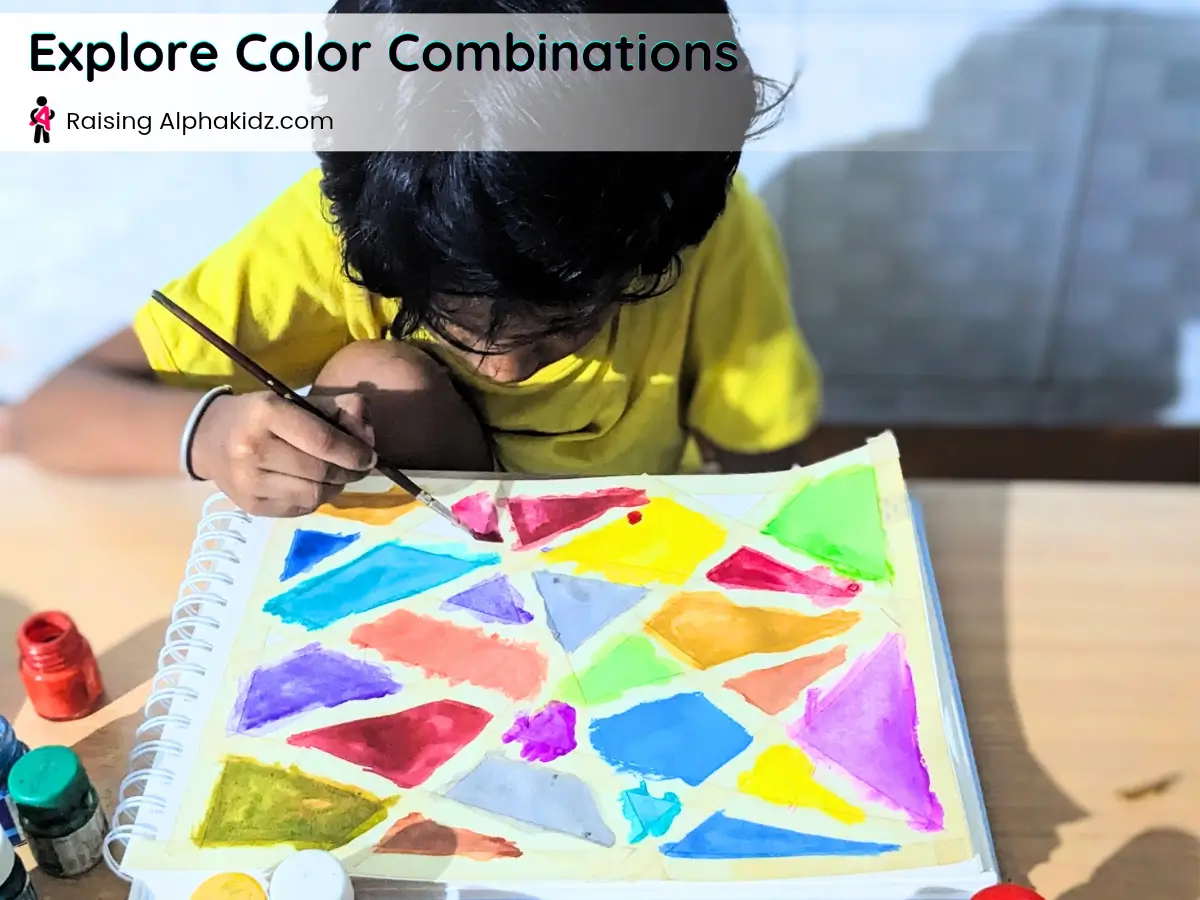
Use a variety of watercolor or poster paint shades to make the artwork bright and expressive. Encourage children to mix colors, layer shades, and paint freely over the taped areas.
Let the Artwork Dry
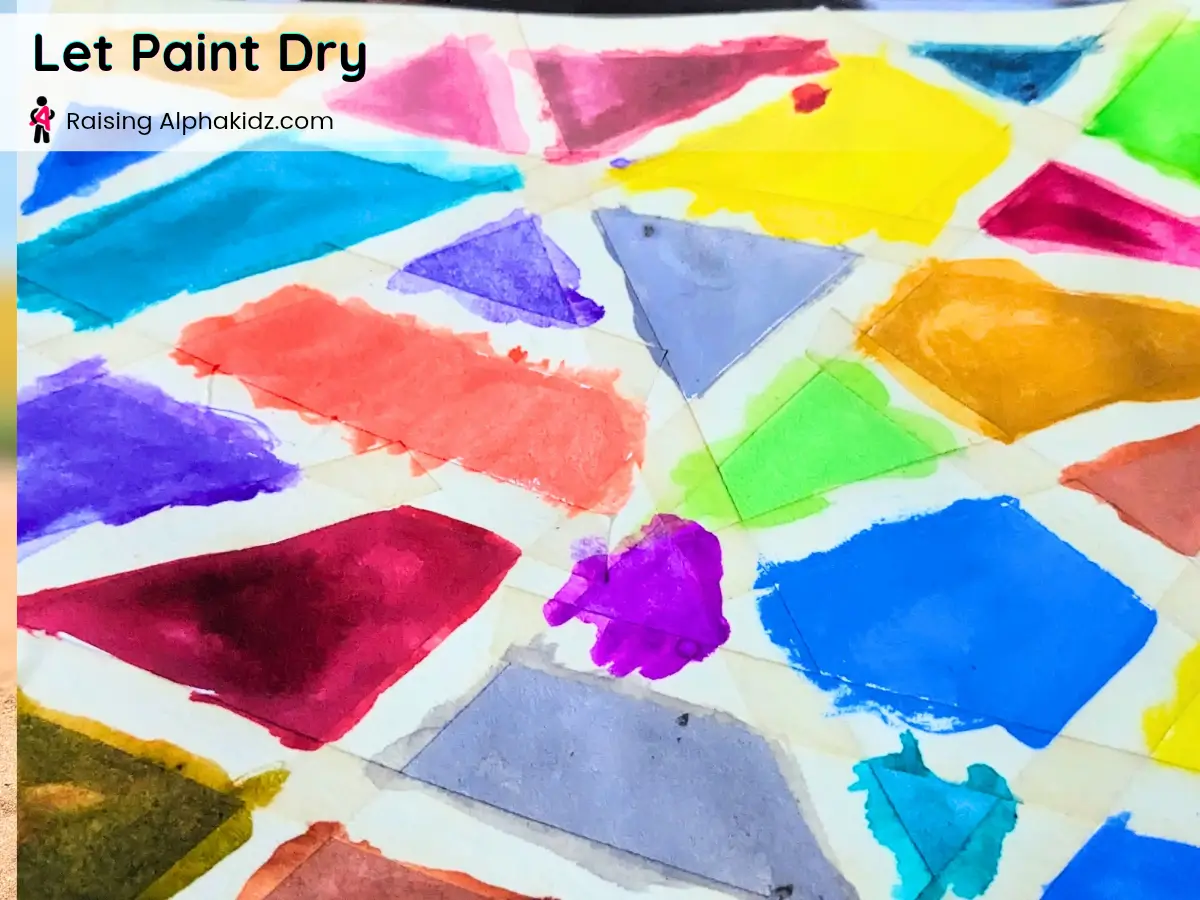
Once the painting is complete, let the artwork dry completely before removing the tape. Pulling tape off a wet surface may tear or damage the paper or canvas, so patience is important at this stage.
Peel Off the Tape
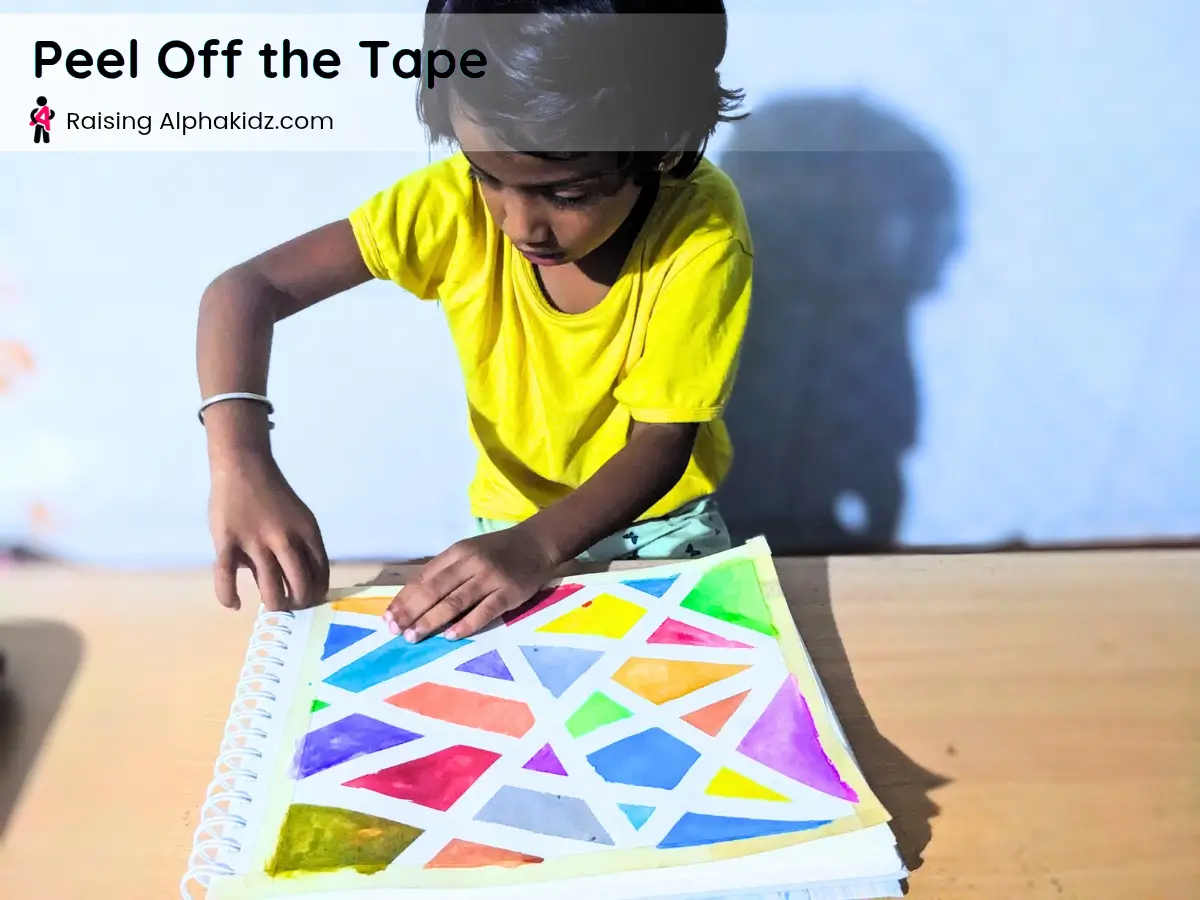
After the surface has fully dried, slowly peel off the tape one strip at a time, including the edge tape. This reveals the beautiful resist patterns underneath.
Finished Tape Resist Art
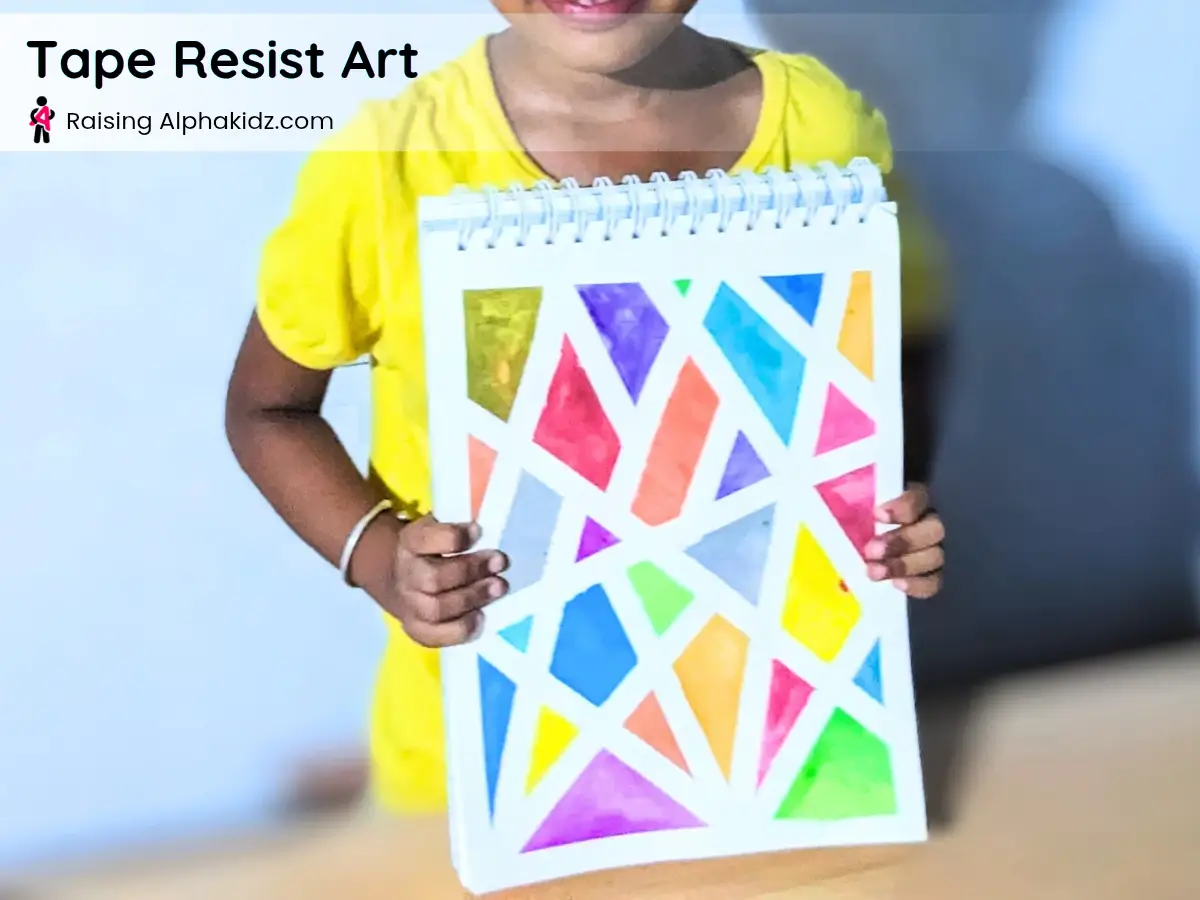
Your tape resist art is now ready. The final artwork will display colorful abstract patterns contrasted with clean white spaces created by the masking tape.
Advanced Tape Resist Art Ideas
Tape Resist Abstract Art
You can apply tape again over the finished artwork and repaint the surface with another layer of colors. Repeating this process creates more depth, texture, and complex abstract patterns.
Tape Resist Name Art
Stick the tape in the shape of a child’s name or initials and ask them to paint around it. Once the tape is removed, the name appears clearly against the colorful background.
Tape Resist Pottery
Tape resist techniques can also be used on pots or ceramic surfaces. Apply tape in patterns, paint over it, and then peel the tape away to reveal abstract designs on pottery.
Tape Resist Cross Art
This is one of the simplest tape resist activities. Create a cross shape using tape and paint over the entire surface. Once the tape is removed, a clean cross design appears in the center.