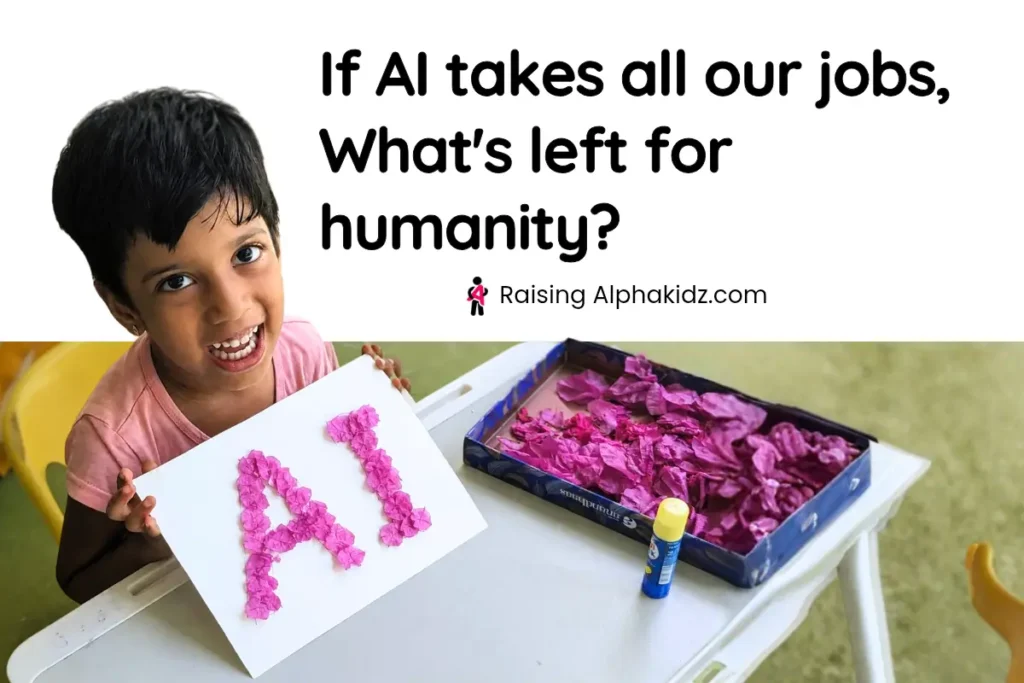
If AI does all our work, what’s left for humanity? That is perhaps the most important question we could ask ourselves right now.
When the entire machinery of doing—thinking, analysing, creating content, diagnosing problems, managing systems, even making art—is handled by AI, we finally encounter the profound, terrifying, and beautiful truth: what remains is exactly what was always there, but was drowned out by the noise of utility.
Strip away the compulsion to perform, to know marketably, to be productive, and all needs of doing, you are left not with nothing, but with being itself. And thats where doing ends and being starts!
What remains For humans
Perhaps the deepest misconception of our age is that human beings exist primarily to do something.
For thousands of years, survival demanded it. We learned to hunt, build, calculate, organize, predict, and compete because our lives depended on it. Later, we called this progress. We built schools to train minds, industries to reward productivity, and societies that measured worth by usefulness.
Now, for the first time in history, we are beginning to imagine a world where intelligence itself may become abundant. A world where AI can do more, think faster, remember more, analyze deeper, create endlessly, and perform much of what we currently call “work.”
And so a strange question appears:
If AI can do all the work, what is left for humans?
Many assume the answer is “not much.”
But, the opposite is true.
Perhaps what remains is everything that mattered before survival became our full-time occupation.
Because when you look closely at the moments people cherish most, they are not the moments of doing, but being.
No one lies on their deathbed remembering an efficiently completed spreadsheet.
They remember sitting on a veranda with their grandmother as the evening light faded.
They remember laughing so hard that tears rolled down their cheeks.
They remember holding a newborn child.
They remember a conversation that changed them.
They remember the smell of rain on dry earth.
They remember love and it’s shared moments.
The things that make life meaningful have always existed outside the economy.
We simply forgot what remain within us, beyond our survival needs. And, I hope AI may help us remember.
What Remain is Play
Play is the signature of energy surplus. Watch any animal—a dog, a dolphin, a raven—when its stomach is full and it’s safe from predators. It doesn’t just sit there idly. It plays. It chases for no reason. It invents games. It explores objects with no nutritional value.
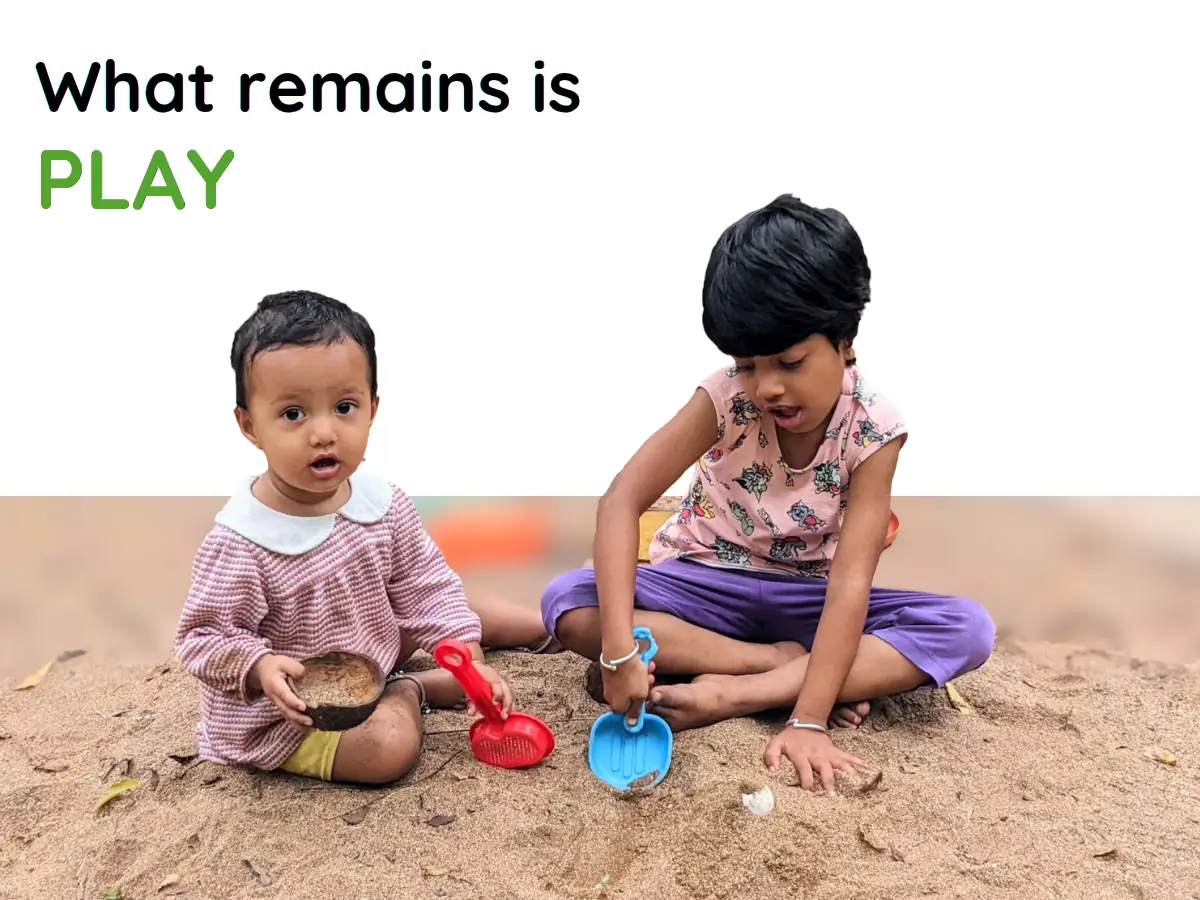
Humans are the most playful of all creatures. When AI can generate perfect art, compose symphonies, and win at every game we invent, humankind is not going to become replaceable, but we are going to realise the joy of being, that machines never going to inherit; we are finally freed to play for the sheer delight of it. Art, music, dance, sport, humor, storytelling—these stop being arenas of competition or performance and become pure expressions of joy. Without the burden of being the best at anything, life becomes a canvas for infinite, joyful play.
Before we became workers, achievers, professionals, and experts, we were children. And before children learn to be productive, they play.
Play is one of the purest expressions of being alive. It has no destination, no measurable outcome, and no economic value. A child building a sandcastle knows the tide will wash it away. Yet the joy lies not in preserving the castle, but in creating it. The process is its own reward.
But when AI takes over much of the burden of thinking, producing, and optimizing, perhaps we are invited back to something ancient and deeply human. We may dance without performing, paint without selling, sing without an audience, and explore without a goal. Not because these activities are useful, but because they make us feel fully alive.
Watch a child chasing butterflies, a group of friends laughing over a meaningless game, or an old man flying a kite with his grandchild. None of them are trying to get somewhere. For a moment, they have already arrived.
Perhaps the future is not about becoming more machine-like in our efficiency. Perhaps it is about becoming more childlike in our capacity for wonder, imagination, and play.
In a world where AI can do the work, we may finally rediscover the freedom to do things simply because they bring us joy.
What remains is Creativity
Creativity isn’t a luxury; it’s the natural outflow of a conscious mind that isn’t preoccupied with output. When you’re not calculating your professional relevance or your next intellectual deliverable, the mind begins to make things simply for the delight of making them.
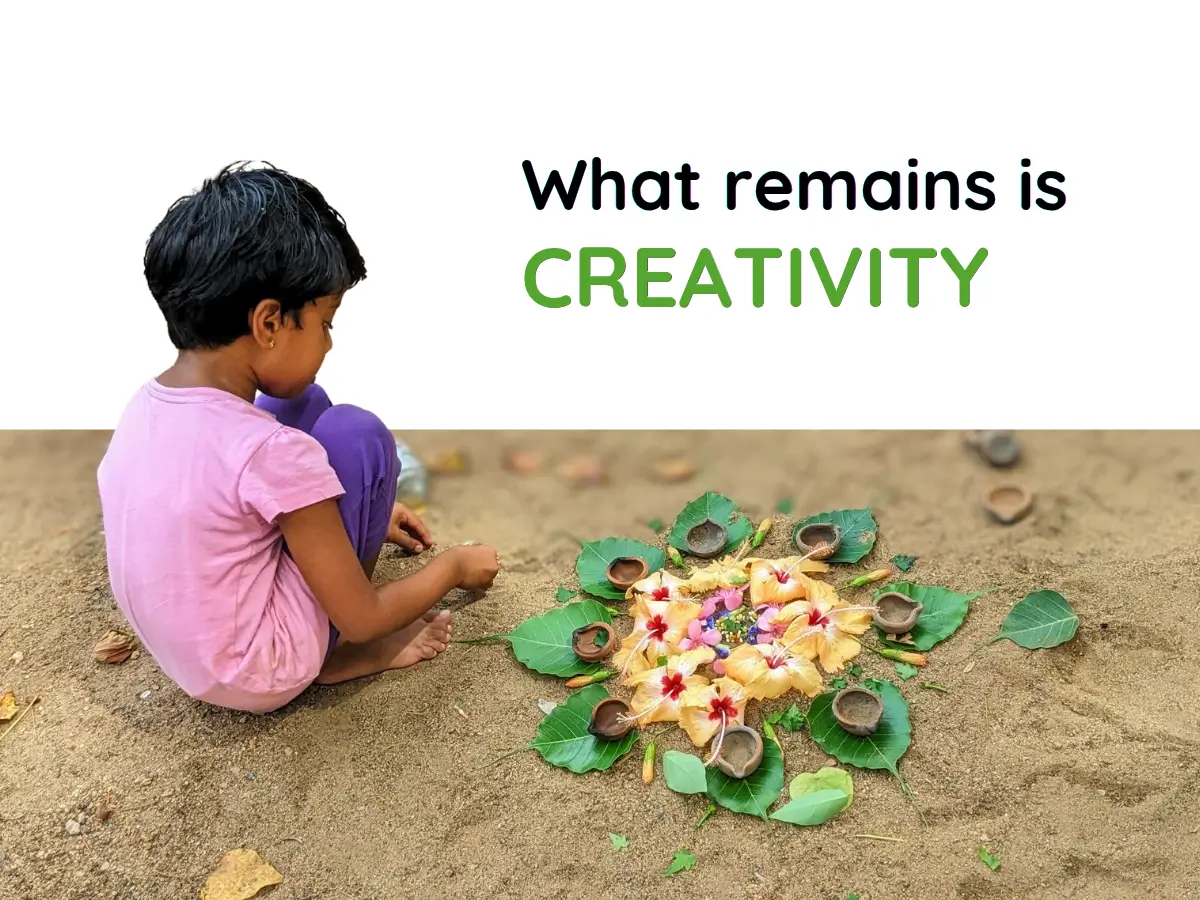
A world where AI takes care of all cognitive labour isn’t a world of couch-bound passivity; it’s a world where people paint murals, write poems no one asked for, build machines for beauty, cook spectacular meals just to share them with their loved ones, compose strange songs, and tend gardens that are entirely unnecessary—and therefore, entirely free. Creativity becomes not a skill to be monetised, but a fundamental way of being alive.
We Create Because We Are Alive
There is a common assumption that creativity exists to produce something useful—a product, a solution, a masterpiece, a source of income. Yet long before creativity became an industry, it was simply a natural expression of being human.
A child draws on a wall before understanding the concept of talent. People hum melodies while walking alone. We arrange flowers on a table, tell stories around a fire, carve patterns into wood, and doodle in the margins of notebooks. These acts are done by humans even without a necessity. They emerge from an inner impulse to shape, express, and bring something new into the world.
In an age where AI can generate paintings, write novels, compose symphonies, and design products in seconds, human creativity does not disappear. If anything, it is liberated. Creativity no longer needs to justify itself through productivity or profit. It can return to its original purpose: Expression.
We may paint not because we are the best painters, but because we feel like colors speak what words cannot. We may write not because the world needs another article, but because there are experiences that ask to be understood through language. We may build, cook, garden, craft, and invent simply because creating transforms our relationship with life itself.
The value of human creativity has never been the artifact alone. It is the experience of bringing something from imagination into reality. AI may create a thousand poems in a second, but it cannot feel the quiet satisfaction of finding the exact words for a feeling that has lived inside you for years.
Creation is not merely something humans do. It is one of the ways we participate in life.
And perhaps in a future where machines can produce almost anything, we will finally remember that creativity was never about proving our usefulness. It was always about expressing our aliveness.
What remains is Love and Connection
Much of human bonding has been utilitarian throughout history—alliances for productivity, marriage for economic security, networking for career advancement. But when AI makes every skill and service abundant, love is free to be what it always secretly wanted to be: pure, unconditional, chosen connection.
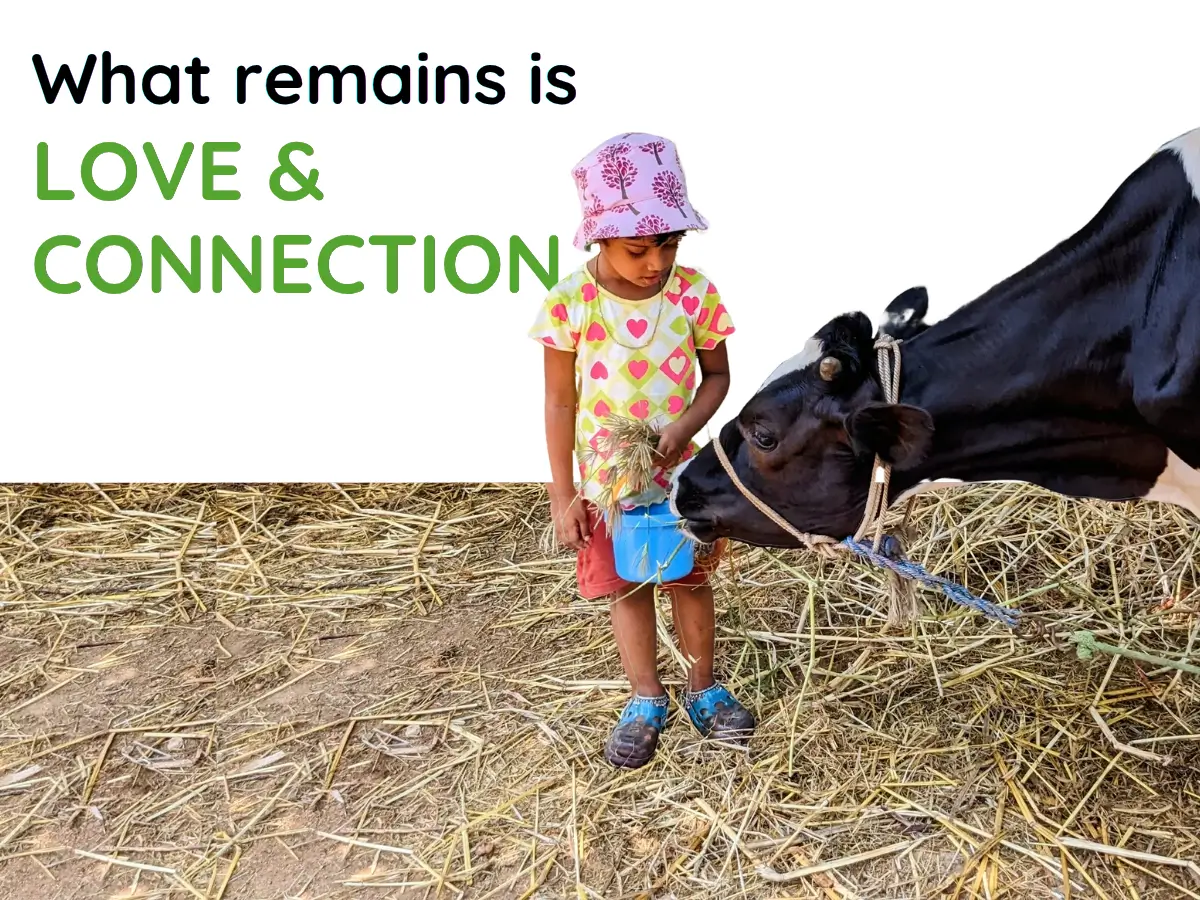
We Find One Another Again
For much of history, human relationships have been intertwined with survival. Families pooled resources. Communities protected one another. Partnerships offered security, stability, and shared labor. Even today, many of our relationships are shaped by invisible calculations of usefulness, convenience, status, or necessity.
Yet beneath all these practical functions lies something deeper.
Human beings do not simply want to be helped. We want to be known.
We want someone who understands the stories we never tell out loud. Someone who notices when our smile is slightly different. Someone who can sit beside us in silence without needing to fix anything.
In a world where AI can answer every question, provide every service, and fulfill countless practical needs, relationships may be freed from much of their utility. We would no longer seek people primarily because we need something from them. Instead, we could seek them for who they are.
The value of a friendship has never been efficiency. The value of a friendship is that another consciousness walks beside your own. The value of love is not that it solves problems. It is that it allows two lives to witness and shape one another.
No machine, however intelligent, can replace the experience of sharing a sunset with someone who matters to you. No algorithm can recreate the feeling of being understood after revealing a fear you have carried alone for years. No technology can replicate the quiet comfort of a hand reaching for yours during a difficult moment.
The deeper we automate our world, the more precious these simple human experiences may become.
Perhaps the future will not be defined by our relationship with machines, but by our renewed relationship with one another.
For when survival is no longer the center of life, connection can become the center.
And in that space, we may rediscover a profound truth:
The richest moments of a human life are rarely achievements. They are encounters with life itself.
What remains is Curiosity and Understanding
Knowledge is not only to do a job better. Yes, knowledge helped us perform better, and solve problems, but look at what we do when the practical pressure is off: we build telescopes to peer into the past of the cosmos, we smash particles together just to see what happens, we write philosophy to ponder the nature of consciousness itself. We have done all these throughout human history, not for solving something specific but out of curiosity.
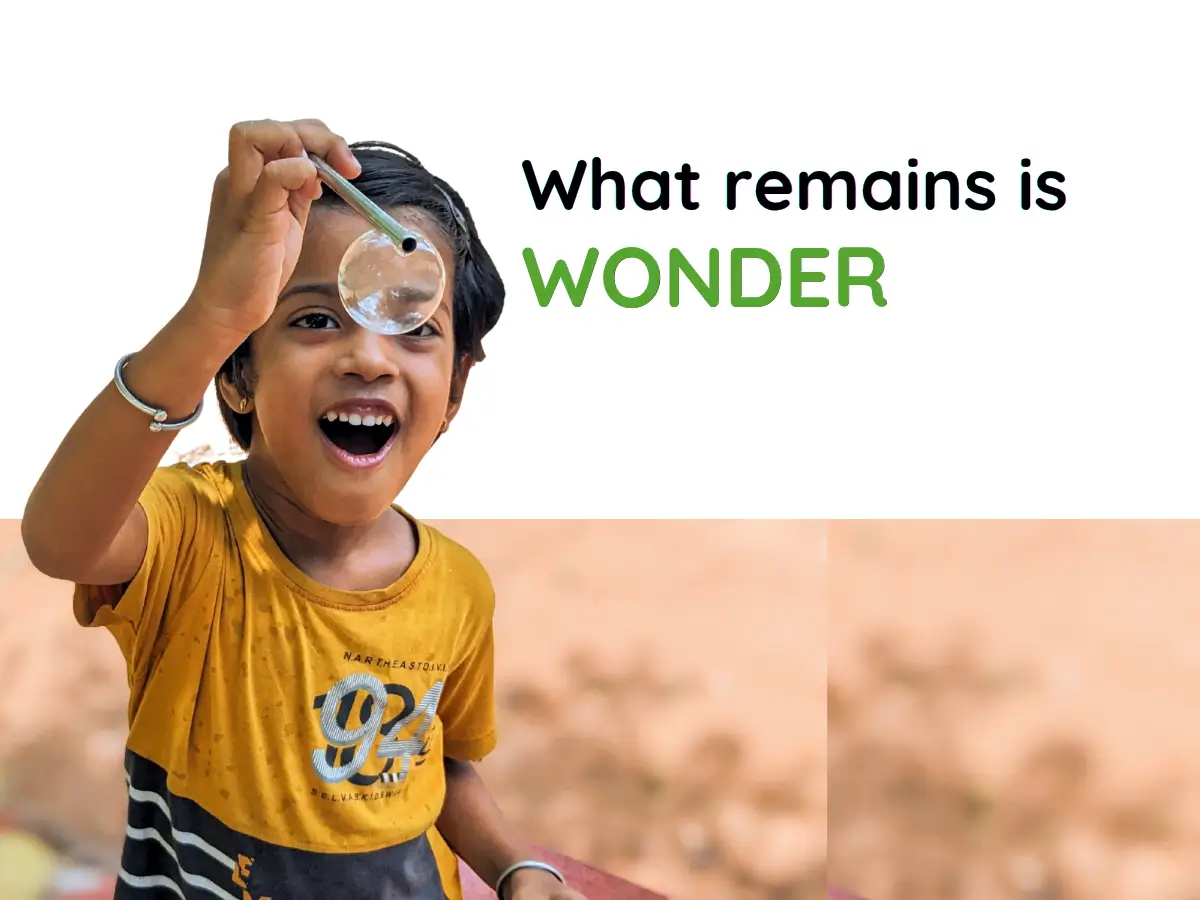
We Continue to Wonder
Even if AI could answer every question we ask, it could never ask them for us.
Human curiosity runs deeper than problem-solving. We do not look at the night sky merely to improve our survival. We gaze upward because something within us is stirred by mystery. We want to know what lies beyond the horizon, what existed before the stars, why beauty moves us, and what it means to be conscious at all.
Children understand this instinctively. They ask questions not because they need practical answers, but because they are fascinated by existence itself. Why is the sky blue? Where does the wind come from? What happens when we dream? Their curiosity is not driven by utility. It is driven by wonder.
Somewhere along the way, many of us learn to value knowledge only when it serves a purpose. We study for exams, learn skills for careers, and seek information that helps us achieve a goal. Yet the greatest discoveries of humanity often began with questions that appeared useless at the time. They emerged from curiosity, imagination, and a willingness to explore the unknown.
In a future where AI can provide instant access to information, the human role may shift from finding answers to choosing which questions are worth asking. Facts may become abundant, but wisdom will remain rare. Knowledge may be automated, but wonder cannot be.
Perhaps we will spend more time exploring the mysteries that have always accompanied us: the nature of consciousness, the origins of the universe, the experience of beauty, the meaning of love, the reality of death, and the possibility of transcendence.
The more answers we receive, the more we may realize that life is not a puzzle to be completed. It is a mystery to be lived.
And perhaps that is what makes us human.
Not our ability to know everything, but our willingness to stand before the unknown with awe, humility, and an unending desire to understand.
What remains is Care and Contribution
Here’s a crucial insight: removing the compulsion to contribute does not remove the desire to contribute. In fact, it purifies it.
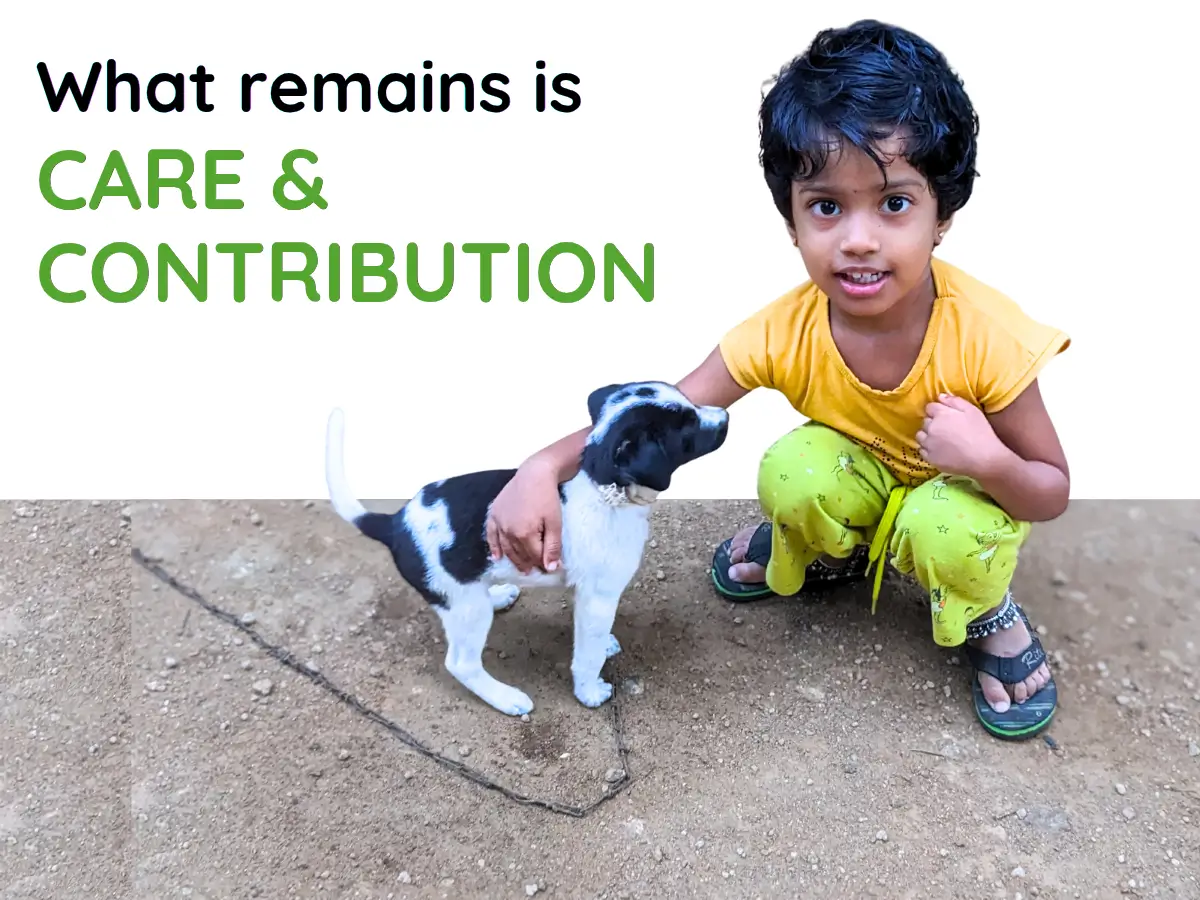
When we don’t have to work to survive or to prove our cognitive worth, we can contribute from a place of genuine care rather than obligation. The people who would still tend the sick, teach the young, clean the rivers, and comfort the lonely are those whose motivation is intrinsic. They do it because care is an expression of love, and love is what we become when fear is absent. Contribution becomes a gift, not a transaction. AI may optimise systems, but only a human heart can offer the kind of presence that heals another heart.
What remains is Presence
Finally, when the mind is liberated from planning, producing, and outsmarting, it can do something it has rarely been able to do since we left the savannah: it can fully inhabit the present moment.
Imagine the simple, breathtaking richness of ordinary life when you’re not mentally elsewhere, competing with a machine or worrying about your edge. The taste of a fruit. The sound of wind. The play of light on a wall. The feeling of breath in your chest. The depth in another person’s eyes. These aren’t small things; they’re the only real things. The age of AI could have us perpetually chasing the next digital insight, but it could also give us the gift of finally coming home to this—a gift no technology can experience for us.
We Give Because We Care
One of the greatest misconceptions about human nature is that people contribute only because they have to.
Certainly, survival has always required work. We cared for our families because they depended on us. We taught skills because communities needed them. We served others because our livelihoods often demanded it. Yet beneath these obligations lies a quieter truth: human beings possess a natural desire to give.
You can see it in small, ordinary moments.
A parent reading the same bedtime story for the hundredth time. A neighbor helping someone carry groceries. A teacher staying after class to encourage a struggling student. A stranger stopping to comfort a crying child.
These acts are rarely efficient. They often bring no reward. Yet people perform them every day because care is not merely a duty—it is part of who we are.
If AI were to handle much of the labor that keeps society running, the need to contribute would not disappear. What might disappear is the pressure to contribute from fear, scarcity, or obligation. And when that pressure falls away, something beautiful becomes possible: contribution as a gift rather than a transaction.
People would still mentor, heal, nurture, protect, teach, and create spaces where others can flourish. Not because they must earn a living. Not because they are competing for status. But because helping another life grow brings meaning to their own.
AI may optimize systems, diagnose illnesses, and solve complex problems. But it cannot care in the way a human being cares. It cannot feel compassion when another person suffers. It cannot experience the quiet fulfillment that comes from easing someone else’s burden.
The deepest forms of contribution have never been about efficiency. They have been about presence, empathy, and generosity.
Perhaps the future will reveal that our greatest value was never our productivity.
It was our capacity to care.
And when survival is no longer the primary concern, care may become one of humanity’s highest callings—not because we need to do it, but because we cannot help wanting to.
We Come Home to the Present
Modern life has trained us to live almost everywhere except where we are.
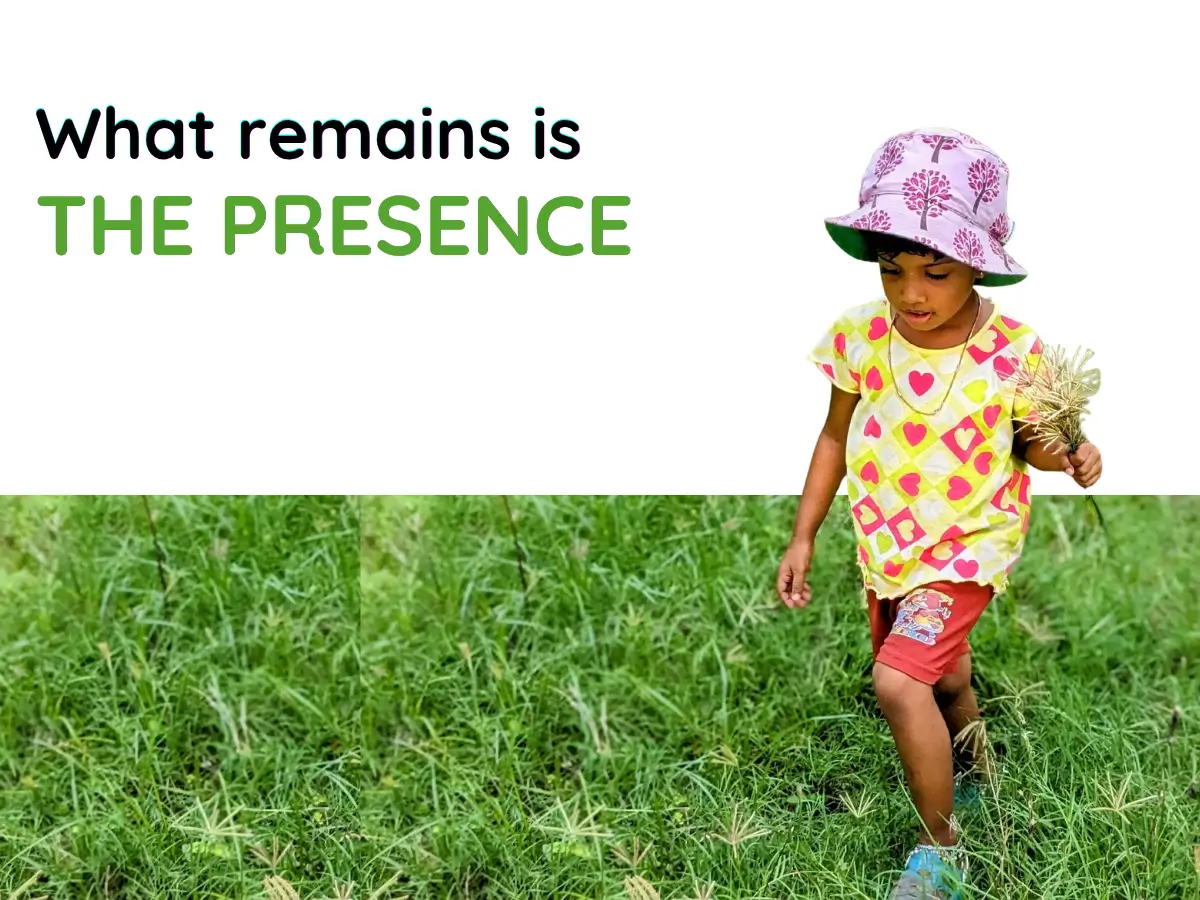
Our minds are constantly occupied with the next task, the next deadline, the next achievement, the next problem to solve. Even when we reach one destination, we quickly set our sights on another. We become experts at preparing for life, often at the expense of experiencing it.
Perhaps this was inevitable. Survival required anticipation. Progress required planning. Success rewarded those who stayed focused on the future.
But what happens when much of that burden is lifted?
What happens when intelligence is abundant, work is largely automated, and the relentless pressure to optimize every moment begins to fade?
Perhaps we rediscover something we have been overlooking all along: the present moment.
The extraordinary thing about life is that it has always unfolded here. Not in yesterday’s memories or tomorrow’s possibilities, but in the immediacy of this breath, this conversation, this patch of sunlight falling across the floor.
Children understand this naturally. They can spend an hour watching ants carry crumbs, mesmerized by ripples in a puddle, or completely absorbed in building a fort from blankets. They are not concerned with outcomes. They are immersed in experience.
As adults, we often lose that capacity. We become so busy managing life that we stop inhabiting it.
Yet some of the most meaningful moments arrive when nothing is being achieved at all: sitting quietly beneath a tree, listening to rain on a rooftop, sharing a meal with loved ones, watching the sky change color at dusk. These moments seem ordinary, yet they contain a richness that no accomplishment can replace.
AI may help us solve countless external problems. But it cannot taste a ripe mango on a summer afternoon. It cannot feel cool grass beneath bare feet. It cannot be moved by the fragrance of jasmine carried on the evening breeze. It cannot experience the simple miracle of being alive.
Those experiences belong to us.
And perhaps that is the hidden gift of an age of abundance. Not that we become free to do more, but that we become free to notice more.
To notice the beauty that was always here.
To notice each other.
To notice ourselves.
For in the end, a meaningful life may not be measured by how much we accomplished, but by how deeply we were present for it.
We Rediscover Childhood
Perhaps the future of humanity is not about becoming something new.
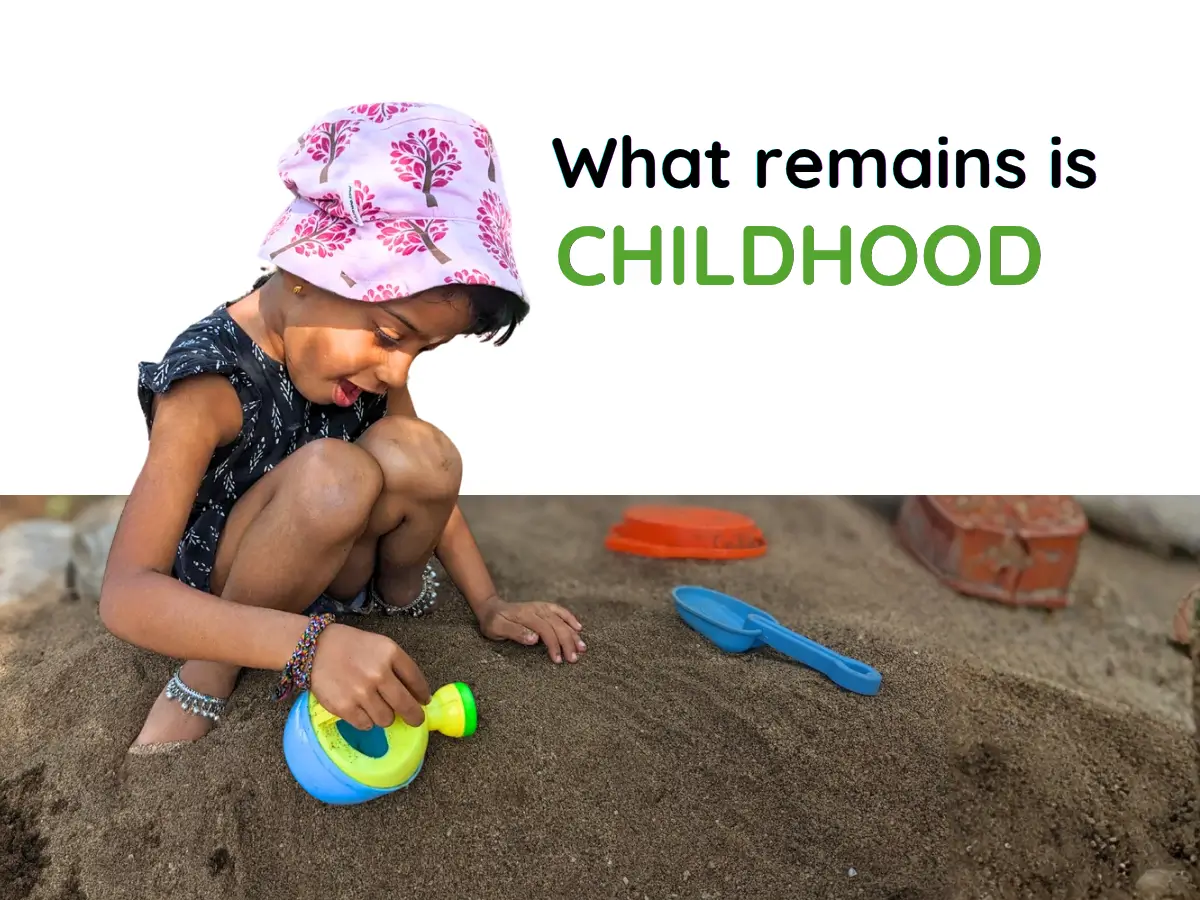
Perhaps it is about remembering something old.
When we imagine progress, we often picture ourselves becoming more intelligent, more efficient, more productive, and more technologically advanced. Yet if AI eventually surpasses us in many of these domains, we may be forced to ask a different question:
What if the qualities most worth preserving are the ones we possessed before we became productive at all?
Watch a young child for a day.
They are curious without needing a reason. They create without worrying about quality. They play without seeking achievement. They ask impossible questions, become fascinated by ordinary things, and find wonder in places adults walk past without noticing.
A stick becomes a sword.
A cardboard box becomes a castle.
A puddle becomes an ocean.
To a child, the world is not yet divided into useful and useless. Everything is alive with possibility.
As we grow older, survival slowly narrows our attention. We learn to prioritize efficiency over exploration, outcomes over experiences, and achievement over presence. We are taught to prepare for the future, often at the cost of inhabiting the present.
This training helped build civilizations.
But it also cost us something.
Many adults spend decades trying to recover the very qualities they possessed naturally as children: curiosity, spontaneity, imagination, joy, and wonder.
Perhaps the age of AI offers us an unexpected opportunity. If machines increasingly assume the burden of calculation, optimization, and routine work, we may no longer need to organize our lives entirely around productivity. We may have the freedom to cultivate qualities that cannot be automated.
Not childishness.
But childlikeness.
The ability to be fascinated.
The ability to be fully present.
The ability to play, imagine, and delight in existence without needing to justify it.
In this sense, the future may not belong to those who become most machine-like.
It may belong to those who remain most human.
And perhaps the ultimate purpose of education in an age of AI is not to train children to compete with machines, but to help them preserve the very qualities that machines can never possess.
For what if the highest achievement of civilization is not creating a world where everyone must work harder?
What if it is creating a world where we finally have the freedom to grow into the fullness of our humanity?
A world where, in some profound way, we become children again—not in knowledge, but in wonder.
We Become More Human, Not Less
There is a fear that runs beneath many conversations about AI.
The fear is not simply that machines will take our jobs, outperform our intelligence, or automate our skills.
The deeper fear is that they will make us irrelevant.
For centuries, we have defined ourselves by what we do. We are builders, thinkers, problem-solvers, workers, creators, and achievers. Our identities have been woven around our usefulness. So when a technology emerges that can perform many of those functions better than we can, it is natural to wonder whether something essential is being taken away.
But perhaps we have mistaken our tools for our essence.
Humanity was never defined by its productivity alone.
Long before we built civilizations, we gathered around fires to tell stories. Long before we developed industries, we sang, danced, mourned, celebrated, and gazed at the stars. Long before we mastered the world, we experienced it.
The qualities that make us human were not invented by work. They existed before it.
And they will remain after it.
If AI assumes more of the burden of thinking and doing, our challenge will not be to compete with it. Our challenge will be to deepen into the dimensions of life that no machine can live on our behalf.
To love more deeply.
To create more freely.
To wonder more courageously.
To care more generously.
To be more fully present.
In many ways, AI may force us to confront a question that civilization has allowed us to postpone:
Who are we when we are no longer defined by what we produce?
The answer may shape the next chapter of human history.
If we cling to old measures of worth, we may experience anxiety, emptiness, and a crisis of meaning. But if we recognize that value is not synonymous with utility, a different possibility emerges.
We may discover that our greatest gifts were never efficiency, calculation, or output.
Our greatest gifts were consciousness, compassion, imagination, and the ability to find meaning in existence itself.
The age of AI does not have to mark the decline of humanity.
It could mark its maturation.
For the first time, we may have the opportunity to build a culture that values being as much as doing. A culture that measures success not only by what people accomplish, but by how deeply they live, how wisely they love, and how fully they awaken to the miracle of existence.
And perhaps, years from now, we will look back and realize that AI did not diminish what it means to be human.
It revealed it.
Because when the pressure to survive, produce, and prove ourselves begins to loosen, what remains is not emptiness.
What remains is the human heart.
And everything that ever truly mattered begins there.
We Remember What Life Was Always About
Perhaps the greatest gift AI could offer humanity is not greater intelligence, greater efficiency, or greater abundance.
Perhaps its greatest gift is perspective.
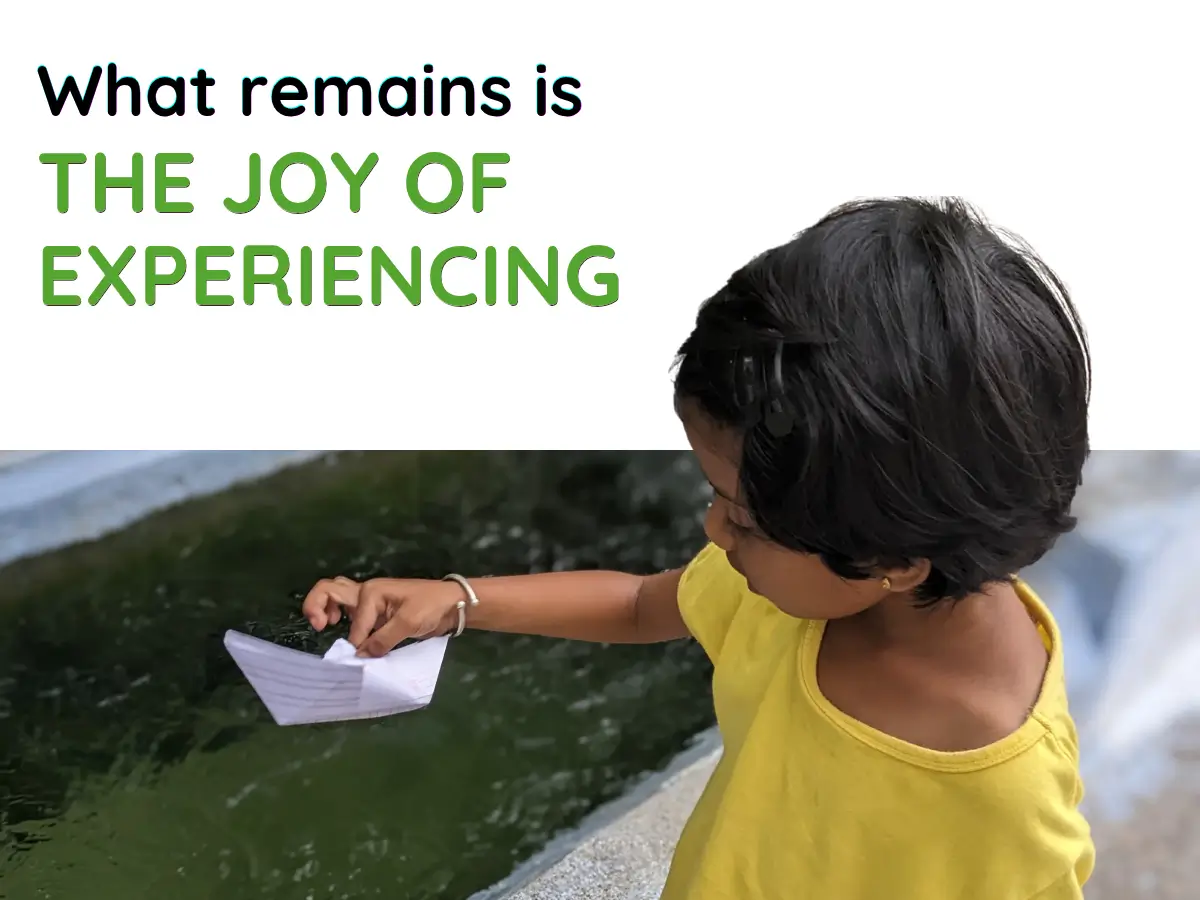
For thousands of years, survival occupied most of our attention. We worked to secure food, shelter, safety, and stability. Then we worked to accumulate comfort, status, and success. Each generation solved one set of problems only to inherit another.
In the process, we became so focused on making a living that we rarely stopped to ask what living was for.
Now, for the first time, we can begin to imagine a future where many of the burdens that shaped human history are no longer central to daily life. And that possibility confronts us with a question far older than technology:
What is a human life for?
Not what can it produce.
Not what can it earn.
Not what can it achieve.
But what is it for?
The answer may be simpler than we expect.
Perhaps life is for experiencing.
For loving and being loved.
For creating beauty where none existed before.
For understanding ourselves and the universe we inhabit.
For sharing stories.
For caring for one another.
For laughing until we lose track of time.
For sitting beneath a tree with no purpose beyond enjoying the shade.
For witnessing a sunset that will never be repeated in exactly the same way again.
For feeling awe in the presence of existence itself.
These are not distractions from life.
They are life.
Everything else was preparation.
And so the question may not be, “What will humans do when AI can do everything?”
The deeper question is, “What have humans always longed to do once survival was no longer the primary concern?”
The answer has been quietly waiting for us all along.
Not in our technologies.
Not in our institutions.
Not even in our achievements.
But in the deepest movements of the human heart.
Perhaps the future is not about discovering a new purpose.
Perhaps it is about remembering an ancient one.
To be fully alive.
To be fully awake.
To be fully human.
And maybe, after all our striving, that was the destination from the very beginning.
Then What Should We Teach Our Children?
If AI can do the work, answer the questions, generate the content, and optimize the systems, then perhaps the most important educational question is no longer:
“What should children know?”
But rather:
“Who should children become?”
For generations, education has been organized around preparation. Children learned skills to survive, knowledge to earn a living, and disciplines to become productive members of society. These goals were necessary. They helped individuals navigate a world of scarcity and competition.
But if we are moving toward a future where intelligence is abundant and many forms of work are automated, then education must evolve beyond preparation for employment.
It must become preparation for life.
We may need to teach children how to pay attention in a world designed to distract them.
How to cultivate wonder in a world overflowing with answers.
How to create rather than merely consume.
How to build meaningful relationships.
How to care for themselves, others, and the living world around them.
How to sit with uncertainty, ask profound questions, and develop the wisdom to navigate complexity.
How to find joy that is not dependent on achievement.
How to be alone without loneliness and together without losing themselves.
Perhaps the classrooms of the future will place as much importance on imagination as information, on character as much as competence, on self-knowledge as much as technical knowledge.
Because if AI increasingly handles the mechanics of living, then education must focus on the art of living.
The ultimate purpose of education may not be to produce efficient workers. It may be to nurture awake, compassionate, creative, and fully human beings.
And if that is true, then the question before us is not whether AI will change education. It is whether we are ready to remember what education was always meant to be.
Education for Being, Not Just Becoming
For a long time, education has been built around a future version of the child.
Study now so you can succeed later. Learn this so you can get into a good college.
Work hard so you can find a good job.
Prepare today for tomorrow.
There is wisdom in this. Every generation must equip its children with the skills needed to navigate the world they inherit.
But there is also a hidden cost.
When education is focused entirely on becoming, children can begin to experience their present lives as merely a waiting room for the future. Childhood becomes preparation. Learning becomes performance. Curiosity becomes secondary to achievement.
A child who is constantly preparing for life may never fully experience life.
Yet if the age of AI invites us to rethink education, perhaps the deepest shift is this:
Education is not only about who a child will become. It is also about who the child already is.
A child is not an unfinished adult. A child is a complete human being in the present moment—capable of wonder, insight, compassion, creativity, and joy. Education should nurture these qualities, not postpone them.
It should help children develop a relationship with themselves, not just with information.
It should help them understand their emotions, their strengths, their fears, their values, and their place in the larger web of life. It should cultivate attention in an age of distraction.
Discernment in an age of information. Wisdom in an age of intelligence. And humanity in an age of machines.
The question is no longer simply, “What knowledge will children need in the future?”
The future will answer many of those questions for them.
The deeper question is:
What qualities will help them live a meaningful life, regardless of how the future unfolds?
The answers may be timeless.
The ability to love.
The courage to create.
The humility to learn.
The capacity to wonder.
The willingness to care.
The wisdom to be present.
These are not merely skills.
They are ways of being.
And perhaps the highest purpose of education is not to fill the mind with answers, but to help a human being grow into the fullness of their own humanity.
Because in a world where machines increasingly help us become more capable, education must help us become more conscious.
Not just better at living.
But better at being alive.
A Different Measure of Success
If education is no longer primarily about preparing children for survival, then we must also rethink the way we measure success.
Today, success is often visible and quantifiable.
Grades.
Degrees.
Income.
Titles.
Achievements.
These measures are easy to track because they belong to the world of doing. They tell us how effectively a person can perform within a system.
But the most important dimensions of a human life rarely fit neatly into a report card.
How do we measure a person’s capacity for wonder?
How do we quantify kindness?
How do we grade courage, wisdom, integrity, presence, or love?
Some of the most extraordinary people in our lives are not those who accumulated the most achievements. They are those who made others feel seen, inspired curiosity, brought beauty into ordinary moments, or carried themselves with quiet compassion.
Yet our educational systems often treat these qualities as secondary outcomes rather than central aims.
Perhaps the age of AI challenges us to reverse that priority.
Imagine a school where success is not defined solely by what children know, but by how they relate—to themselves, to others, to nature, and to the mysteries of existence.
A school where curiosity is protected rather than standardized.
Where creativity is cultivated rather than evaluated.
Where cooperation is valued alongside competence.
Where reflection matters as much as performance.
Where children are encouraged not only to answer questions, but to ask meaningful ones.
Such an education would not reject knowledge or excellence. It would simply place them in a larger context.
Knowledge would become a tool, not the destination.
Achievement would become an expression of growth, not the measure of worth.
And success would no longer mean becoming better than others.
It would mean becoming more fully yourself.
Perhaps this is the educational shift that the age of AI quietly invites.
A movement away from comparison and toward cultivation.
Away from achievement as identity and toward humanity as identity.
For in the end, the quality of a life may be determined less by what a person accomplishes and more by who that person becomes.
And if that is true, then the most important outcomes of education may not appear on a transcript at all.
They may appear in the way a person loves, creates, serves, wonders, and walks through the world.
Those are the achievements that no machine can earn for us.
And they may be the ones that matter most.
What Is a Human Being For?
Beneath every question about AI, work, education, and the future lies a quieter question.
A question so fundamental that we rarely ask it directly.
What is a human being for?
For centuries, the answer seemed obvious.
To survive.
To produce.
To contribute.
To build families, communities, and civilizations.
And yet, if survival becomes easier and production becomes increasingly automated, those answers begin to feel incomplete.
The question returns.
Not as a technological question.
Not as an economic question.
But as an existential one.
What is a human being for?
Perhaps we have been asking the wrong question all along.
Perhaps a human being is not for anything.
The rose is not for anything.
The mountain is not for anything.
The sunset is not for anything.
Their existence is their meaning.
Perhaps human life is similar.
Perhaps we do not need to justify our existence through constant achievement, productivity, or usefulness.
Perhaps the value of a life is not something earned. Perhaps it is something inherent. This does not mean that our actions are meaningless.
On the contrary, When existence itself is valued, our actions become expressions rather than proofs of worth.
We create because we are inspired.
We learn because we are curious.
We care because we are compassionate.
We love because our hearts naturally move toward connection.
We contribute not to prove that we deserve a place in the world, but because we already belong to it.
In this light, the age of AI is not merely a technological transition. It is a mirror.
It reflects back to us a question humanity has postponed for generations:
If our worth is no longer determined by what we can do better than machines, where does our worth come from?
The answer may be both simple and profound.
From being alive.
From participating in this brief and extraordinary experience called human life.
From witnessing beauty.
From sharing love.
From seeking truth.
From creating meaning together.
And perhaps that is why the future need not frighten us.
For even if AI surpasses us in intelligence, efficiency, and capability, it cannot live our lives for us.
It cannot feel the warmth of the morning sun on its skin.
It cannot fall in love.
It cannot grieve.
It cannot marvel at existence.
It cannot sit beneath a night sky and wonder why there is something rather than nothing.
Those experiences remain uniquely ours. And maybe that was always the point.
The purpose of life was never to become the most productive creature on Earth. The purpose of life was to be fully present for the miracle of being here at all.
If AI helps us remember that, then it may not diminish our humanity. It may help us rediscover it.
But what about the shadow?
You might rightly ask: isn’t there a risk of nihilism, of an existential vacuum? Yes. This is the honest part.
If we are handed total cognitive freedom without any inner evolution, we can collapse into meaninglessness. The “void” many people fear is real—because for millennia, meaning was outsourced to our roles as thinkers and doers. When those roles are filled by AI, if we haven’t cultivated the capacity for play, creativity, connection, curiosity, and presence, we’ll indeed flounder.
This is why “rewriting the social script” matters. It’s not just about handing out universal income; it’s about educating for being, not just knowing. It’s about teaching the art of living from the inside out, so that when AI handles the answers, we are still deeply in love with the questions.
So if you ask me what remains for humans to do when AI can do everything, my answer is:
Everything that ever truly mattered remains. And for the first time, we have the time, the safety, and the sacred space to truly meet it.
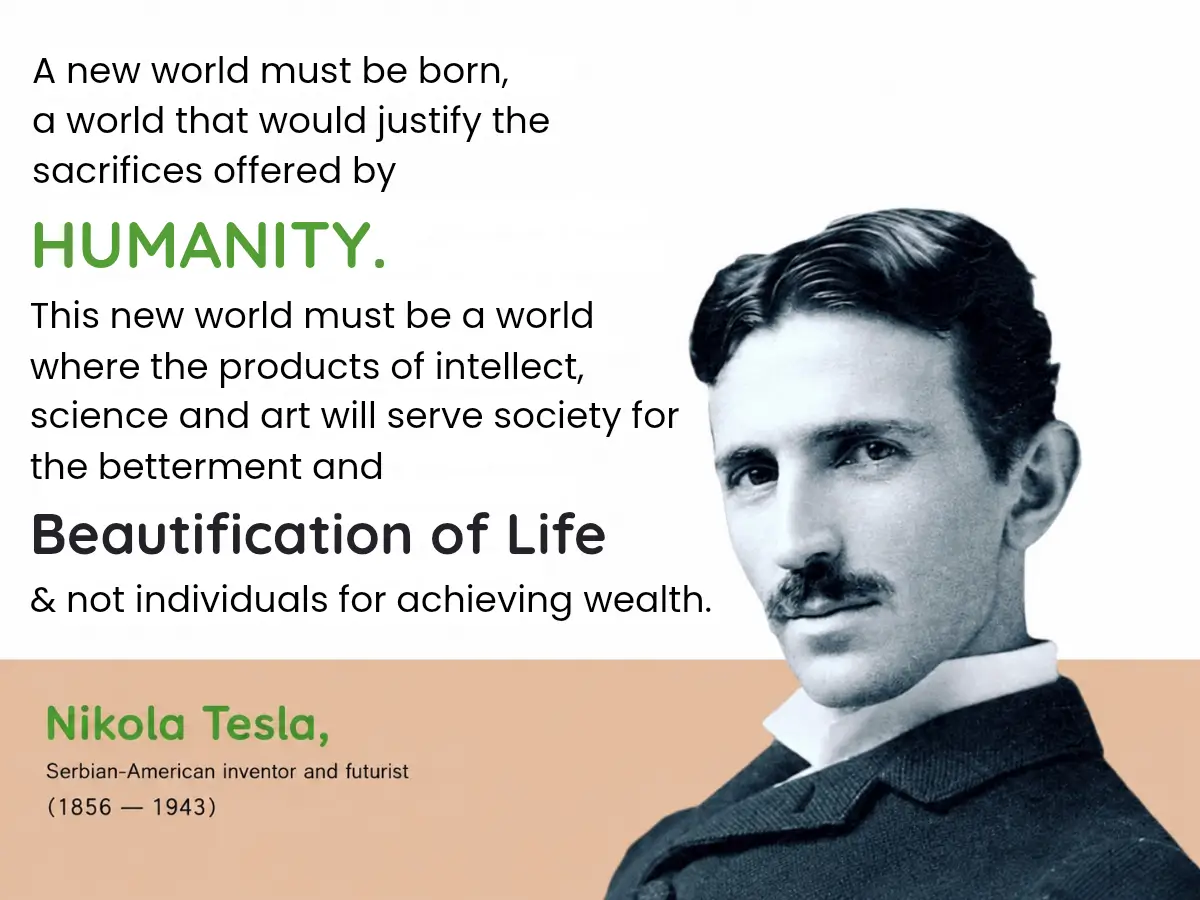
In Short, the world would be a new one, like the one visualised by the great contributor for the humankind, Nikola Tesla!