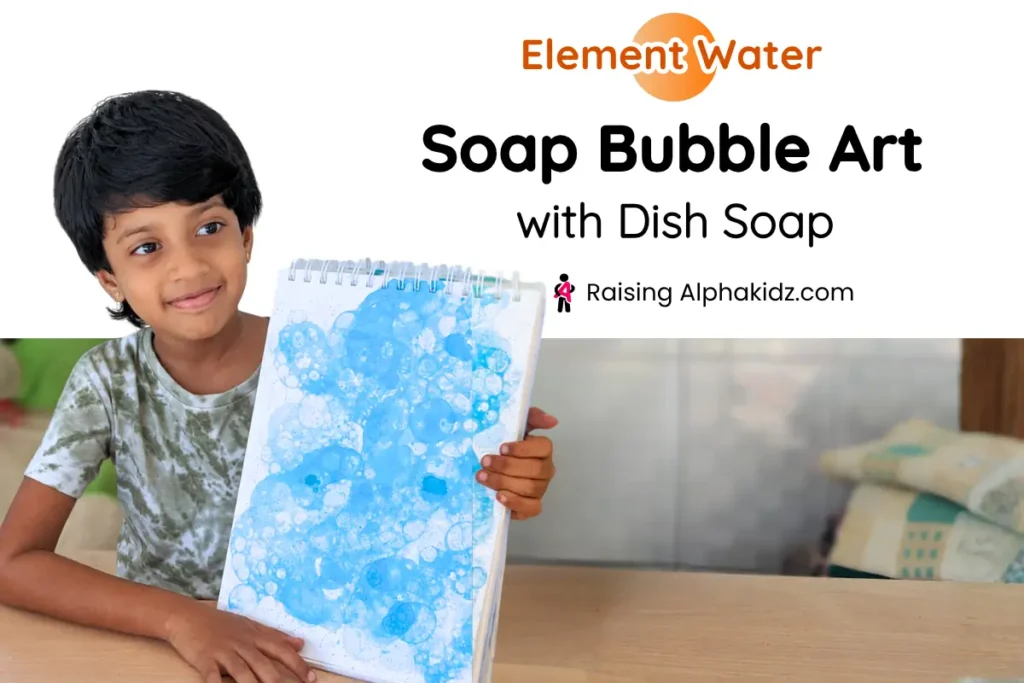
Soap Bubble Art for Kids | A Process Art Activity That Turns Bubbles into Masterpieces
- Element: Water (Flow-based Creativity)
- Skills: Creative self-expression, sensory play, Fine Motor skills.
- Experiences: Acceptance for imperfect results, Focus on process more than a result.
- Age Group: Kindergarten – Elementary.
Hello Moms!
Today we’re trading the laundry sink for the art table. Soap isn’t just for washing hands and dishes anymore — it’s about to become your child’s favorite paintbrush. Soap bubble art is a process art activity where colorful, soapy bubbles pop onto paper and leave behind swirling, one-of-a-kind patterns. There are no rules, no “right way” to do it, and no perfect picture to copy. Just color, air, and random imagination working together.
If you’re looking for a mess-friendly, sensory-rich activity that keeps kids engaged for a full afternoon and doesn’t require a trip to the craft store, this one is best choice.
What Is Soap Bubble Art?
Soap bubble art is one of the process art technique where liquid dish soap is mixed with paint and water, then blown into bubbles using a straw. When the bubbles land on paper, they pop and leave behind delicate, lacy rings of color. Every bubble creates a slightly different pattern, so no two paintings ever turn out the same.
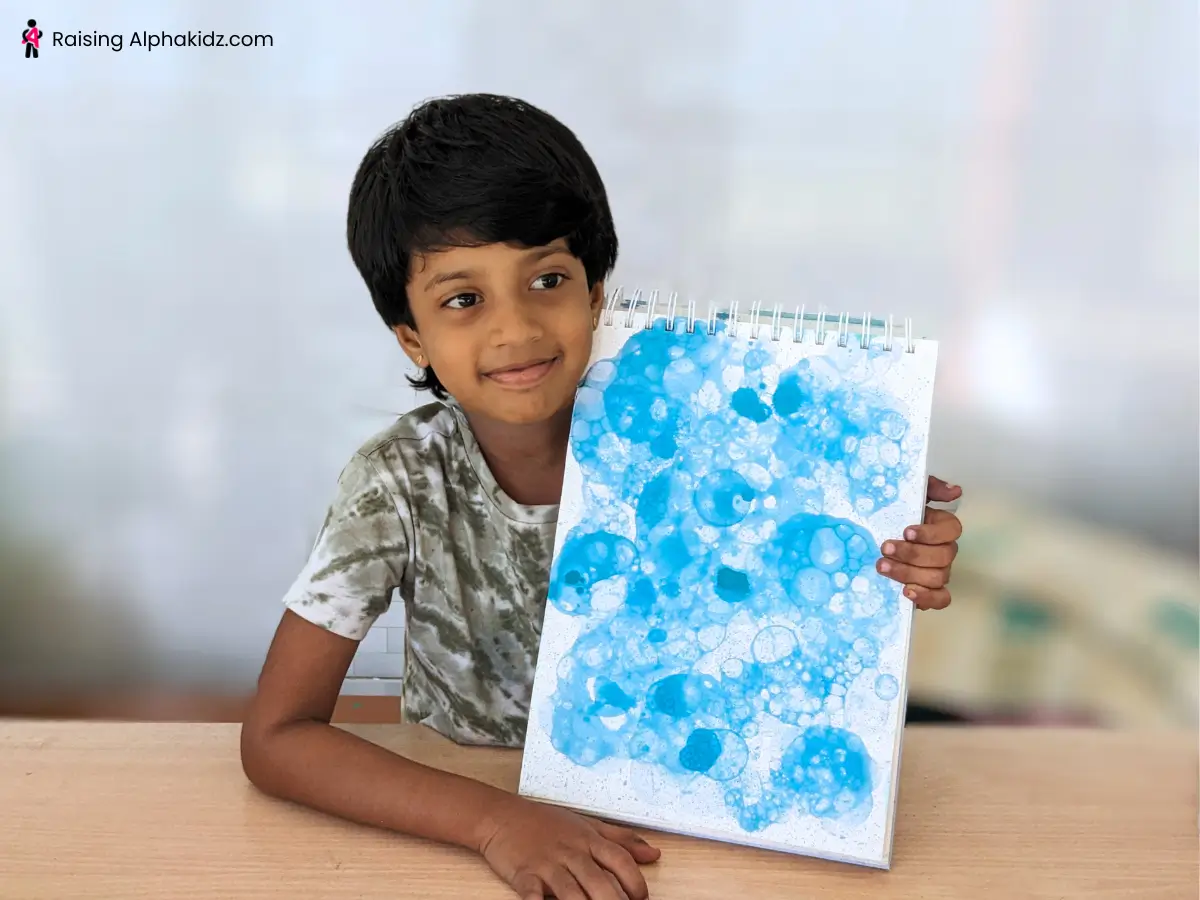
As the joy is in the process of doing rather than the finished product, this activity is a favorite among early childhood educators and homeschool parents who want to encourage open-ended creativity that bloom out of little hands!
Why This Is a Water Activity
In our Elements-based Learning Framework, soap bubble painting belongs firmly to Water. Water represents process, creativity, imagination, emotional joy, flow, and artistic expression — and this activity embodies all of it. There’s no fixed outcome to aim for, no lines to stay inside, and no “correct” bubble pattern. Kids simply follow the flow of the bubbles and let color happen.
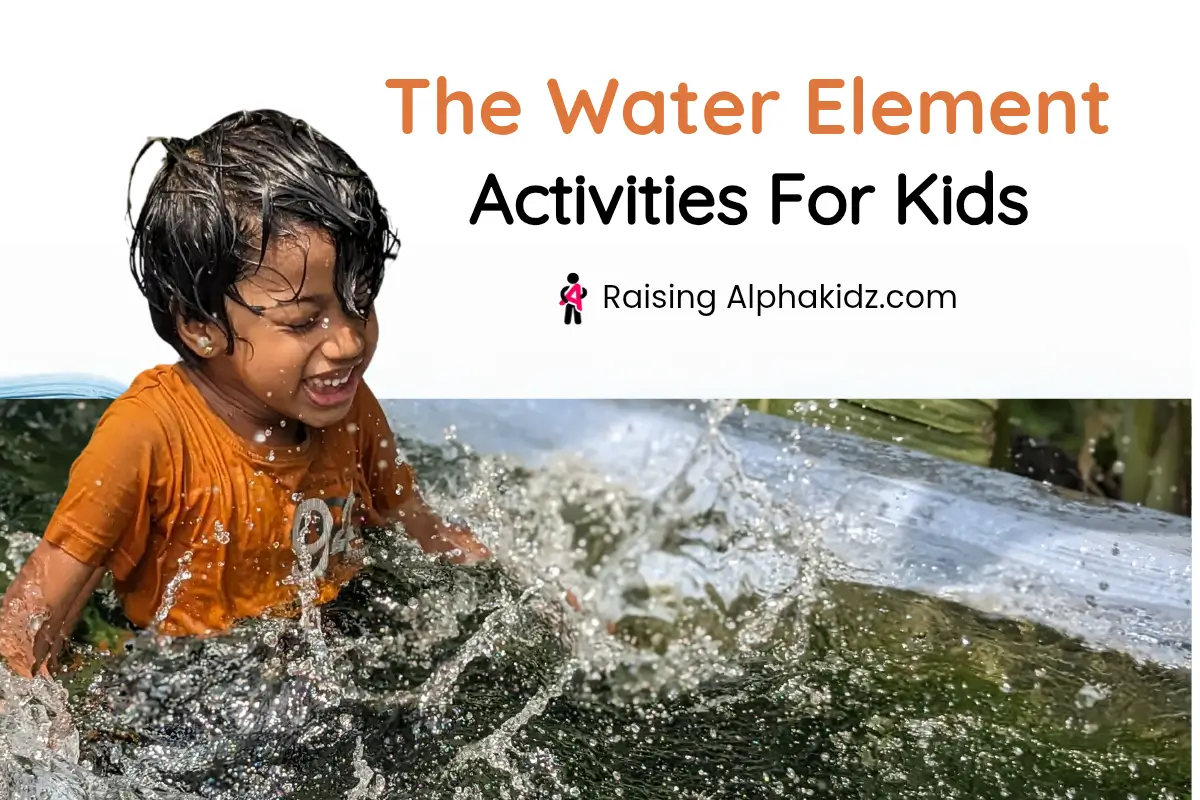
This openness builds emotional comfort with imperfection. When a bubble pops in an unexpected way, children learn to adapt and see beauty in the result rather than frustration in the mistake — a gentle, playful lesson in flexibility. The rhythmic act of blowing bubbles also has a calming, almost meditative quality, similar to blowing bubbles in a bath or watching rain trickle down a window. It’s sensory, soothing, and joyful all at once, which is exactly the emotional territory Water represents.
Art Supplies You’ll Need
- Acrylic paint (a few colors)
- Dish soap
- Water
- A spoon or small brush (for mixing)
- A straw
- Small containers or cups (one per color)
- Cardstock or thick paper
- Masking tape (optional, for a clean border)
How to Make Soap Bubble Art With Kids
1. Mix your Soap & paint.
In each container, combine one spoonful of liquid dish soap, a few spoonfuls of water, and a spoonful of paint. Use a separate container for each color.
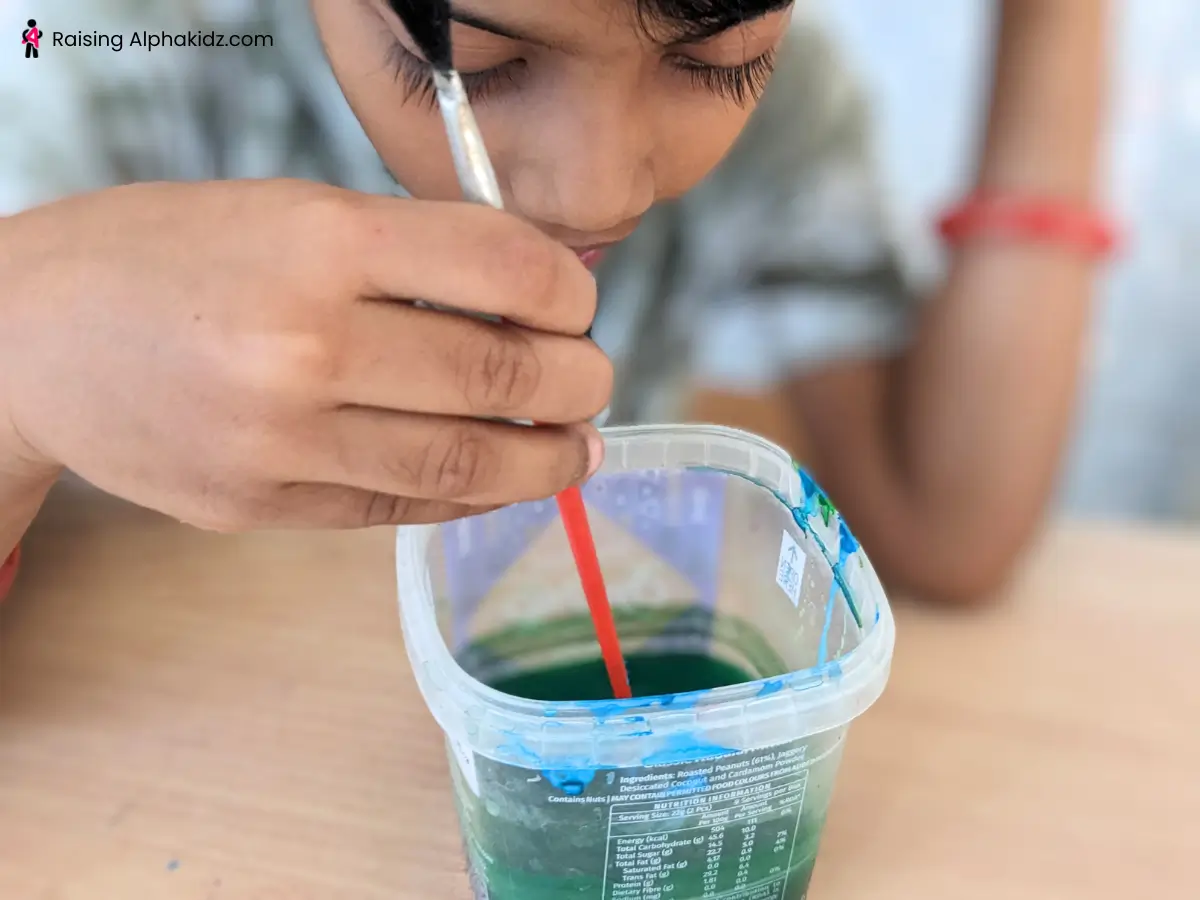
2. Stir thoroughly
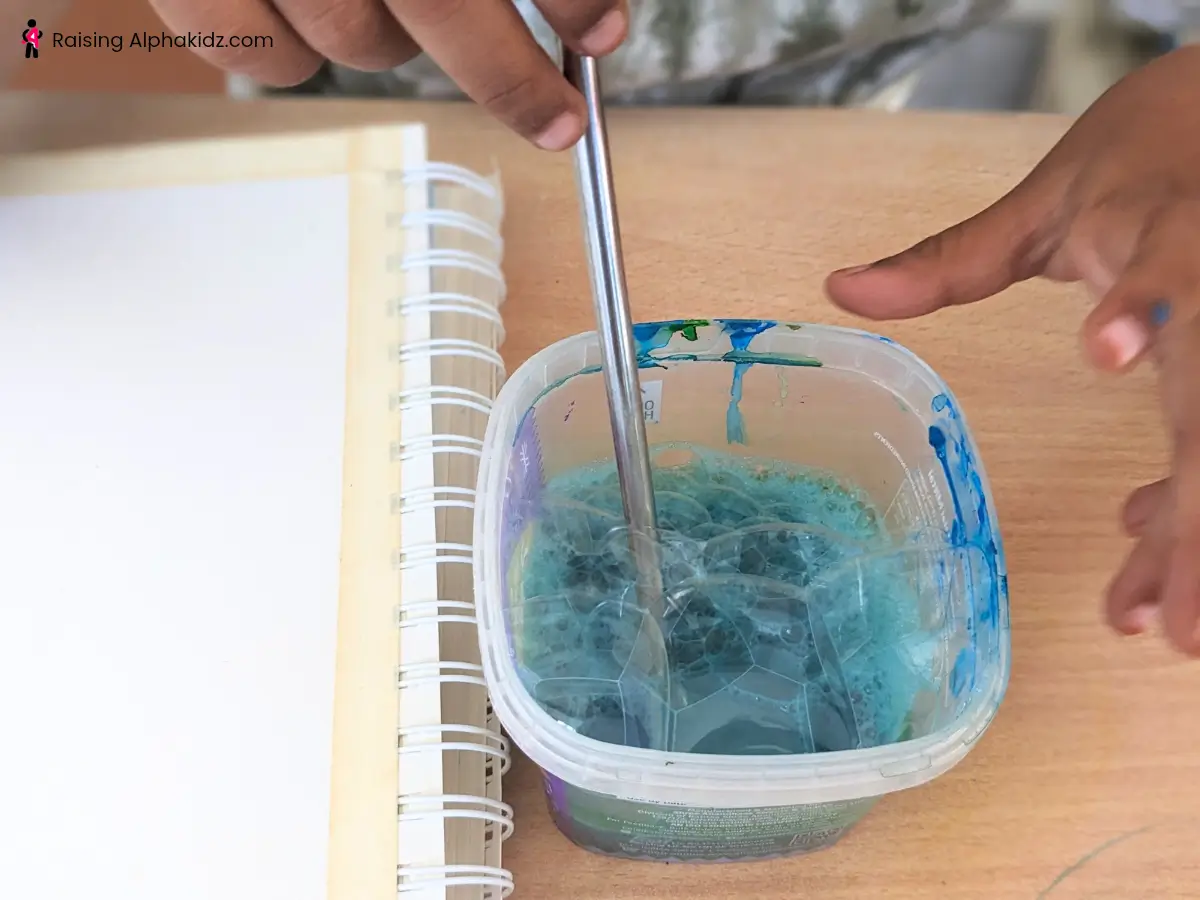
Mix until the color, soap, and water are fully blended and slightly frothy.
3. Test the stain For Soap Bubble Art
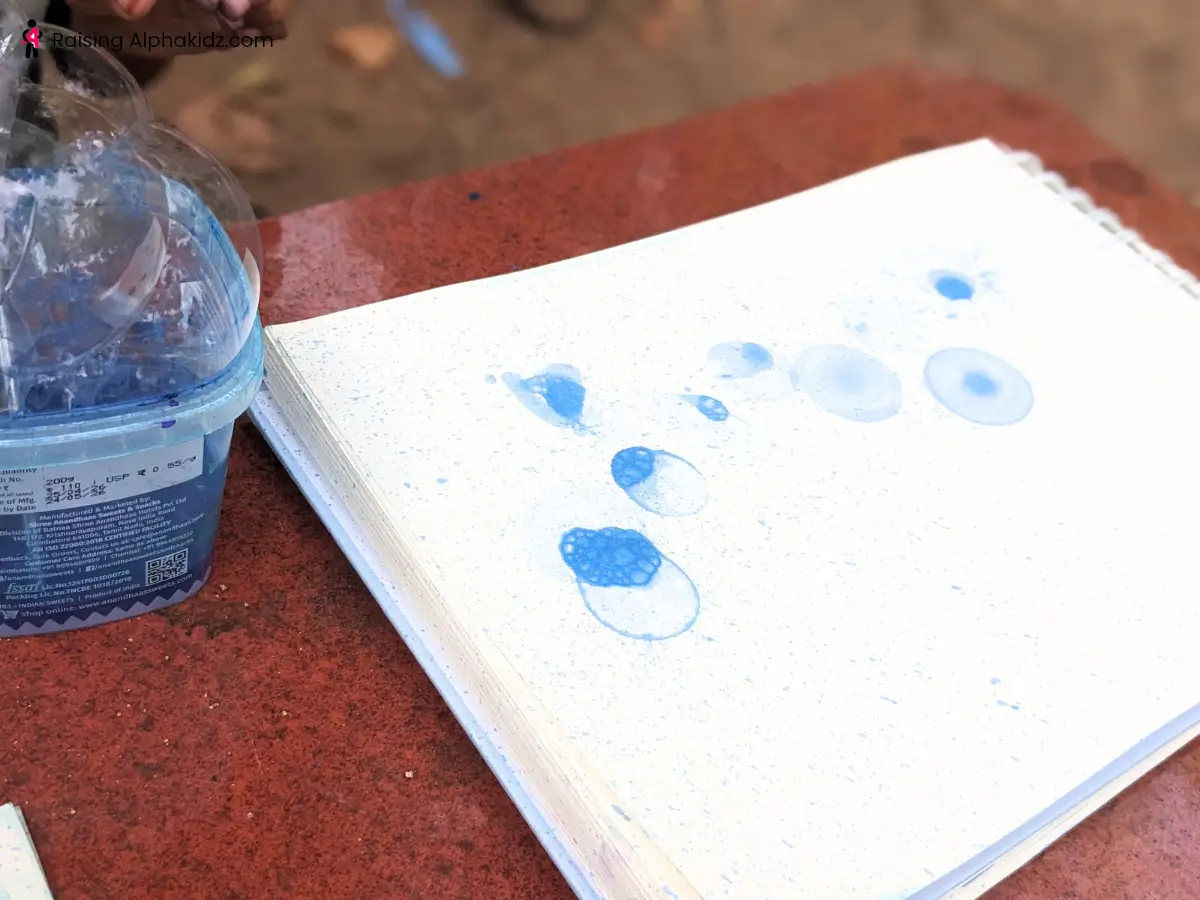
Before diving in, check the color intensity. Dip a straw into the mixture, blow gently to form a bubble, and let it land on a scrap piece of paper.
If the resulting ring is vivid and well-defined, you’re ready. If it looks faint, add a touch more paint and test again.
4. Set the safety rule first
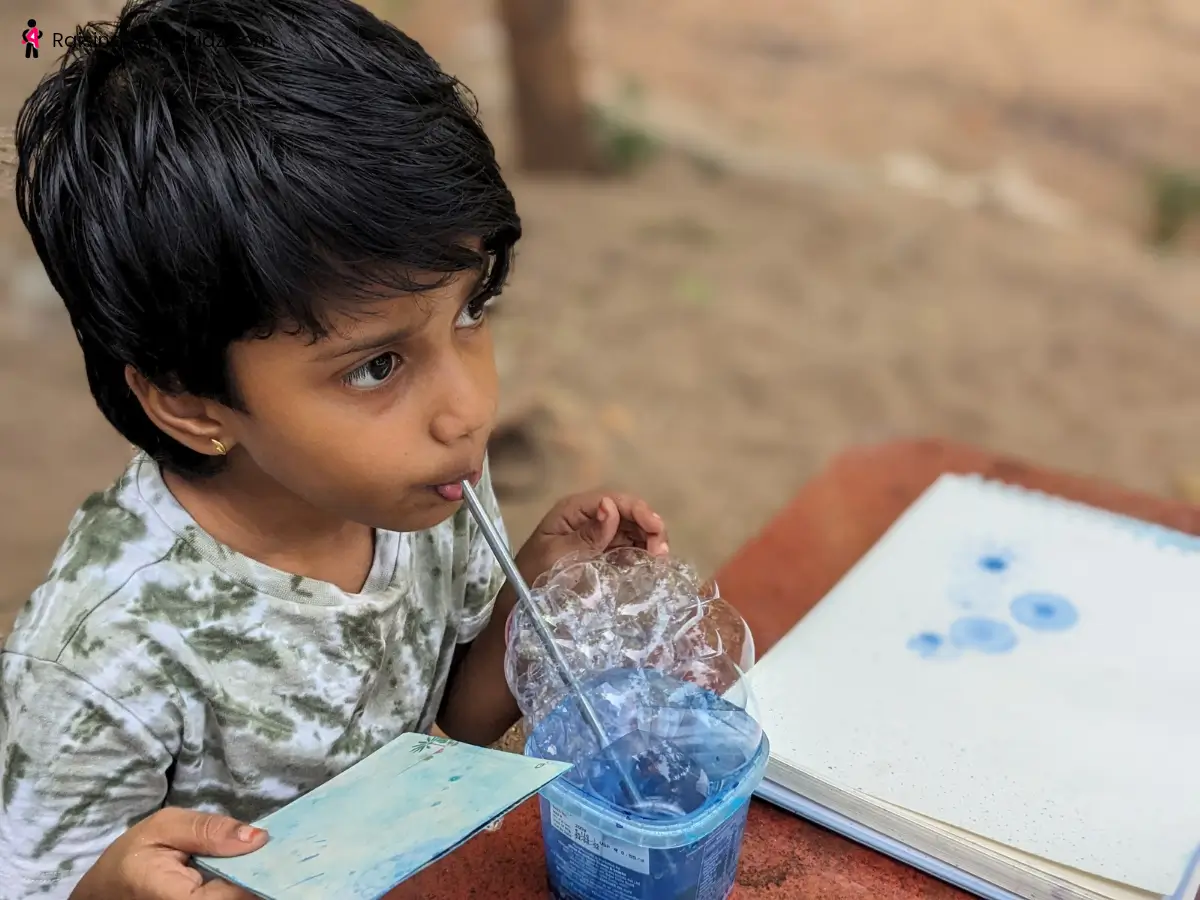
This is the most important step: before any blowing begins, teach kids to blow the bubbles outward, never to suck the mixture in. A simple reminder — “blow, don’t sip” — goes a long way, especially with younger children.
5. Try the straw-and-land method
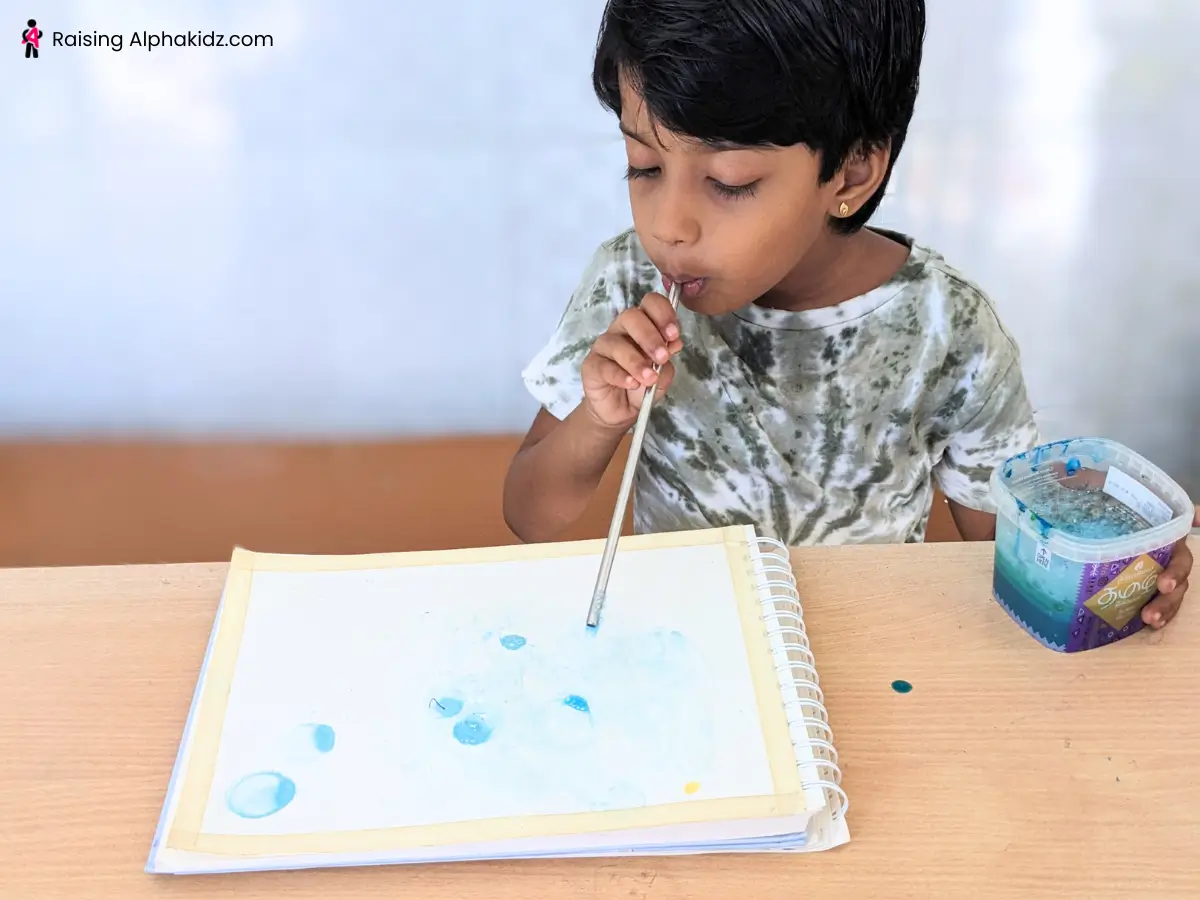
Dip the straw into the colored soap mixture, lift it out, and blow gently to form a bubble at the tip. Guide the bubble onto the paper and let it pop naturally. Repeat with different colors to build up a layered pattern.
6. Try the overflow method
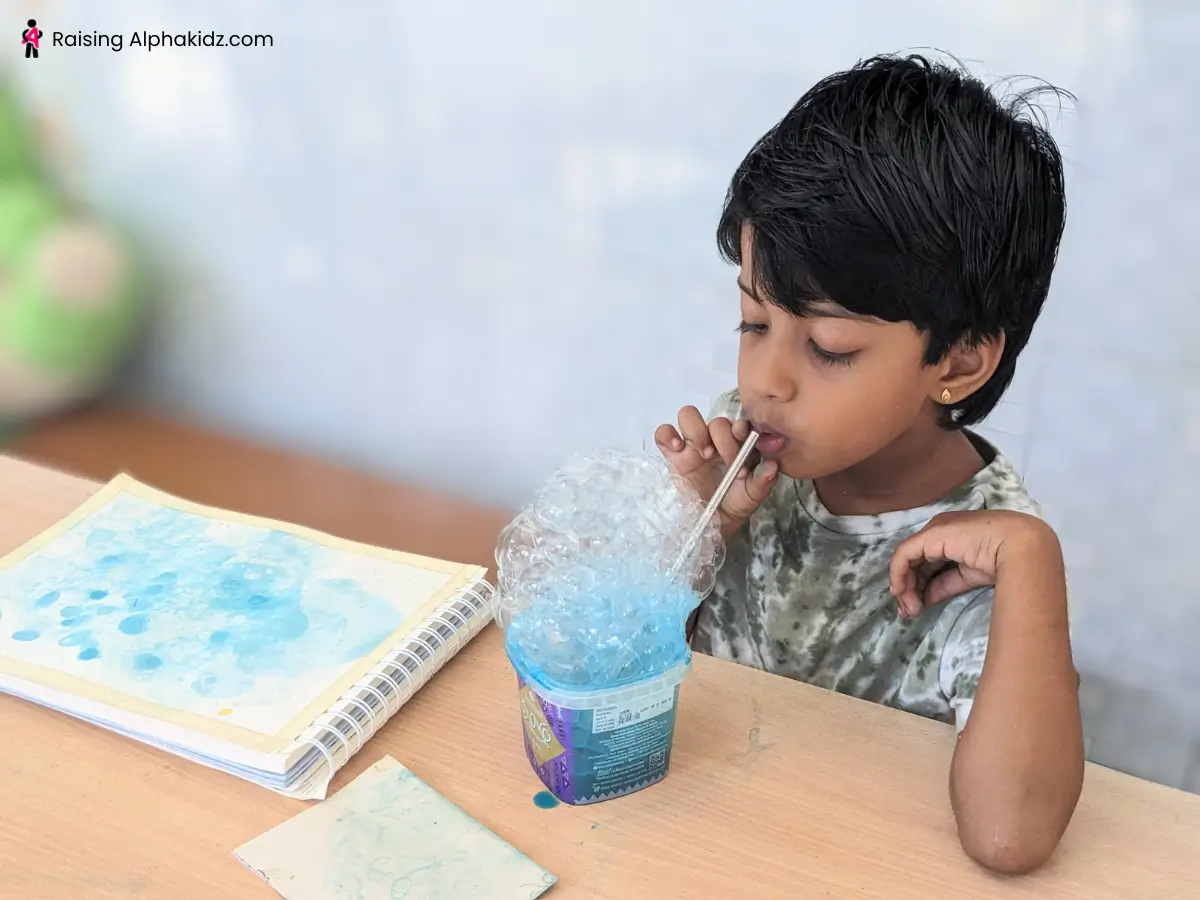
Keep the straw submerged in the soap mixture and blow continuously to build a mountain of frothy bubbles rising above the container’s rim.
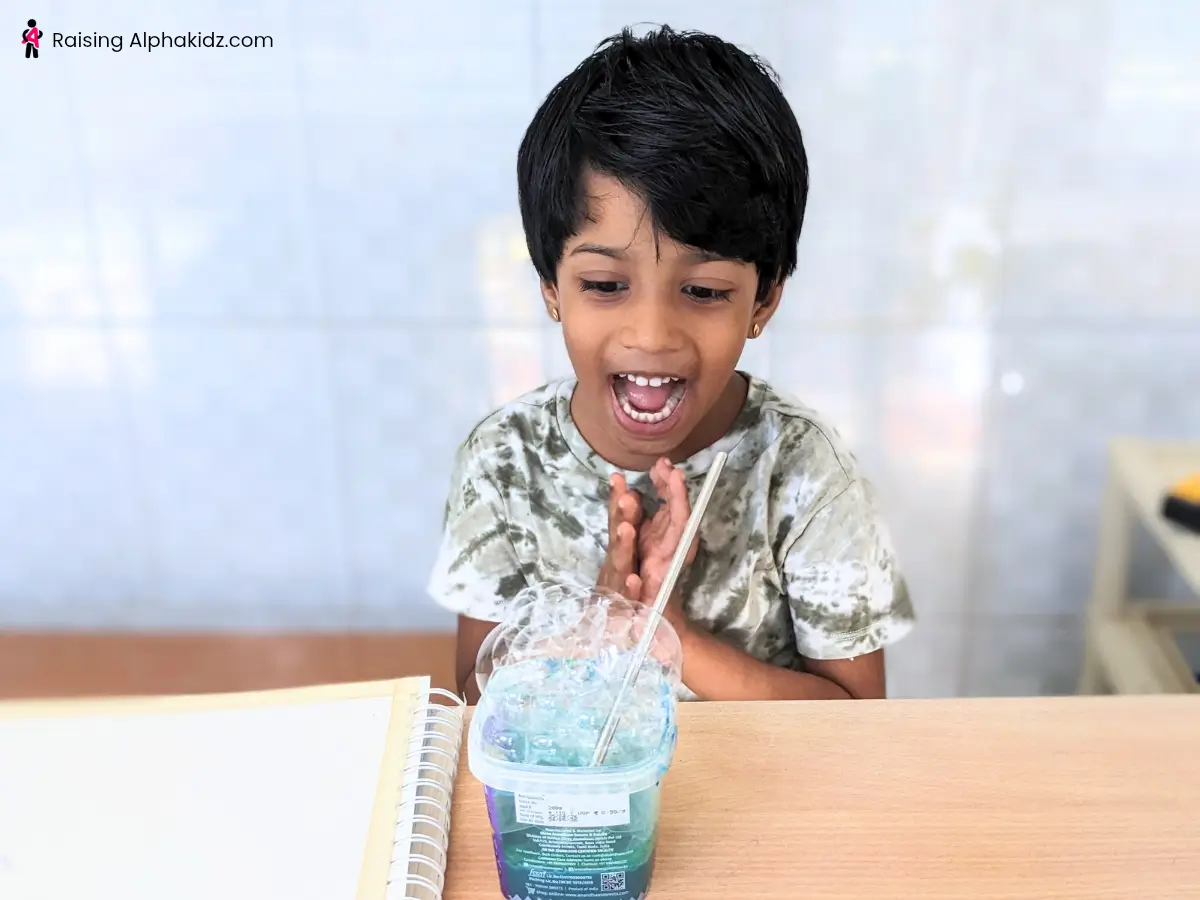
Kids will love witnessing the magic bubbles bouncing out of soap liquid!
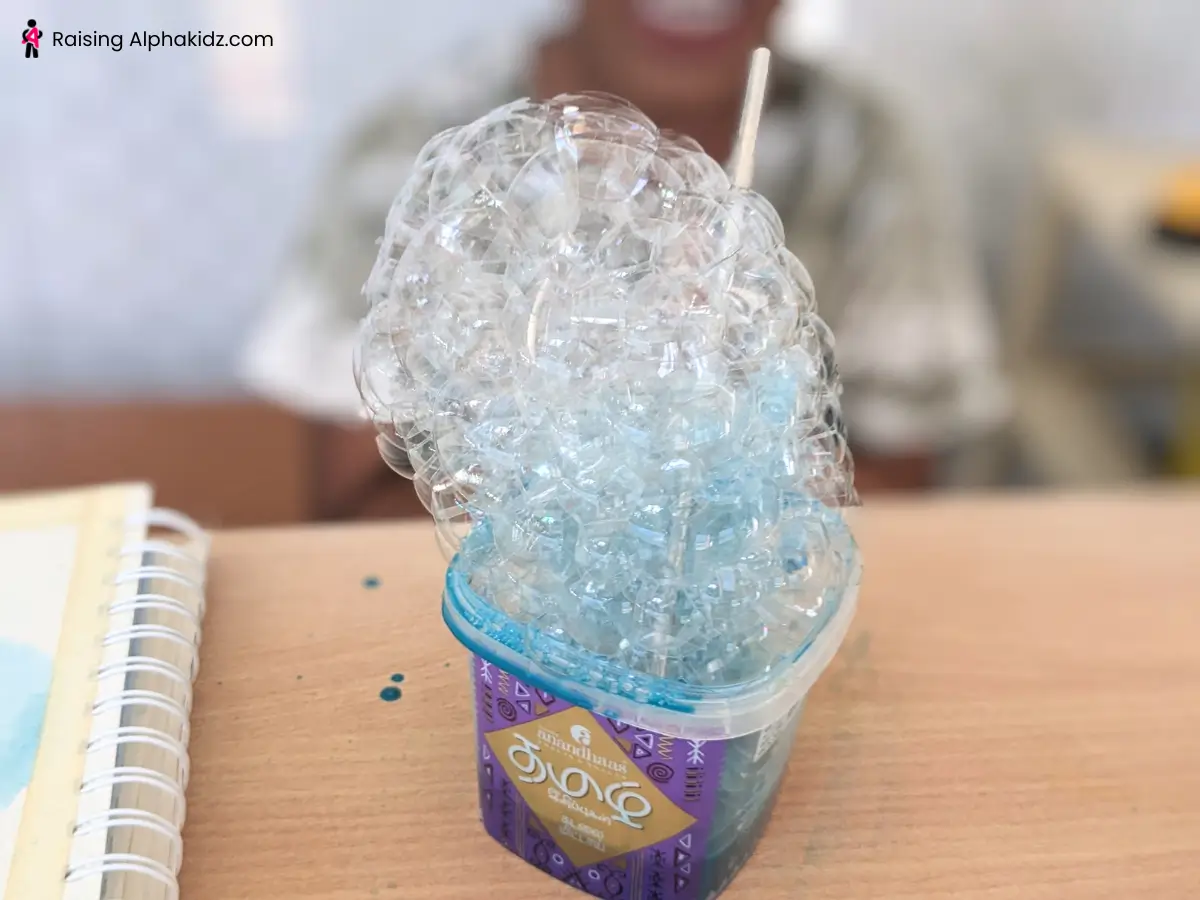
Once the bubbles are piled high, slide a piece of cardstock between the container rim and the bubbles to lift a layer of bubbles onto the card.
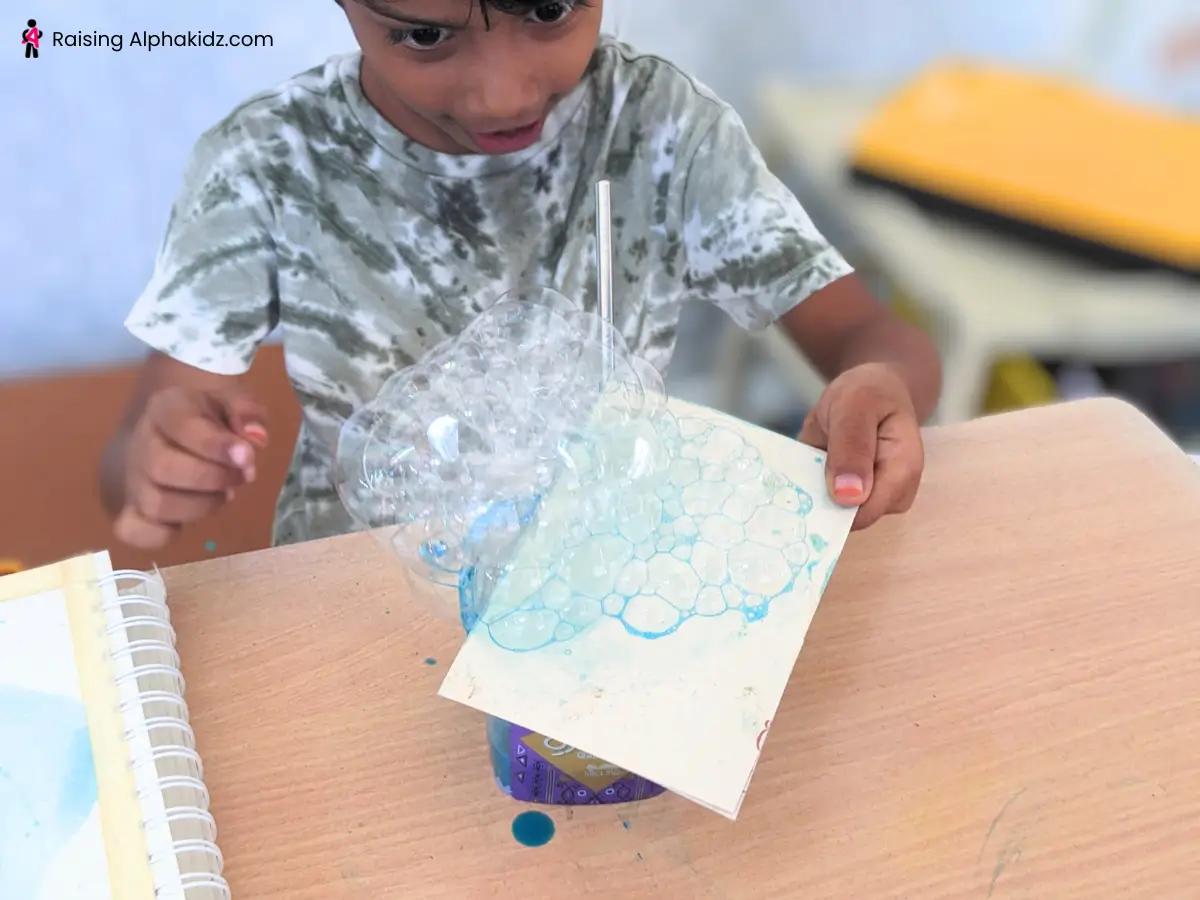
Then press the cardstock, bubble-side down, onto your painting paper to transfer a full cluster of bubble prints at once.
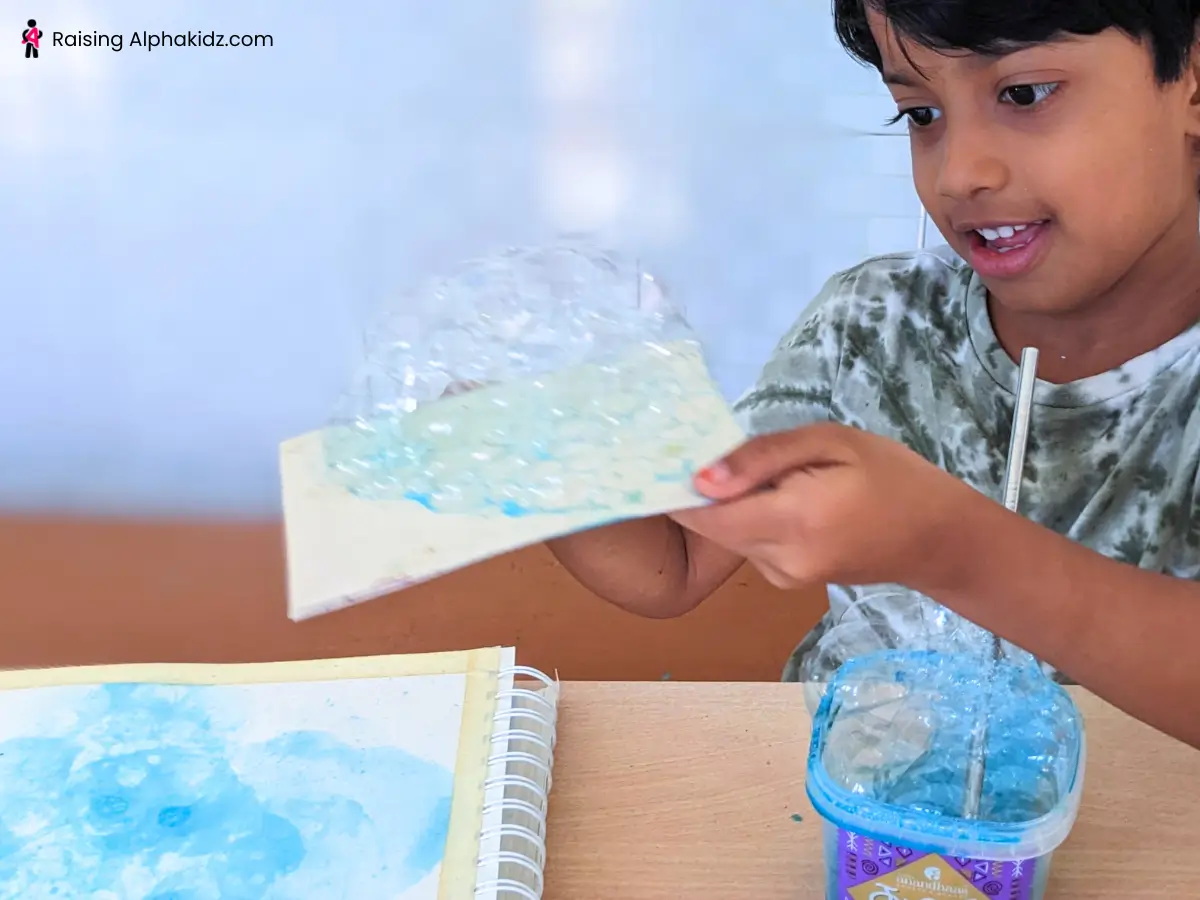
Repeat until the paper is full of enough colourful bubble patterns!
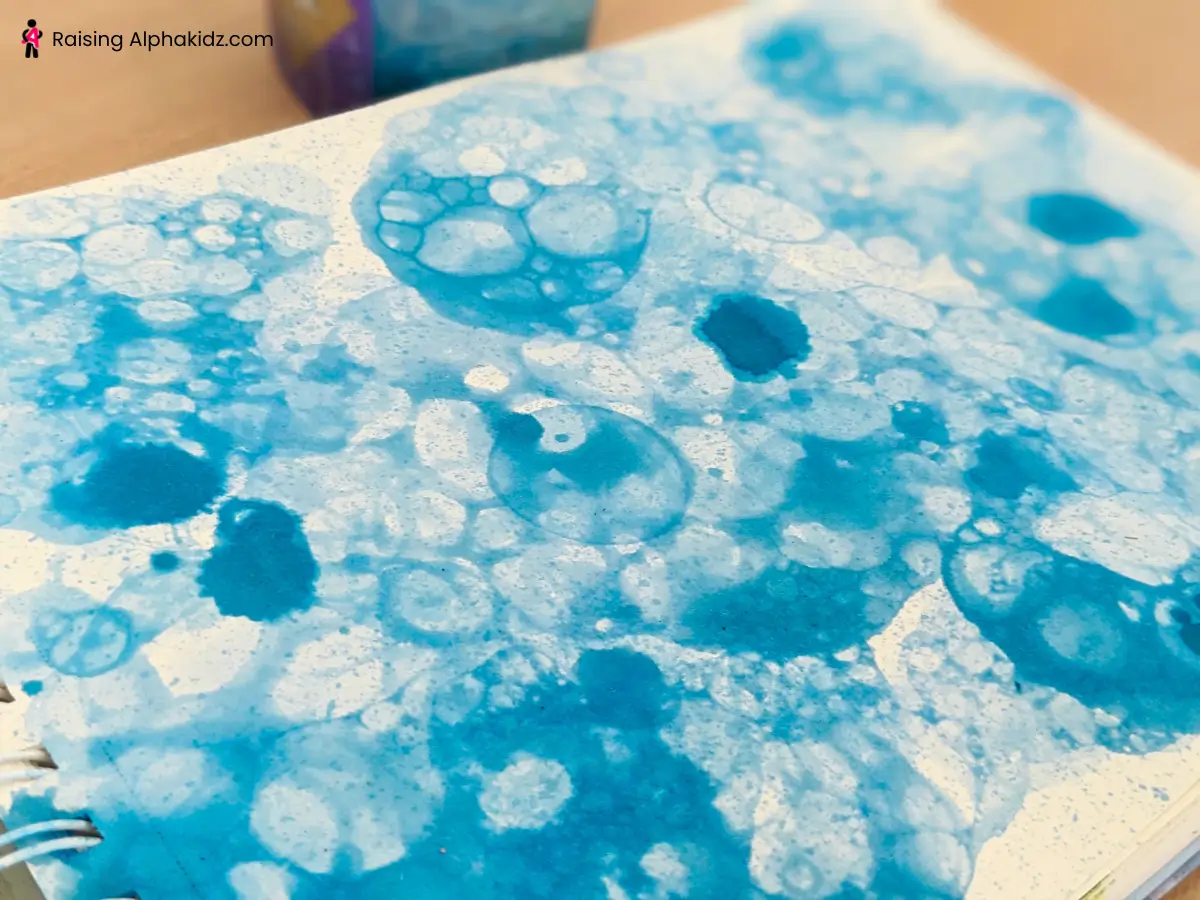
7. Let The Soap Bubble Art dry
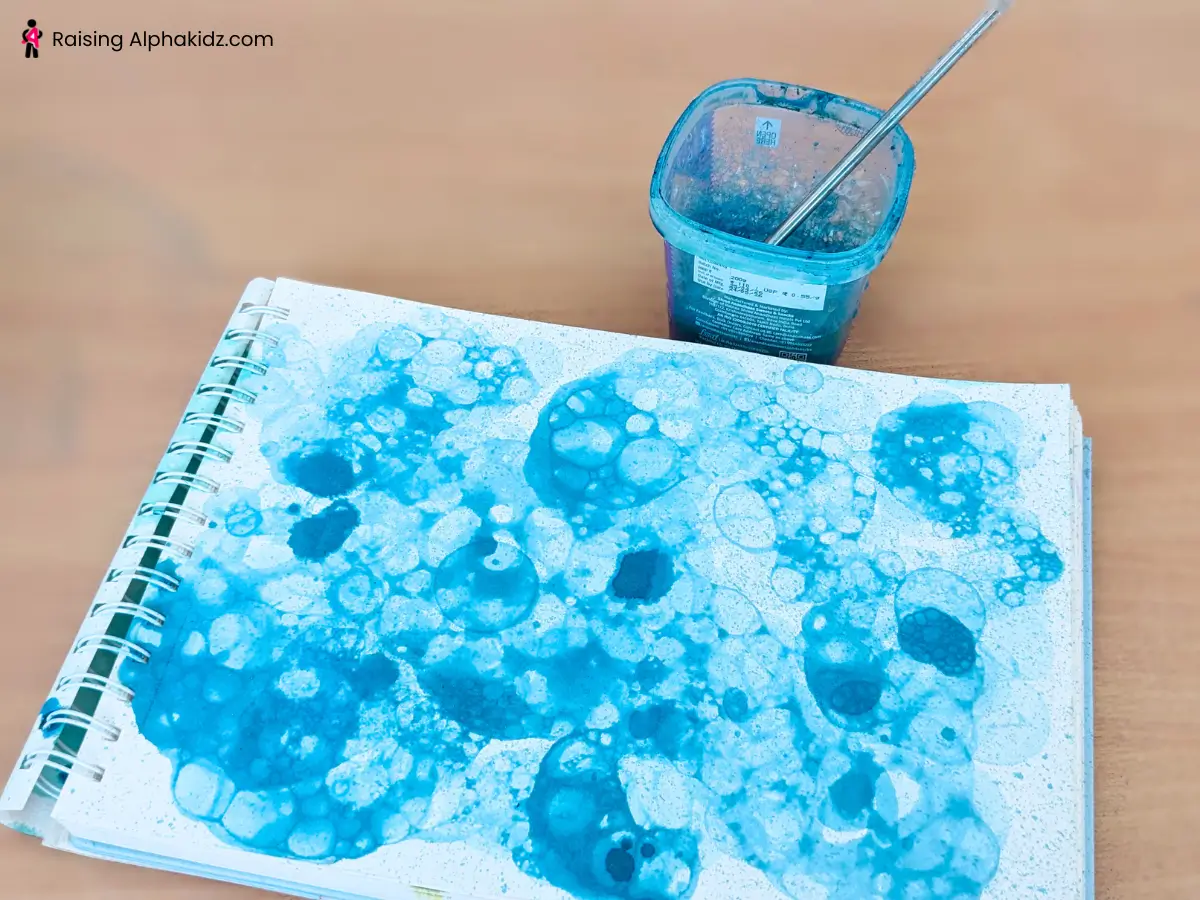
Set the finished piece aside and allow it to dry completely before touching or displaying it.
What Kids Learn From Making Soap Bubble Art
- Cause and effect: Blowing harder or softer changes the size and pattern of the bubble.
- Color mixing: Overlapping bubble prints introduce basic color theory in a hands-on way.
- Fine motor control: Controlling breath through a straw builds oral motor and breath-control skills.
- Emotional flexibility: Accepting unpredictable results builds comfort with imperfection.
Tips for a Smoother (and Less Messy) Session
- Cover your table with a plastic tablecloth or old newspaper before starting.
- Use washable, kid-safe paint for easy cleanup.
- Have a damp cloth nearby for sticky fingers.
- Work outdoors or over a tray if you’re using the overflow method — it gets bubbly fast.
- Let toddlers use pre-made bubble mixture with adult-controlled blowing if straw safety is a concern.
Variations to Try Next
Once your child has mastered the basics, soap bubble painting can grow into more advanced projects:
- Bubble hydrangea flowers – cluster small bubble prints together to form flower blooms.
- Bubble monsters – add googly eyes and marker details to bubble shapes for silly creatures.
- Bubble backgrounds – use a finished bubble painting as textured background paper, then sketch fish, jellyfish, or other ocean creatures on top.
FAQs About Soap Bubble Art
What age is soap bubble painting best for?
It works well for kindergarten through elementary-age kids. Preschoolers can join in with close supervision, ideally with an adult controlling the blowing.
Is soap bubble painting safe?
Yes, as long as children are taught to blow outward rather than inhale the mixture, and mild, tear-free dish soap is used.
Can I use food coloring instead of paint?
Yes, though food coloring produces lighter, more translucent stains compared to acrylic paint.
How do I get bolder color prints?
Add a little more paint to the mixture and do a test bubble on scrap paper before committing to your final piece.
A Simple Takeaway
Soap bubble painting proves that some of the best learning happens when we let go of the need for a “perfect” result. A bit of soap, a splash of paint, and a few deep breaths through a straw are all it takes to turn an ordinary afternoon into a colorful, creative memory.
If your child enjoyed following the flow of color today, explore more Water element activities — like watercolor resist art or vegetable stamp art— for more joyful, imagination-led creativity.